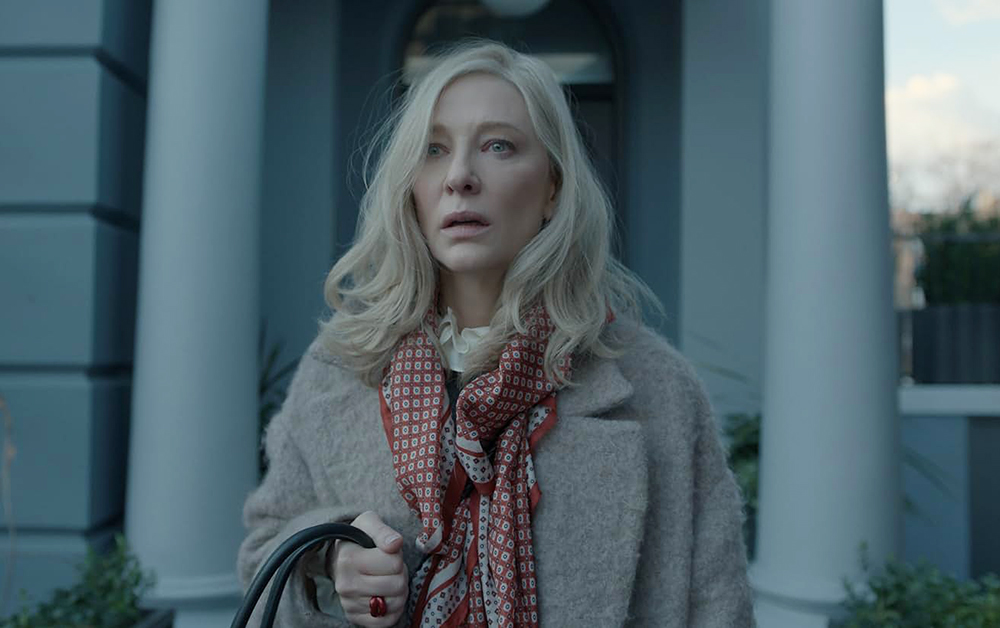
“Disclaimer,” Alfonso Cuarón’s latest, is a mini-series based on the bestselling novel of the same name by Renee Knight. The series revolves around award-winning journalist Catherine Ravenscroft, who inadvertently becomes the subject of an exposé after a chapter from her past ‘leaks out’ in the form of a novel (titled “The Perfect Stranger”). The novel reads like a semi-fictionalized or even sensationalized piece of literature about the same event. And while it’s not climbing any bestseller lists soon, the novel spreads like wildfire after being deliberately and discreetly delivered to her loved ones by its author. Like a time bomb, it leaves damage in its wake, causing ripples in Catherine’s stormy marriage and shattering an estranged bond with her son, Nicholas. The culprit behind this act of ‘character assassination’ is soon revealed to be Stephen Brigstocke, an elderly, widowed English teacher. He only has vengeance on his mind. The only way Catherine can put an end to his vindictive designs is by regaining agency over her own story.
While “Disclaimer” is initially a slow-burn thriller, it also plays out like a family drama. Its episodes are broken up into chapters, each one exposing a façade of its characters previously hidden from view. Gradually these masks slip away, evoking feelings of sympathy and disgust towards them and posing questions on their morality. With each turn of the page, a new chapter makes the viewer squirm. Since showrunner Alfonso Cuarón doesn’t spoon-feed viewers with all the information of his characters or their morality code in one go either, it becomes a show that’s worth savouring for each insightful episode too.
Visual Storytelling and Bleakness via Cuarón
The bleak tone, and grim atmosphere and colour palette—coupled with themes of bitter and dark pasts—are occasionally reminiscent of the British crime procedural “Broadchurch.” Despite similarities though, “Disclaimer” is still a Cuarón vehicle through and through, featuring his trademark touches such as signature voiceovers. The narration is effective in conveying the perspectives of its characters. It examines their troubled headspace as well as their pompousness, hypocrisy and hidden vices/insecurities. Cuarón’s voiceovers also serve multiple purposes. They act as an internal monologue while adding depth to each character or to their interactions with each other.
Cuarón also incorporates visual storytelling to guide viewers, with mirror shots depicting the stages of Stephen’s descent into lunacy due to an infatuation in carrying out his cold, ruthless plans and his delusions. In one scene, he finds a strand of his late wife Nancy’s hair in a jar of homemade preserves. He views it as proof that his long-dead wife would have wanted him to punish Catherine, since he holds the latter solely responsible for their son Jonathan’s death during the young man’s sojourn in Italy. Later, recurring imagery of a fox catching the scent of its prey plays a pertinent role during the penultimate episode.
Cuarón, known for bold portrayals of sexuality in works like “Y tu mamá también” (2001), addresses the thin line between pent-up frustrations and sexual liberty. He showcases how a woman is viewed as an object of desire and a punching bag for a man’s vengeance. Themes such as infatuation and gratification also intricately overlap in this page-turner of a series. This results in a gripping viewing experience while also rewriting the rules of the erotic thriller genre.
Deception and All its Faces
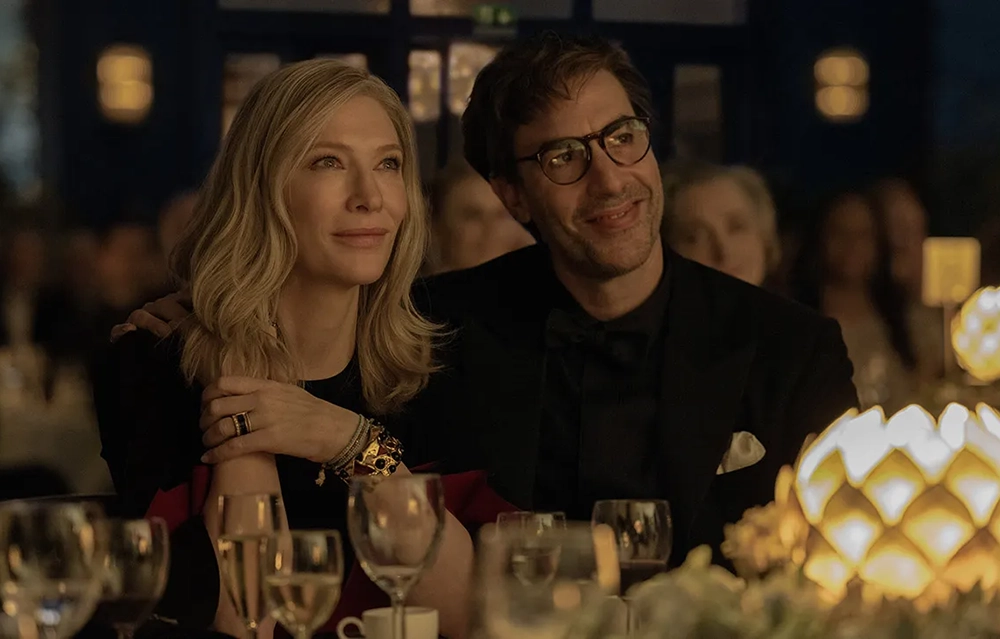
Deception is another running theme in “Disclaimer,” as it depicts how individuals present or carry themselves in public and privately. It examines which version a subject’s story the public can trust, and how one person’s lie is another’s truth. It leaves viewers to ponder who is presenting the truest version of themselves or selling a false narrative, which can be mistaken for the whole truth and nothing but the truth. The series also leaves one guessing over who the real victim is in this blame game of epic proportions. For instance, while Stephen has deemed Catherine morally corrupt, he’s no better with his blatant martyr complex. This mixes with an altogether sadistic, misguided form of justice.
“Disclaimer’s” flashback portions allot much sympathy to a grief-stricken man who has outlived his only son as well as his equally emotionally devastated wife. However, the series never absolves nor justifies Stephen’s malicious acts during its run-time. This is true even if his motivations stem from a place of hurt, sorrow and being unable to move on. Moreover, as the series progresses, we learn Stephen’s desperation for closure—or rather to placate himself for his shortcomings as a parent—is a deception in itself. “Disclaimer” also sheds light on more current measures of deception such as catfishing, online trolling, etc., which might appeal to a more contemporary audience.
Of Trauma and Guilt
Cuarón’s series is also a sensitive window into the complexities of grief. It places an emphasis on healthy grieving rather than resorting to haste to resolve unhealed trauma and guilt. For example, we see troubled Nancy (Lesley Manville) consumed by a lack of closure over her son’s last moments. She goes to the extent of even recreating the same in her bathtub at home, leading to an obvious near-death experience. “Disclaimer” also draws parallels between Catherine (Cate Blanchett) and Stephen (Kevin Kline), both seeking consolation yet with different approaches. Their parenting styles also bear similarities, with both their sons (Nicholas and Jonathan, respectively) pushing them away. As a result, Stephen not only mourns over his son’s death, but his absentee parenting when Jonathan was alive.
In a similar fashion, Catherine laments on how the stormy sea and lashing winds deterred her from rescuing a young Nicholas when he drifted out to sea on the same day that Jonathan drowned. As her son grew up, the duo drifted apart emotionally too. Later, “Disclaimer” uses a familiar colour palette and staging as Catherine and her husband Robert sit in silence in the waiting room of a hospital, awaiting the results of a life-threatening medical emergency. Cuarón’s scenes mimic a shot during the flashback portion as a shell-shocked Stephen and Nancy sit motionless at a busy and crowded airport terminal after flying to Italy to identify their son’s corpse at the morgue.
Kline and Blanchett are Convincing
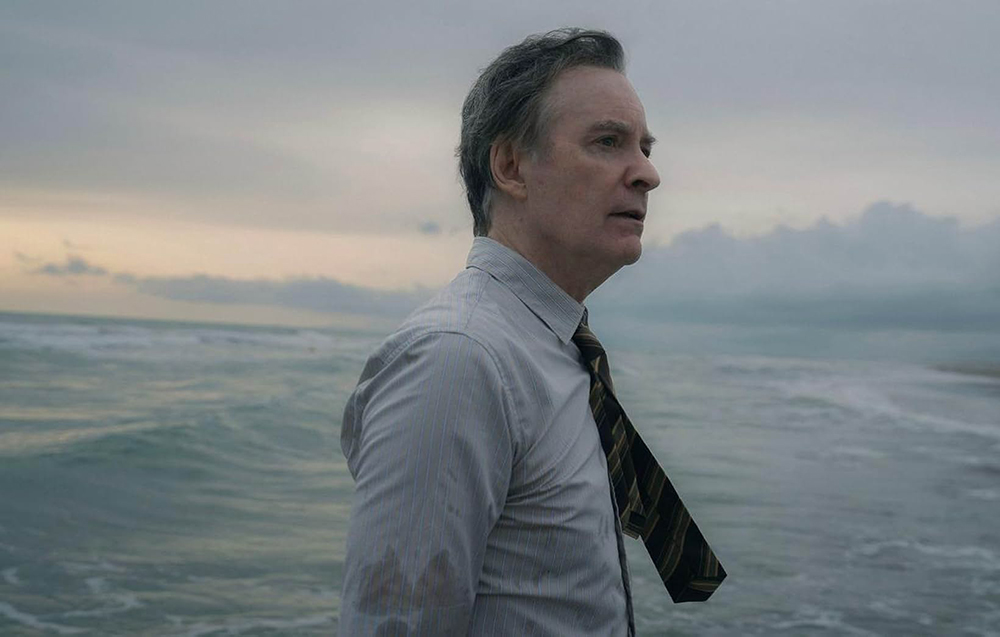
Following his recent role in 2021’s “The Starling”—in which he played a kind vet who doubles as a therapist—it feels ironic to watch Kevin Kline (who nabbed Golden Globe and Critics Choice award nominations for his performance, alongside co-stars Cate Blanchett and Leila George) play a broken man here. He sets out to break apart a family with no proof other than a novel penned by his late wife, which he posthumously publishes with the help of a work colleague and obscene photographs from his deceased son’s Nikon camera. Not surprisingly enough, Kline proves his versatility with a layered performance as the shady Stephen. He conveys emotions such as heartbreak and anguish, simultaneously capturing Stephen’s inhumanity with ease. Kline’s body language—particularly an unnerving Kubrick stare directed towards the camera as the character sits alone snacking on a sandwich contemplating his next move—is chilling. His intonation, too, is convincing. It is neither generic nor overdone, and we genuinely forget he is an American playing an Englishman.
Much like her co-star, Blanchett too prefers to focus on the tics of Catherine, such as nervously chewing on her hair, a trait that later allows for a seamless transition between the older and younger versions of this character. As she ages, Catherine is played by Leila George. It’s a casting choice that feels apt in terms of physical resemblance and also tone and body language. Blanchett and Kline only share a handful of scenes together. However, their interactions—be it exchanging threats via a voice message or even through a mail slot before their final face-to-face encounter—are absorbing to watch. Sacha Baron Cohen plays Robert; and while his performance starts off promisingly, it occasionally falls short and feels uneven. The rest of the supporting cast comprising Lesley Manville, Louis Partridge, Kodi Smit-McPhee, Gemma Jones, et al, are memorable in their respective roles.
An Engrossing Thriller
Nonlinear, yet never confusing, ultimately “Disclaimer” proves to be a raw, triggering watch. While few might find it infuriating, mostly due to the slow burn pace, it is nevertheless very engrossing. It also saves the most devastating blow for last, although for whom it is destined, I won’t reveal here….