


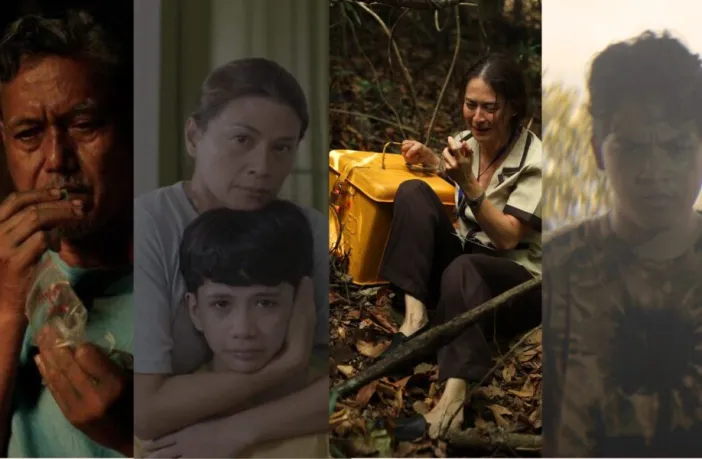
As a vibrant celebration of independent filmmaking in the Philippines, the Cinemalaya Philippine Independent Film Festival showcases a diverse range of stories from one of Asia’s most dynamic film industries. Since its inception in 2005, Cinemalaya has become an essential platform for burgeoning Filipino filmmakers, exhibiting their work and giving audiences a glimpse into the vibrant cultural landscape and pressing societal issues in the country.
Known for its emphasis on originality and creativity, Cinemalaya has gained recognition in the global film circuit, drawing international audiences to appreciate the depth and diversity of Philippine cinema. Think of it as a spiritual sibling of the Sundance Film Festival, in how they both highlight independent and innovative films, often providing a platform for emerging filmmakers and encouraging a diverse range of storytelling.
This year isn’t any different, with Cinemalaya 20 unveiling 10 feature-length films, all of which telling stories of the human condition through the lens of the Filipino experience. Of the 10, I had the opportunity to watch 8. Below are the capsule reviews of four of those films: “Balota,” “Kantil,” “Gulay Lang, Manong!” and “The Hearing.”
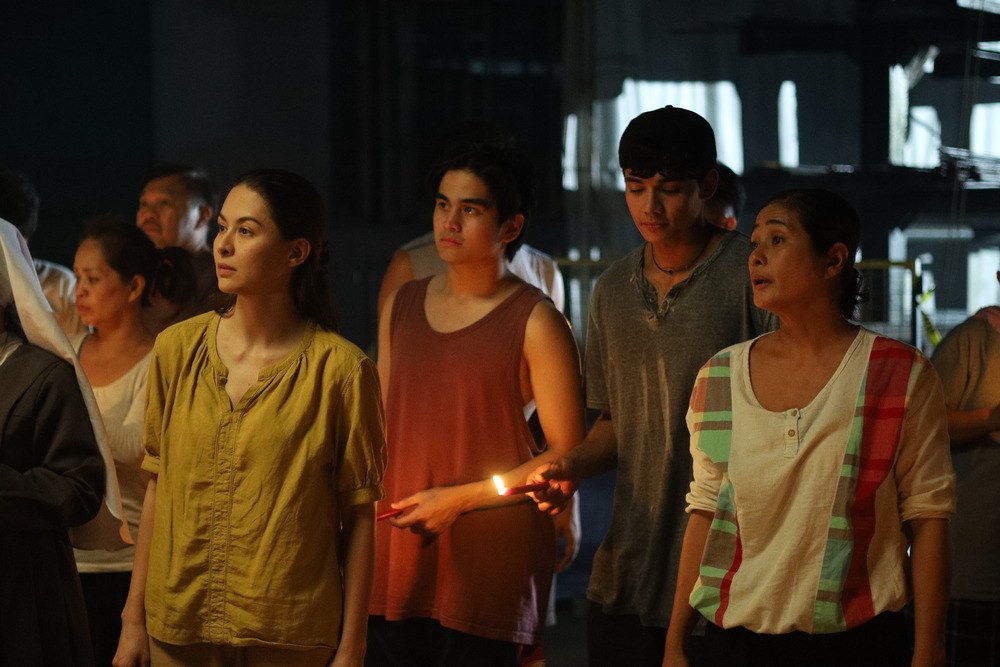
‘Balota’: A Dark Comedy that Critiques the Pageantry (and Corruption) in Philippine Politics
During the local elections, a teacher (Marian Rivera) assigned to the Board of Election Inspectors for her local precinct pays an increasingly steep price for defending the democratic process of the election.
Here’s the thing: You’ll always get the usual A-game from Rivera, even if the screenplay isn’t up to the task. Here, she plays a principled teacher who escapes with the ballot box containing real votes from the townspeople, so that the candidates’ henchmen don’t get their hands on it and tamper it with fake ones.
In this regard, “Balota” (lit. ‘Ballot’) really works — it’s dark, the message timely, the performances eerily resonant. Having said that; whereas casting internet personalities Esnyr Ranollo and Sassa Gurl shouldn’t have been a distraction, making their banter an integral part of the story felt so misplaced. It’s one thing to touch upon the weird pageantry of Philippine elections, but it’s another to use it as the audience’s relief from seeing on screen the realities of politically motivated killings in the name of a few hundred votes.
Writing and directing a black comedy film about the dirty politics in the Philippines is a delicate artform. In the hands of indecisive filmmakers, such movies tend to overswing, keying in on comic relief to make up for other more glaring issues (shallow writing, uneven pacing, insipid acting).
All these, then, make me wonder why Kip Oebanda chose not only to incorporate comedy in “Balota,” but to integrate it into the film’s very fabric. Because, even without the comedy, the film already works. And if we’re being honest, it would’ve been much, much better.
Grade: B
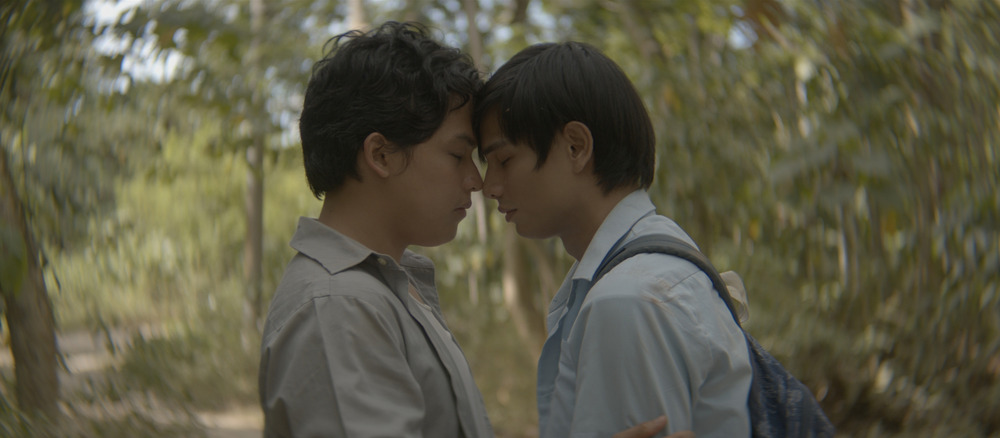
‘Kantil’: A Gay Love Story, Sci-Fi Mystery, and Social Commentary Rolled into One Confounding Mess
A star-crossed gay couple trying to keep their love alive. An imminent demolition of a coastal village by a local councilor whose clan owns the land. A discovery of a seemingly extraterrestrial rock that could either help the community or curse it even further. Three powerful précis, yes; but plotlines that never really meshed well in this film.
Joshua Caesar Medroso‘s “Kantil” (lit. ‘Trench’) is an interesting mess: a film made up of three different stories that are, frankly speaking, better as standalone short films. Trying to stitch together these three plotlines to make a whole narrative doesn’t cohere at all, and ending the film the way it did doesn’t feel earned.
In his statement, Medroso described the film’s story as that of “a discovery of a mysterious alien in the Filipino slums. No invasion. No global war. Just a small town fighting for its place in the world and the universe.” Somehow, I couldn’t feel it in the film. Whereas the love story between the two men provides the film its heartbeat, the other elements seem too intent on just going for the ride. The end result, unsurprisingly, is a frustrating facsimile of unrealized cinematic potential.
Grace: C-
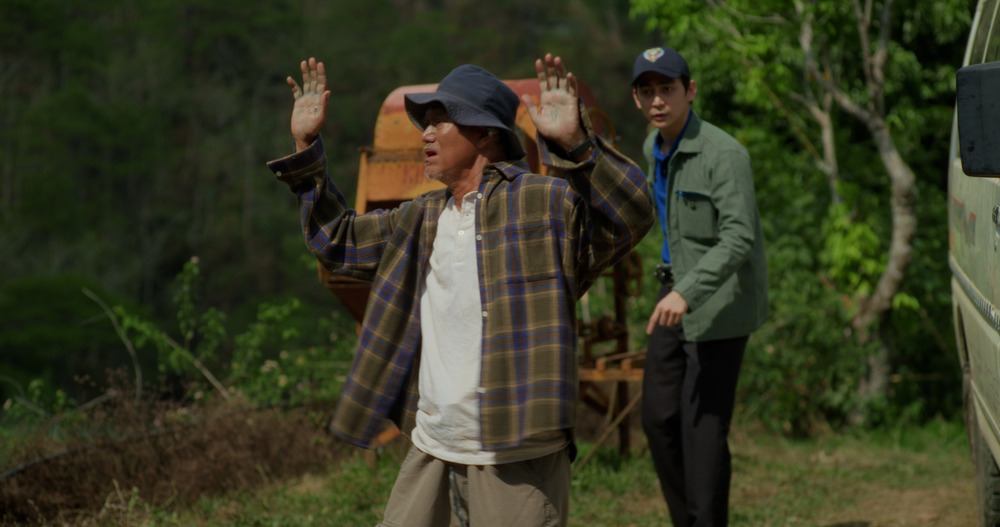
‘Gulay Lang, Manong!’ Tries to Destigmatize Recreational Marijuana Use in the Age of Extrajudicial Killings
Pilo, a struggling farmer, gets caught up in a sticky situation when his grandson Ricky gets involved in the cannabis trade with his friend Razer. To avoid spending time behind bars for something he knows nothing about, Pilo agrees to police officer Ariel’s bargain: help the police catch Razer, and Ricky walks.
Along the way, Pilo and Ariel discover the connection of the cannabis trade to a powerful politician, who plans to monopolize the trade, not for recreational purposes, but for medicinal means. This shakes their moral code, culminating in character choices that betray their very ideals of what’s right and wrong.
Can you complain about a film that aims to be a crowd-pleaser and nothing more? With “Gulay Lang, Manong!” (lit. ‘Just Vegetables, Sir!’), I’d say yes.
This is a film that could have been a riotous black comedy, underscored by a searing critique on the country’s ongoing stigma toward recreational marijuana use. What’s more, it could have sent a loud message decrying the Duterte-sanctioned extrajudicial killings, elements of which — despite the fallout — still continuing to this day. Instead, director BC Amparado seems too content relying on the comedy (with a little touch of drama), curtailing the potency of his film’s commentary in the process.
All in all, nonetheless, “Gulay Lang, Manong!” packs enough feel-good laughs that can make one forget about the film’s missed opportunity.
Grade: B-
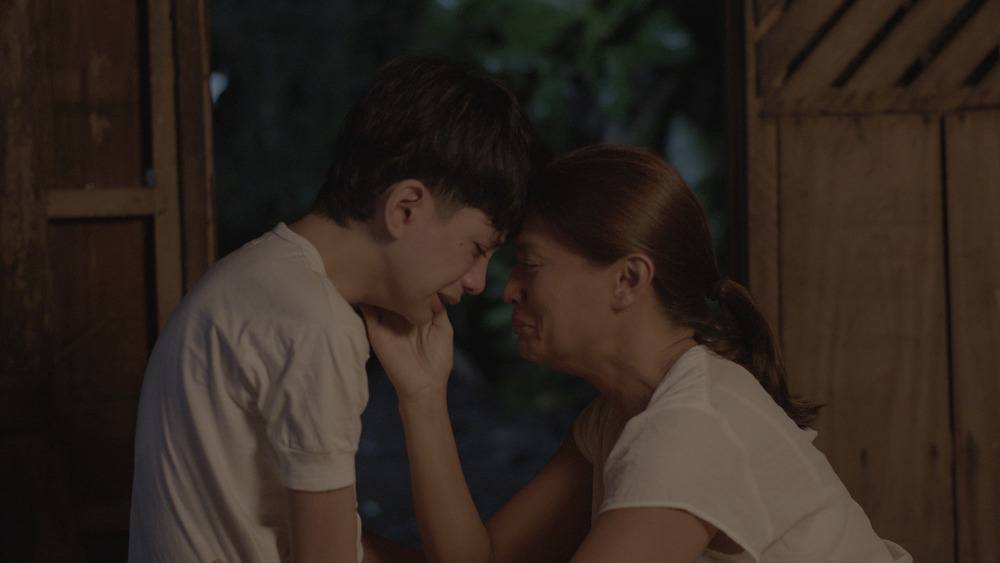
‘The Hearing’ Demands the Public to Listen to the Unheard Cries of Victims of Sexual Abuse
Lucas, a deaf boy from a small fishing village, is sexually abused by an influential priest. After they discover the truth, Lucas’ parents decide to file a court case against the priest despite the obstacles in their way. With Lawrence Fajardo‘s “The Hearing,” the pursuit of justice becomes an additional antagonist. The characters find out quickly how the rich and powerful can sway any case in their favor. It doesn’t also help that the victim has deaf-mutism, limiting his capacity to stand up for himself even further.
As a film that tackles a very timely and sensitive topic of sexual abuse in the Catholic church, “The Hearing” earns high marks for the performances, with Ina Feleo‘s supporting role as a court sign language interpreter deserving of merit alongside stalwart turns from Mylene Dizon and child actor Enzo Osorio.
Having said that, the film is essentially presented through two subgenres of drama — family and courtroom — that greatly differ in warmth and tone. So, admirable as director Fajardo’s intents may be, “The Hearing” packs its strongest punch when focusing on Osorio’s deaf-mute Lucas and his ever-loving mother Madonna (Dizon); and loses steam when the film begins to transform into a courtroom drama and gets transfixed somewhere else.
And not even veteran Filipino actor Joel Torre‘s small but pivotal role could make a difference.
Grade: C+
“Balota,” “Kantil,” “Gulay Lang, Manong!” and “The Hearing” screened and competed at this year’s Cinemalaya Philippine Independent Film Festival, which ran from August 2 to 11, 2024. Follow us for continuing dispatches, reviews, capsules, and wrap-ups.

