


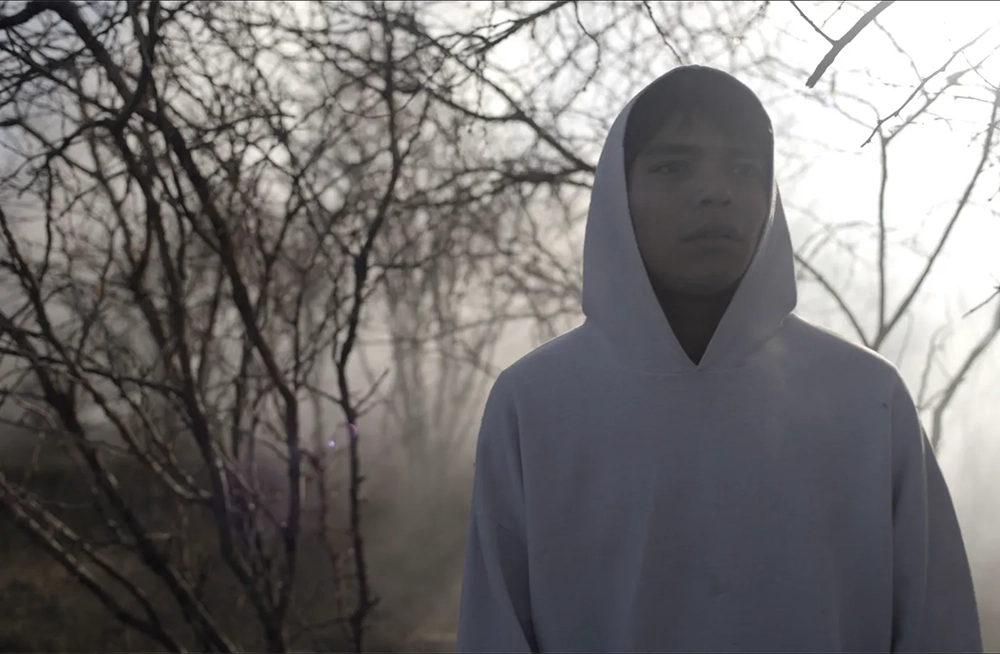
Fernanda Valadez and Astrid Rondero are two fascinating directors who have decided to work together and present cold, grounded stories about the Mexican people and their struggles. They demonstrated the power of their collaboration with one of 2020’s best films, “Identifying Features” (“Sin Señas Particulares”). Since then, everybody has had an eye on them, being on the lookout for their next project. And now, four years later, the directing duo has returned to Park City to present their latest picture, “Sujo”—screening in the World Cinema Dramatic Competition of the 2024 Sundance Film Festival. While it may still have the hefty impact of Fernanda Valadez and Astrid Rondero’s powerful, hushed filmmaking approach, their latest work is hindered by its weak structure and characterization in the latter half.
A Decade-Spanning Tale About Life Riddled with Crime and Violence
“Sujo” chronicles the life of the titular character in the Mexican countryside. He was left an orphan after the cartel killed his father and his mother dying during birth. We see his life as young as the age of four to a full-grown adult, basking in an inescapable destiny filled with crime and violence passed down to him by his antecedent. Shown in chapters (Josue “El Ocho,” Nemesia, Jai & Jeremy, Susan), a shadow of malfeasance surrounds each stage of his life, growing stronger and stronger as the years go by. This story begins with a young Sujo living with his aunt Nemesia (Yadira Pérez). She tries to distance him by every means possible from the brutality that transpires in the city from the Cartel.
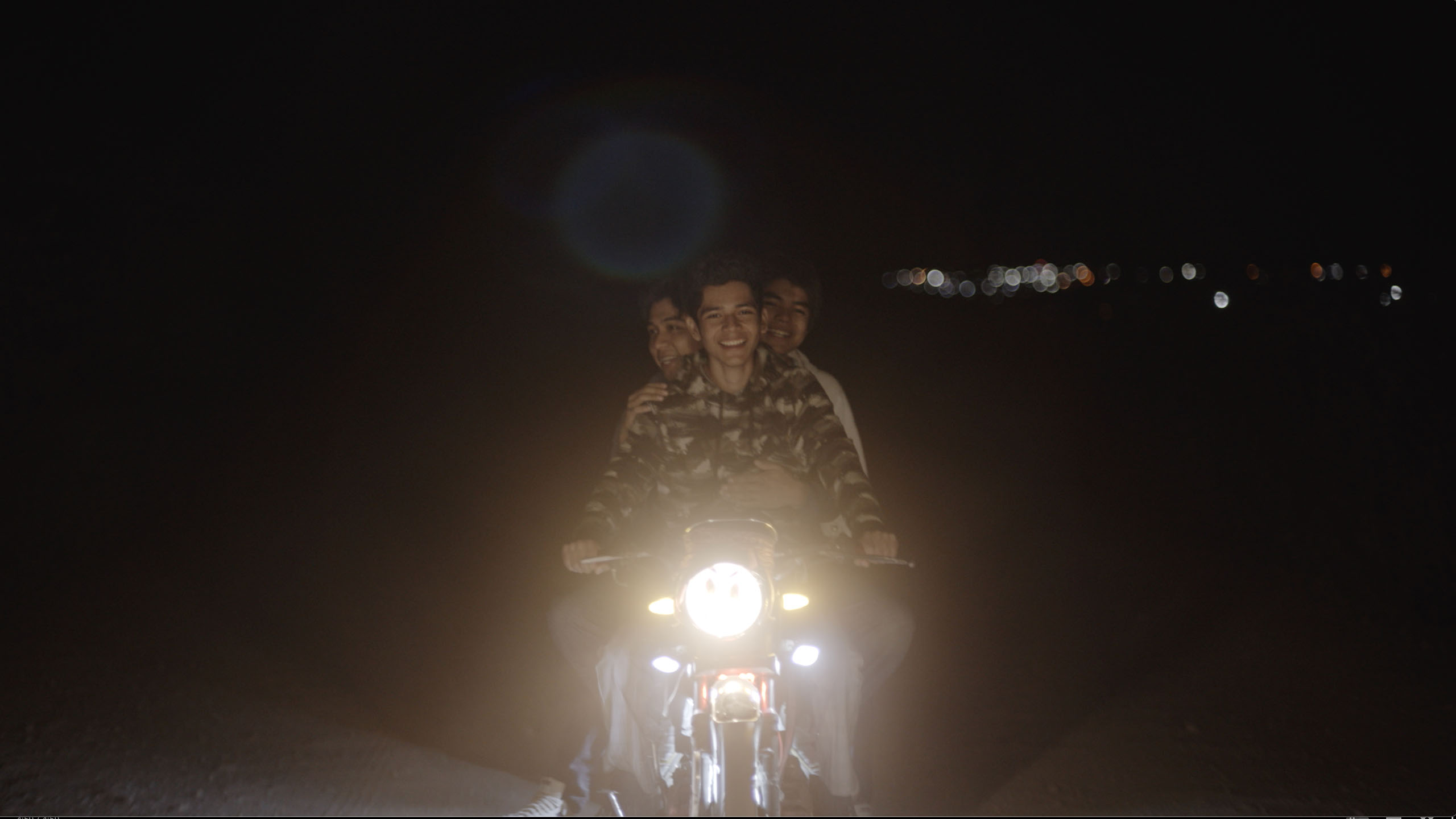
This first chapter keeps the audience, as well as Sujo, in the dark. The directing duo builds a tone of paranoia and despondency due to the harshness of the characters’ surroundings. Sujo hears bits and pieces of conversations, kept hidden from the people searching for him. He relies on voices rather than faces to recognize those who might have killed his father possibly. Knowing what happened to his father, Nemesia wants Sujo to be able to live life, unlike his father, who was trapped in that world at a young age. However, things begin to change once his cousins, Jai (Alexis Varela) and Jeremy (Jairo Hernández), bring him back into a life that he didn’t want to be a part of in the first place.
That’s just one half of the story; the rest relies on Sujo avoiding following in his father’s footsteps during his adult life. When things begin to work out for him, the shadows of violence come back again to haunt him. It tries to devour the essence of a man who has moved on. Like their previous feature, “Identifying Features,” the Mexican directing duo of Fernanda Valadez and Astrid Rondero opt for a colder and quieter approach to tell this story, where each scene becomes more demanding and devastating. They do so by not embracing the scenes of violence and torture in their totality. Ximena Amann’s camera looks away when something treacherous is happening. Of course, there are glimpses of the incidents. But it isn’t the film’s focus.
A Faulty Structure Hinders the Film’s Second Half
We only see the aftermath, just like in “Reservoir Dogs” and its ear-cutting scene, because, after all, this is a film about the aftershocks of violence—serving as a cursed inheritance of some sort. This coldness that emerges as the story develops doesn’t make the audience feel distanced from the characters. Instead, it helps us comprehend many people’s tragic reality. Valadez and Rondero maintain “Sujo” in a grounded nature yet add dreamlike imagery that fascinatingly cuts into the film’s realism. Alongside the visions and “dream sequences” that are in sparsed, a haze taints the film in a way that keeps us on tenterhooks. This immerses us in watching this slowly-drowning world.
Although the film’s first hour is very captivating, “Sujo” begins to falter in its pacing and structure in the latter half. In the film’s first part, you get a dynamic depiction of the ideas Valadez and Rondero wanted to portray. But the second relies on repetition. This might serve some purpose for one of the movie’s ideas. Even though the characters endure such brutal things firsthand, they still make the same mistakes as their parents. However, it makes the second hour of “Sujo” feel quite detached from what was initially presented. The reiteration extends the story for a bit longer than it needs to. The directors don’t lose control of the narrative but falter, making this decade-spanning story feel bloated by the end.
In addition, when the film transitions from Tierra Caliente to Mexico City, you feel an abrupt change in the character’s life that undermines the film’s crux. That’s because we aren’t presented with proper character development in this new chapter of Sujo’s life. You feel as if some details were missing. Most of his characterization is up to interpretation. You can fix some of these issues by a more in-depth exploration of the main character’s adult life. That will also mean that the directors would need to extend the run-time a bit more. And that’s a big mistake due to the sluggish pacing attached to these last few minutes.
It is a bit frustrating because Rondero and Valadez’s previous feature was a very enthralling piece through in through. The story is a very important one that many filmmakers are afraid to tackle. But amidst its importance, something got in the way of its potential methodical procedure. Nevertheless, the film retains most of its power and impact throughout the entire runtime. The buildup might not be as substantial as it could have been. Yet, there’s still plenty to get out of this picture. This is because it focuses on ensuring everything is true-to-life rather than mechanical.

“Sujo” screened in the World Cinema Dramatic Competition as part of the Sundance Film Festival 2024.

