


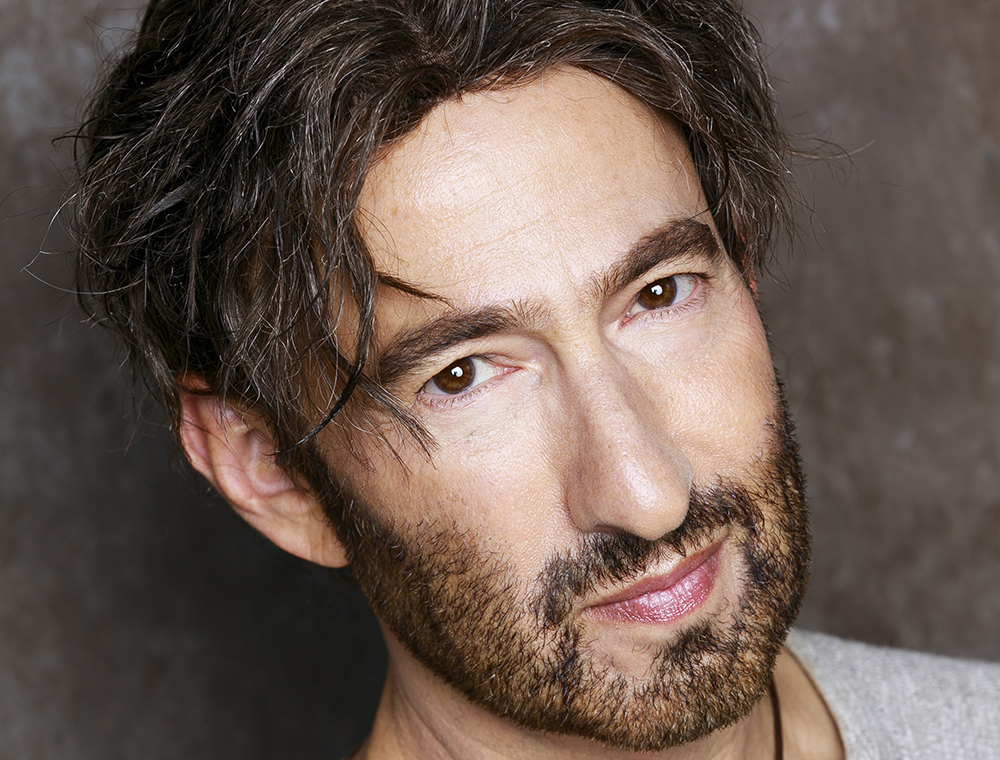
Capturing raw human emotions is core to an actor’s craft. But how is this possible remotely, while using motion capture?
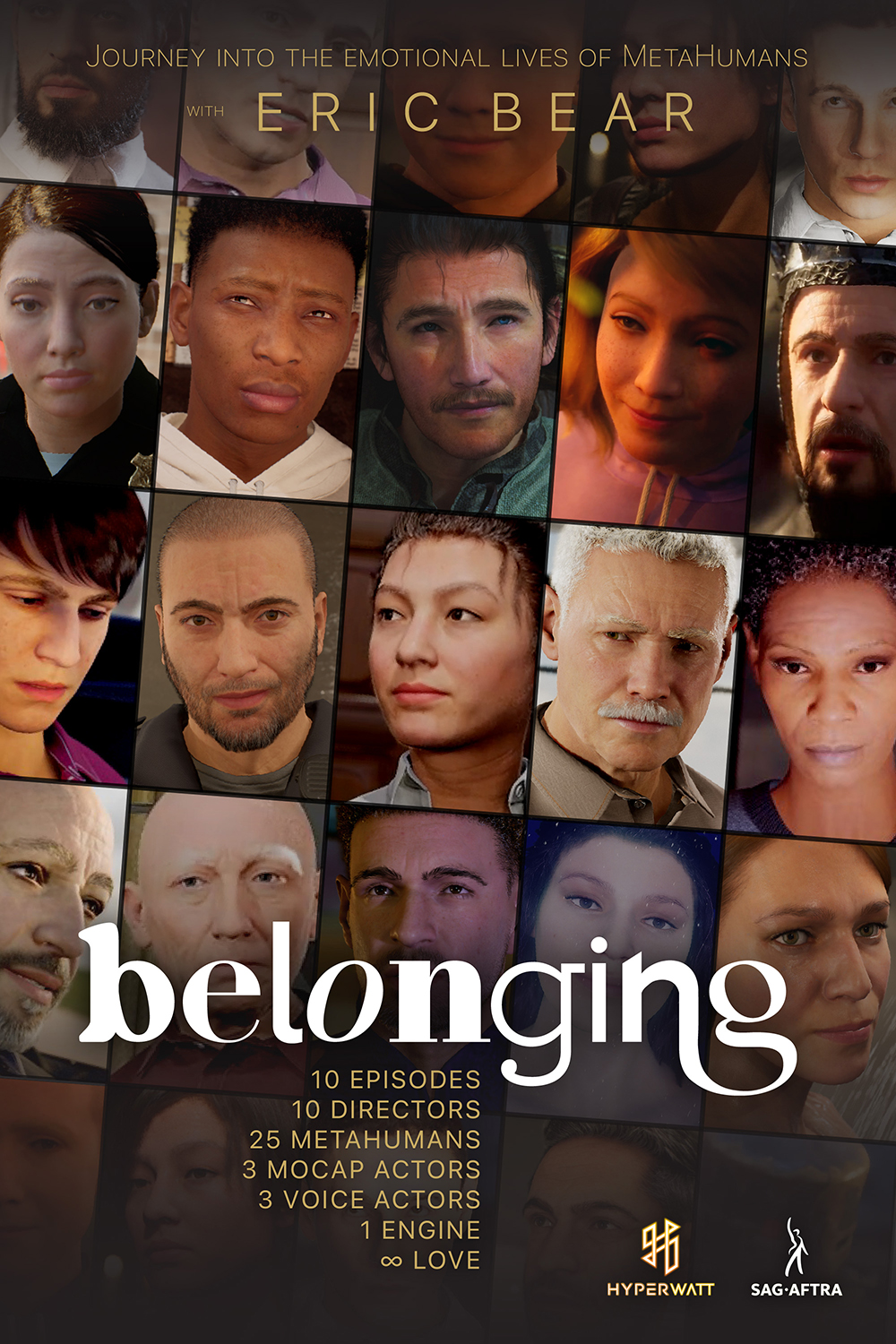
This is the question that Austin-based writer, actor, producer, kinesthetic artiste and tech entrepreneur Eric Bear set out to answer during the quarantine. Assembling a group of diverse filmmakers from around the world, he created “Belonging,” a series of journeys into the emotional lives of MetaHumans.
The entire project was completed remotely and is multimedia, an inventive blend of live action and animation. Spanning genres and time periods—from the sci-fi “Rosaline” set in a not-so-distant future, the fantasy “Farewell” set in the distant past, to the romantic drama “Water” set firmly in the present… each vignette creatively uses performance capture to explore the human condition.
Multiple Roles and Festival Wins
Bear plays multiple roles and also received the award for ‘Best Actor’ at the Cannes International Shorts Festival earlier this year for the same. In addition, the series was nominated for three awards (and won two) at the 2023 Portland Festival of Cinema, Animation and Technology, as well as winning ‘Best Animation’ at the 2022 Toronto International Women Film Festival.
I had the pleasure of speaking with the versatile artiste about his creation. He shared the efforts which went into capturing the pure essence and emotions of the real world using motion capture technology.
Vidal D’Costa for The Movie Buff: What attracted you to the art of motion capture?
Eric Bear: I love performance capture because I get to be so many different people and beings. It takes our work as actors—accessing authentic emotions—and plays our expressions back through an entirely new skin. And that’s thrilling.
Not only are we wearing digital makeup and wardrobe, which is a lot easier to clean up after a day’s work, but our entire body can be different in virtual production. As a result, I’ve grown less attached to this particular physical body that Eric Bear wears in everyday life. Seriously. I’ve started experiencing my own body as a rental car. [It’s] a wonderful biological skin on loan to me for the short time I get to be alive here on Earth.
When we see ourselves on screen in real-time, that digital mirror tricks us into believing that that version is us. It changes our posture, our emotional palette, facial expressions, the gait of our walk. We become who we see looking back at us. So, for me, performance capture is like an escape from … or into … The Matrix. You can decide for yourself which one is real.
That’s some of the magic of being an actor working in the world of motion capture and virtual production … where anything’s possible.
What was the idea behind creating ‘Belonging’?
EB: When the Covid-19 pandemic hit, I had just graduated from conservatory … which was a return to my roots as a performance artist. We were all quarantined and hungry for connection, hungry to create new work and keep acting. At the same time, virtual production technology was rapidly evolving, and Epic Games had just released “MetaHumans” for Unreal Engine. I was curious if the tech was good enough to allow actors to focus on simply being emotionally present without any attention to the way we look on the outside. This is only way I know how to stay authentic on camera anyway.
So, “Belonging” was created to see if audiences could be touched, moved and inspired by human performances routed into the bodies of virtual people. Seemed reasonable to try putting on a production with a distributed team around the world with video and data piped over the Internet. I had no idea if any of it would work. But I pulled together 10 scripts with varied emotional palettes and dialects. [I] hired 10 directors to create 10 unique worlds in which these evocative vignettes could be realized.
My approach to cultivating this range was to hire directors with a healthy mix of genders, colors, ethnicities, ages and sexual preference…”
The community’s passion for creative and technical excellence was fantastic. And the results speak for themselves.
I’ve noticed that you’ve quite an extensive background in stage acting too, and each snippet in ‘Belonging’ also features characters from a range of backdrops. These range from a medieval knight to a sympathetic dad opening up about a sensitive topic on a road trip. And we even have a re-interpretation of a Shakespearean protagonist gliding through space.
Could you provide an insight into your creative process? What prep work did you need to bring each character to life? How about the mind frame/skin of each individual character?

EB: Oh, I love this question, because that’s where we come alive… where we harness our shared humanity and leverage the art of vulnerability to touch the hearts of audiences.
For me, the homework of preparation is experiential. Rather than actively manufacturing back-story, I hang out in not knowing… relaxing with curiosity until what occur as memories as that other person or being arise. When I feel that truth in my belly, in my thighs, my heart, scapula, behind my eyes… then we’ve transported successfully. And those memories apparently encode in my brain just like memories from Eric Bear’s life. That’s how I discover the feelings I feel about the people and places in the stories we’re telling.
What drives me? Whom do I love? What do I fear? Which inner conflicts thwart me? What do the smells around me evoke in my throat and spine? Those memories are rich and thick and triggering and do everything we need them to do to bring authenticity once the camera’s rolling. It all arises… and in an instant, I need to be able to jump from one reality to another without attachment. That’s where being a practicing Buddhist comes in handy. All possibilities are in all of us—at all times—anyway.
A majority of this series was filmed remotely during the pandemic. Did you face any hardships? And how did you and your fellow creatives overcome the same?
EB: Ha! Yeah. All of it was captured remotely. Was quite a feat of ingenuity, trust and perseverance. Major credit goes to our on-site performance capture team and the ten directors. [They] dialed in over Zoom and then took the raw performance data back to their home studios to play through the MetaHumans in each of their episodes.
For me, the homework of preparation is experiential. Rather than actively manufacturing back-story, I hang out in not knowing…”
Cory Williams designed physical props and sight-line markers for the capture stage that matched up with millimeter-accuracy to the environments and props that lived in each virtual world. A simple example is building a desk or counter at the right height, so if I were to sit on a surface or throw down a Glock, everything would land exactly in the right place in Unreal Engine. One of the most amazing set pieces was a rowboat he crafted for Episode 4, directed by Cristina Mercado. Janna, my scene partner, and I were physically rocked back and forth as if on water to generate natural motion data from our XSENS suits.
By making the experience real for us as actors, nothing organic had to be hand animated in software. That’s one of the reasons the Academy doesn’t classify performance capture as animation; and why Andy Serkis has been lobbying for PCap acting to be treated the same as on-camera acting. From an actor-to-audience perspective, the work is exactly the same. We’re just wearing digital makeup and digital wardrobe.
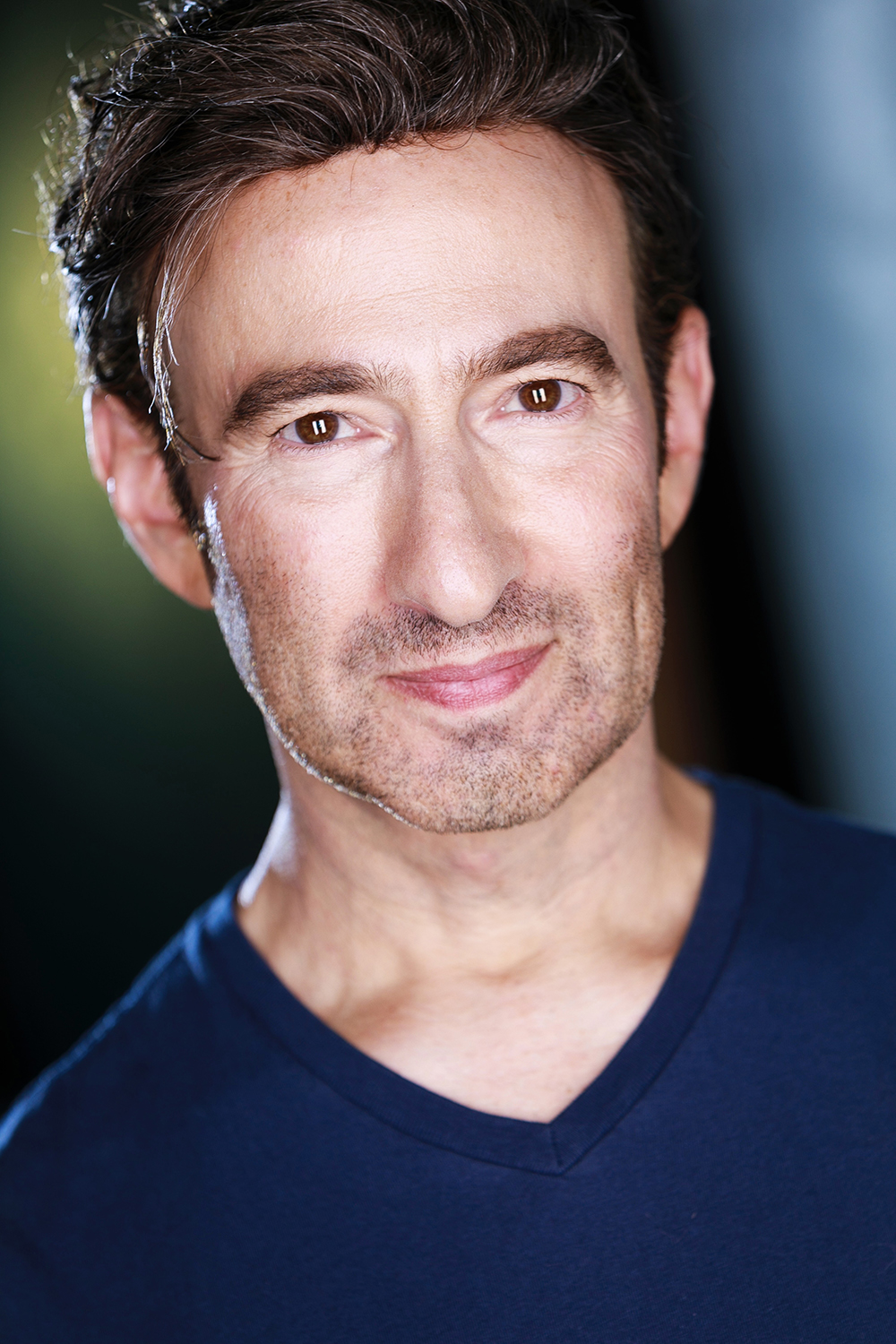
But during previsualization, we had some serious facial capture setbacks. We shot between episodes of 1883, the Yellowstone prequel. On that show, I had to keep a certain level of beard scruff, which totally ruined the face data. So, once I wrapped my work on 1883 and was able to shave, we reshot everything top-to-bottom. With a clean face and great lighting, FaceWare did an amazing job of translating our expressions into beautiful data.
The software is even better today. [However], when we were in post, it wasn’t so good at interpreting b’s, p’s and f-shapes of the mouth. To get those right, Fred Junqueira meticulously dialled in the lip data to match video reference footage of our performances.
I stuck around until the end credits rolled just to check out the behind the scenes footage. Watching the collective ability between you and the fellow actors in playoff each other was exciting. Especially with how this off-screen chemistry eventually translated on-screen too.
EB: Since we were exploring how well MetaHumans could convey authentic emotional expression, I wanted not just a variety of emotional palettes to embody—love, loss, fear, anger, longing, belonging—but a variety of directorial styles to guide us on set. My approach to cultivating this range was to hire directors with a healthy mix of genders, colors, ethnicities, ages and sexual preference, [and then]empower them to create arcs in unique emotional palettes. I believe this commitment to the humanity of the project is what set the stage for the chemistry you witnessed.
What are some of your favourite “Belonging” memories that you’ll treasure? What insight or creative input did you gain while working alongside the various directors, actors, etc.?
EB: Gosh, my favorite memories? So many to choose from. Where do I even start?
Well… as I play that time back in my mind, what really stands out is the generosity of everyone involved. I created the series and hired the team. [However], when we go on set, I turn myself over to being directed. I work for them as an actor. And that’s a vulnerable place to be. On purpose, for sure. But when treated as a person engaging in the world of richly feeling feelings, it means a lot when a director is tuned into our flow and shepherds what they’re looking for into existence with kindness and curiosity. For that, there is deep gratitude.
So, for me, performance capture is like an escape from … or into … The Matrix. You can decide for yourself which one is real.”
Lastly, what are some future/ongoing works that our readers can look forward to?
EB: It’s an interesting time. I signed on with an awesome new manager—Susan Ferris at Bohemia Group—just before the [Writers Guild of America] strike. Now, SAG-AFTRA is doubling-down on some other very important issues. Getting through these negotiations with positive outcomes for everyone is critical. As a result, most of us union members are not acting or even auditioning right now. We’re focused on solidarity and the long view. A healthy ecosystem is what readers can look forward to. Then, we’ll bring more of the magic.
Thank you for your time!
EB: My pleasure, Vidal. I love sharing this work.
Eric Bear’s “Belonging” is all set to premier on October 5, so do keep an eye out for it on Apple TV. You can check out the trailer below. More info is available at www.hyperwatt.com.

