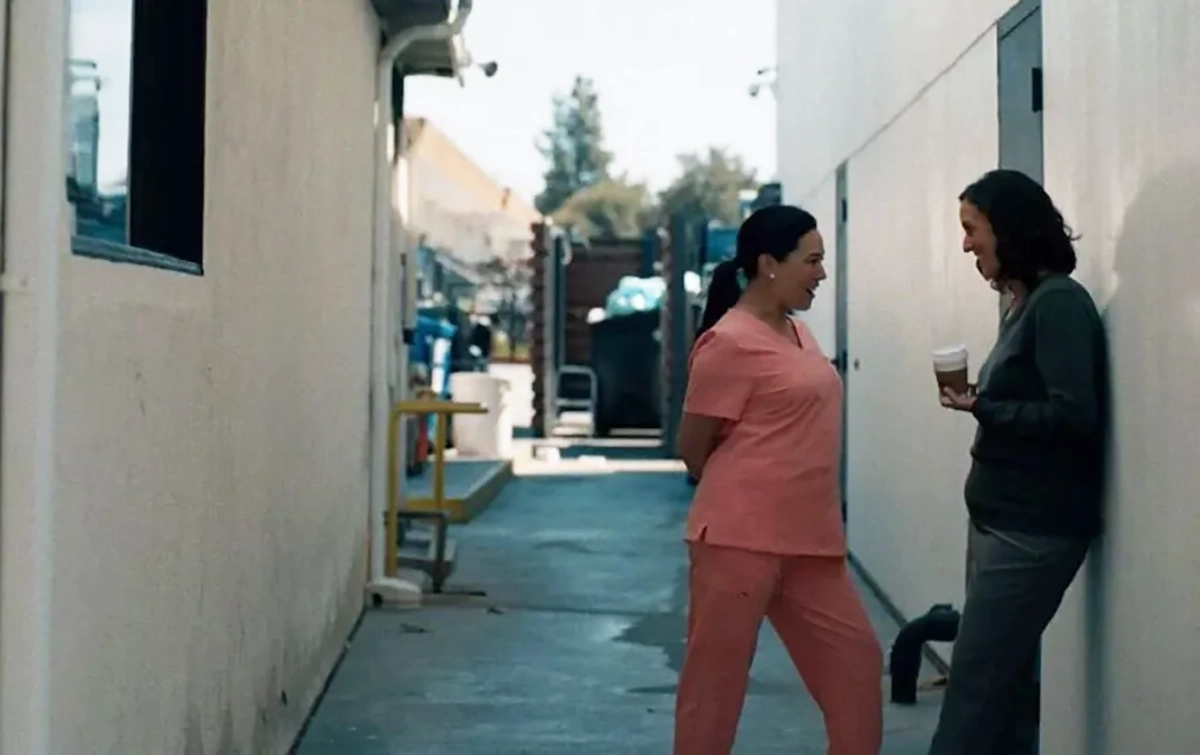
Doron Max Hagayâs âShe Keeps Me Youngâ is an odd bag. It’s a film billed as a comedy, but I found it contained more liminal sadness than laughs. The film, playing at this yearâs Tribeca Festival, follows a middle aged woman, Michelle (âPluribusââ Blair Beeken), trying to navigate her life four years after her fiancé mysteriously disappeared. She works at an eyeglass repair store and shows a savvy with customers that makes her easily likable. Yet her life is stultified. She spends her lunch breaks with her friend Kelly (Katy Fullan), another woman who seems unfulfilled in life. However, unlike Michelle, she is in denial of it. Sheâs a hygienist in her husbandâs dental practice, their marriage is frustrating, and Kelly feels diminished. And yet of the two best friends, this is Michelleâs movie. To me the film commented on realities of middle age and feeling unheard with the same kind of sadness that accompanied the excellent âAnother Round,â and not with the comedy I feel Doron Max Hagay intended.Â
The writing of âShe Keeps Me Youngâ is well-done, especially the dialogue between its two leads. The dialogue flows naturally and inquisitively. Both Michelle and Kelly are tentative and often look to each other for permission to exist. Thereâs all sorts of hints that Michelle spends too much time in her head, analyzing herself and her friends with a love of psychology she thought she abandoned a long time ago. Yet a chance occurrence at a hip hop class the two go to weekly â they both, but more Kelly, have a crush on their instructor (AJ Troup) â starts to bring Michelle out of her shell. A high school senior there (a good Shay Rudolph) wants to take her photo for the âstrength of her form.â Timid Michelle at first shies away, but then agrees. It starts a friendship between the two that helps both â but more Michelle â let go of past hurt and move on with her life.Â
A Film that Comments on Middle Age ‘Stuckness’
Yet from here, âShe Keeps Me Youngâ (a designation to describe Shay Rudolphâs âBridgetâ in relation to Michelle) sort of meanders into jealous territory as a) Michelle starts to bond and heal through her friendship with Bridget and b) Kelly judges it and lashes out, likely out of fear of being replaced. She will go on about Michelle needing to âfocus on adult relationshipsâ â especially the âhotâ Rocky (Mike âMitchâ Mitchell) who she wants to set Michelle up with. Thereâs also an underlining here that Michelleâs friendship with Bridget is âwrong.â And while the film is not intimating pedophilia, itâs clear Kelly is leaning that way. She even asks Michelle â kind of aggressively â if sheâs a lesbian. But the whole time, all I saw going on was Michelle being listened to for the first time in a long time and her supposed best friend who wanted to shut that down.Â
The film, written by director Hagay and his two leads, Beeken and Fullan, is full of complication. Itâs good, in that we donât get enough films like this, ones that study female midlife crises. Yet the picture seems more intent to show the ways these women are forced to stay stuck rather than progress. Kelly becomes quite toxic as she works to sabotage Michelleâs friendship with Bridget. Meanwhile Michelleâs other options â her adult friends â arenât exactly solid themselves. Kelly clearly has a disappointing marriage where she feels minimized, another friend (Ayden Mayeri) is a recovering addict, and Rocky drinks too much, ordering a pitcher of margaritas on he and Michelleâs first date that felt odd. And the whole time, Kelly criticizes Michelle for hanging out with Bridget. But Bridget is young. Sheâs a kind soul who likes photography and art and is not yet cynical as are Michelleâs friends. Her friendship with Michelle encourages the latter to apply to grad school and believe in her life again. When Bridget ghosts her â mostly because of Kellyâs machinations â it crushes her. This is the second person to vanish from her life (first her fiancé). And I feel the film skipped over that pain in lieu of the fact that “Bridget is a kid.”
Wanting Us to Laugh Rather than Understand
Thereâs also the fact that this film didnât feel like a comedy to me. Itâs billed as a dark comedy â and some parts offer chuckles â but to me those moments were subtle. Yet many of the people in my screening room cackled at some of the filmâs bits I didnât find especially humorous, and I started to ponder if that was the point of this film: are we supposed to laugh at Michelle? I donât think so, but othersâ reaction made me wonder. Comparing once again to âAnother Round,â I feel the films have much in common. Yet the former wants to comment on the sadness of its subjects who canât feel full versions of themselves without drinking, while âShe Keeps Me Youngâ wants to trivialize its leads’ emotions. As the film ends â with a very passive aggressive move from Kelly â I was kind of left scratching my head.Â
All-in-all, I enjoyed watching this film. I feel it would have worked better as a thoughtful drama, as its indie parts are its best. The dialogues and delivery are slow and introspective, and both Beeken and Fullan are great here. But at the end of the day, I feel it was a misfire. It doesnât empathize with its characters’ pain and emotional isolation, but rather demands that they ignore their emotions and press forward with âadulthood.â There was deep material present throughout âShe Keeps Me Young;â but by using it as comedic fodder rather than emotional discovery, I left the film feeling sorry for these women instead of understanding them. Itâs a mark you can overlook and still enjoy this picture, but at the end of the day I canât help but think what the film could have been without it.Â
“She Keeps Me Young” had its world premiere at Tribeca Festival in the U.S. Narrative Competition on June 4th. It’s playing again on June 9th. Follow us for more coverage.