






The Danish film âAnother Roundâ (âDruk,â original title) is a profoundly sad film. Yet, in the way films are not always about the visible source material, here is a case in point of not judging a film by its outward messaging. While its main characters are buzzedâif not drunkâfor most of the filmâs run, this is not a film about alcoholism, but loneliness, isolation, and dysfunction. In the same way the excellent âFlightâ was not about a plane crash (and was, in fact, about alcoholism), âAnother Roundâ makes its points with lingering cameras and a feeling of unease that hangs like malaise. Mads Mikkelsen turns in a great performance insofar as he appears real, human, and does not outshine the other actors, even with his marked international success. âAnother Roundâ is a real film, and its lessons are stinging and painful.Â
The film begins with a number of high school students engaged in a âdrinking runâ as they must drink a case of beerâwhilst runningâstudents (and teams) penalized for vomiting. I had to look this up⦠and it appears that some form of drinking run (together with sailing) takes place in Denmark, and the drinking culture is something of a thing. Given this, you would expect an exciting film from Director Thomas Vinterberg. However, âAnother Roundâ is a slow, almost biographical picture that details the life of four middle-aged men in various stages of humdrum and mid-life crises. The film stars the aforementioned Mikkelsen, unlike any of his Box Office hits over the last few years, along with Thomas Bo Larsen (Tommy), Magnus Millang (Nikolaj), and Lars Ranthe (Peter). The film focuses on all four, but Mikkelsen and Millang the most.Â
Can Drinking Improve Your Life: Key Takeaways
âAnother Roundâ is set alongside a simple premise: the four men, celebrating Nikolajâs 40th birthday, discuss Norwegian philosopher Finn SkÃ¥rderud, who boasted that humans are born with 0.05% blood/alcohol defect. The tone is somber at dinner; Mikkelsenâs Martin is abstaining from drink as he has to drive home. His friends toast with champagne, vodka, caviar, and house wines. We learn from the filmâs beginning, that Martinâs marriage is unhappy. He and his wife, Anika (Maria Bonnevie) work opposite shifts, have teenage sons, and neither is willing to talk to the other about their loneliness. It occurred to me this is one of the first films Iâve seen centering on human loneliness that did not result in cheating or straying from loved ones. Martinâand later, we learn, his friendsâhave long passed the point of questioning their stultified lives.Â
That is until the experiment. The next day, Martin sneaks into a bathroom at the public school he teaches at and raises his blood alcohol content to the sought 0.05% by sipping vodka. His history classesâteetering on boredom and confusion to the point his students want him replacedâinstantly become a hit. He has joy again. He has life. And weaving Denmarkâs drinking culture in and out of his lessons, itâs unlikely his students know heâs buzzed. Mikkelsen lets us know he is through motor deficits and glazed eyes in wonderful, subdued acting. He has to ask his friend Nikolaj (also a fellow teacher; all four of them are) for a ride home and lets him in on what he did. Soon, all four follow suit, with varying results. Mostly positive at the 0.05% level, the group convinces themselves they are conducing a social experiment, and keep data.Â
A Film About Loneliness, Not Alcoholism

You would expect a film like this to focus on the dramatic, poking fun at scenes of drunkness or stupidity, but Vinterberg knows better. The depictions of intoxicationâespecially at workâare well done. The camera focus on the act of drinking and the mannerisms of the cast are superb: you really believe these people are day drinking. And whereas in the aforementioned âFlight,â Denzel Washington’s character is an alcoholic, these people are not. Not yet. Their experiment brings out shades of them most have forgotten; and even as both Martin and Nikolajâs wives express dissatisfaction with their drinking, the saddest part of âAnother Roundâ is not their drinking, but their levity due to it. These are men who have long ago forgotten what itâs like to experience joy. The fact that drinkingâand remaining buzzedâthroughout the workday brings that joy is what is doleful and painful.Â
More painful is that Vinterberg highlights their scenes of drinking and camaraderie as joyful but exclusionary. They break into their foursome to drink and discuss, and it feels like a secret club. It feels like one of those days when one has an event at a bar during daytimeâa funeral, perhapsâand drinks when theyâre typically not supposed to, feeling shame at the stolen moments they didnât expect. Except this goes on too long, and hints at marital and family problems that were brewing long before âAnother Roundâ began. Martinâs wife laments that he âonly has fun when heâs not with herâ and sheâs not wrong. I think Vinterberg wrongly hints this is Martinâs failing (he suffers from isolation and depression) instead of blaming the pair for their parts. But we donât know what happened before the film’s start, so maybe that’s fair.
An Anthem to Take Charge of Your Life
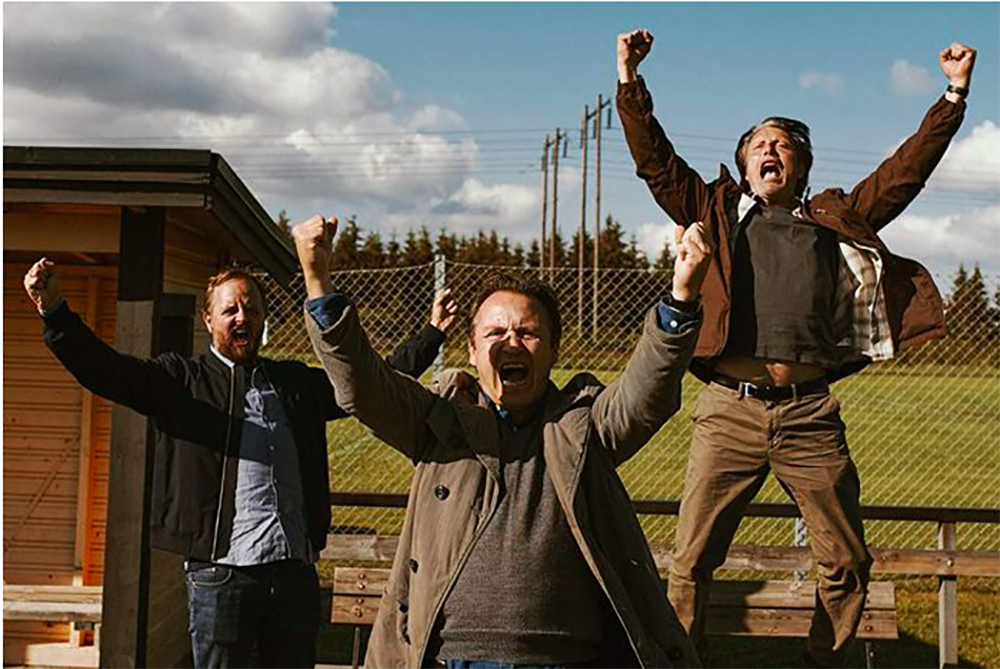
As Vinterberg highlights the revelry and stolen moments of these men, he also highlights their pain, and some of the scenes in the filmâs third act are harrowing. (*Mild spoilers)âone becomes an alcoholic, two of the men risk their marriage and children, and the fourth, oddly, connects with an overly anxious student by offering him a drink. This latter is not poised as corruption, but forlorn, like the rest of the film: the student is crippled with anxiety so bad he cannot pass his exams, his parents expect him to go to medical school, we know the drill.
And while Vinterberg makes sweeping commentary on Denmarkâs drinking culture, I wonder if anyone noticed that the sadness and ennui suffered by the people in this movie are very common phenomenons. That these men feel alone in their struggles causes a sense of dolor Iâve not seen in other films surrounding drinking. And that Martin et al. realize they may have wasted their lives causing their own misery is a takeaway that offers a tinge of hope amidst a sea of melancholy.Â
Earns its ‘Best International Feature’ Win

âAnother Roundâ is not a perfect film. It sometimes idolizes the men and vilifies the women in their lives. Itâs all too easy to blame drinking on relational problems instead of what lies beneath. We donât get a true sense of why the foursome feel so low, only that they do, highlighted by scenes of drunken revelry and escapism that arenât intended, but happen as a result. The film teeters on closure for several of the men and then pulls back, Martin showing off some ballet skills heâs notâIâm certainâeven been proud of enough to show his wife.
âAnother Roundâ is about rediscovering yourselfâor finding yourself for the first time. Its saddest takeaway is that it takes alcohol to do this, and that these problems couldnât have been addressed without this manner of escapism. But if nothing else, Vinterbergâs film feels wholly authentic, kind of hurts, and makes you want to take charge of your own life. Its 2021 âBest International Featureâ win at the Oscars is a testament to that fact.Â
“Another Round” is currently streaming on Amazon Prime.Â




