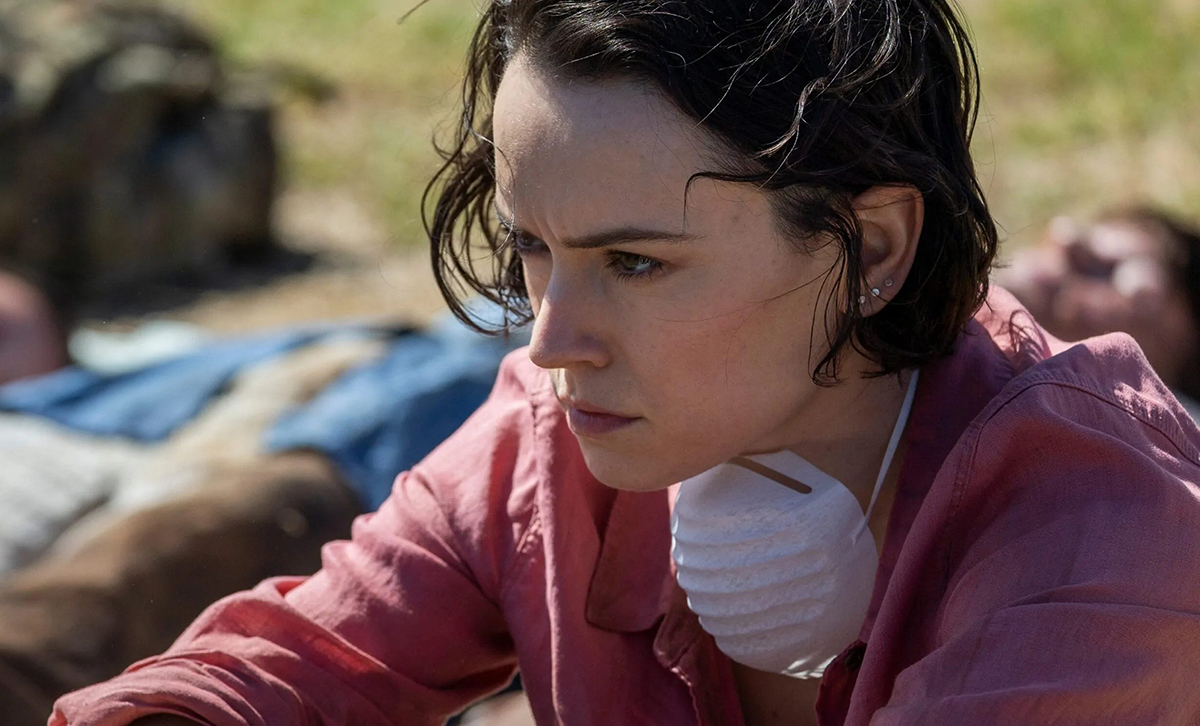
Pouring plenty of emotion into its relatively brief run-time, Zak Hilditch’s “We Bury the Dead” takes a hearty swing at pathos-laden ‘zombie horror’ and emerges for the most part successful. Vaguely akin to the way in which Steven Soderbergh used haunted house tropes to channel a solemn exploration of familial grief in last year’s “Presence,” Hilditch also explores the crushing toll of loss through the lens of an apocalyptic undead survival exercise, and amongst the many aces up his crafty sleeve is the formidably grounded presence of Daisy Ridley. Her turn here anchors the anguish as well as the sporadic, gory mayhem.
Ridley’s Ava is a dam-wall battling against a tide of pain as soon as the film opens, all barely contained tears and exasperated despair. The movie itself wastes little time throwing the details of its catastrophic premise upon the viewer, spelling out the predicament at the heart of the tale in no uncertain terms. A chemical disaster by way of an accidental weapon discharge on the island state of Tasmania has caused mass destruction. Vast swathes of the population have perished, while some of the dead are reportedly coming back ‘online’. As for Ava, well, her husband is missing, after he headed down there on a business trip.
More than Just About Monsters
Sent to Tasmania to operate as a kind of undertaker (or body removalist) by choice, she meets Brenton Thwaites’ wisecracking Clay, whom she ultimately develops an unlikely friendship with (especially by the third act). There, they go about shifting bodies and alerting authorities whenever they discover a reawakened corpse. The reanimated are initially harmless but seemingly become prickly and violent after prolonged periods of postmortem aliveness. All the while, Ava cannot and shake the shadow of her missing husband Mitch (Matt Whelan) from her perpetually overcast conscience. We learn by way of flashback that they were, at least in the beginning, besotted, before the onset of friction.
See, “We Bury the Dead” is as much about how the human psyche compartmentalises bereavement as it is about evading marauding monsters. And while this sort of elevated stab at dystopian horror has been done before and done well, there are some neat twists in Hilditch’s tale that render it an absorbing, if not completely satisfying ride. For while it skilfully blends genre-mandated ferocity and pathos, it lacks somewhat for catharsis.
Ridley’s penchant for two-hander scenes makes for as much tension as any of the corpse-hurtling moments that arrive later. When she meets Mark Coles-Smith’s psychologically wounded soldier Riley (recently seen in the solid Aussie creature feature “Beast of War”) the film pivots, informing the audience that the unaffected can be as dangerous as the infected. He saves her from a zombie and hints that he may be able to take her to where her husband was posted.
Ridley Conveys a Lot While Doing Little
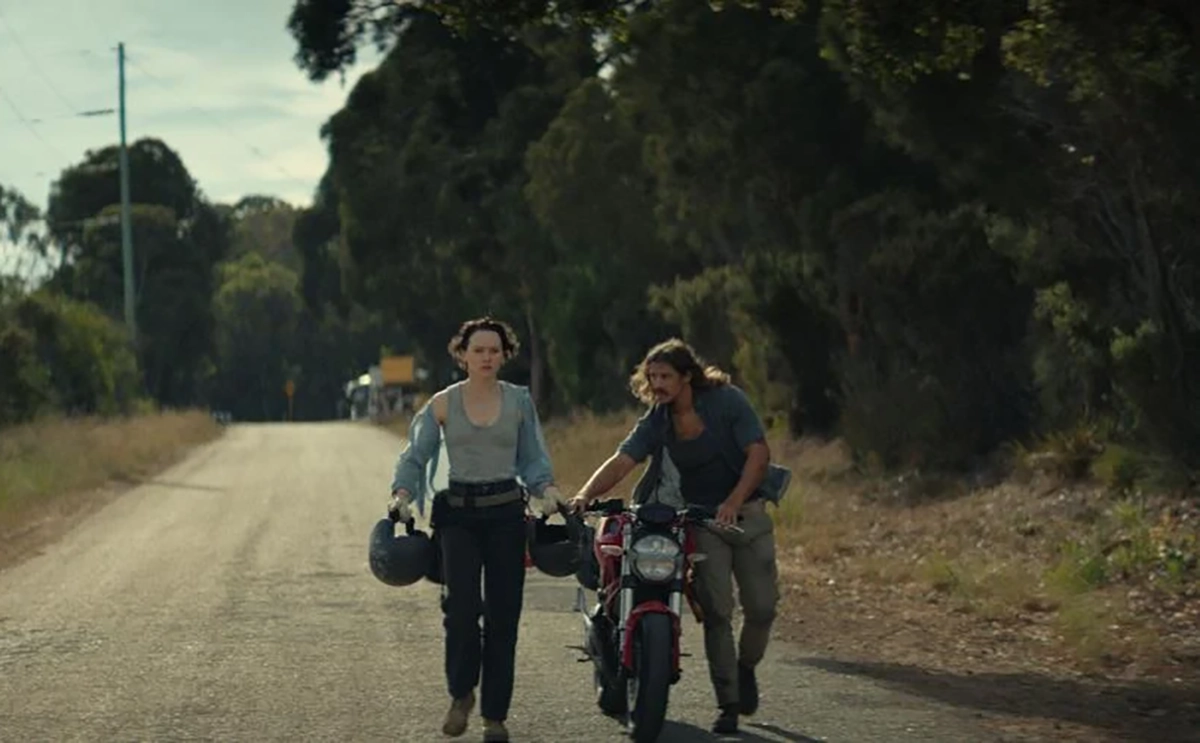
Riley’s part in the drama serves as a kind of dramatic tipping point, in much the same way Tim Robbins’ Harlan Ogilvy did in Steven Spielberg’s “War of the Worlds.” Outwardly benign at first, but very likely troubled, disturbed and a carrier of dark intentions. Riley is also sufferingly from severe grief. He lost his wife atter all, but how lost is she? Riley has an agenda brewing, and it may indeed involve Ava. There are apparent nods (apparently) to Zack Snyder’s “Dawn of the Dead,” too (chase sequences on large vehicles, an expectant member of the undead soon to give birth), but mostly “We Bury the Dead” creates its own landscape and treads carefully for much of its stretch. The Australian landscape serves as a captivating backdrop, shifting from suburbia to barren highways clasped between sparse fields.
Hilditch utilises some glorious natural lighting during the last act as well. There is some superb craftsmanship on display, playing with extreme closeups and sunsets and framing his subjects adroitly. The score taps away mournfully, effectively leading the viewer into a world on the brink of suffocation. There are some very strong ingredients in Hilditch’s film, and smatterings of scariness as well, it just could’ve benefitted from a little more potency during its key moments to counterbalance its appropriately grim languor. Credit again to Ridley, who can convey a great deal by doing very little.