





When Roger Ebert died, Werner Herzog mourned the loss of his friend and champion, labeling the great critic a âgood soldier of cinema.â Jafar Panahi might resist superlatives related to his unbreakable character and astonishing resolve but his artistry, wit, and compassion have earned all the laurelsâespecially the golden onesâawarded to him throughout a storied career. Winner of the Palme dâOr at the 2025 Cannes Film Festival, Panahiâs âIt Was Just an Accidentâ is a rugged beauty, the type of charged thriller that rides a volatile arc so tense, frightening and fun, a letdown at the finish seems inevitable. And yet, in the final sequence, Panahi delivers a closing dilemmaârather than a statementâfor the ages, a disorienting, overwhelming cinematic coup that could only have come from a cagey, crafty good-troublemaking legend.
A road movie that rollicks along to its own soundtrackâthe cityâs hum, car horns, ominous silenceââAccidentâ delights in the humor of sane people and their justifiably sociopathic methods. An occasional light touch does little to blunt the subject matterâs desperate wail; on the contrary, humor elevates the pathos and each personâs stake in a fraught, often unwelcoming society. âAccidentâ opens on a highway and Cinematographer Amin Jafari, a frequent Panahi collaborator, holds the family of three in a steady, limiting frame. The car breaks down after it collides with a dog, forcing the father to pull it into the nearest mechanicâs shop in the dark of night. In the backseat, a child (Delmaz Najafi) cries for the animal while her pregnant mom (Afssaneh Najmabadi) soothes her daughter, then offers up a wink to the audience on behalf of her chilly husband (Ebrahim Azizi): âit was just an accident.â
Azizi is Mesmerizing
In the garage, owner Vahid (Vahid Mobasseri) recognizes a squeaky echo that sends him into a panic. After the family leaves, the impulsive, manic Vahid sleeps outside of their home and ultimately kidnaps the patriarch, convinced that he is Eghbal, aka Peg Leg, the government loyalist/prison guard who beat and tortured him and so many others. Since Vahid was blindfolded during his captivity, he relies only on Eghbalâs limp and the creaking sound of his prosthetic leg to deduce that heâs got his man. Following the hasty, broad-daylight grift, Vahid drives out to the desert, where he tosses Eghbal in a man-made grave and demands answers. Shrill, defiant and dirty, Azizi is mesmerizing, enduring countless physical agony and countering with pragmatism, humanity and, when all else fails: arrogance.
Faced with the prospect of death, Eghbalâs denial seems both totally credible and completely irrational, and he ultimately succeeds in conjuring Vahidâs own self-doubt. Vahidâwho struggles to stand up straight because of the persistent beatings when in captivityâcalls off the interrogation and lurid murder fantasy in favor of seeking the truth, driving around town to visit friends or sources who might be able to corroborate his hunch about Eghbal. Thumping from the urban streets to the desert (like previous filmsâand those of his peersâPanahi made âAccidentâ in secret) with Eghbal stored in the back like a barely-breathing Billy Bats, Vahid collects fellow prisoners. On the recommendation of a friend, he finds Shiva (Mariam Afshari), a wedding photographer and Golrokh (Hadis Pakbaten), a bride-to-be on her wedding eve, who also has a vested interest in identifying Eghbal, or, as they know him, the âGimp.â
‘Accident’ a Tragic Historical Document
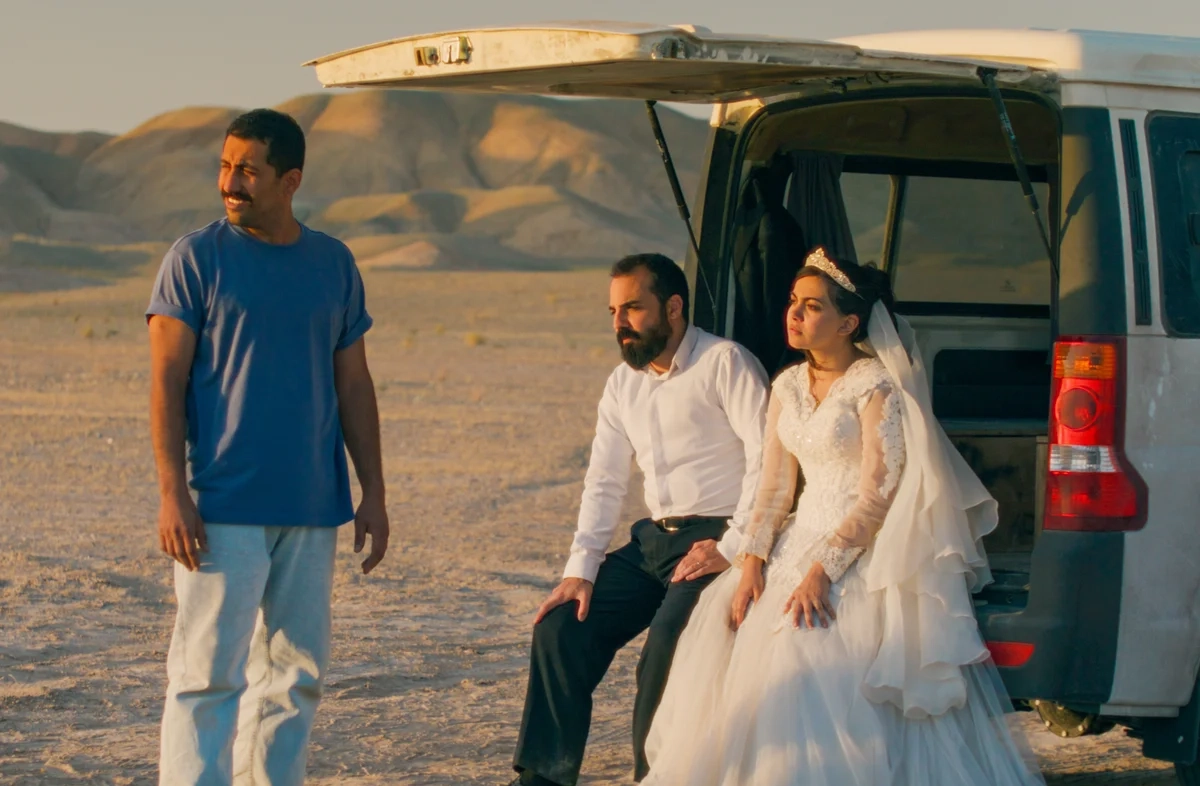
The group is divided on strategy. Hamid (Mohamad Ali Elyasmehr) advocates for violence, which Shiva, who happens to be his ex, resists. But when Eghbal awakesâtied to a tree, bloodied and blindfoldedâfrom a sleeping-pill induced rest, Shiva substitutes for Vahid, wrestling out the truth that all of the prisoners deserve. Backed literally into a corner, Azizi credibly conveys the innocence of a wounded soldier (another term Herzog used to describe Ebert) and a wicked, feral beast. I wasnât prepared for the staggering, visceral blow of this final sequence, and was moved to tears both at the intensity of Eghbalâs confession and a preceding plot twist involving his family, where the communal forces swerved towards empathy. Then, in a stunning coda, Panahi freezes on a haunted Vahid hearing a ghost, and weâre all forced to witness a nightmare that heâll never shake.
It was impossible for me to not imagine Panahiâs personal sufferingâbanned from making movies for twenty years, jailed, censored, and moreâthroughout the film, although âAccidentâ does, if itâs possible, exist on its own, somehow detached from that context. Similar to the great âNo Bearsâ Panahiâs latest is a troubling, edge-of-the-seat romp that is both harsh and generous to every frisky, complicated character inhabiting this lightly-fictional world. Closing on Vahid, trapped in his own memory and brutalized body, Panahi offers a more bitter than sweet ellipses, acknowledging that, to paraphrase from his oeuvre, this is hardly a film. Deliriously entertaining and maddeningly current, âAccidentâ is a tragic historical document, an instant classic that promises to be a misbehaving and disruptive cinematic soldier.
Jafar Panahiâs âIt Was Just an Accident,â a Neon release, is now out in theaters.


