





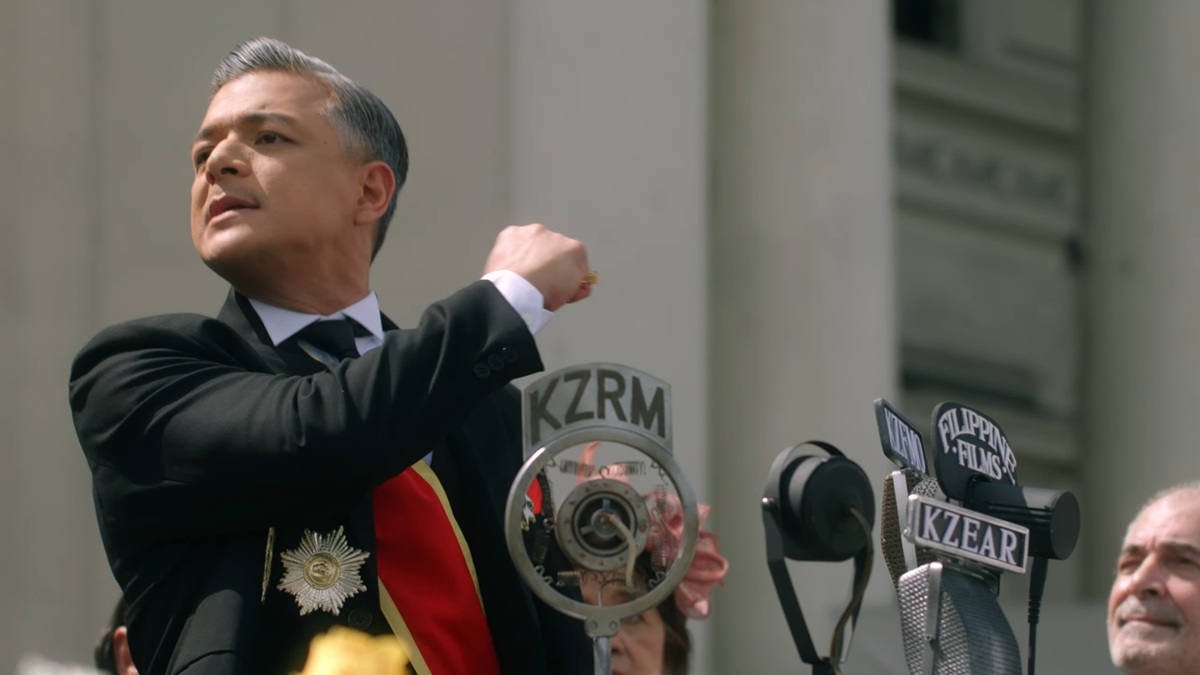
Itâs telling that for most Filipinosâespecially the younger generationâManuel Luis Quezon exists not as a person but as currency. His name circulates daily through 20-peso bills, his face an emblem of neat-pressed nationalism and faintly perfumed history. Jerrold Tarogâs âQuezon,â the long-gestating third entry in what has been dubbed the âBayaniverseâ (Tagalog portmanteau for âbayaniâ, or hero, and âcinematic universeâ), takes that symbol and scratches away the varnish.
Here, the Philippine Commonwealthâs first president is no saint of statehood but a cunning, combustible creature of powerâambitious, vain, and frighteningly modern in his manipulations. And Tarog, who previously channeled outrage in âHeneral Lunaâ and melancholy in âGoyo: The Boy General,â turns his gaze inward this time. âQuezonâ completes the arc by exposing what comes after disillusionmentâwhen ideals give way to image management, when politics mutates into performance art. Itâs a film less about the man himself than about how nations constructâand commodifyâtheir heroes.
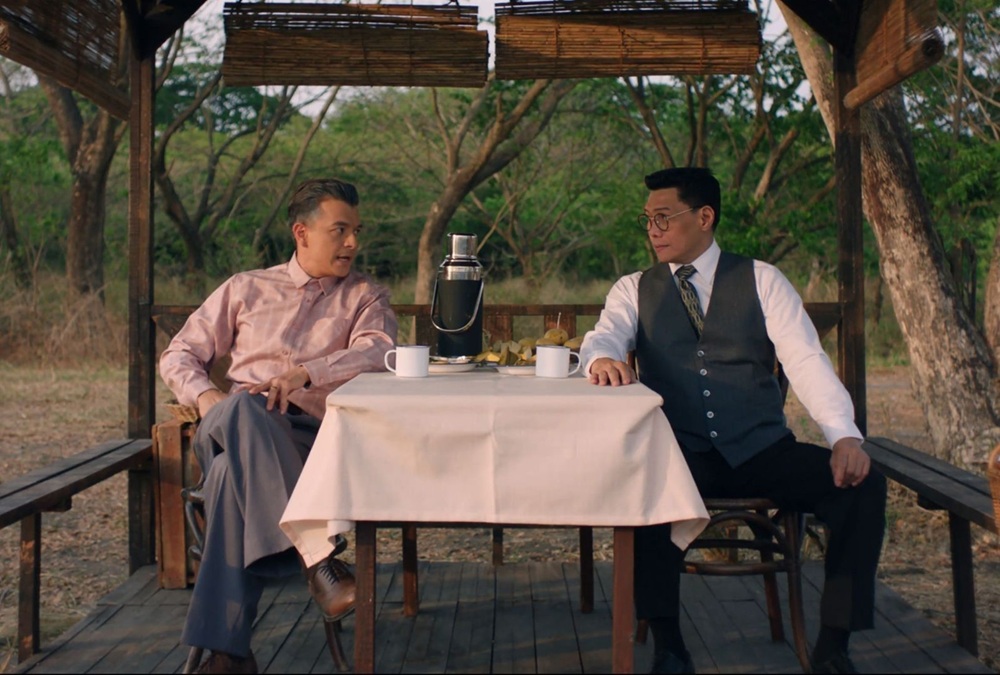
Told through a nonlinear structure that flits between 1901, 1920s Manila, and the Commonwealthâs birth in the 1930s, âQuezonâ moves like memoryâfragmented, selective, unreliable. We meet Quezon as a young revolutionary surrendering to the Americans, then watch him reemerge as the Senateâs most formidable tactician, alternately flattering and defying the very colonizers he claims to resist. His rivalry with Sergio Osmeña (Romnick Sarmenta) and clashes with Governor-General Leonard Wood (Iain Glen) provide the scaffolding for what is, at its heart, a study of moral corrosion. By the time he claws his way to the presidency, Quezon has learned to weaponize charisma, turning populism into policy, rhetoric into currency.
The Politics of Performance
At its center is Jericho Rosalesâs Quezon: a man so aware of the performance of politics that even his tenderness comes with an audience. He calls himself âthe Filipino people,â and by the end, you might believe himânot out of admiration, but of horror. Rosales, in a career-defining role, embodies this contradiction with unsettling precision. His Quezon is both seducer and snake, a politician whose smile conceals calculation. The physicalityâthe posture, the deliberate gait, the slightly reedy pitch of his voiceâfeels meticulously researched, recalling Daniel Day-Lewisâs famously unexpected vocal choices for âLincoln.â
But where Day-Lewis found tenderness beneath authority, Rosales locates duplicity beneath grace. Itâs a bold interpretation, though not always an affecting one; the portrayal often feels performative by design, which makes psychological depth elusive. Quezon, the man, never quite escapes Quezon, the mythâa tension thatâs both the filmâs subject and its occasional flaw.
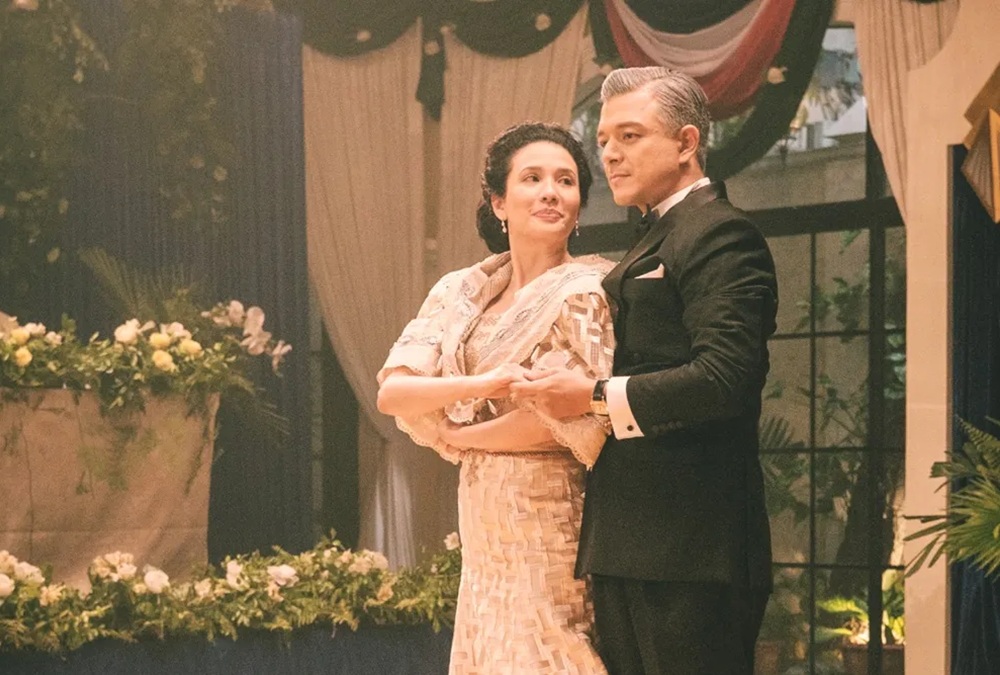
In contrast, Karylleâs Aurora Quezon, barely given dialogue, conveys oceans through silenceâher eyes tracing the slow erosion of idealism as she observes her husbandâs growing delusions. Meanwhile, Mon Confiado delivers a mesmerizing Emilio Aguinaldoâwry, wounded, and measured to the syllable, like a Filipino John Malkovich in barong.
Power, Spectacle, and Cinema
Tarog, doubling as editor and composer, wields his Soderbergh-like multitasking to strong effect. The filmâs rhythm is brisk yet unhurried, the cuts precise, the music alternating between irony and lament. His use of the film-within-a-film deviceâa silent propaganda reel commissioned by Quezonâs campâgives âQuezonâ one of its most inspired conceits. The sequences, shot in black and white by cinematographer Pong Ignacio, parody the mechanics of mythmaking while simultaneously implicating cinema itself. We watch Quezon stage his heroism, unaware that others are re-editing the same footage into his undoing. Itâs a self-reflexive stroke that folds Tarogâs âBayaniverseâ back onto itself: a trilogy less about heroes than about the people who film, narrate, and believe them. The conceit also excuses the recasting of young Quezon (Benjamin Alves in archival scenes from âLunaâ and âGoyoâ), merging Tarogâs cinematic timeline into a single continuum of national disillusionment.
Ignacioâs cinematography remains one of the productionâs major triumphs. His lens finds both grandeur and rot in colonial Manila: the burnished interiors of Malacañang, the overripe elegance of state dinners, the humid light that renders power almost tactile. One extraordinary montage juxtaposes Quezonâs jubilant campaign with Aguinaldoâs austere ralliesâthe former all brass bands and applause, the latter funereal and bloodless. The production design bathes every room in colonial luxury, but thereâs rot beneath the sheen, a faint suggestion that the Commonwealth was built atop moral mildew. Itâs visual storytelling at its sharpest, condensing an entire nationâs political DNA into two parallel images: populism versus principle, both hollowed out by ego.
âQuezonâ and the Legacy of Patronage
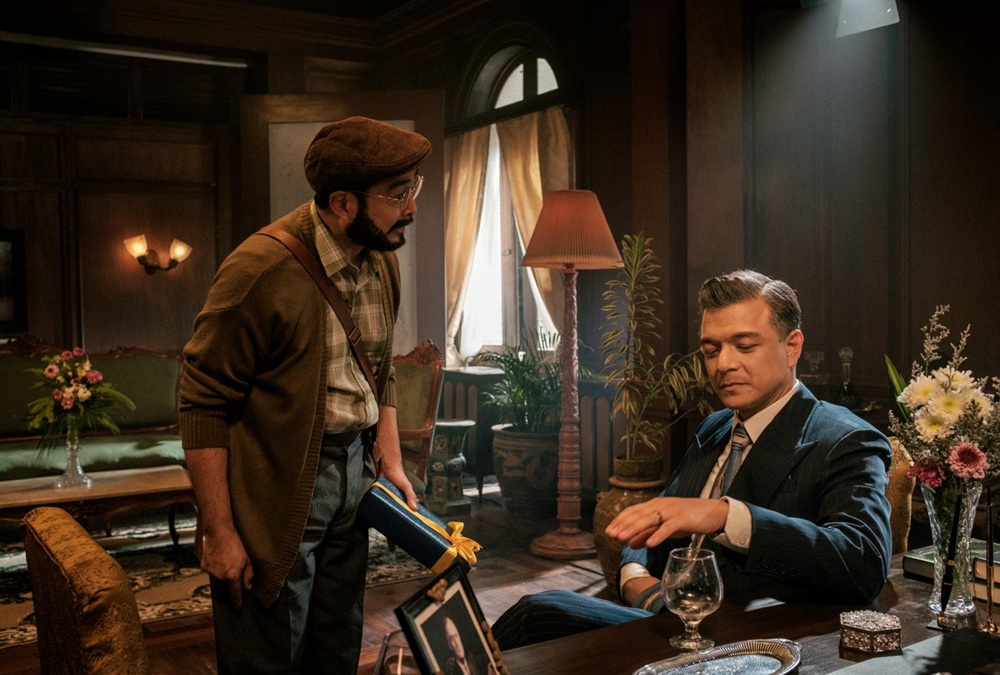
The filmâs most intriguing throughline lies in Quezonâs exchanges with Joven Hernando (Arron Villaflor as the young journalist, Cris Villanueva as the older one). Joven, who once idolized Quezon, becomes his conscience and later his accuser, returning a coin once given to him as a symbol of principle. Their relationship encapsulates Tarogâs grand question: can integrity survive intimacy with power? Itâs through Jovenâs eyes that we watch the statesmanâs transformation into strongman, his lofty rhetoric curdling into patronage politics. When Quezon shuts down Jovenâs newspaper for publishing an exposé, the betrayal stings not only as political allegory but as personal tragedyâthe loss of faith in leadership itself.
What I found most striking here (and which I strongly feel is the filmâs strongest aspect) is how Tarog, through Jovenâs eyes, frames Quezon as the unwitting architect of a system that still defines us. Joven suggests that while Quezon didnât invent patronage politics, he definitely perfected its choreography: every favor disguised as friendship, every handshake turned into hierarchy. The film doesnât condemn him outright for this; it simply watches how such pragmatism metastasizes into a national reflex that still nags at us today.
In one exchange, Quezon insists that principle must bend to survival, a line that feels less like justification than prophecy. Tarog lets that sentiment resonate across the film like a curse. We see it in the way Quezon rewards loyalty with access, in the quiet humiliation of those who refuse to play along, and in the hollow triumph of independence negotiated rather than fought for. The movieâs politics are cyclical, almost fatalistic: power breeds corruption, corruption demands compromise, and compromise becomes governance. Tarog doesnât spell this out; he lets it unfold in the pauses between alliances and betrayals, in the small intimate silences that follow Quezonâs public victories.
Jovenâs arc, meanwhile, becomes our moral compassâa journalist who believes truth can coexist with patronage, only to learn that one always consumes the other. His disillusionment is as national as it is personal. By the time he returns the coin Quezon once gave him, the gesture feels both intimate and historical, like a nation finally returning the debt of false ideals. Tarogâs âBayaniverseâ has always traced this erosion, but here it feels complete: Quezon may have built the countryâs first Republic, but he also built the template for its recurring undoing.
What the film ultimately suggests is that corruption in the Philippines isnât an aberrationâitâs an inheritance. Quezonâs genius wasnât that he corrupted the system, but that he understood how to make corruption look like leadership. His brand of âopportunistic nationalism,â as historians have called it, didnât die with him; it evolved, refined by each successor who learned the same survivalist grace. Tarogâs gaze isnât accusatory, though. Itâs almost elegiac, as if recognizing that Quezonâs contradictionsâhis brilliance, his vanity, his compromisesâare also ours.
On the Pitfalls of Overexplanation
And yet, for all its finesse, âQuezonâ often succumbs to Tarogâs most persistent habit: overexplanation. Characters speak the subtext as though auditioning for a history lesson, every gesture annotated by dialogue. At times, the screenplay (co-written with Rody Vera) feels less like conversation and more like commentary. The ideas are lucidâhow power is performed, how independence was negotiated rather than wonâbut the delivery lacks subtlety. This tendency toward didacticism was present in the grand speeches of âHeneral Lunaâ and epistolary meditations in âGoyoâ, but here it becomes almost compulsive, as if Tarog no longer trusts his images to speak.
Thatâs unfortunate, because when the film does trust itself, itâs masterful. Consider the recurring motif of the coin Quezon gives to Joven: a token of principle that passes back and forth as both gift and curse. Their evolving relationshipâmentor and disciple, then benefactor and criticâmirrors the nationâs own toxic codependency with power. Jovenâs eventual disillusionment, punctuated by the return of that coin, delivers the filmâs emotional truth: every act of compromise, however small, exacts a moral debt.
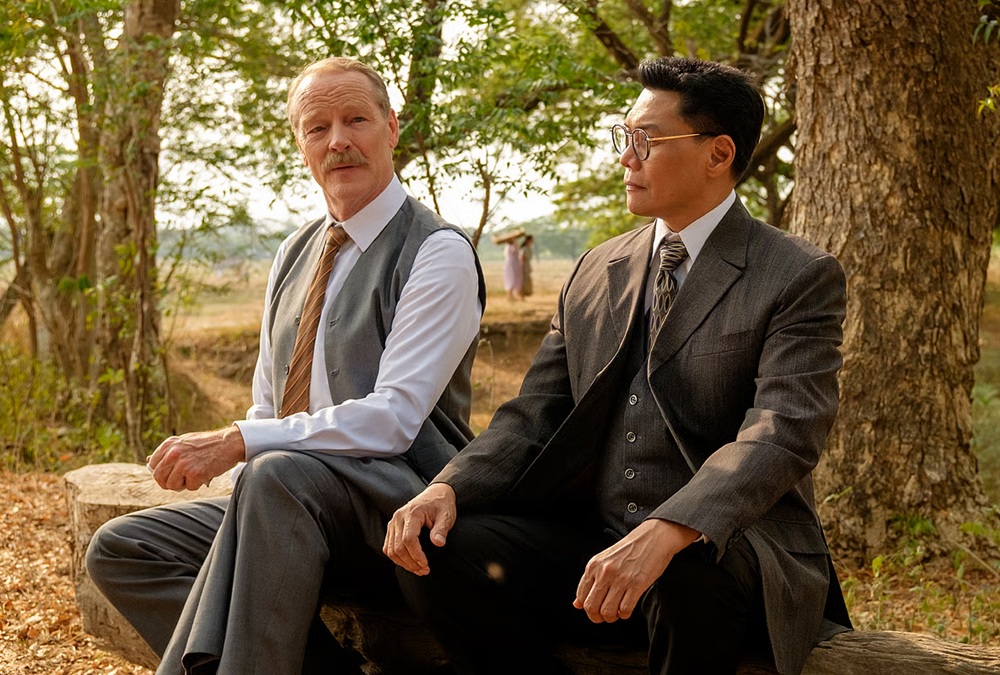
Tarogâs portrayal of Leonard Wood, however, is more contentious. Casting âGame of Thronesâ alum Iain Glen lends international heft, but the characterization softens the historical record. The real Woodâresponsible for the Bud Dajo massacre in Mindanaoâwas hardly the benevolent bureaucrat implied here. By making him a dignified foil to Quezonâs corruption, the film risks recasting imperialism as civility. Itâs a strange moral inversion: in condemning Filipino opportunism, âQuezonâ inadvertently absolves American paternalism. The critique of power thus becomes asymmetrical, blunting what might have been a truly radical examination of colonial complicity.
Using Philippine History as Mirror
Still, Tarogâs craftsmanship remains beyond reproach. His command of toneâoscillating between tragedy and farceâshows a filmmaker confident in contradiction. One minute the film hums with operatic gravitas; the next, it flirts with political satire. When Quezon snarls âI am the Philippines!â during his final days, the line lands not as self-aggrandizement but revelation. He isnât claiming ownership of the nationâheâs confessing its pathology. The filmâs power lies in that ambiguity: the sense that Quezonâs ego didnât just shape our politics, it became our politics.
Through all this, itâs worth recalling what Tarog began ten years ago with âHeneral Lunaâ: a cinematic project that dared to confront Filipino forgetfulness. That film asked, âBayan o sarili?âânation or self? âGoyoâ, on the other hand, mourned how easy it was to mistake loyalty for love. âQuezonâ answers both questions with a grim epilogue: in the Philippines, nation and self are never separate; the myth of service merely hides the machinery of self-preservation. These three films, taken together, form less a trilogy of heroes than a chronicle of erosion.
And yet, for all my reservationsâthe exposition, the tonal imbalance, the sanitized view of empireâI canât help but admire what Tarog has built. His âBayaniverseâ may never achieve the narrative cohesion of what a good cinematic universe should stand for, but its ambition is of another kind: to provoke civic introspection through cinema. Few filmmakers in the Philippines today are willing to touch historyâs open wounds, fewer still with this level of artistry. âQuezon,â for all its imperfections, insists on the importance of remembering even when the remembering hurts.
In the end, the film doesnât elevate Quezonâit indicts him. But in doing so, it also indicts us: the electorate that still confuses swagger for strength, the citizens who mistake performance for leadership. What does it mean to be a hero in a country addicted to spectacle? How do we reckon with history when its villains speak like our idols and its idols act like our villains?
If Tarogâs goal was to make history feel alive again, then he has succeededâsometimes to the point of discomfort. As cinema, âQuezonâ is impressive. As history, itâs provocative. And as myth, itâs necessary. Tarog gives us a leader both admirable and abhorrent, a mirror so polished it reflects our own complicity in worshipping the performative. For all its excessesâthe verbosity, the theatricality, the spoon-fed subtextâthereâs value in a film that forces us to look again at the faces weâve flattened onto currency. If this is the chapter that finally closes Tarogâs decade-long exploration of Filipino heroism, it does so with uneasy grace: not a salute, but a shrug, acknowledging that every great manâs monument casts a long, complicated shadow.
And if a new generation learns their history through these cinematic universesâflaws, flourishes, and allâthen maybe thatâs a small victory in itself. The myth is cracked open. The bills still circulate. The question, as ever, is whether weâll bother to read the fine print on the face.


“Quezon” was released in Philippine cinemas on October 15, 2025. The film is also scheduled for release at the 45th HawaiÊ»i International Film Festival (HIFF) on October 26, 2025. Follow us for more coverage.




