





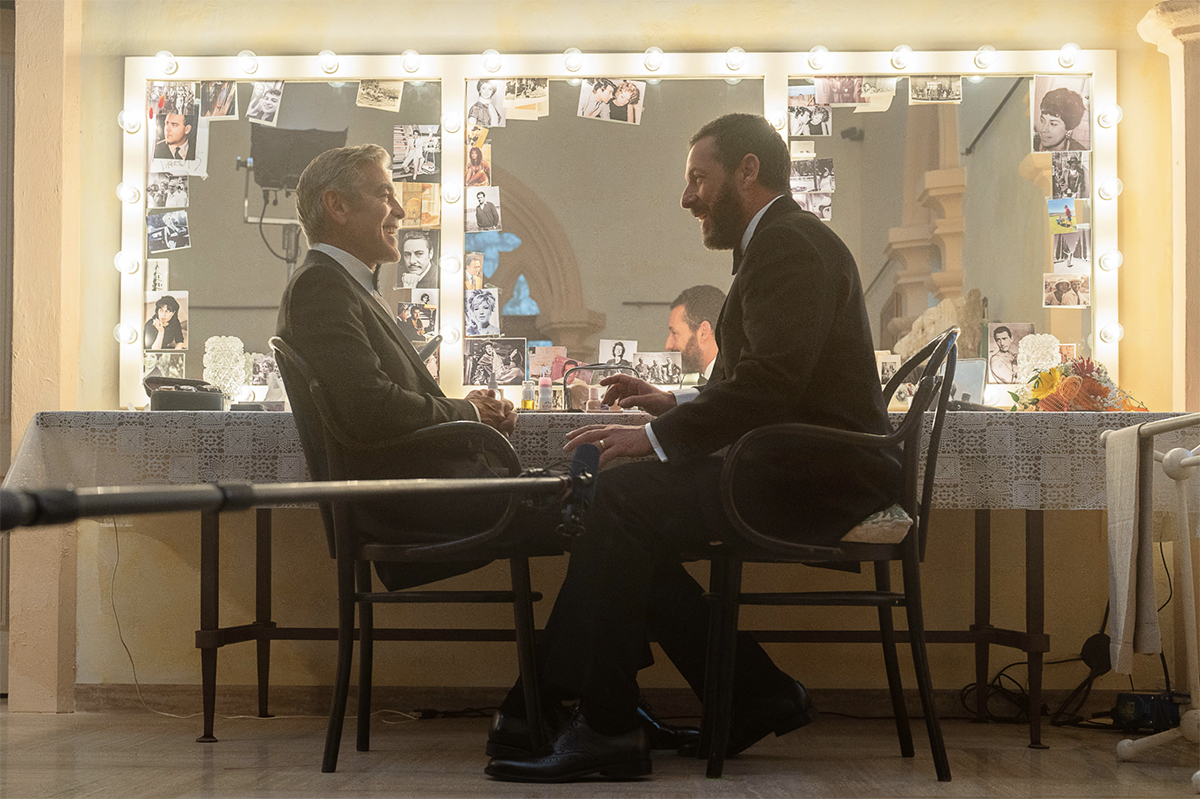
“Everyone wants to be Cary Grant. Even I want to be Cary Grant.” – Cary Grant
Although Noah Baumbachâs âJay Kellyâ opens quoting Sylvia Plath, Cary Grantâs cheeky quip was on mind when Jay Kelly (George Clooney) leans in to confront himself in a mirror. Having retreated to his trailer after wrapping a movie, Kelly stares at himself and repeats his name. Then, he practically chants a few other boldfaced names, several of whom Clooney has over the years drawn comparisons to: Gary Cooper, Grant, Clark Gable, Robert De Niro (who was no slouch in front of a mirror himself). Toeing an uncertain line between cynical Hollywood satire and a sappy, meta redemption song, âJay Kellyâ spends far too much time playing pretend self-reflection. A dreamy international cast keeps the lights flickering, but Baumbachâs film lacks the snarl (âThe Squid and the Whaleâ) and palpable agony (âMarriage Storyâ) of his more personal work, pinnacles not even the legendary Jay Kelly can rise to.Â
A roving, stylish saga which starts in Los Angeles, flies private to France and then trains and busses it to Italy, âJay Kellyâ has a striking and original visual palate. Shot by Linus Sandgren (âLa La Landâ) âJayâ flaunts its ample travel budget, and the giddy camera is constantly on the move, leading then following a restless ensemble in pursuit of the mercurial star. Nicholas Britellâs score elegantly tickles the mood, volleying from somber to silly, mostly avoiding emotional manipulation. Besides, as we learn, Jay is the chief manipulator in town. But while mourning the death of a mentor (Jim Broadbent) and his youngest daughter Daisyâs (Grace Edwards) final summer before college, Jay reconnects with his old pal Timothy (Billy Crudup) who forces a pivot towards introspection.Â
Baumbach Doesn’t Linger on Discomfort
Itâs nothing new, Jayâs agent Ron (Adam Sandler) reminds publicist Liz (Laura Dern). Jay always gets this wayâcontemplative, regretful, threatening retirementâafter finishing a movie. Where did the time go? Where was Jay? And how can he make up to everyone right now? Baumbach imposes a miniseries worth of thorny questions on Jay, a symbol of gargantuan Hollywood glamour and the attendant tropes. Heâs a handsome, charismatic star whoâs aging gracefully, but still requires a good ego stroking (and cheesecake, hair plugs and a black Sharpie over his grey eyebrows) on the reg. After a bruising night out with Timothyâa former master of method acting, now a child therapistâJay makes the intrepid and idiotic decision to stalk his daughter on her European vacation, the sort of this-wonât-end-well initiative-taking/self-sabotage that Baumbach (who co-wrote the script with Emily Mortimer) has curated so skillfully throughout his career.Â
Only, here Baumbach doesnât linger in the potential discomfort. He punts aside a genuine Jay Kelly reckoning in favor of a glossy protective sheen and mediocre jokes about awards seasons, California and therapy culture. A forced train meeting bounces awkwardly from a dad-Daisy talk to action-hero Jay retrieving a fellow passengerâs stolen handbag. Jay then continues moving forward by looking back, finding neither peace nor closure because the film just keeps moving out and away from any cohesive philosophical core. Jayâs memory humblebrags back through loves lost and abandoned. Through a liberal use of flashbacks, the older Jay revisits young Jay (reminding me of Richard Gere in âOh, Canadaâ) being talented, hot and absentee. The signature Clooney glint implies no regrets at the roads not taken. To paraphrase his older daughter Jessica (Riley Keough): if heâd wanted to spend time with his family, he would have spent time with them.Â
A Film Too Punch-Drunk on Ideas

Itâs almost redundant to call âJay Kellyâ gorgeous, because Jay Kelly is George Clooney. But, credit due to Baumbach, Sandgren and Production Designer Mark Tildesley for crafting a sumptuous backdrop that stands in for the dream factories that served as the background to many a Jay Kelly triumph. A whopper of a supporting castâincluding the great European arthouse stalwarts Alba Rohrwacher (âHappy as Lazarroâ) and Lars Eidinger (âEveryone Elseâ)âenergize the travel sequences, delivering a satisfying composition that lands somewhere between a Fellini-esque spectacle and Sandlerâs own paradise-set buddy films. But, while big-budget Baumbach (âWhite Noiseâ) can be exhilarating, the enormous scale and generous runtime of âJay Kellyâ widens its storytelling net to an extent that it becomes a chore to track the accruing themesâparenting, friendship, ambition, tennisâthat are explored, recycled and underdeveloped.Â
However pure Jay believes his intentions to be, his follow through is uneven. The same can be said for Baumbach. Assembling a dynamite suite of collaborators, Baumbach has indeed made an ambitious film but maybe got a little too punch drunk on ideas. Plathâs quote at the beginning stands in for Grantâs incisive, self-pitying witticism: âItâs a hell of a responsibility to be yourself. Itâs much easier to be somebody else or nobody at all.â For all Jayâs lip service about changing his ways, itâs unclear that Jay can really see himself in that mirror. Although his only companion remaining at the end is Ron, Baumbachâs resounding loyalty rules in favor of the star and the machine that made him (and them!). Alone but never lonesome, Jay will at least have what made him happier, if not totally happy: movies, fans, and the gift of looking away from the mirror.
âJay Kelly,â a Netflix release, is a Main Slate selection at the New York Film Festival. Its New York premier is on Monday, September 29th, followed by several other festival screenings.




