





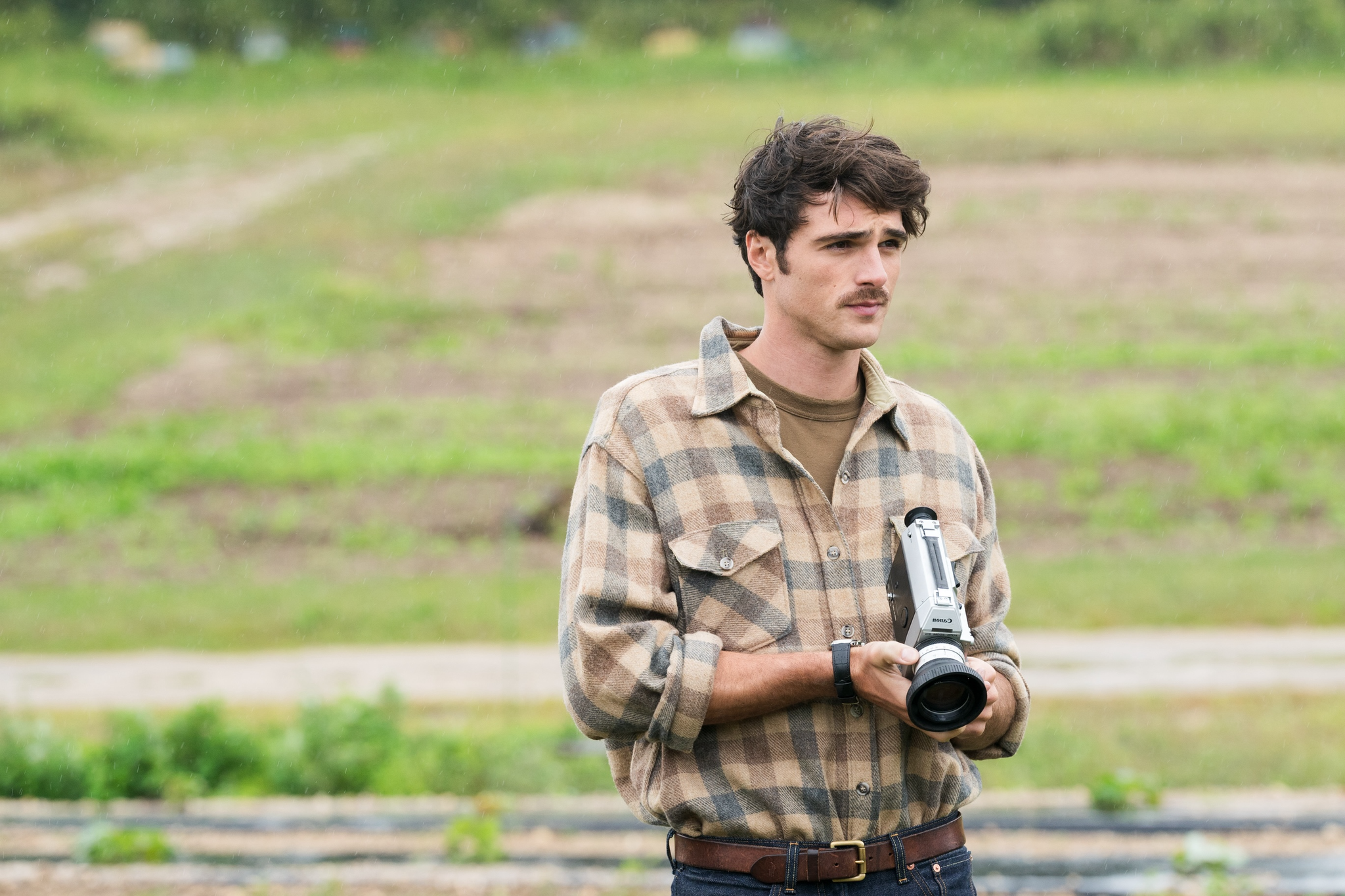
At an âOh, Canadaâ post-screening Q&A, Uma Thurman spoke about her nervous anticipation ahead of meeting acclaimed Writer/Director Paul Schrader (âFirst Reformedâ). Her anxiety abated, however, when she found out he was a Swiftie. Despite Schraderâs career-long fixation on wounded (he wrote âTaxi Driverâ), often violent men (co-wrote âRaging Bullâ) grappling with existential crises, Thurman called him a âbig softie.â The gloves are off in âOh, Canadaâ although itâs a gentler side of Schrader, especially compared to the psychological terror and harrowing conflict featured in his recent âman in a roomâ trilogy. Alternating between color and black-and-white, âOh, Canadaâ is a squinty-eyed, reluctant confessional, depicting the last rites of Leonard Fife (Richard Gere and Jacob Elordi), a documentarian whose personal regrets outstrip his professional plaudits. And yet, Leoâs unsparing release amounts to a selfish plea for closure, transferring the burden to his loved ones, as death closes in.Â
Adaptingâand dedicating the film toâgood friend Russell Banks (1940-2023), Schrader strips down his leadsâespecially Gereâremoving all traces of the movie star glean accumulated over the years. Banksâ novel “Foregone” was, according to Schrader, a thinly-veiled autobiography, in which the author came off quite terribly. I havenât read the book, but on that description, Schraderâs film is loyal to Banksâ version. Leoâolder (Gere) and younger (Elordi)âis probably lovable to some, but on the surface, heâs insufferable, entitled and reliably unreliable. Also, needy: in the filmâs opening scenes, when Leo is brought to a room for an interview with former students, filmmakers Malcolm (Michael Imperioli) and Rene (Caroline Dhavernas), he refuses to talk until he locates his wife Emma (Thurman).Â
Gere and Schrader Together Again
Codependency is one explanation, but perhaps Leo needs Emma there for another, almost sinister reason: to hear his truth. Granted, Leoâs gruff disposition understandable is to an extent, since heâs a dying man whose cancer has reached late late stages. But through flashbacks, Leo rehashes the misstepsâtheyâre legionâof his younger self. Elordi, hale and mustachioed, excels at all stages, evoking a polite and confused boy rebelling against his stern parents who then molds into an adult gracefully considering an offer that heâd never accept from his wifeâs father to take over the family business. When Leo leaves pregnant Alicia (Kristine Froseth) with her parents in Virginia to close on a new home in Vermont, the storytelling evolves from linear exposition to uneven CliffNotes, rife with scribbled and semi-legible notes in the margins.Â
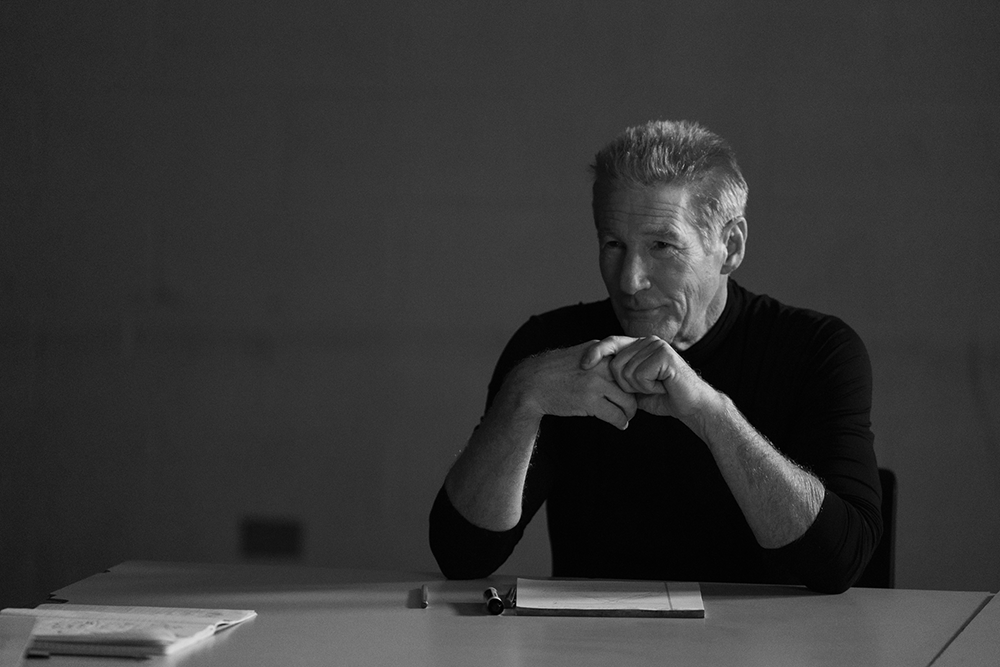
Leoâs account of how he abandoned his family shocks Emma, who begins asking to break for her husbandâs sake (each coughing fit sounds like the next one will kill him), only to have her admit that itâs all too much for her. At this point, Leoâwho seems actually rattled, but also sarcastically says, âWait, Iâm confused!â while eerie, jangled camera angles interrogate himâdemands that Emma switch spots with the interviewer Malcolm, so that Leo can speak directly to Emma on the other side of the camera. By the time Leo is finished, heâs exhausted, a little closer to death, and itâs still unclear whether some of his story was fabricated, and which parts were especially disturbing to Emma, who, it ends up, was well-aware that Leo had a son Cornel (Zach Shaffer). Emma keeps some secrets to herself, though.Â
Well Worth the Cost of Admission
Cornelâs voice is the first narrator, introducing Leonard, Emma and an at-home nurse in a room that, if shaded in crimson and rewound back a century, would resemble the otherworldly death cathedral in Ingmar Bergmanâs âCries and Whispersâ (1972). Schrader has always been a subtly flashy and gifted stylist, and the monochrome Elordi sequences recreate the 1960s and 1970s without exaggerating or luxuriating in exclamation points about Vietnam, protests, etc. That thread is merely part of the film, not a separate entry in which period details overwhelm the narrative. Leoâs accidental career shift from an academic and writer to celebrated documentary filmmaker is mentioned in passing, while the withdrawal from his familyâand attendant infidelitiesâare given ampleâand in the case of his sexual conquests, perhaps excessiveâairtime.Â
Alas, this is not a film about the artist as a young man. Itâs more about the old dying man who happens to be an artist and who, as a younger man, repeatedly betrayed the people who relied on him most. And Gere, uniting with Schrader for the first time since âAmerican Gigoloâ (1980), is a memorable, menacing villain. The purpose of Leoâs truth-telling is to free himself, and it ends up being the final selfish act in a long line of objectionable behavior. Too frail for physical altercation, Leo nonetheless fits right at home in Schraderâs canon of broken men, enacting his own special brand of self-sabotage, eschewing contemplative closure for a perverse form of revenge against himself and his family. In other words: another visit to a lonesome, troubled man in one of Schraderâs rooms and âOh, Canadaâ is well worth the cost of admission.Â
“Oh, Canada” screened at the 2024 New York Film Festival, which concluded on October 14th. Follow us for wrap-up coverage.Â




