





A goodie bag of candy-colored nostalgia, Noah Baumbachâs “White Noise” is a stylish and ambitious take on Don DeLilloâs postmodern classic. Working with his largest budget yet (reportedly $80-$100 million), Baumbach is both in his comfort zone and out of his league, leaning too much on his Wes Anderson impulses when the story calls for Paul Thomas Andersonâs technical flourishes. Itâs a chatty, funny film. However, it’s so light on its feet that it doesnât quite capture the paranoia and agony DeLillo committed to the page thirty-seven years ago.Â
DeLilloâs novel has long been deemed unfilmable, and even in a June 2020 New Yorker story titled “White Noise,” Emma Cline imagined Harvey Weinstein pitchingâor fantasizing aboutâthe idea of adapting the novel. Baumbach has said that he began re-reading “White Noise” in late 2019 and early 2020, believing it eerily captured how he was feeling at that moment. DeLilloâs singular story follows the Gladneys, whose father Jack (Adam Driver) is a professor of Hitler studies at a nearby university and mother Babette (Greta Gerwig) teaches exercise classes and occasionally pops mysterious pills. They have four kids, are each on their fourth marriage, and prefer pillow talk that leads to debates about which spouse will die first, and whether theyâd prefer to be alive and lonely or dead.Â
Filming an ‘Unfilmable’ Novel
The subject of death comes up early and often in Baumbachâs version. Itâs easy to miss that, though, because thereâs so much else happening. The first time we meet the Gladneys, the family is shuffling around the kitchen, in a routine that seems both chaotic and mundane to those involved. Kids talk past each other, Babette fixes the meals, Jack listens to Heinrich (Sam Nivola) rave about the latest and most tragic recent plane crash. Heinrich is the most Baumbachian creation of all, a credible yet incredibly charismatic teenager who actually has his fatherâs ear and admiration. Nivolaâs voice sounds quite like that of Jesse Eisenberg, who memorably played a Baumbach surrogate in “The Squid and the Whale,” drawing a father-son contrast between the two films and in this one; the score favors the son.Â
Itâs a lively and dynamic film, and some of the novelâs best lines (âYou swallowed the lifesaver? Without an interval of sucking?â) and scenes (Heinreich holding court among a crowd of nervous adults) are here, helping to move the story forward. Baumbachâs faithfulness to the source material is an asset, and he shows no intimidation of the epic scope and structure of the narrative. Still, some of the scriptâs trademark wit and banter drag, or feel misplaced. That’s not a knock on the acting. Everyone here is going big and generally succeeds at bringing to life the repetition of supermarket shopping, absurdity of campus life, and 1980s hairstyles. And yet, the actors often preach, resembling orators in a stage play. It edges the film towards an irreverent tone thatâs confusing, serving like an oddball homage to Baumbachâs earlier films.Â
A Film Divided in Three Parts
Like the novel, Baumbach divides the film into three parts. The first is the strongest, introducing the cast of characters and giving a taste of their quirks (Babetteâs âimportant hairâ) and vulnerabilities (the kids in particular mistrust everything and everyone). The second part, in which a black cloudâwhich the government labels a Toxic Airborne Eventâleads to mandatory evacuation and requisite panic shows promise, but leans too hard on established set-ups and gags. Meanwhile Danny Elfmanâs brooding and effective score is overshadowed by the sense that weâre watching Baumbach phone home and imitate Spielberg. And with the third part, the film descends into marital melodrama and a slapstick-noir resolution. Itâs a good time, and obvious why Driver and Gerwig would be enjoying themselves (itâs easy to watch them do anything), but at that point itâs no longer an ensemble piece, and that cheapens the punch of the payoff.Â
Yes, the ending disappoints, but oh how Baumbach redeems himself! The end credits sequenceâand hopefully this starts a trendâis glorious, featuring the entire cast in an elaborate dance number, navigating the aisles of the A&P Food Center (expertly designed with garish colors and stacked shelves) which plays such a prominent role in the film. Itâs a joyous celebration of life (and death, according to Baumbach), a brilliant way to light another candle and blow the very same one out with a billowy gust of air. The movement is free, just like how it is during the filmâs most enjoyable parts.Â
Yet a Fun Film to Watch, Especially for the Finish
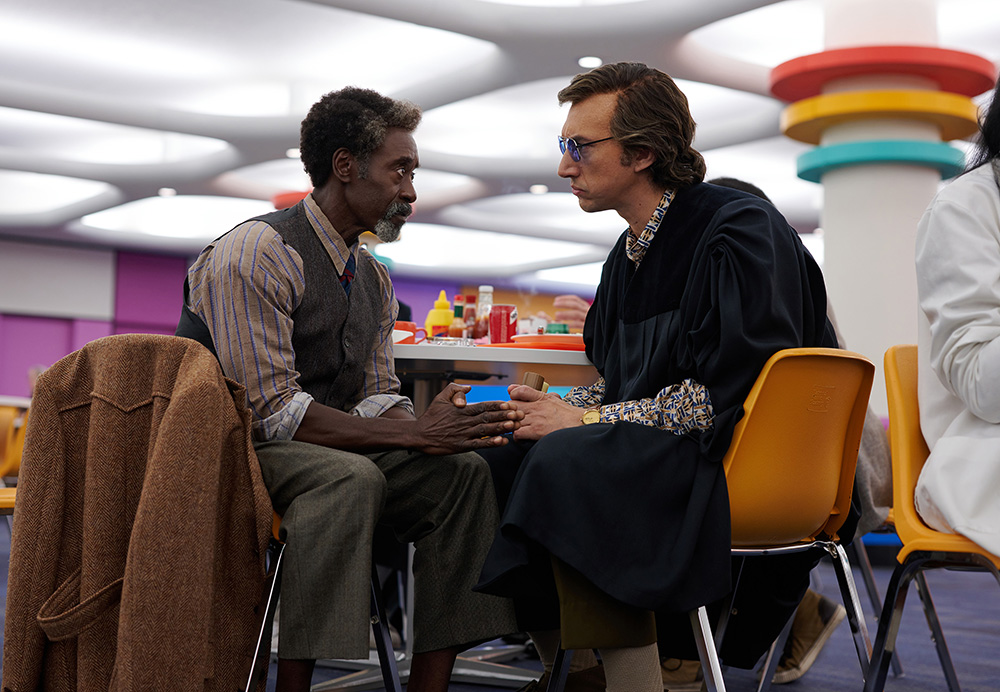
Unfortunately, too much of the acting is inhibited, uncharacteristic of a Baumbach productionâespecially in the case of Driver. Heâs a generational talent, an intensely-physical presence who often channels early Jack Nicholson in the way he can frighten, seduce, and then, make a fool of himself in quick succession. Here though, heâs drenched in makeup, cloaked in a graduation robe and hiding behind tinted sunglasses. For humor, itâs fine, but the script only allows us to learn so much about Driverâs emotional core, besides that heâs the worldâs preeminent Hitler scholar but canât speak a word of German. His colleague Murray Siskind (a gleeful Don Cheadle) has plenty to say. His his presence always arouses suspicion about what he needs or stands to gain from his bizarre personal advice to Jack. Siskindâs airtime is overshadowed; and despite Cheadleâs charm, his character sort of fades to the background.
The best argument to make in support of watching “White Noise” is that itâs a Baumbach film. But the allegiance to familiar tropesâan erudite couple bickering, extended comedy bits, kids who are more mature than adultsâprevents it from looking hard at some themes (fear of death, consumerism, panic in the streets, etc.) DeLillo pinpoints so well in the novel. Baumbach mightâve hit everything on the grocery list, but that doesnât mean those were the right ingredients for the screen version. Start to finishâespecially finish!â”White Noise” is never boring. And while Baumbach has âwill continue toâmake better films, this one is, to paraphrase Jeff Danielsâ Bernard Berkman, ‘minor’ Baumbach, even with all the noise.Â
âWhite Noiseâ is part of our continuing coverage of the 2022 New York Film Festival (NYFF).
Support the Site:Â Consider becoming a sponsor to unlock exclusive, member-only content and help support The Movie Buff!


