





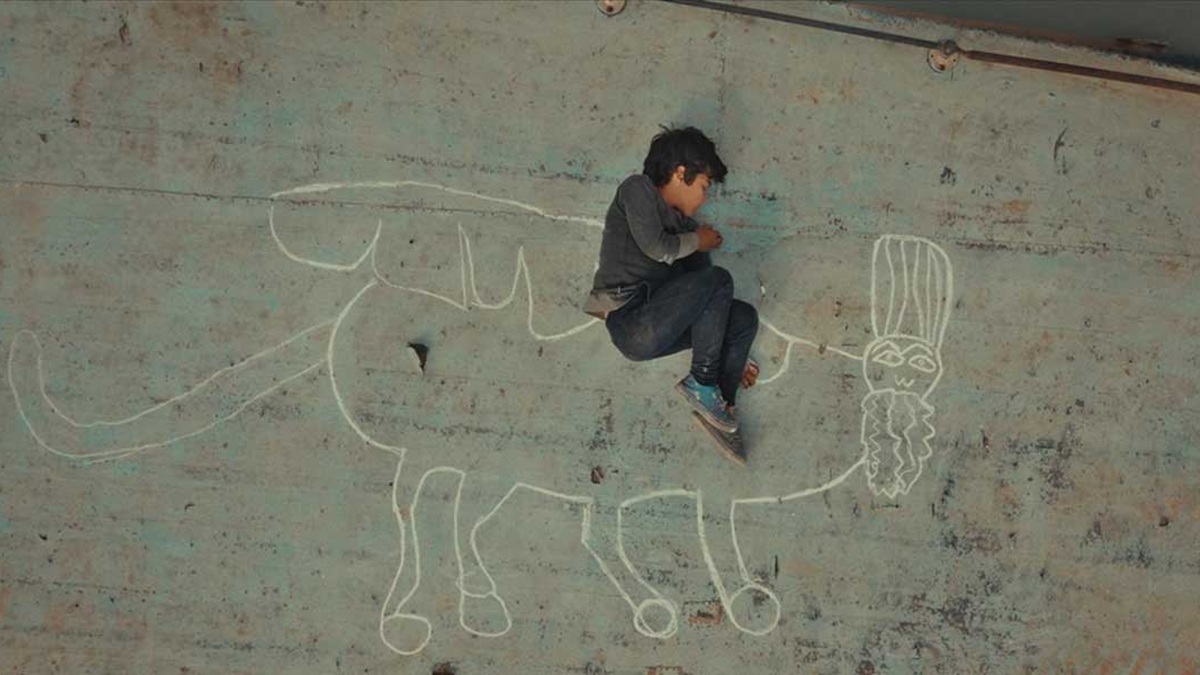
Watching âIrkalla: Gilgameshâs Dreamâ is the kind of experience that leaves you sitting with a knot in your stomach long after the credits fade. Films about war often promise catharsis or a rallying cry; Mohamed Jabarah Al-Daradjiâs latest offers neither. Instead, it zeroes in on the ache of lives interrupted and lets a childâs imagination do the only work it can: to turn unbearable reality into myth. This, to put it simply, is a necessaryâalbeit uneasyâwatch.
More TIFF Coverage: In âAkiâ, Darlene Naponse Crafts a Wordless Love Letter to Home
A Young Boy Dreams of Resurrection and the Underworld
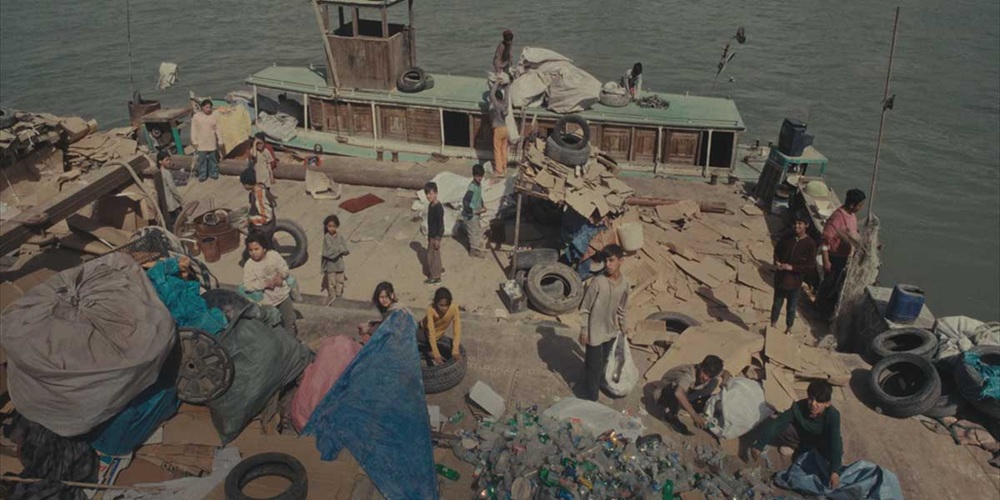
Baghdad, 2019. The city seethes with anti-government protests. Iraqis demand electricity, jobs, and dignity. The state answers in kind: with bullets, tear gas, and scalding water. Into this landscape wanders Chum-Chum (Youssef Husham Al-Thahabi, heartbreaking in the central role), a nine-year-old with diabetes who lives in a riverside commune of orphans. He scavenges, jokes, dreams.
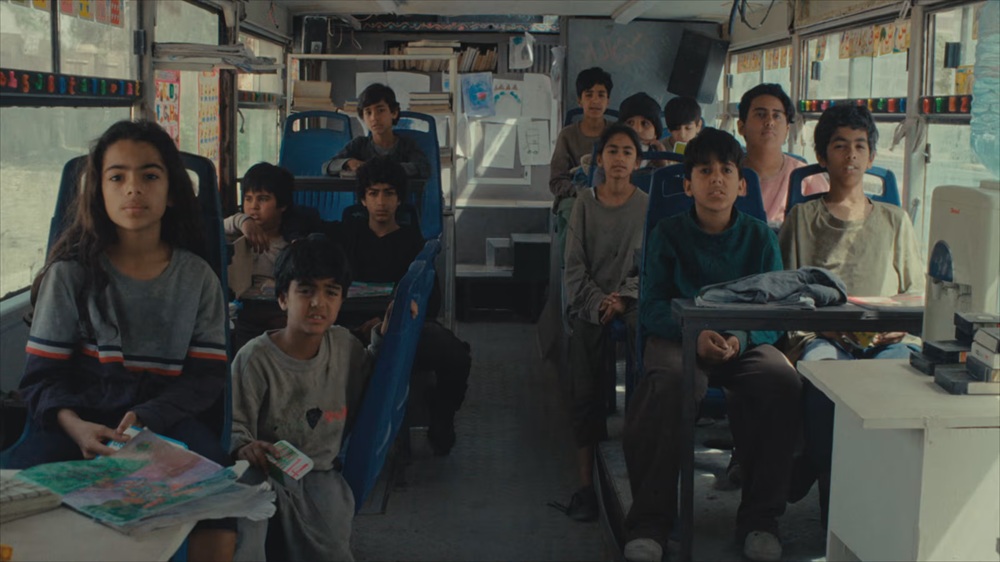
When a teacher hands him a battered VHS of the Epic of Gilgamesh, he clings to it as if it might rewrite the world. For him, the Tigris becomes a portal to Irkalla, the underworld where he believes his parents (killed from a terror attack sometime before the film’s timeline) are waiting. Once reunited with them, Chum-Chum believes he can resurrect them from the dead.
That belief is not simple escapism; itâs survival. Al-Daradji has said he wanted to capture âthe seeds of lifeâ that persist even as war devours a nation. He frames Chum-Chumâs mythic visions not as a flight from politics but as a quiet act of resistance: a child insisting on a narrative larger than the violence surrounding him. His friend Moody (Hussein Raad Zuwayr), a teenage hustler desperate to flee to the Netherlands with his music, canât afford such dreaming. Moodyâs side gigsâcollecting scrap metal, running errands for a militiaâpull him toward a darker future, even as he tries to protect Chum-Chum and his sister Sarah (Lujain Star Naima), the girl Moody loves.
âIrkalla: Gilgameshâs Dreamâ and the Real Casualties of Endless Wars
The filmâs greatest power lies in how it captures Baghdad from a childâs eye level. Smoke and banners hang over the streets, but Al-Daradji keeps the camera close to the ground: kids darting through alleys, scavenging for cans, trading small jokes in the shadow of riot gear. These momentsâhalf games, half survival drillsâcarry more weight than any overt political speech. They remind us, without a single slogan, who pays the steepest price in every conflict.
In a broader context, itâs impossible not to think of Gaza, where nearly a million children are now displaced, starving, or killed, their lives turned into statistics while the world argues over blame. Al-Daradji never points the camera there, yet the echo is unmistakable.
If thereâs a stumble, it comes in the filmâs relationship to the ancient myth it invokes. Viewers well-versed in the Epic of Gilgamesh may find resonances in Chum-Chumâs journey. However, for those of us less familiar, the mythological layer can feel murky, even distracting. The story of these childrenârooted in the very real protests of 2019âhas enough urgency on its own. At times the supernatural flourishes risk pulling focus from the human stakes that need no embellishment.
More TIFF Coverage: Leon Leâs âKy Nam Innâ Channels âIn the Mood for Loveâ in the Shadows of Postwar Saigon
A Film Defiant in Its Stand and Potent with Its Message
Still, the filmâs ambition is inseparable from its subject. Al-Daradji isnât trying to give us a straightforward social-realist drama; heâs trying to reclaim an ancient narrative for a generation born into ceaseless war. By letting the Lamassuâa winged bull of Mesopotamian legendâstride through the smoke of modern Baghdad, he insists that Iraqâs past and present are inseparable. The myths belong to the children as much as the rubble does.
Performances are raw and affecting, especially from the young actors. Chief among these is Al-Thahabi as Chum-Chum. He carries a quiet watchfulness, a kind of stoic wonder that makes his faith in legend both heartbreaking and believable. On the other hand, Zuwayrâs turn as Moody follows an arcâfrom playful protector to a boy seduced by the false power of militiasâthat unfolds with unforced inevitability. Together, they embody what Al-Daradji calls âthe tightrope between symbol and reality, between dream and revolution.â
By the end, âIrkalla: Gilgameshâs Dreamâ offers no tidy redemption. Baghdad still burns, the circle of violence remains unbroken. Yet something rages on: the stubborn belief that imagination itself can be a shield, that a childâs myth can carry truths no political speech can reach. This is a film that hurts to watch, but in its very pain lies a kind of quiet defianceâa refusal to let the voices of children be drowned out by the outside noise.

Mohamed Jabarah Al-Daradjiâs âIrkalla: Gilgameshâs Dreamâ had its North American premiere at this yearâs Toronto International Film Festival. Follow us for more coverage.




