





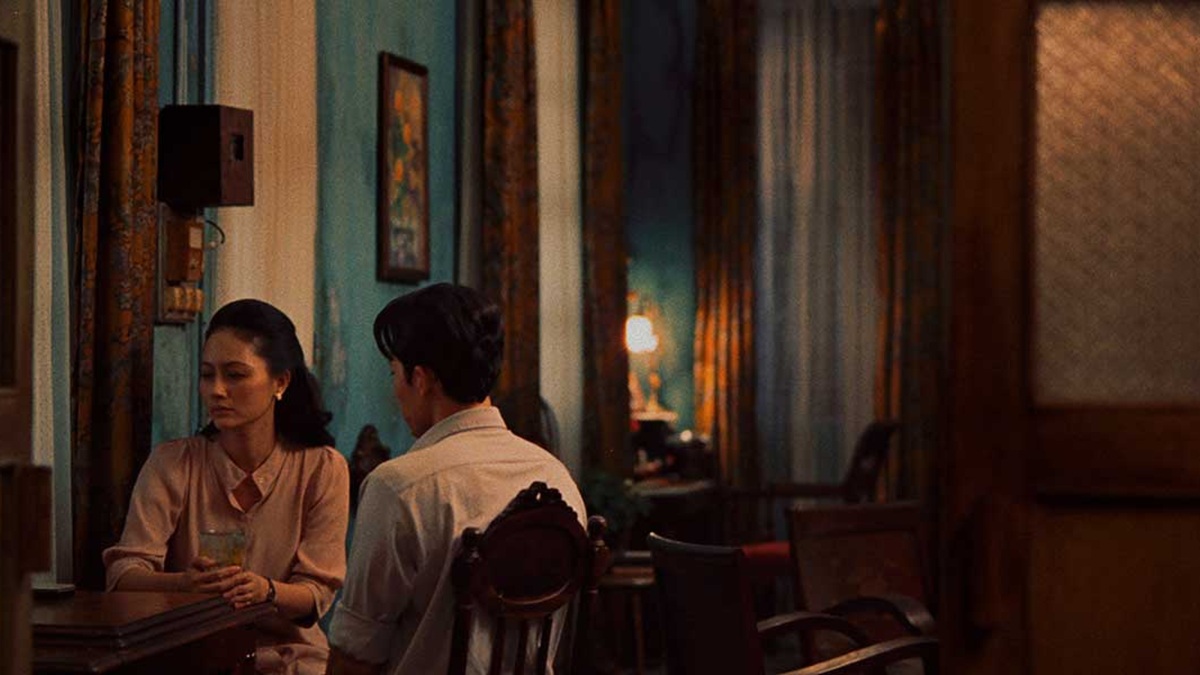
“In the Mood for Love” in the Shadows of Postwar Saigon. It’s a title I offer with full awareness of the comparison it invites. Wong Kar-waiâs film has become the eternal yardstick for cinematic longing, and invoking it risks sounding glib at best, reckless at worst. But Leon Leâs âKy Nam Innâ all but demands the association. The callbacks are everywhere: in its glances and silences, in the choreography of desire stifled by circumstance, in the lushness of every frame. What saves it from feeling like mere mimicry is the specificity of its settingâ1980s Saigon, still trembling from reunification, where intimacy itself can feel like contraband.
From its opening moments, âKy Nam Innâ announces itself with an unabashed flourish. A man sits at a typewriter, musing on agarwood (Ky Nam in Vietnamese): a tree whose resin only emerges when the tree is wounded. âFor me,â he continues, âeven more precious and rare than this agarwood is a woman who shares its name.â Itâs a little on the nose, sure, but also a kind of romantic overtureâa signal that what follows will wear its heart openly, even if in whispers and glances. I knew then that Le wasnât going to shy away from melodrama, but he was going to dress it up with craftsmanship and care.
A Visual Treat in Romance and History
Set in 1980s Saigon, a city still reeling from war while inching toward renewal, the film introduces us to Khang (Lien Binh Phat). A young translator working for the new regime, Khang moves into a crowded collective housing block to begin translating Antoine de Saint-Exupéryâs The Little Prince. Locals call him the âred seedââa man stationed anywhere, whose mission is to plant loyalty to the Party. Itâs there that he encounters Ky Nam (Do Thi Hai Yen), a reserved widow whose grief seems to seep into every gesture. As for Khang, what sprouts in the womanâs presence is not doctrine but an unexpected intimacy, tentative at first, then consuming.
When Ky Nam breaks her wrist by accident from stopping a fight, it leaves her temporarily unable to work as cook. So when Khang offers to help, the first thread of connection is laid. Their relationship unfolds with hesitation, their attraction suspended between propriety and yearning in a world where duty still towers over desire.
On a purely sensory level, âKy Nam Innâ is ravishing. Shot on 35mm by Bob Nguyen, the film glows with a nostalgia that never feels cheap. The grain, the saturated colors, the interplay of light and shadow on peeling wallsâevery apartment in the building has a personality, cluttered with objects that seem borrowed from life rather than designed for a set. Even the food has texture. When Ky Nam prepares her food, you can almost smell the steam rising. Itâs the kind of production design where nothing feels wasted, where every corner of the frame holds memory.

Of Stylistic Representations of Longing and Desire
Le has always been a stylistâhis previous film âSong Langâ was already proof of thatâbut here, he leans harder into atmosphere and restraint. Agarwood burns with a fragrance thatâs both rare and enduring, the kind of scent that seeps into your memory long after it fades from the air. Using that imagery, Le uses it as a fitting metaphor for a film steeped in longing. This is a story about desire that defies time, place, and ideologyâan ember that refuses to go out, even when the world conspires to smother it.
In the film, Khang and Ky Nam are drawn together slowly, sometimes painfully so. They avert their eyes, brush past one another, then linger in silence. When that reserve finally cracks, the impact is all the greater, precisely because so much has been withheld. Do Thi Hai Yen gives a performance so delicate itâs almost translucent, carrying grief and desire in equal measure.
Opposite her, Lien Binh Phat plays Khang with a kind of restless earnestness, as though afraid his own longing might betray him. Watching them reminded me of how much cinema can do with the smallest gestures.
Toeing the Line Between Homage and Mimicry
Of course, the inevitable comparison looms. âIn the Mood for Loveâ remains one of my desert island films, a timeless study of unconsummated love. It has become the benchmark for a certain kind of cinema, and most films that invite the comparison collapse under the weight of it.
âKy Nam Innâ doesnât escape that shadow. Quite the opposite, Le leans into it, to the point of obsession. The languid pacing, the careful choreography of bodies in tight corridors, the way it expresses desire through everything but words, the asymmetry and imbalance in framing the protagonists against negative spaceâitâs impossible not to see Wong Kar-waiâs fingerprints. (For crying out loud, even the lead actors, Lien Binh Phat in particular, remind me of Tony Leung and Maggie Cheung.)
Even so, I donât mean that as dismissal. When a filmmaker borrows from a master, sincerity matters more than originality, and Leâs sincerity is never in doubt. If anything, it feels like a love letter written with genuine affection.
More TIFF 2025 Coverage: âMamaâ is a Melodramatic Reflection on Sacrifice and the Cost of Absence
Juxtaposing Romance and Sociopolitics in Postwar Vietnam
What makes âKy Nam Innâ more than just pastiche, however, is the way it roots its romance in a political and social context. Saigon was a city in flux: southern identities suppressed, northern ideology imposed, neighbors watching neighbors.
On the other hand, the building itself where the characters reside is full of lives marked by history. We see a doctor who hoards banned records, a mixed-race boy bullied by neighbors, a young woman whose gossip masks loneliness, a scene inside a movie theater where patrons watch the Soviet film âMoscow Does Not Believe in Tearsâ with reverence. The North-South divide lingers in subtle but piercing ways, and Ky Namâs widowhood carries political resonance that the film only ever whispers. In fact, the very reason Khang needs to translate The Little Prince is to supplant the current version that, while masterful in its translation, was a product of the old regime.
All of this situates the love story in a world still defined by wounds, where intimacy is fragile not only because of personal hesitation but because of the times themselves.
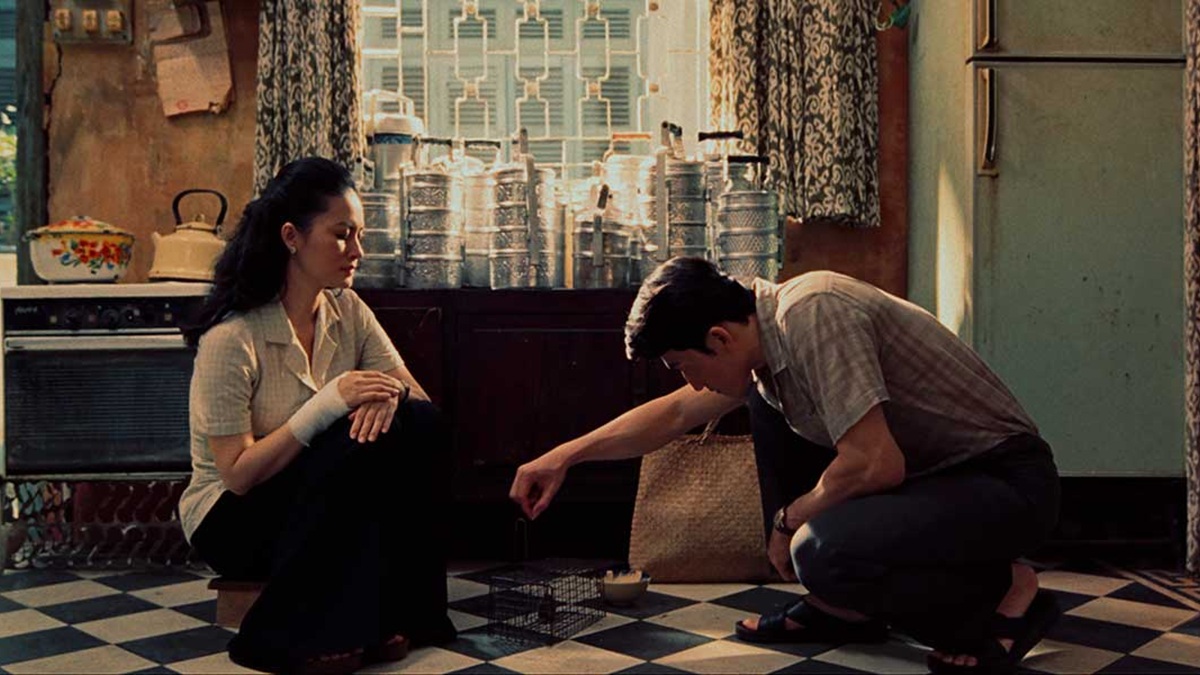
âKy Nam Innâ: Tender and Romantic Vietnamese Cinema
The indulgence, if there is one, lies in the length. At 138 minutes, the film sometimes risks drifting into languor, its rhythm more patient than it strictly needs to be. Yet even when I felt it sag, I couldnât take my eyes off it. Thatâs the thing about love stories that work, after all: they thrive on patience, on the ache of waiting. And for all its excesses, âKy Nam Innâ understands that ache.
By the end, I found myself more moved than critical. Le may not have reinvented the wheel here, but he has crafted something undeniably heartfelt, a film suffused with yearning and memory. âKy Nam Innâ belongs to the tradition of romantic cinema that believes love is as much about what it speaks and what it leaves unsaid. That tradition is crowded with giants, but Le earns his place among themânot by surpassing, but by caring enough to try.

A Vietnamese production, âKy Nam Innâ had its world premiere at this yearâs Toronto International Film Festival. Follow us for more coverage.




