





Naveenâs mother never had any doubts about his sister Arundhathiâs futureâno matter how many boyfriends sheâd cycled through in college, sheâd eventually end up married to, as their mother put it, “a nice Indian boy.” And so, at 25, Naveen (Karan Soni) finds himself at the wedding of his sister (Sunita Mani), watching Arundhathi fulfill that destiny with a future orthopedic surgeon. Meanwhile, he fields an endless chorus of guests telling him, âNext one of these, itâll be your wedding.â
Thereâs just one problem: as Naveen wryly observes, âJust one concernâwhat will it look like when I bring home a nice Indian boy?â Itâs a strong, playful opening to âA Nice Indian Boy,â directed by Roshan Sethi and adapted from Madhuri Shekarâs stage play. The film knows exactly what it isâan unabashedly sweet and predictable romance, its charms lying not in reinvention but in sincerity. And to overanalyze it would be to miss the point entirely.
Finding Love in Familiar Places, Strength in Predictability
Cut to six years later, and Naveen, now a doctor, has his answer. While getting his hospital ID photo taken, he locks eyes with Jay (Jonathan Groff), a photographer heâd seen praying at the temple the night before. Sparks fly, leading to a first date watching âDilwale Dulhania Le Jayengeââa meta touch, given how much this film borrows from Bollywoodâs grand romantic tradition.
Jay, as it turns out, was adopted by Indian parents, which explains both his temple visit and his deep-rooted affinity for Bollywood musicals. Heâs all sunshine and optimism, a rom-com lead in both spirit and execution. By contrast, Naveenâever the pragmatistâapproaches their relationship with the weariness of a man whoâs been bracing for disappointment his entire life.
Their relationship follows the blueprint of a classic romantic comedy: meet-cute, whirlwind courtship, minor misunderstandings, emotional roadblocks, and a final act resolution. The film never pretends to be anything more than this, nor does it need to be. If anything, the sheer familiarity of its structure serves a larger functionâits ordinariness is the point. âA Nice Indian Boyâ treats its love story not as a radical statement but as something that should be obvious: a romance as simple and saccharine as any other, existing without justification. Thereâs a quiet significance in that.
Between Acknowledgment and Acceptance
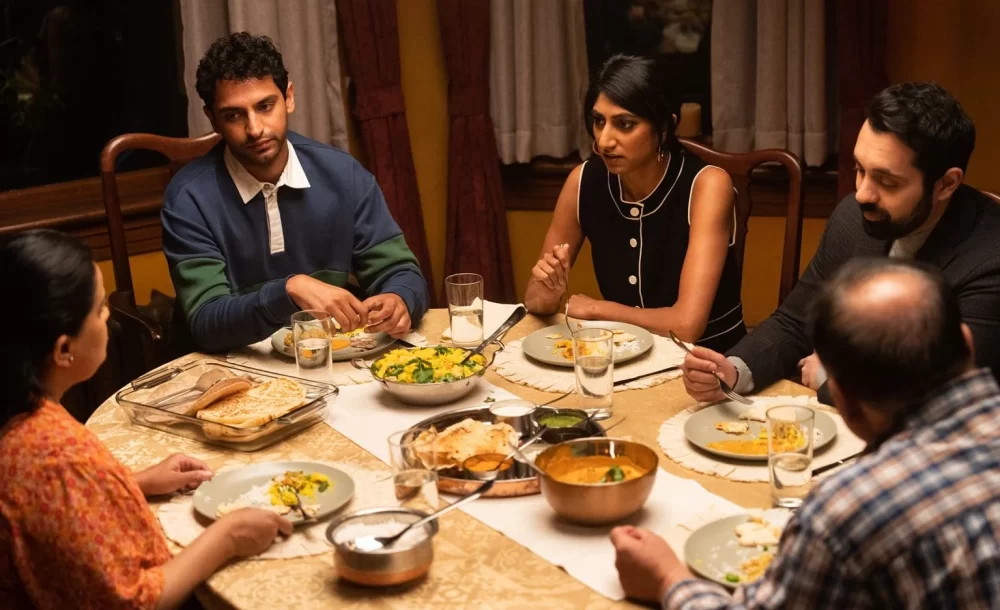
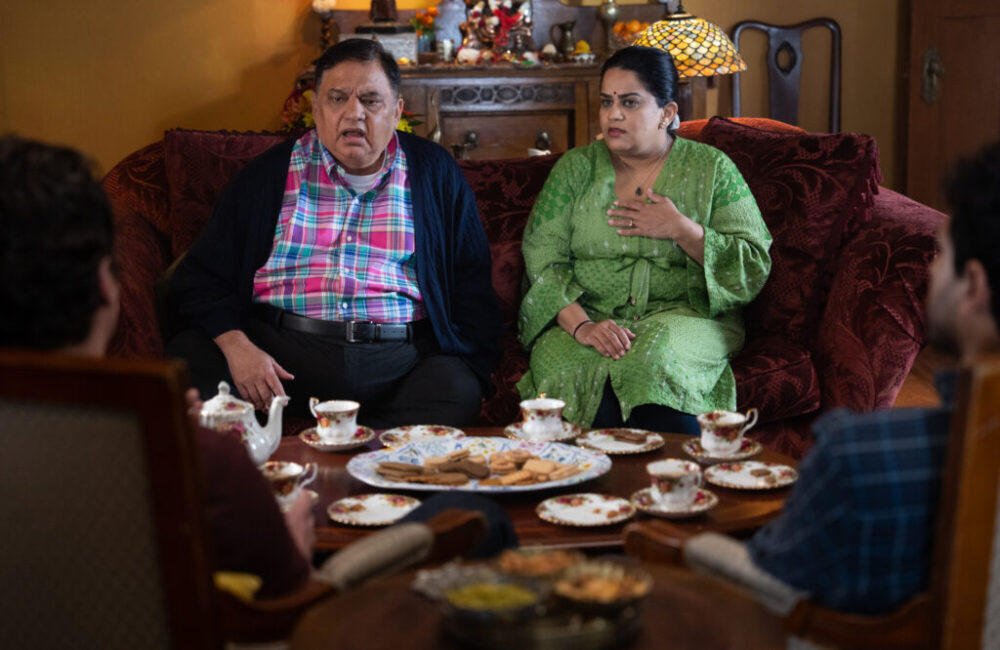
Thatâs not to say it completely sidesteps the cultural realities of its characters. Indian families, especially those of an older generation, often operate in a space between acknowledgment and acceptance when it comes to homosexuality. Naveenâs family knows heâs gay, including his father (Harish Patel), who gives the movie one of its most emotional moments when he spends one afternoon in the kitchen with Jay after visiting the latter’s gallery exhibit and seeing the portrait of Jay and his adoptive Indian parents.
However, knowing Naveen is gay and seeing his sexuality are two different things. Fortunately, Sethi tackles this in an endearing way. One of the filmâs best touches is its depiction of his familyâs awkward but well-meaning attempts to âunderstandâ his sexuality. His mother (Zarna Garg), for instance, calls him while heâs at work to ask if heâs seen the movie âMilk,â before recounting the entire plot to him over the phone as though this alone might unlock a deeper understanding of his life.
Itâs funny, yes, but itâs also tellingâthereâs an effort made, however clumsy. And for many in the community, even that small step is more than theyâve been granted.
âA Nice Indian Boyâ: A Romance That Stays in the Shallow End
This is where âA Nice Indian Boyâ finds its heartânot in the grand romantic overtures, but in these smaller, more complicated moments of familial negotiation. Sethi doesnât push these tensions too far, choosing instead to keep things light. Even so, the film’s portrait of a family moving from tolerance toward genuine acceptance is still meaningful. If Naveenâs story doesnât break new ground, it at least carves out a space for a version of queer love that is wholly domestic and deeply familiar. It asks for nothing more than what its title suggests: a nice boy from a nice family, looking for his nice ending.
That ending arrives in the expected way, neatly tying up every conflict with a bow. Problems arise out of comical misunderstandings and petty fights, but resolution is never far behind.
While this makes for a pleasant, easy watch, it also means that âA Nice Indian Boyâ rarely lingers in the messier spaces where its story might have deepened. Naveen and Jayâs differences in temperament are a source of occasional friction, but those tensions get smoothed over quick. And while the film acknowledges the cultural tensions that hover over their relationship, it rarely challenges those notions. At times, the film feels too eager to reassure, skipping past complexities in favor of keeping the romance intact.
Sentimentality Without Apology
Still, thereâs something impressive about a film that embraces its sentimentality so wholeheartedly. If itâs a retread, itâs at least one that understands why these stories endure. The comfort of âA Nice Indian Boyâ lies in its familiarity, in its unshakable belief that loveâwhether it conforms to tradition or notâdeserves its place in the sun. Itâs not a film that demands its viewers to deconstruct it; it simply asks them to feel it. In doing so, we feel that the filmmakers created this sincere movie with real love and care for its characters.
And in the filmâs best moments, thatâs nice enough.


Â
Roshan Sethi’s “A Nice Indian Boy” premiered at South by Southwest on March 12, 2024. The film will have its slated release on April 4, 2025 by Blue Harbor Entertainment. Follow us for more coverage.




