





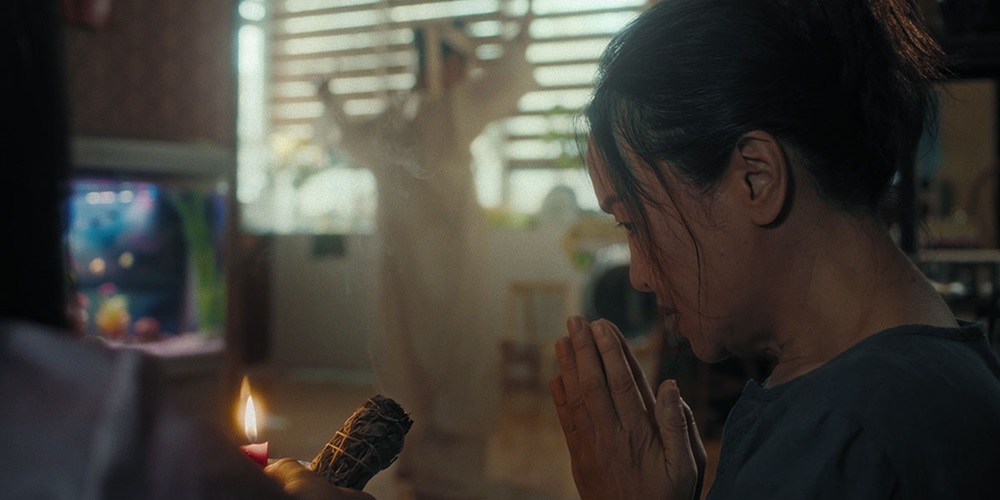
âDonât Cry, Butterflyâ (Vietnamese: MÆ°a trên cánh bÆ°á»m), the debut feature from Vietnamese filmmaker Duong Dieu Linh, is a film that embraces the quiet struggles and societal expectations shaping womenâs lives. Through the story of Tam, a middle-aged wedding planner who witnesses her husbandâs infidelity on live TV, Linh brings us a rich, culturally anchored narrative that blends humor, tradition, and a longing for freedom.
That this is Linhâs first feature-length film, and seeing how the storyâs rich themes play out, is a testament to what the filmmaker has in store for us next.
More QCinema Coverage: âAll We Imagine as Lightâ Meditating on the PersistenceâDespite the Impermanenceâof âHomeâ
A Protagonist Caught Between Family and Self
Tam (Tu Oanh) is the typical Asian woman. She manages both her family and work with determination, yet she faces a series of expectations that demand far more from her than they do her husband. Her husband Thanh (Le Vu Long), who moves with a sloth-like indifference, remains nearly silent throughout the film; only speaking one line near the endâa choice made by the actor to amplify his characterâs apathy and emotional distance.
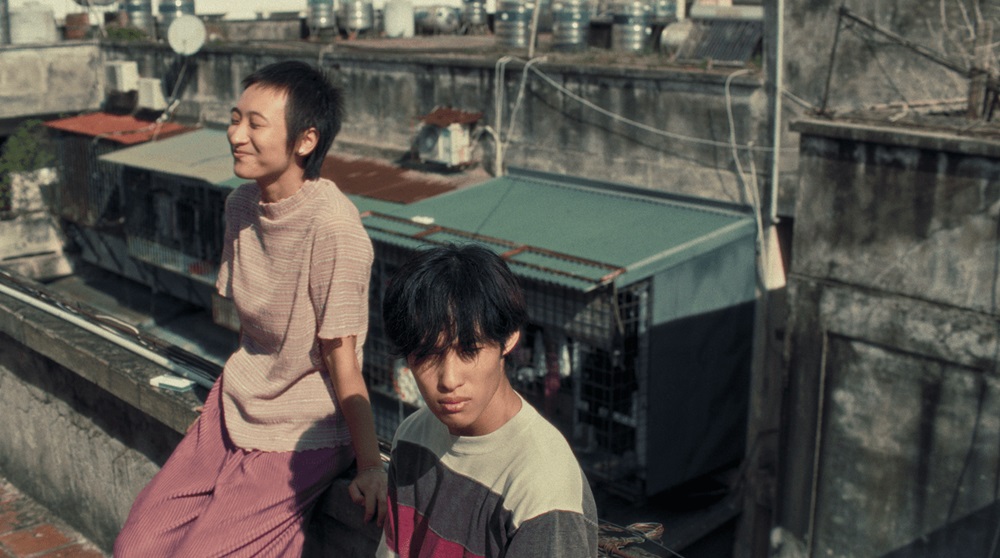
On the other hand, Tamâs daughter, Ha (Nguyen Nam Linh), represents a generational shift, caught between her desire for independence and the pressures of familial obligation. In seeking to escape her world, Ha dreams of studying abroad. Itâs a prospect that Tam quietly disapproves of. This, even though, like her daughter, she too feels the growing desire to break free from her one-sided marriage.
Tamâs world unravels in the most public and humiliating way when she learns of her husbandâs affairâbroadcast live on TV for all of Hanoi to witness. Itâs a revelation that leaves her shattered and brings shame upon her family. However, rather than offering comfort or support, people around her subtly suggest that the blame lies with Tam herself, implying she should have kept her husband in check. Itâs an unfair, painfully familiar accusation that only deepens Tamâs frustration, further pressuring her to âfixâ her marriage rather than confront her husbandâs betrayal.
Throughout this ordeal, Tamâs husband remains disengaged, spending most of the film in a state that underscores his emotional absence. In contrast, Ha is keenly aware of her motherâs distress, though she channels her own frustration into dreams of studying abroad. Torn between family loyalty and a deep-seated desire for independence, Ha represents the pull of a younger generation eager to step out from under the expectations of tradition.
Layered Symbolism and Cultural Anchors
Itâs in this push and pullâbetween familial duty and individual needsâthat Tamâs story unfolds, laying bare the invisible weight of cultural expectations on women, particularly in times of crisis. Tam, faced with community pressures and her own shame, turns to mystical means as a last-ditch attempt to fix her marriage, convinced by others that she must somehow redeem herself and her family through supernatural intervention. In doing so, she reflects the many layers of sacrifice women make to uphold family ideals, often at their own expense.
The symbolisms in âDonât Cry, Butterflyâ reveal themselves gradually, with recurring images that embody Tamâs longing and frustration. A leaking ceiling, which only the women seem to notice, grows into an ominous force, mirroring the burdens weighing on Tamâs family life. Another scene shows Ha and her friend Trong (Bui Thac Phong) accidentally killing a butterflyâa layered moment where Ha reflects on her familyâs disappointment over her gender.
Linh carefully uses these symbols to explore the tension between honoring tradition and the invisible, often painful, restraints it places on women. The butterfly, a symbol of freedom and transformation, reflects the freedom both Tam and Ha crave but cannot yet achieve.
As an Asian audience member, I found it easy to recognize the complexities the filmmaker weaves into the story, especially the mix of spirituality and folklore that shapes Tamâs choices. Linh herself has noted that these cultural undercurrents resonate strongly with Asian audiences who âjust get it.â In contrast, she acknowledges that Western viewers may feel distanced by the filmâs cultural references and reliance on visual metaphor over explicit explanations.
Visual Boldness and Surreal Elements
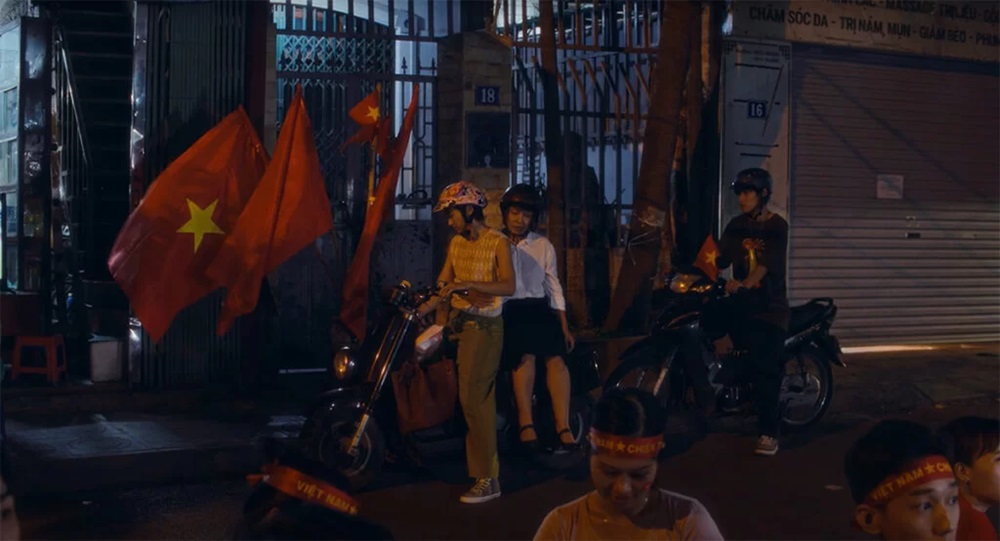
Visually, âDonât Cry, Butterflyâ is striking, bathing scenes in saturated hues and showcasing unconventional camerawork that adds both depth and whimsy. Ngo Minh Nghiaâs cinematography includes shots reflected off unexpected surfaces and complex tracking sequences, subtly enhancing the storyâs emotional pull. In addition, Linhâs direction keeps viewers off-balance in moments, like the scene where Tam and Ha feel sorrow upon discovering Thà nhâs infidelity while a crowd celebrates a national soccer victory around them.
Conversely, the supernatural mass in the ceiling and Tamâs visits to the âMasterâ blend family drama with mystical overtones, a tonal shift that adds to the filmâs offbeat charm but may feel jarring for some. Even so, this surreal side isnât fully integrated into the story, and the filmâs multiple threads, such as Haâs friendship with Trong, can feel unresolved. While this stylistic choice aligns with Linhâs preference for open-ended storytelling, the lack of cohesion might leave some audiences puzzled.
More QCinema Coverage: âLost Sabungerosâ: A Chilling Portrait of Disappearances and Impunity in the Philippines
âDonât Cry, Butterflyâ: A Debut of Complexity that Shows a Lot of Promise
Finally, one of the filmâs great strengths is its cast, especially Tu Oanhâs portrayal of Tam. Her restrained, nuanced performance captures Tamâs quiet resilience and inner conflicts, giving depth to her journey through shame, determination, and self-discovery. Nguyen Nam Linhâs Ha, meanwhile, brings an intense, youthful energy that emphasizes the generational divide between mother and daughter.
Itâs an acquired taste, sure. But âDonât Cry, Butterflyâ is an ambitious film, rich with visual symbolism and steeped in cultural context. Director Duong Dieu Linhâs bold mix of genres and themes may be polarizing, especially for audiences unaccustomed to its shifting tones and visual metaphors. However, for those willing to embrace its unique rhythm, the film presents an incisive meditation on family, cultural obligation, and the sacrifices women make to uphold both. Itâs a promising, inventive debut that captures a world of unspoken desiresâa story of women reaching for freedom in a society that often holds it just out of reach.


A Vietnamese-Philippine-Singaporean-Indonesian international co-production, “Don’t Cry, Butterfly” screened in this year’s QCinema International Film Festival under its Asian Next Wave section. The festival runs from November 8 to 17, 2024. Follow us for more coverage.




