





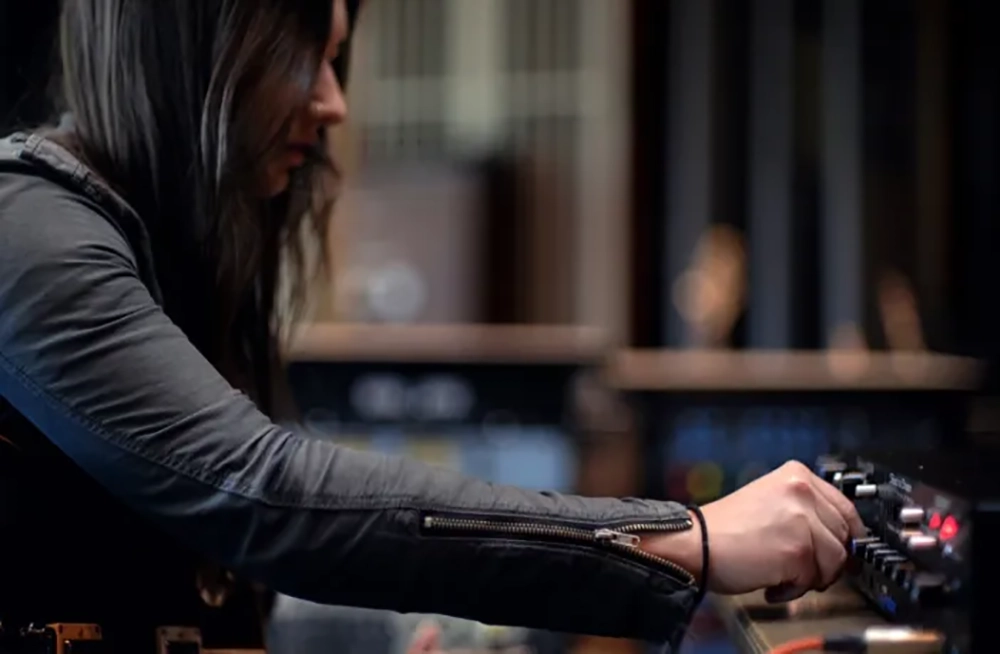
How do you forge a bond with someone whom youâve never met? Director Alison Tavel sets out for this exact mission with âResynator,â her documentary film which recently had its world premiere at this yearâs SXSW Film festival.
In her efforts to learn more about the revolutionary synthesizer her late father invented in the 1970s, Alison decides that itâs her objective to share the technology with the world. Along the way, however, she gets to establish a transcendent bond with him, a man and a father she never got the chance to know.Â
Discovering Resynator and the Curiosity It Sets Off
âResynatorâ begins with Alisonâs voiceover, presenting the film as if it were a letter she wrote to her late father Don Tavel. âDear Don, this is me. Youâve missed a lot over the years,â she says, before explaining to her father her upbringing in his absence.
As the film reveals, Don died suddenly when newborn Alison was just ten weeks old. And growing up, the filmmaker kept hearing stories about her âgeniusâ father, stories that became somewhat mythical and even superhuman by nature. It would take a reality check during her fourth grade, when upon researching to write a school report about âthe inventor of synthesizer,â she didnât see her fatherâs name in the encyclopedia. That counterpoint to one of the stories she often heard made Alison forget about Don for a while.Â
It was during her mid-twenties, working as part of Grace Potterâs touring crew, when Alison discovered her fatherâs invention packed away in a box in her grandmotherâs attic. That synthesizer prototype, the titular Resynator, is essentially a precursor of MIDI technology that combined digital tracking and analog effects. This stokes her curiosity as to why her father never built upon its potential and instead tucked it away.
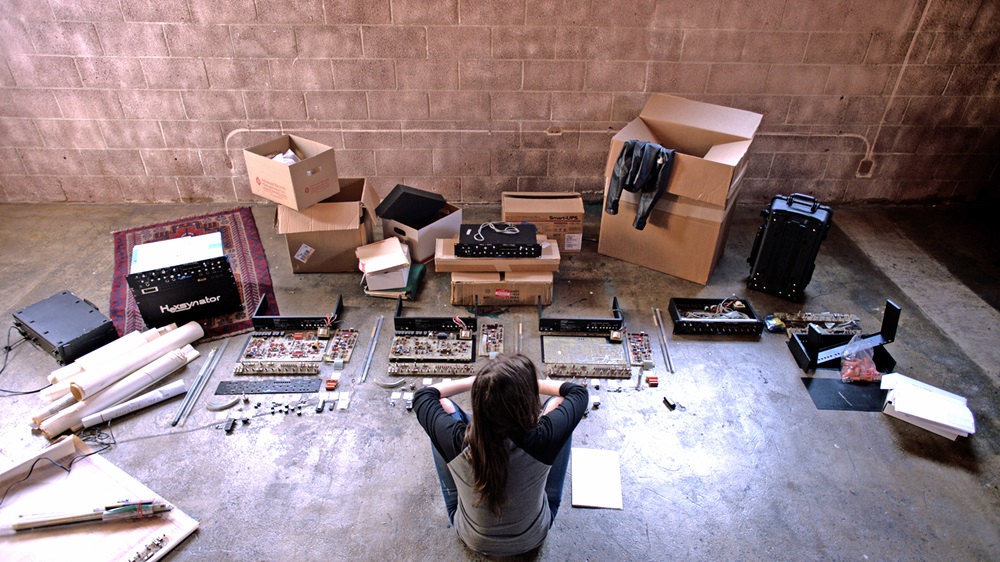
Alison admits that despite the praises people kept heaping on Don, her life is largely absent from any meaningful connection to him. Nonetheless, her discovery of Donâs invention served as the catalyst for her to uncover things about Donâs life she never knew. From what started as mere curiosity, Alison sets off on a quest to know more about her fatherâs invention â at the same time learning less about the superhero and more about the man.
Getting to Know the Father She Never Knew
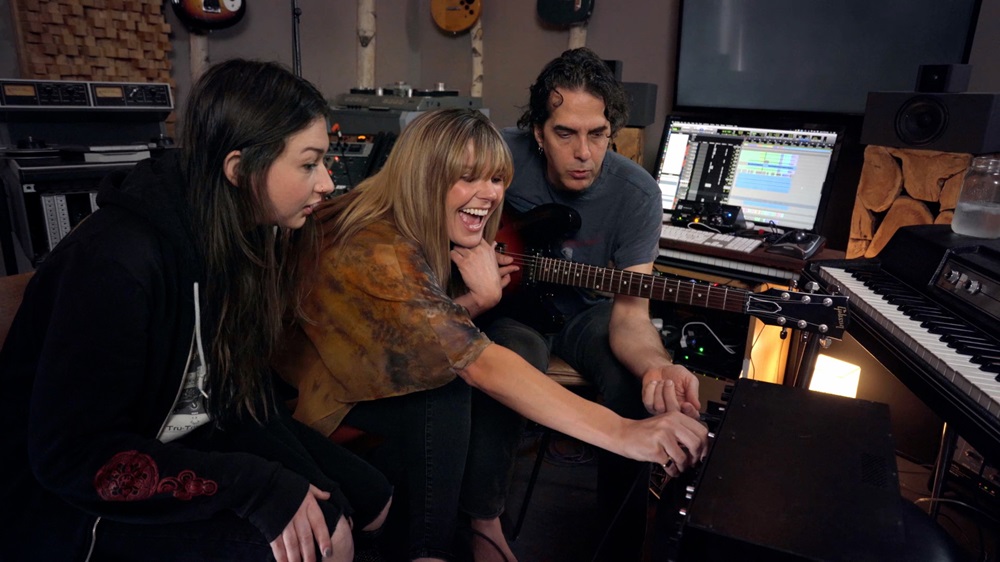
Apart from Alisonâs family and friends, both estranged and lost, a whoâs who of celebrated musicians grace the film. Aside from Potter (who advises Alison to let other people use Donâs Resynator to see what magic it unleashes), the documentary features Fred Armisen, Gotye, Rami Jaffee, Butch Vig, Jon Anderson, and Peter Gabriel. The latter, noted as one of the few early users of the Resynator, encourages Alison to continue Donâs work, as a way to fulfill the filmmakerâs purpose of her search for her father.Â
Without spoiling anything, âResynatorâ also examines the realities of life as it applies even to musical and technological geniuses. Mental health, depression, and other dark chapters of a personâs life will no doubt contradict the rose-colored perception the public has of them; and itâs the same ride Alison finds herself in. Suddenly, the superhero version she has of her father â someone whose exploits included playing with blues legend B.B. King â fades away in favor of a picture of a vulnerable man who had flaws, was imperfect, and most of all, human.
Alison makes it clear from the get-go about the subjectivity of this film, trying to deconstruct her long-held perception of Don and focus instead on his humanity. What she discovers reveals a lot about the man. These include his likely support of artificial intelligence if he were still alive today, his dedication of Leon Russellâs âA Song for Youâ to Alison, and the events before the car accident that took his life.Â
âYou were 25 when you began inventing the Resynator. And I was 25 when I found itâ
Several parts of the film feature Danny Maddenâs animation work that portrays Don as Superman doing both heroic and mundane things, a rendering of what the man meant to those who knew him. Madden, whose previous work includes the animated sequences in âEverything Everywhere All at Once,â infuses nostalgia in his animation here. As a result, the sequences complement Alisonâs discovery of things she didnât know about Don, while at the same time lining up those discoveries with what she already knows.Â
If anything, do stay for the end credits song, where Alison sings a duet with Don thanks to the help of AI tools and lyrics taken from some of Donâs songs. The end result, âJust for You (My Time is Moving On),â isnât by any means perfect, with the robotic singing still audible. Once context comes in, however, the song becomes a perfect semicolon to Alisonâs journey to know her late father better. In a way, the Resynator project has become her lifeline to this ongoing discovery, as she muses in the end:
âWho you are is who I am, because I am a resonance of you.â
A Promising Directorial Debut

âResynatorâ marks Tavelâs feature-length directorial debut, and an auspicious one at that. While the film at times gives way for family drama befitting a genealogy documentary series, how Alison subjects herself to the whole ordeal is something that deserves praise. Even (and especially) when the narrative became too personal, the filmmaker chose to continue filming. With that, the documentary stops being about anything else other than a daughterâs yearning to know â for the first time in her life â who her father really was.
For audiophiles interested in learning about arguably a lesser-known history in music, this is a gold mine of a documentary. Stripped of its outer garments, however, âResynatorâ is a deeply personal film. At its core, this is a daughterâs love letter to someone whom the world knew as a Renaissance man ahead of his time, but whom she wished sheâd always known as just âdadâ.





