





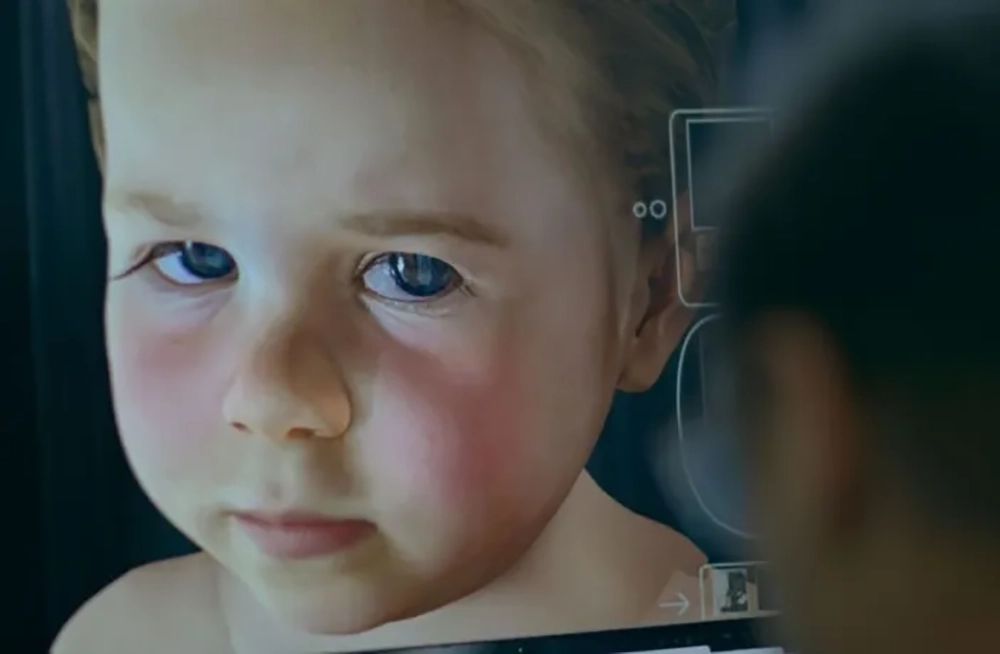
If you had a chance to talk to someone that died that you love, would you take it? âEternal You,â a documentary film by Hans Block and Moritz Riesewieck now playing at this yearâs Sundance Film Festival, asks this question almost rhetorically.Â
Touching upon the continued rise of artificial intelligence and its role in forging human connections, the film is an exploration of a profound human desire to communicate, and the ethical considerations when one chooses to treat it as a commodity.
In the beginning of the film, âEternal Youâ posits a fascinating juxtaposition between artificial intelligence and most religions. It says that both sectors promise that there is something after death â that humans essentially donât have to die, and that their existence can transcend the limitations of their corporeal states.
But while itâs a fascinating thought, the documentary doesnât really delve deep into that comparison. Instead, it focuses on the tightrope walk of striking the balance between technological innovation and humansâ ethical and moral responsibility.
âEternal Youâ: A Closer Look into Immortality as a Commodity
In 2023, an article went viral online about ChatGPTâs potential ability to make it possible for people to talk to the dead. By referring to the deceased loved oneâs digital communications (virtual communication styles, facial recognition, voice recordings), AI programs can simulate them, essentially attaining digital immortality.
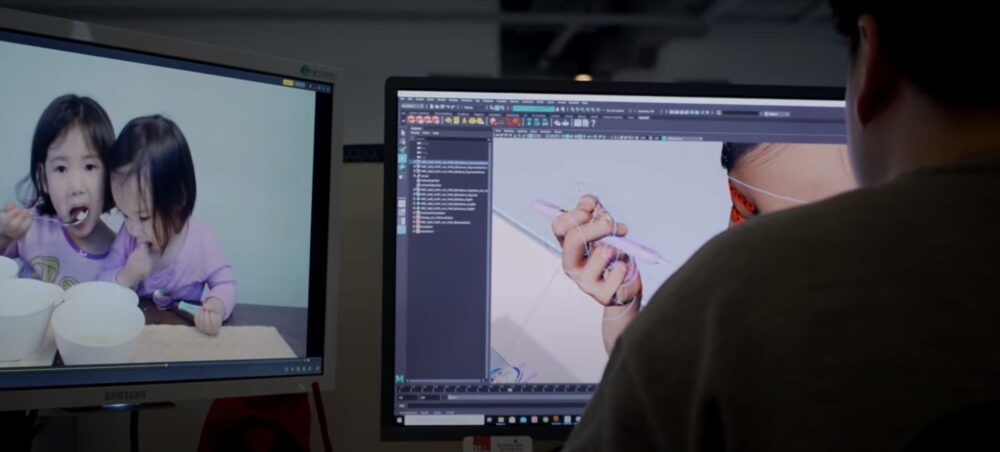
âEternal Youâ heavily features that startup, Project December, alongside other startups that include HereAfter.ai and Resemble AI. Basically, they use AI capabilities to create avatars that allow relatives to talk with their loved ones after they have died.
However, as a computer programmer and game designer, co-creator Jason Rohrer started Project December only as a personal endeavor, seeing the possibilities of generative AI when one tweaks the codes to be able to talk to different characters. It was only when someone approached Rohrer and volunteered to simulate the formerâs dead fiancée did Project December take off. Suddenly he was inundated with stories from people whoâd lost loved ones, requesting Rohrer to simulate their departed ones. Â
On Humansâ Very Unhealthy Relationship with Grief
When not providing the audiences with exposition, the filmmakers take the backseat. Instead, they allow the people to openly discuss their experiences using these AI tools to communicate with their dead loved ones. And thatâs where the film shines. At certain points, âEternal Youâ eerily plays out like a real-life version of a âBlack Mirrorâ episode from over a decade ago. Since then, technological advancements have taken great strides. And with the continuous rise of artificial intelligence, communicating with anyoneâincluding the deadâis made possible.
In the film, one customer attempts to check on her first love. Another man expresses his longing for his high school sweetheart even years later. Later on, a family member wishes to rid themselves of guilt. These are stories of everyday people, whose love and grief sound all too familiar. Regardless of oneâs reason for wanting to talk to the dead, humans have always had a very unhealthy relationship with grief, and âEternal Youâ keys in on that.Â
Related Review: âThe Resemblanceâ Examines Novel Measures to Overcome Grief and Ultimately Heal
The Danger of Turning the Dead into a Billion-Dollar Business
âEternal You,â in a way, exhorts the audience to reserve judgment against those willing to bleed their pockets dry just to avail of this kind of generative AI. Sure, from the outside looking in, it might look like an unhealthy obsession to hold on instead of moving forward. But deep down, it might simply be an important step toward healing: that of accepting a lossâalbeit a very expensive form of acceptance at that.Â
However, it stops short of admonishing a potential billion-dollar sector that, not long from where we are today, would likely profit from our digital remains even after weâre gone. For a documentary film that dares to explore a timely topic that touches on the importance of ethics, providing some semblance of solution wouldâve been better than simply leaving the moral complexities up to the audience to navigate.
And by posing important questions without providing concrete calls to action, this is where the filmmakers fall short. For what itâs worth, it couldâve at least taken a stand.





