





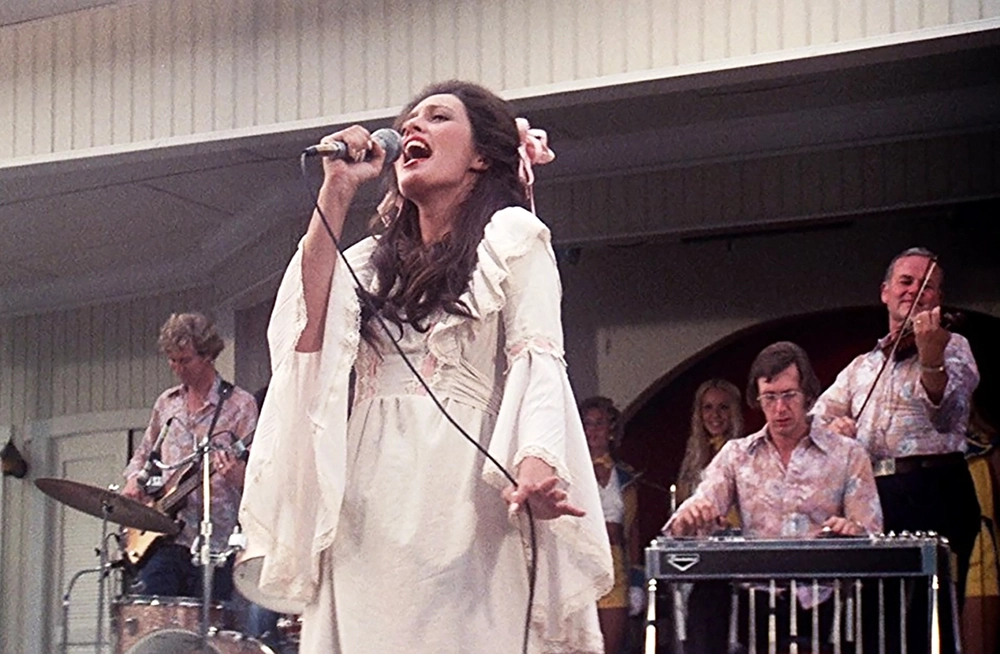
In December 2022, ‘Sight & Sound’ released its once-a-decade ‘Greatest Films of All Time’ ranking. This was the year the list blew up, with unprecedented changes throughout the entire Top 100, including at the top. With this essay series, weâre exploring the films that were new to the Top 100, and those that were bounced from the list. The goal is to analyze â and enjoy â each film, considering its current or former position in the canon, stepping back from the hot takes and manufactured controversies to evaluate a film on its merits. The first essay in our series looked at a new entry, Charles Burnettâs “Killer of Sheep” (1977). Next up is Robert Altmanâs “Nashville” (1975), which fell out of the Top 100, dropping more than 40 spots from its 73rd ranking in 2012, tying at 114th in the 2022 poll.
Watching Robert Altmanâs “Nashville” doesnât mean just absorbing all 160 minutes of the film in its grand olâ glory. The experience unearths an insatiable appetite to learn more about how Altman and screenwriter Joan Tewksbury could have pulled this off, bringing together an epic cast on a slim budget, unfurling a universal story about rivalry, loss and broken promises in the country music capital of the world. Lauded as an instant classic three months before its theatrical run (Pauline Kael: âan orgy for movie-loversâ), “Nashville” still shines brighter than Haven Hamiltonâs belt buckle, no matter how many steps it has descended down from the cinematic pantheon. Featuring twenty-four main characters (the actors wrote most of their own songs), “Nashville” is a sprawling, punch-drunk opera whose massive reach matches its ambition, mourning and cheering those American virtues of life, liberty, and the reckless pursuit of failure.Â
A Soundtrack that Explores its Characters
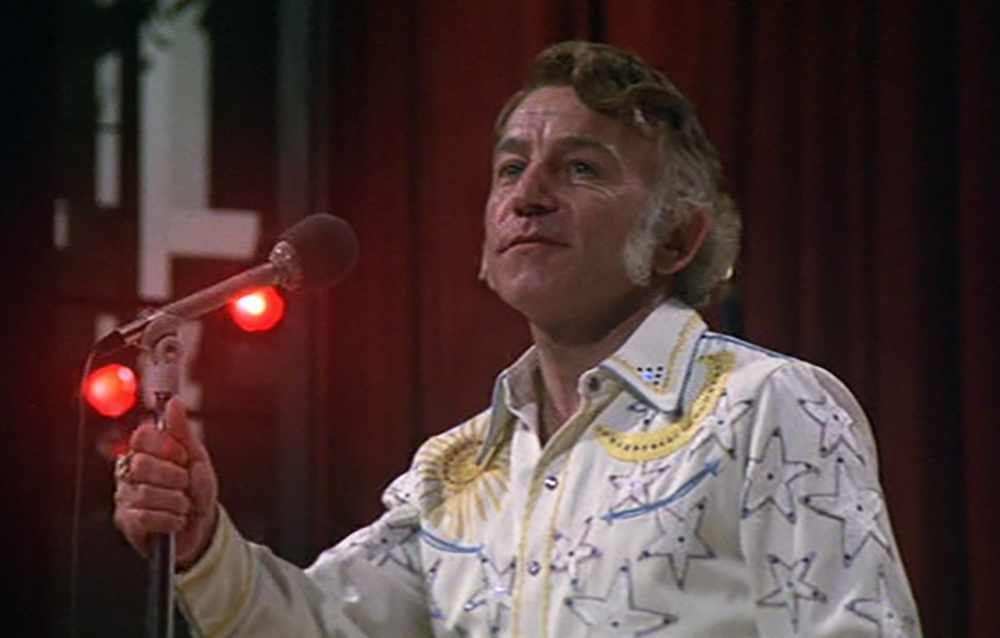
The eclectic, homemade soundtrack tugs at viewers and penetrates these characters. Considering the music apart from the film gives a sense how intricate the overlapping plots and character arcs are, refuting â or at least challenging â the notion that so much of it was improvised. True, Altman encouraged improvisation, but it feels in the vein of how Mike Leigh plans out his films, with key players settling into their characters off-screen so that it gels effortlessly on-screen. Despite “Nashvilleâs” size, the film never lacks cohesion, and the songs are a cheat sheet revealing the gulf between reality and imagination. The patriotic zeal of a Hamilton (Henry Gibson) song, for example, uncovers not his political ideology but the contradictory nature of this starâs public and private life. Same for the self-absorbed folk-singing hunk Tom (Keith Carradine) whose eyes wander with the camera when he croons, âIâm Easy.âÂ
But Altman is not there to serve as judge or jury for these twenty-four dreamers, believers, and schemers. The rational tussles with irrational from start to finish, with stubborn delusion prevailing. Hamilton sings his anthem to fatherhood and monogamy, âFor the sake of the children, we must say goodbye,â while his wifeâs in Europe and mistress (Barbara Baxley) is backstage. Waitress Sueleen Gay (Gwen Welles) is determined to be a star, no matter how many times her coworker Wade (Robert DoQui) tells her to give it up (âYouâre not a singer ⦠theyâll kill you!â). And in a scene when sheâs finally performing, itâs for a group of sweaty men in a smoky room, who boo and jeer her singing. In response, Sueleen is pressured into an impromptu strip tease, a heartbreaking turn that anticipates the tragic outcome that will befall two revered stars on stage the next day.
Did Gary Busey Write the Best Song?
At a political rally, the country idols Barbara Jean (Ronee Blakely) and Hamilton, are shot, and the hot-mess hero-on-the-spot Albuquerque (Barbara Harris), previously on the run from her husband (Bert Remsen), steals the show. She belts, âIt Donât Worry Meâ with extraordinary brio, imploring the stunned crowd to join her while Altman pans back to survey the crowd gathered at the cityâs parthenon. Then, the camera shoots up to the sky, scanning away from a giant American flag in one of the great stage exits in film history. Far from ending on a high note, the remaining spectators freeze, stuck in a haze of disbelief that means the only logical move is to escape, so Delbert Reese (Ned Beatty) yanks his wife Linnea (Lily Tomlin) from her gospel choir, and his colleague, the dapper and shrewd John Triplette (Michael Murphy) turns away, defeated.Â
For the rest of us, itâs impossible to bow out and move on. We need to hear, read and see more. Oh, to be alive to witness the galvanized critical community, in a contest of superlatives: Pauline Kaelâs five-page New Yorker rave (âA radical, evolutionary leap,â) after seeing a 3-hour rough cut, Village Voice critics Molly Haskell and Andrew Sarris in an off-kilter âduet,â with Haskell praising it as âa Chaucerian musical pilgrimage whose Canterbury is Nashville,â and Sarris calling it âthe most exciting dramatic musical since ‘Blue Angel.'” And the long tail of gossip and trivia: Louise Fletcher cast away from her role as Linnea Reese, only to win ‘Best Actress’ for her unforgettable Nurse Ratched in “One Flew Over the Cuckooâs Nest.” Lily Tomlin, as Reese, would bag a ‘Best Supporting Actress’ nomination in her first screen role. Also: Gary Busey wrote one of the best songs?
‘Nashville’ Casts a Wide Shadow
Still, like so many Altman films, the cultural and critical discourse didnât translate to commercial or awards-season success. It was Altmanâs biggest box-office hit since “M*A*S*H” (1970), but it earned a reported $10 million to “M*A*S*Hâs” $80 million. The two films did, however, win the same number of Oscars: one. Keith Carradine took home the gold statue for ‘Best Original Song,’ (âIâm Easyâ) while at the 1976 ceremony Altman lost in an embarrassingly rich ‘Best Director’ category (Federico Fellini, the winner Milos Forman, Stanley Kubrick, and Sidney Lumet) and arguably the most formidable ‘Best Picture’ race in history (“Barry Lyndon,” “Dog Day Afternoon,” “Jaws,” and the winner, “One Flew Over the Cuckooâs Nest”). Tewksburyâs wild, inventive script, based on her own experience visiting the city (which, like “Nashville,” begins with multi-car highway pile up), didnât even earn a nomination.Â
And yet, “Nashville” casts a wide shadow. True, they donât make âem like this anymore, but Altmanâs influence splays across modern film and TV. In his early-career, mosaic triumphs “Boogie Nights” (1998) and “Magnolia” (1999), Paul Thomas Anderson said that he was just âripping Altman off.â The anti-establishment, anti-genre work of Kelly Reichardt is a direct descendent of Altmanâs, especially her “First Cow” (2019), which centers a doomed business partnership at the turn of the Century, riffing on “McCabe & Mrs. Miller” (1971). Reichardt even cast Altman stock-company regular René Auberjonois for a second time, credited as âMan with Raven,â a possible wink to his madcap ornithologist in Altmanâs “Brewster McCloud” (1970). The scathing class satires from Ruben Ãstlund (“Triangle of Sadness”) and Mike White (“White Lotus”) ooze Altman, that magic blend of humor and cynicism, of charactersâ tenderness, deception and self-hatred, punctuated with sad/funny/haunting finales.Â
A Middle Finger to America? Or a Call for Empathy?
For all the heightened drama and political intrigue that “Nashville” concocts, much remains unresolved. But, how could it not? The cycle of disappointment, hope, and success spins and will keep spinning. Still, Altman dishes out scorn and glory in appropriate proportion and passes only a modest amount of judgment on the characters (the narcissistic philanderer Tom, Geraldine Chaplinâs antic BBC reporter Opal) who, in a lesser movie, would be villainized in a cartoonish manner. And the hypocrisy of those who are too pure (Linneaâs a loving mother of two deaf children, a vibrant gospel singer, and unfaithful to her husband) is exposed. In those instances, Altman isnât out to admonish these people or us for empathizing with them, heâs complicating or subverting a staid message that there are only good and bad people, winners or losers. Not so in Altmanâs America, or actual America. Â
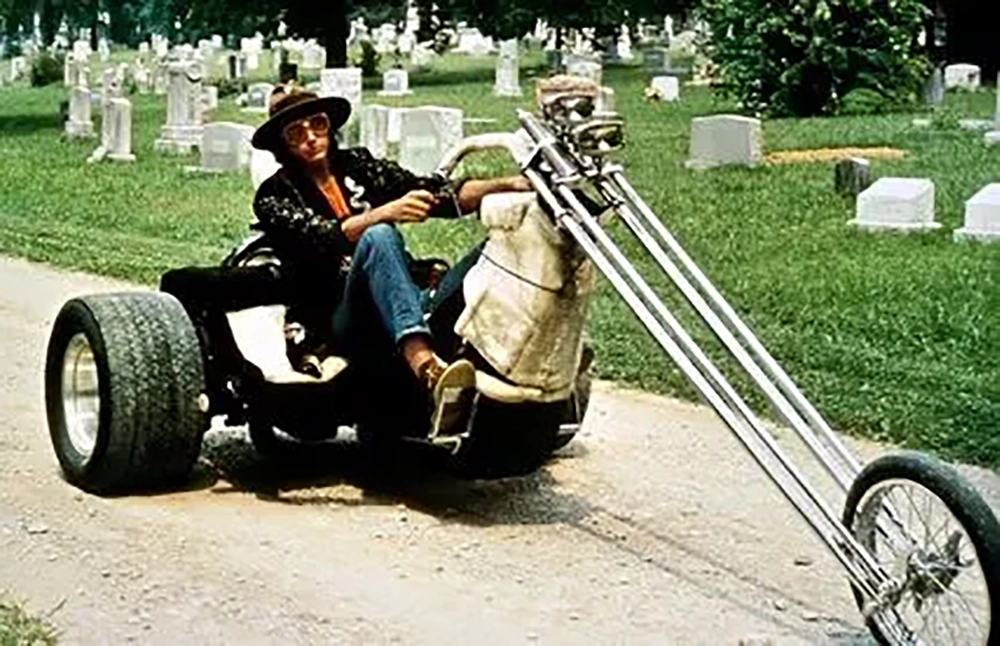
Released in June 1975, “Nashville” was the height of Altmanâs legendary 1970s hot streak, which began with “M*A*S*H,” the irreverent Palme dâOr winning coup. Next was the dreamy, devastating anti-Western (“McCabe”), some trippy psycho horror (“Images”) and two spins on Old Hollywood tropes, the whodunnit (“The Long Goodbye”) and the lovers-on-the lamb tragedy (“Thieves Like Us”). This range could baffle, frustrate, or delight even the staunchest supporters, and Kael herself wrote after “Images” that Altman seems to alternate between success and failure, going âone on, one off.â But thatâs what makes each film so rich, and the rabbit holes so addictive. No concept or âmaking ofâ documentary is the same, although the constant is a push-and-pull between the artist, his collaborators, and the studio executives. No wonder Altman abandoned the system entirely, putting out a string of play adaptations in the 1980s before returning the â90s with two stunners.Â
‘Nashville’ as a Predecessor to Modern Filmmaking
When Altman roared back with “The Player” (1992) and “Short Cuts” (1993), his reputation as an actorsâ director was intact, and those stellar ensembles and plot complications tie back directly to the “Nashville” experiment. Plots unfold without the characters realizing theyâre part of some grand narrative, and the audience understands more than anyone that everyone is doomed. In “Nashville,” tension thickens with the fervor of Mary (Cristina Raines) piercing the lounge with Buseyâs âSince Youâve Gone,â aimed at both her husband Bill (Allan Nichols) and lover Tom (Carradine). The escalating sense of dread coming at the end doesnât diminish the payoff of each individual scene, with Altman deftly blending conventional melodrama (cheatinâ hearts, political violence) with bittersweet redemption. Linnea meets, then dispatches Tom on her own terms, and when an injured Hamilton hands the mic to Albuquerque, she answers the call.Â
All of these strivers share such an individualistic zeal that “Nashville” can come off as both a love letter to ambition and a middle finger to America, decrying the crooked system while saluting its occasional gift for inspiration. Certain in-jokes risk poking fun at these personalities, although the campaign sloganism from Hal Phillip Walker (Thomas Hal Phillips, never seen in the film) might as well have been cut-and-pasted from recent election cycles. The bland and catchy inanity wins over the general public and media, with one TV anchor agreeing with Walkerâs statement that, âChristmas does smell like oranges.â Walkerâs van ambles through the city spouting platitudes through megaphones, while his operatives on the ground (Delbert and John) recruit talent for fundraising events, including the ill-conceived show which humiliates Sueleen, and the rally at the end, which leaves one star dead and the entire nation wounded.Â
A Film that Persists Through the Ages â Despite its ‘Top 100’ Fall
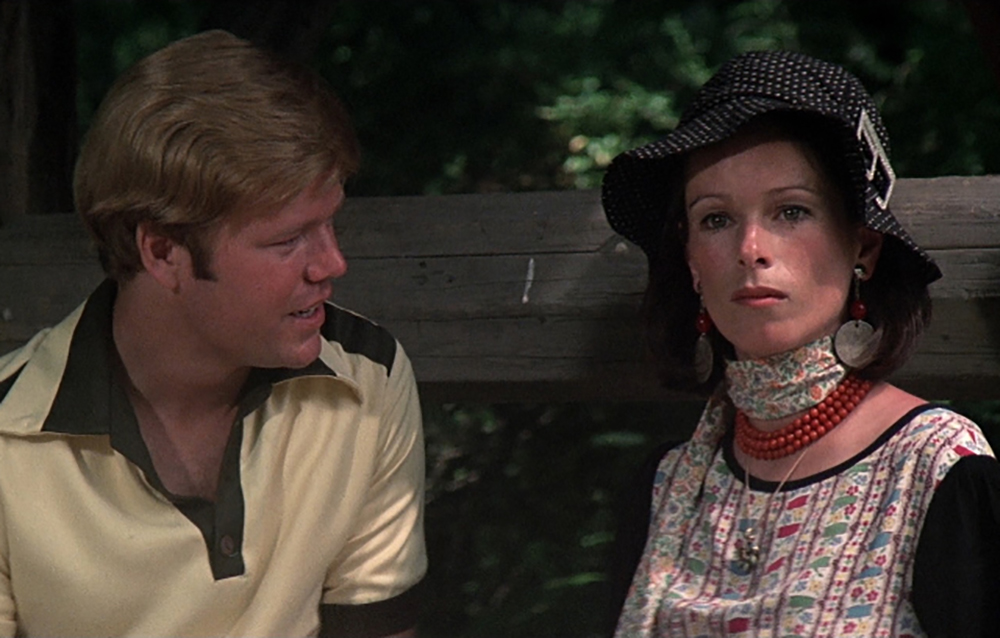
Midway through the film, many of the filmâs characters (even Eliot Gould, an Altman regular makes an appearance, as himself) gather at Hamiltonâs cozy cabin in the woods for a party. In one of Opalâs many rambling monologues, she declares the setting to be âpure unadulterated Bergman.â And that line, an improvised zinger which strikes directly at its arthouse target audience, could be the best way to summarize “Nashville:” itâs pure, unadulterated Altman, his most perfect imperfection, a titanic achievement whose lyrics still echo nearly a half century after the orgy started. Altman films are a genre unto themselves, and while “Nashville” inspired a dedicated niche following, the most loyal, winning homages come from Altmanâs own late-career films.Â
Few have tread Altmanâs windy path and inimitable style, so perhaps it shouldnât shock that his films are conspicuously absent from canon conversation. His one film in the Sight & Sound Top 250 is one fewer than protege Paul Thomas Anderson, and exactly the same as personas non grata Woody Allen and Roman Polanski. Maybe fans canât settle on a favorite (Director Hirokazu Koreeda selected “Short Cuts” in his Top 10 list), or the voting public consider him a New Hollywood outsider, starting in TV when boys wonder Scorsese, Coppola, etc. emerged from prestigious film schools. No matter how far “Nashville” falls out of favor, itâs harder to shake than a Carradine jingle. As Kael wrote, “Nashville” “is a pure emotional high, and you donât come down when the picture is over, you take it with you.â All that praise, for a first draft! Wait till she sees the final product.Â
The next essay in this series will be on Barbara Lodenâs Wanda (1970) new to the Top 100 at no. 48.




