





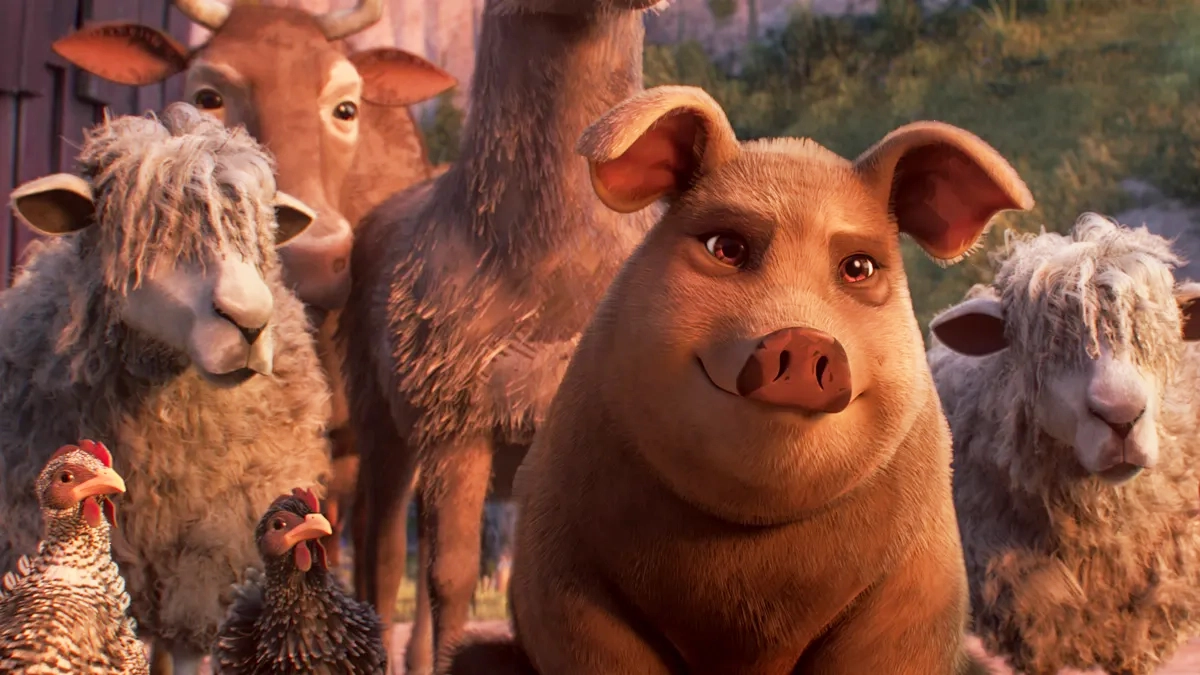
It can be incredibly draining to watch a film that completely misses the essence of the book itâs based on, all while claiming to fully grasp it. That is the experience of watching “Animal Farm” (2025), a film produced by Angel Studios that takes George Orwellâs political allegory of the 1917 Russian Revolution and Stalinâs rise to power and somehow turns it into a childrenâs movie with low-brow humor.
This adaptation stars Seth Rogen as Napoleon, sounding more like an AI-generated decision influenced by Reddit and expired weed gummies. To be fair, Rogen sounds like he is having fun. Honestly, most of the cast sounds like they are trying. Gaten Matarazzo in particular gives a genuinely charming performance as Lucky the Pig, bringing more emotional sincerity to the film than the screenplay ever deserves. But strong voice performances cannot save a movie that seems terrified of the implications of its own source material.
Betraying Orwell’s Source Material
And that is the central issue here: this “Animal Farm” wants the aesthetics of Orwell without any of the actual Orwell.
George Orwellâs “Animal Farm” is not merely âthe USSR but with pigs.â The novel transcends Stalinism by exploring how propaganda, historical revisionism, class manipulation, and authoritarianism thrive under any system that exploits fear and ignorance. Orwellâs work is deeply cynical about power itself. The pigs are not just communists. They are opportunists. The point is not âcommunism bad.â The point is that power rewrites truth until reality itself becomes negotiable.
Orwell’s understanding of propaganda, as shown in his line â âEvery record has been destroyed or falsified, every book has been rewritten, every picture has been repainted, every statue and street and building has been renamed, every date has been altered⦠Nothing exists except an endless present in which the Party is always right. I know, of course, that the past is falsified, but it would never be possible for me to prove it, even when I did the falsification myselfâ â highlights the malleable nature of truth in authoritarian systems, especially in this case with the writers choosing to promote “Animal Farm” in this way, losing the previous interpretation.
A Sanitized Children’s Adventure
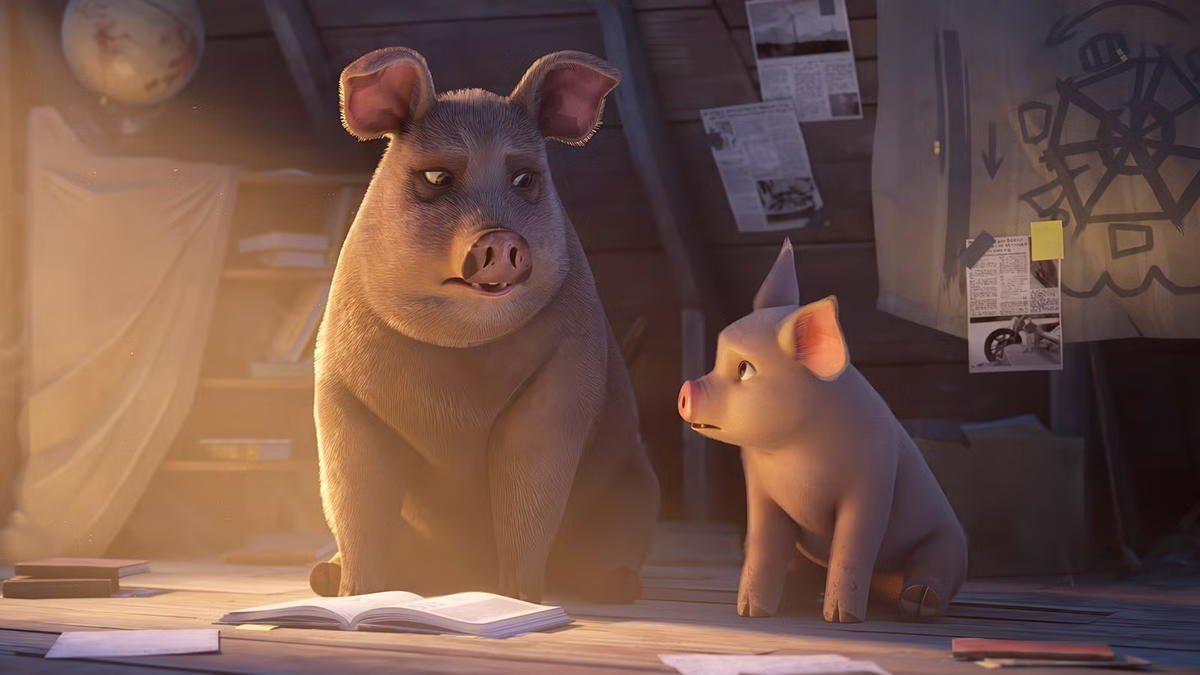
A friend of mine described the movie as â’Animal Farm’ if the pigs wrote it,â and unfortunately, that is the most accurate review possible. The movie softens the harshness of the original material, transforming it into something more mainstream and palatable. It transforms a grim allegory about corruption into a strangely sanitized childrenâs adventure that cannot decide whether it wants to entertain kids or reassure adults who already agree with it politically.
The result is tonal whiplash. One moment the movie gestures vaguely toward systemic oppression, and the next it delivers humor that feels engineered to entertain a twelve-year-old who just discovered YouTube poop compilations. The actual story of “Animal Farm” is dark, dreary, and deeply unsettling â because it should be. Watching ideals decay into tyranny is not supposed to feel like a DreamWorks side quest.
And yet the film keeps undercutting itself with jokes and safe storytelling choices, as though it is terrified children might accidentally think too hard.
More Parody than Dark Satire
The irony becomes almost performance art once you learn that Angel Studios marketed âMAFFA Hatsâ for the film â âMake ‘Animal Farm’ Fiction Again.â That sounds less like satire and more like a parody product from a fake commercial in a dystopian comedy sketch. You genuinely begin to wonder if the movie itself is an elaborate bit designed to prove Orwell correct through sheer existence.
At a certain point, I stopped evaluating the film as an adaptation and started evaluating it as a social experiment.
That is perhaps the most frustrating part. The idea of reviving “Animal Farm” in todayâs political climate is genuinely compelling. With rising misinformation, political tribalism, historical revisionism, and algorithmically amplified propaganda everywhere, Orwellâs work feels painfully relevant again. A modern adaptation could have been devastating. It could have been incisive, uncomfortable, and necessary.
Instead, this version feels like it was focus-grouped into submission.
The Film Works Visually
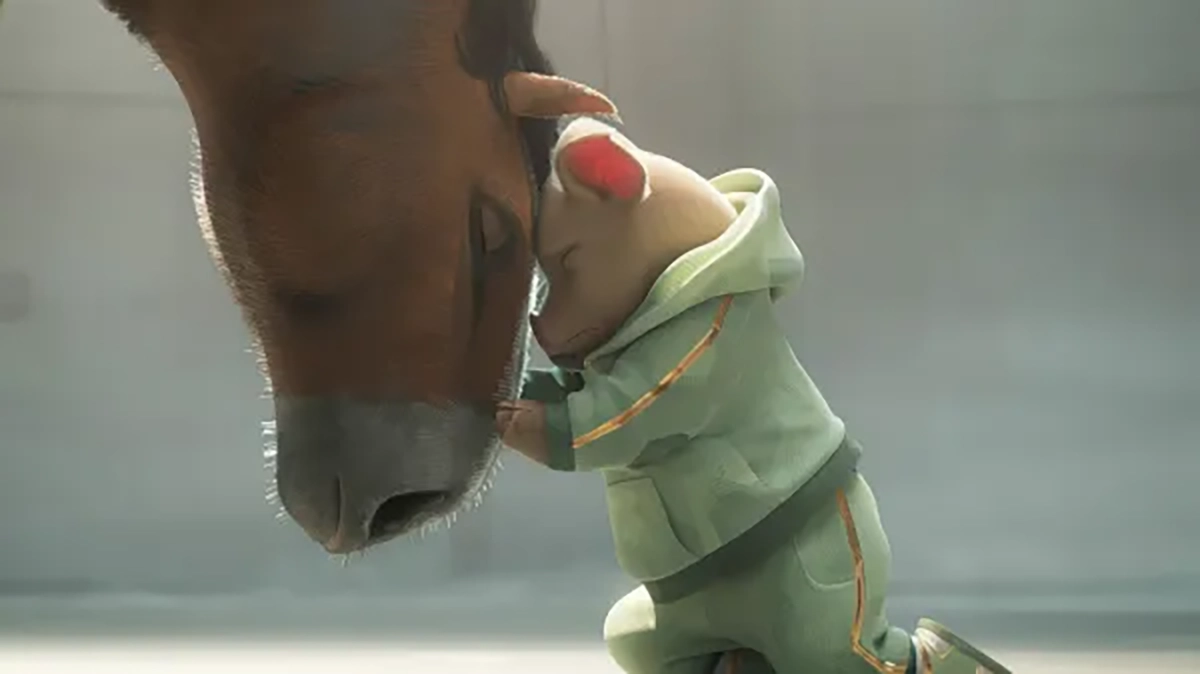
The animation is admittedly polished. The environments are detailed, the character designs are expressive, and there are moments where the film visually works. But if the strongest praise anyone can give your adaptation of “Animal Farm” is âthe animation looked nice,â then the phrase âputting makeup on a pigâ has never been more appropriate.
Because underneath all the visual polish is a film that fundamentally lacks conviction.
If you completely ignore the fact that it is supposedly based on Orwellâs work, there are components that function. Some performances are solid. Certain emotional beats land. Children unfamiliar with the original text may even enjoy parts of it. But as an adaptation, it collapses under the weight of its own compromises. It is too juvenile to engage adults meaningfully and too politically confused to justify its existence as satire.
A Film that Misunderstands the Assignment
If you want a genuinely effective animated adaptation of Orwellâs work, watch the animated 1954 version instead. That film understood the assignment, and I have loved watching it since I was a kid.Â
George Orwell wrote “Animal Farm” as a warning about propaganda, manipulation, and the corruption of ideals. This adaptation accidentally demonstrates all three.
“Animal Farm” is currently showing in theaters.


