





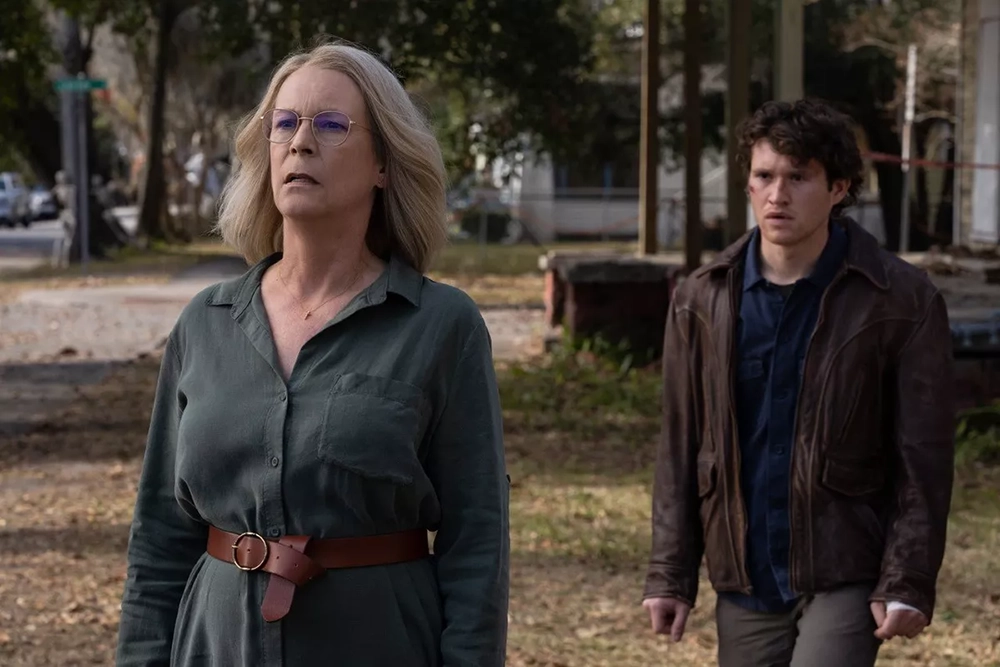
âHalloween Endsâ is a divisive film. Audiences are splitting into the âI loved itâ crowd and the âitâs garbageâ side. The first time I watched it, I wasnât pleased. But if I have learned anything from my âHalloweenâ time spent with David Gordon Green, itâs to look deeper, and look again.
The first time I watched âHalloweenâ (2018) I hated it. When I watched it again, a year and a half later, preparing for âHalloween Kills,â I asked myself, what didnât I like about this? Itâs okay. I realized the first time I watched it I went in with a huge expectation. Green is one of my favorite indie directors of all time, and âHalloweenâ is my favorite horror movie, period. I was expecting too much. Green had his own vision and couldnât live up to my idea of what I thought âHalloweenâ should be. I imagine many fans have this same reaction upon seeing âHalloween Endsâ (its 39% critic/57% audience on Rotten Tomatoes is further proof of this).Â
If the purpose of a filmmaker is to make you think, then Green succeeds in that along this franchise. If his first film was creepy (and it honestly improves more upon each viewing) and detailed Laurieâs traumaâand Michaelsâs evilâwell, his subsequent films became less overt, and more subtle. âHalloween Killsâ examined collective trauma, commenting on mob mentality and coming together, with clear Covid pandemic and hive mind themes. Audiences and critics didnât like that installment either. So, examining âHalloween Ends,â a warning: this movie is even more illusory, even less *about* Michael, and requires more intellectual heft. Michael is in the film for about 10 minutes of screen-time and you could argue this is not a slasher. If thatâs enough for you to not see it, you might want to quit reading.Â
An Intangible Film; Green Abandons the Standard Slasher
But what Green has done here is paint Michael and Laurieâs story into a grander picture of trauma, evil, and lingering ghosts (no, not tangible ones; this is not a film like âHalloween 6â where evil is *controlling* Michael). Itâs impossible to review this film without pretty significant spoilers. This is not an âand then this happens, etc.” review. But if you want to be totally in the dark on âHalloween Ends,â watch the film first.Â
Green is clearly going for an off-the-cuff, if related picture with âHalloween Ends,â present in the first frame, as a loud rock song overlays the opening credits, which this time are colored in blue instead of Halloween orange. Weâre introduced to a young man, Corey (Rohan Campbell), who is babysitting last minute for a Haddonfield family a year after the last two film’s events. I wonât spoil verbatim what happens, but an accident while babysitting leads to the familyâs young sonâs death. Warning: itâs pretty brutal. And no, it doesnât involve Myers or a knife. Itâs ruled an accident, and the events will go on to haunt Corey on repeat.Â
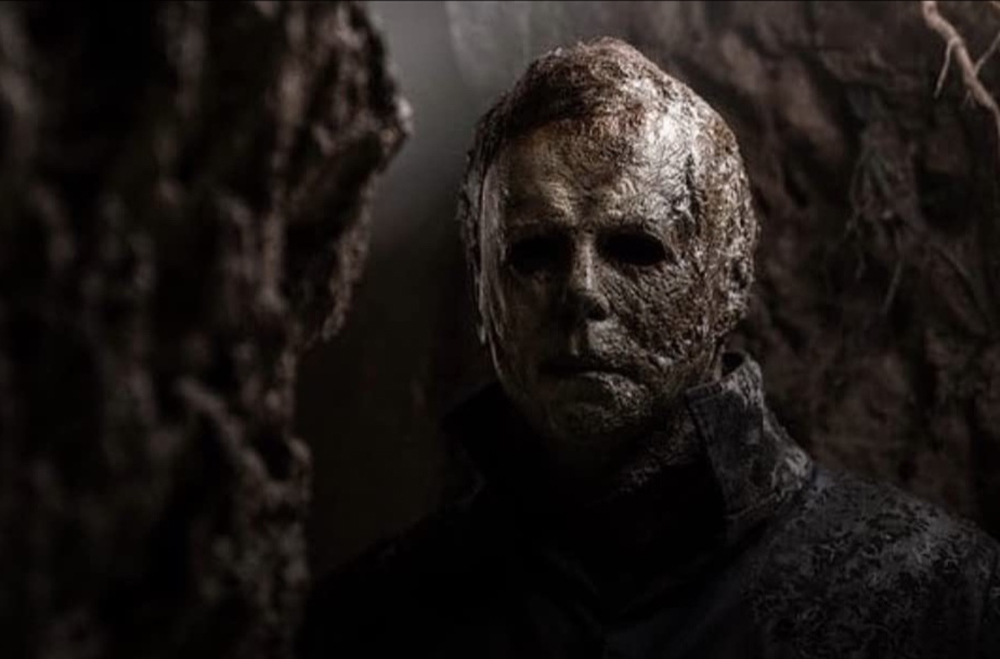
If the Haddonfield in âHalloween Killsâ contained glimmers and sparks of hope, this one has none. Itâs a very bleak film; and seeing as Green has relegated Myers to the back-burner, he has a chance to play with his indie film background more than he has previously. Myers has disappeared (into hiding?), but occasionally teens and people go missing. The whole town has become a desperate place (shootings, suicides, etc.). Laurie and Allyson canât seem to go anywhere or do anything without reminders of Myersâ violence and how they âbroughtâ him upon the town. Green paints lingering aspects of mob mentality, a mentality averse to thinking but not blaming. Coreyâs mom (played by Joanne Baron, she’s a quasi villain in her own right) accuses Haddonfield of not letting her son move on after his babysitting accident because they needed a ânew boogeymanâ after Laurieâs disappeared. Sheâs probably not wrong.Â
Is Myers a Curse? Green Thinks So
So Greenâs whole narrative hinges on Corey and this feeling that Haddonfield’s a cursed place, where nothing goes right for anyone. The mean-wells present in âHalloweenâ and âKillsâ are here filled with anger and blame. Lots and lots of blame. Coreyâs story is bleak and sad. And yes, by the film’s middle, he will become a killer. His connection to Myers is imperfect, and not my favorite part of the narrative. However, I can forgive it for the larger story Green is trying to tell, albeit with murky foundation. A lot of online âHalloweenâ fans despise his story. They want the kills (there are quite a few kills, though, to be honest). However, what we mostly see is inside a young man who’s changing for the worse. Some fans looked for Corey to *become* Myers. To become Haddonfieldâs new boogeyman. I donât think that is the point of Greenâs narrative.Â
On second viewing, I could appreciate the canvas Green is trying to paint. Intentional or not, Coreyâs story is different from Michaelâs; Michael was six years old when he stabbed his sister to death, and Corey is 21 when his babysitting accident occurs. Green follows him as his life worsens: he didnât go to college like he planned. He works for his dad at a dump; heâs labelled the town psycho (in one scene even labelled a âpedoâ by a bunch of bullies), and he canât catch a break. Until he does. He and Allyson (Andi Matichak)Â connect.
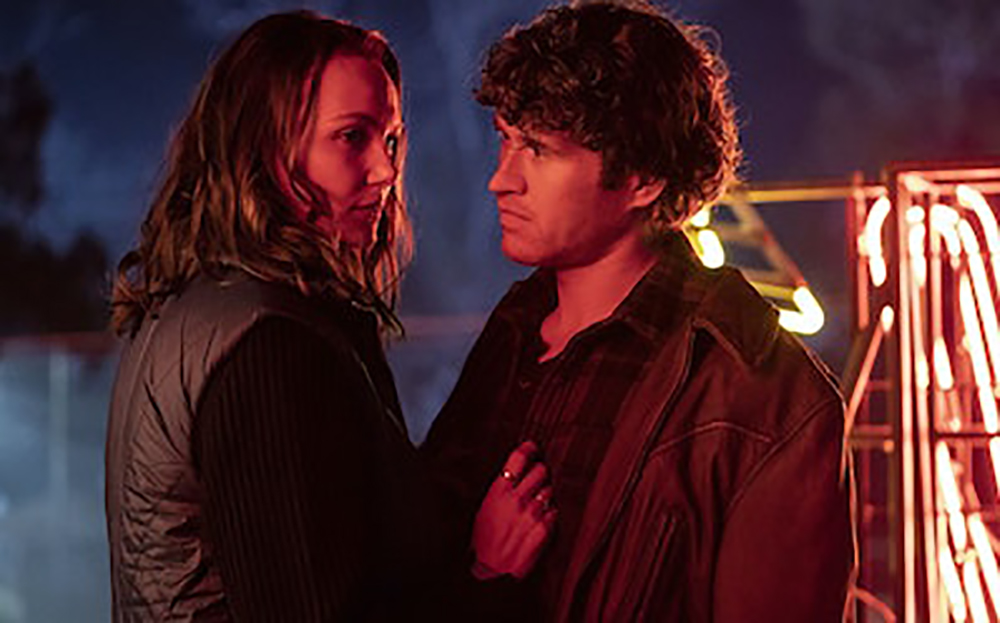
Critics have labeled Campbellâs acting bad (itâs not) and he and Allysonâs time together âa love story;’ (itâs also not). What I got out of these scenes was Green being the indie filmmaker he is. He paints a town so engulfed in its own fear and anger that thereâs nothing left. Just like an ex-con canât catch a break, neither can Corey or Allyson. And all along the time, missing person billboards stretch above lonely highways and all sorts of abuse line the filmâs proceedings. Greenâs Haddonfield has become a canvas; thereâs notes of Rob Zombieâs âHalloween 2â in his work, along with âA Nightmare on Elm Street 2,â as well as âAll the Real Girlsâ (Greenâs own), and âThe Place Beyond the Pinesâ by filmmaker Derek Cianfrance.Â
Closure for its Characters; Was ‘Ends’ the Only Way to End the Thing?
On my second viewing, my only real criticism is the fact that we like Corey (or at least I did), and Green is sometimes throwing darts in the air to see what sticks. Thereâs a clear interpretation that Haddonfield is cursed by evil; that those who live in its confinesâsince Michael struck in â78; maybe before?âare doomed to miserable lives, if they are not outrightly engulfed by evil.
However, like Zombie did in his under-appreciated âHalloween,â Green is also painting a pretty solid picture of how abuse, bullying, and neglect can turn well-meaning people into killers. He doesnât come right out and say either one, which can be a little irritating. Corey is painted as both a victim and a perpetrator, which can be somewhat confusing. One thing is sure though: Corey is not the ânew Michael;â I donât think that is the point of Greenâs film in even the slightest. Coreyâs kills reek less of pure psychopathy, and more of revenge. This is unlike Myers, who is just killing for the sake of killing.Â
If this all feels like a rough sketch, it is. âHalloween Endsâ is the end of Greenâs trilogy, and he paints no hints at a continuation of the story. I feel, in its own off-kilter way, it gives Haddonfield, Laurie, and Allyson the only kind of ending it could. Its closing frames (especially Laurie’s brief confrontation with Myers) feel final. Itâs not a happy final. Itâs kind of sad, though Green does hint that Haddonfield can move on. Its final ten minutes is kind of exciting. The few characters remaining from âHalloweenâ (2018)âLaurie, Allyson, Officer Hawkins, et al.âget closure.Â
Sure to Remain a Divisive Film
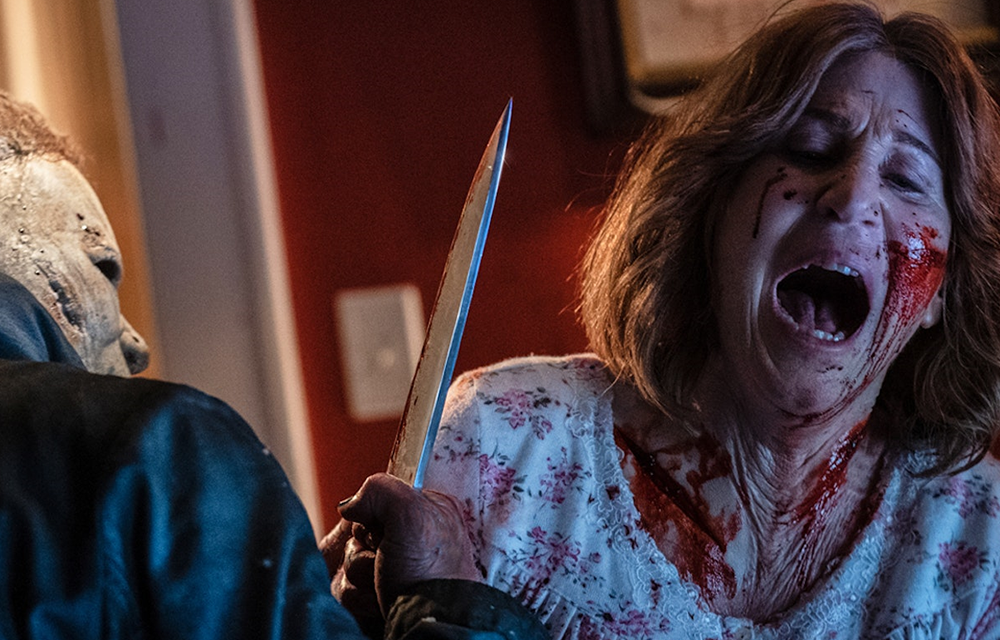
So weâre left with the burning question: will fans like it? If you go into âHalloween Endsâ expecting Myers, a spotlighted final showdown, or John Carpenter, you will not. I get confused with what horror fans look for these days. Some commenters online thought Coreyâs more macabre kills were âawesome.â I almost felt like with some of them, Green was trying to tip some sort of weird hat to Damien Leoneâs âTerrifierâ (no, the kills arenât that sick, but they move beyond Michaelâs quickly dispatching MO). But meâI thought the whole thing was kind of sad. I donât know if thatâs what we want to take away from a âHalloweenâ film, but there it is.Â
So at the end of the day, thatâs what we have: David Gordon Green, in his final act, asks audiences to do a great deal of heft and introspection. Itâs not a standard slasher, and many people will probably hate it; but it is Green’s film after all, not ours, no matter how much we want it to be in line with our fandom. I think this will continue to be a divisive film, with some loving it and others hating it. Iâve come around more on my second viewing, and maybe you will too. For Green, a man skilled at painting small towns, I canât think of another ending that gives Haddonfield the story it needs. That in itself may be âHalloween Endsââ ultimate purpose. The imperfect and sometimes messy way Green gets there may say more about our need for tidy and clichéd slashers than anything else.Â
“Halloween Ends” is available to watch in theaters or stream on Peacock.Â
Support the Site:Â Consider becoming a sponsor to unlock exclusive, member-only content and help support The Movie Buff!


2 Comments
I love how you presented the points here. Excellent read as always.
Thanks Paul, appreciate the kind words ð