





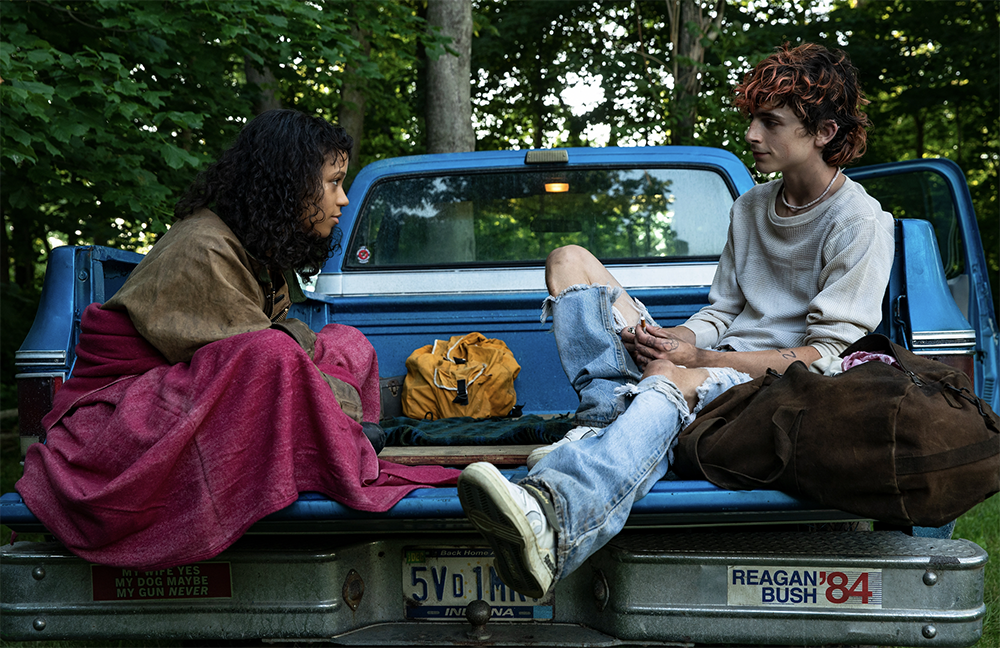
With his usual distinctive and delicate directorial touch, Luca Guadagninoâs adaptation of Camille De Angelisâ novel, “Bones and All,” is a fable that intertwines tenderness with the horrifying to tell the love story of two young cannibals on the run. It is a film that questions the place of love for monsters and how much we can survive without human connection.
In recent years, there have been a lot of projects that revolve around cannibalism. I donât know what happened to peopleâs minds recently that, out of the blue, they got interested in that topic. However, most filmmakers are just using it as a shock factor or in a way that doesnât elevate the filmsâ respective themes or atmosphere. There are a few good cannibal that films rely on comedy (Paul Bartelâs “Eating Raoul”). However, the best are those that treat it with care and caution without goading or provoking their audience.
Guadagnino is one of the Best Working Directors Today
There havenât been many directors that depict cannibalism with the right amount of tenderness, and dread while demonstrating the monstrosity of doing such acts. Some of them are Julia Ducournauâs “Raw,” Peter Greenawayâs “The Cook, the Thief, His Wife & Her Lover,” and Jorge Michel Grauâs “We Are What We Are” (“Somos Lo Que Hay,” 2010). Of course, there will be wince-inducing moments of people eating human flesh. However, it is depicted with a balance of beauty and horror.
When it was announced that Luca Guadagnino would adapt Camille DeAngelisâ novel, “Bones and All,” I was very excited. Why? Because not only is Guadagnino one of the best working directors today, but his filmmaking touch is distinctive and delicate. He expresses a fondness and melancholy that his characters experience.
Also Read:Â NYFF 2022 Review: âEnys Menâ is Drenched in Melancholy and Isolation
Thatâs one of the reasons why many resonate emotionally with his movies, and the humanistic approach to his characters. His films are about outcastsâpeople traveling to new places, into unknown territoryâexploring desires, love, loneliness, loss, and emotional deterioration (as most of the characters lose something at the end of their respective films, whether it is a lover or their own spirituality, eventually becoming a vessel). Although it may have some tiny specs of his earlier work, Guadagninoâs “Bones and All” feels like a âmeeting halfwayâ concoction of his 2018 remake of “Suspiria” and the renowned adaptation of “Call Me By Your Name.”
A Horror Road Movie about Young Love
Itâs a fusion between those two films, as the fleshy body horror aesthetics of the final act in the former meet the effervescent romance of the latter. “Bones and All” is a ghoulish horror road movie about young love between outcasts. Theyâre aching for human connection, and a fable about the secrets in our identitiesâdiscovering new things about ourselves as we age.
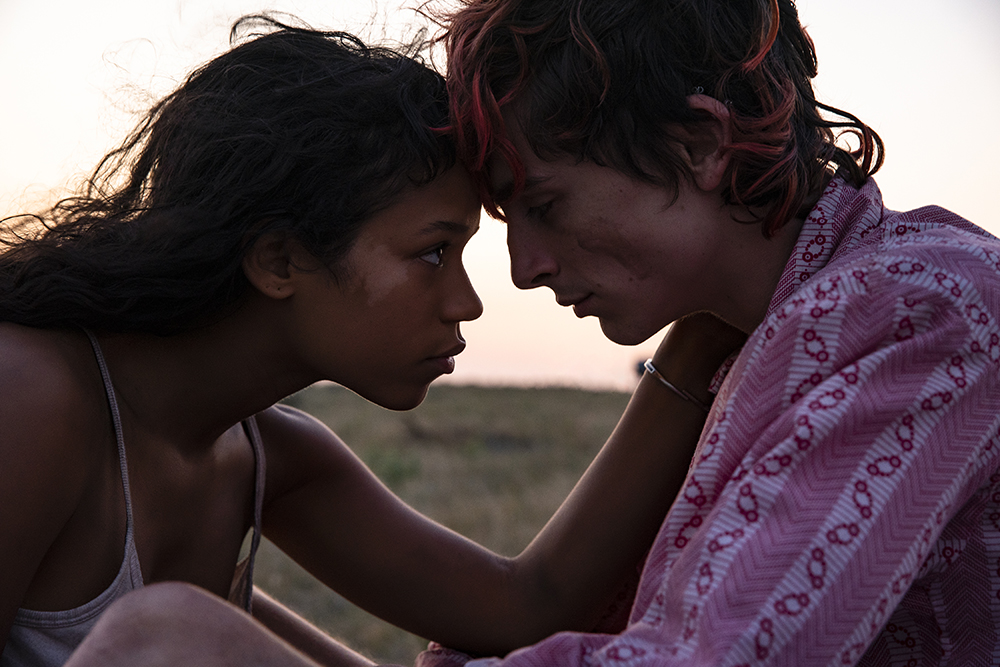
If you’ve watched Guadagninoâs work, you know he will deliver provocative horror set pieces and heartbreaking moments of pulsating devotion. Guadagnino faithfully adapts Camille DeAngeliâs novel. He remains close to the source material while adding a few tweaks to suffice his vision. The film is set in the tail-end of Reagan-era America. Its setting plays a vital role in the narrativeâthereâs a sensation that a time of significant change is coming soon. And although there are occasions one might question its setting, its soundtrack fuels it (consisting of tracks by Joy Division, KISS, New Order, and Duran Duran), Trent Reznor and Atticus Rossâ score, and Elliott Hostetterâs production design (diners, supermarkets, boarding rooms).
Who is at the center of this story? A pair of teen cannibals, Maren (Taylor Russell), and Lee (Timothee Chalamet). The have different personalities, but their hankering for human flesh and outcast separatenessâthe hollow life of despondency and the need for loveâconnect them. Their cannibalism story began way beyond the filmâs run-time. However, it creates a new chapter when they meet each other, filling a gap in their hearts. When she was a toddler, Maren devoured the face and hands of her babysitter. And many years later, her impulses kick in like a rush and bite down on a girlâs fingers at a slumber party.
Creating Empathy For Its ‘Monstrous’ Characters
That particular scene reminded me of Julia Ducournauâs “Raw” (my favorite film of all time), in a scene where Garance Marillierâs character, Justine, gets her first taste of flesh by chomping down on her sisterâs cut-off finger. Both scenes cause the atmosphere to shift from a moment of attachment to one of separation; their link between humanity and the control of their inner beasts shatters, causing the urges to prevail.
Marenâs constant compulsion to bloody consumption has caused various problems for her family (her mother left after that first incident), but her father (André Holland) canât protect her anymore. He leaves her with cash, a cassette, and a birth certificate so she can escape elsewhere for a new life. The roads are endless for her. The isolation intertwined with the escapist despair makes Maren cross paths with other eaters, particularly Lee. He teaches her how to survive on the outskirts of America through a nomadic lifestyle.
Also Read:Â Indie News: âExterno,â Gets Wide Release, Available on Amazon Prime (US & UK)
In addition, Maren learns how to love and live life, even when deep down she might feel as if thereâs no space for such when thereâs a label of monstrosity tagged into her own self. Guadagnino treats these moments of connection between two beasts, as well as the brutal scenes of violence, with tenderness. He creates a way for us to empathize with the characters. One of the questions the director prompts is: âWhatâs the place of love for monsters?âÂ
Not Fitting in and Other Societal Problems Explored
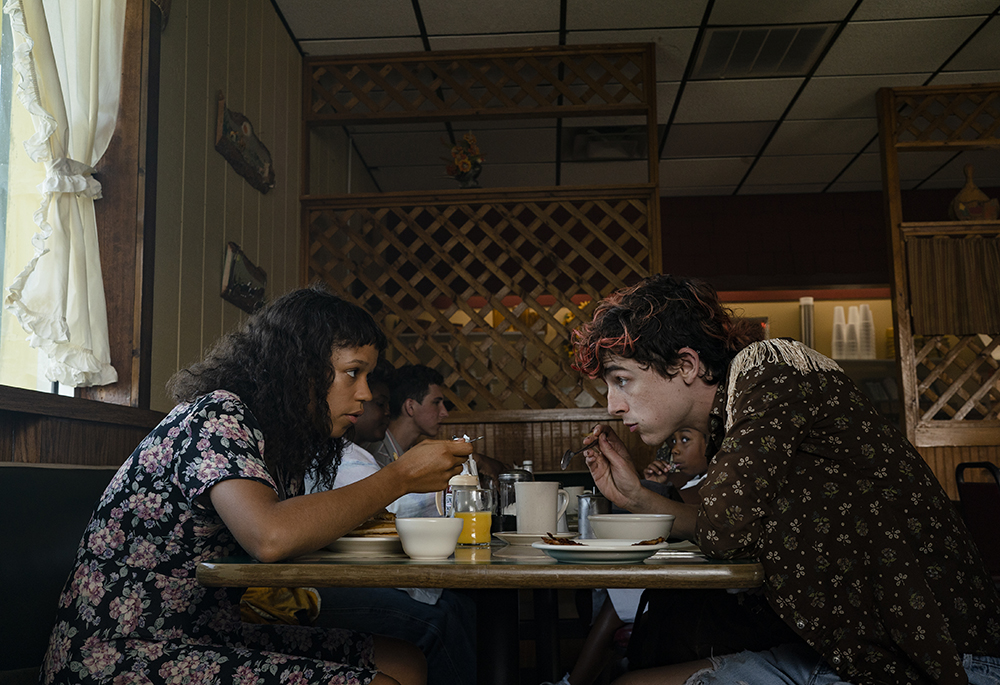
Guadagnino wants the audience to put their feet in the shoes of these characters to explore their situation and discover the tangible factor between what connects us all. That question goes back to Joy Divisionâs heartbreaking song, “Love Will Tear Us Apart.” The lyrics of such literally and figuratively apply to the scenes’ constant swindling between the endearing and horrifying.
The record reflects upon the universality of the insubstantial and delicate nature of all our connections (or relationships), whether newly found or previously forgedâthe way our ways of life lead us to various directions, in which most are far away from the people we love and into the arms of others. Some of the song choices in “Bones and All” are more prosaic, although they are well-selected, whereas others add to the themes of its narrative. While “Raw” dwelled more on the explorations (and control) of our bodies, there are many connections between Ducournauâs directorial debut and “Bones and All.”
Also Read:Â NYFF 2022 Review: âTrenque Lauquenâ is a Story of Personal Freedom in Twelve Chapters
It explores the sins of the flesh as a metaphor for the people who feel better off hiding in their own box, which many relate to. Thereâs the aspect of not fitting in with the rest of the people around you, keeping a secret that might fracture the bonds with whom you have connected, and finding your own identity as you come of ageâeach time uncovering new metiers that make you unique and feel closer to those who are just like you.
Exploring a Taboo Subject Without the Gore
These are the best ways of exploring this taboo subject without goading the audience with shock factor sequences, even if there are plenty of scenes in which audiences might feel uneasy or queasy due to the great work of the makeup and sound team. The junctures of depravity are leveled with the mundane ones in terms of emotional reaction by the viewer, as the conversations Maren and Lee have with other eaters (or with each other) are equally eerie as the scenes where they are eating the flesh of their victims.
Like Claire Denisâ “Trouble Every Day,” the movie revolves around the sacrifices people make for whom they love and how that affects their surroundings. This is reflected by Marenâs restraint of succumbing to her impulses once she gets a grasp of the world, as explained by Lee in one of the many conversations during their travels. Later, the two face an ethical crisis as they feed on innocent people just to survive.
‘Bones and All’ is Equally Tragic and Beautiful
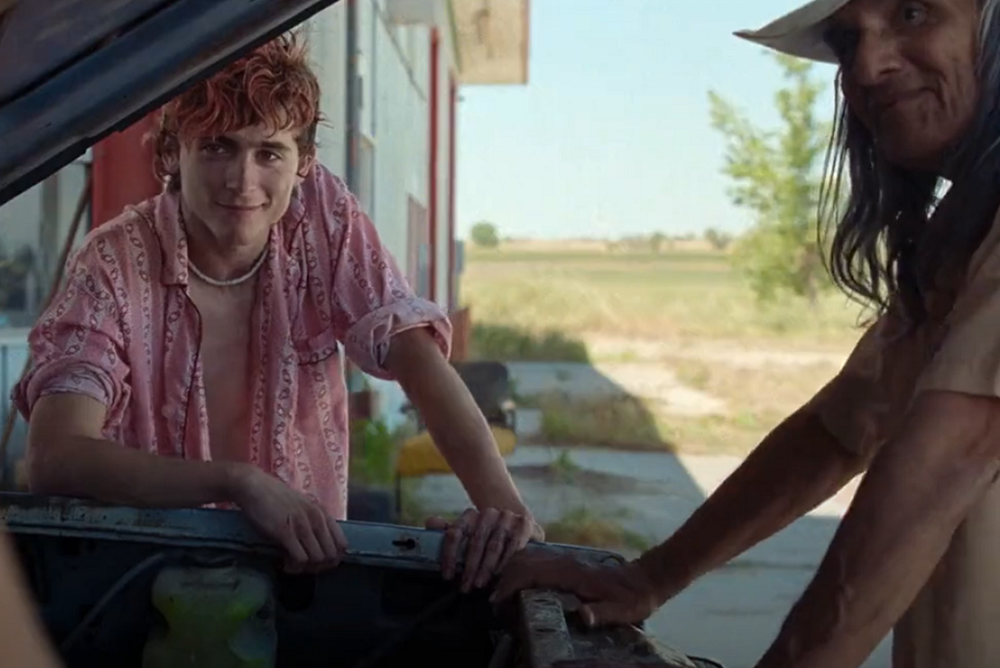
This is one of the few references to Terrence Malickâs grand work, “Badlands,” taking road movie tropes and applying them to a story filled with realistic and imaginative horrors. Russell and Chalametâs chemistry uplift the touching script by David Kajganich to new heights, as it adds more layers to the themes with their gestures and mannerisms. Although Chalamet is truly delivering one of the best performances of his career, this is Taylor Russellâs picture. How she emulates the swindling of emotions, from desperate and confused to passionate, is just utterly magnificent.
Guadagninoâs adaptation of “Bones and All” excels in every facet; thereâs enough meat on its bones to chew every idea and theme the Italian filmmaker is planting. The film finds itself between the bloody and the endearing to conjure the magnetism of love and the brutality of survival. It is a rarity that we get these types of projects nowadays, love stories around taboo subjects. It is fascinating how Guadagnino tells this story with ease and tenderness while also demonstrating the viciousness of trying to grasp oneâs identity. Equally beautiful and tragic, “Bones and All” is just marvelous.

âBones and Allâ is part of our continuing coverage of the 2022 New York Film Festival (NYFF).
Support the Site:Â Consider becoming a sponsor to unlock exclusive, member-only content and help support The Movie Buff!


