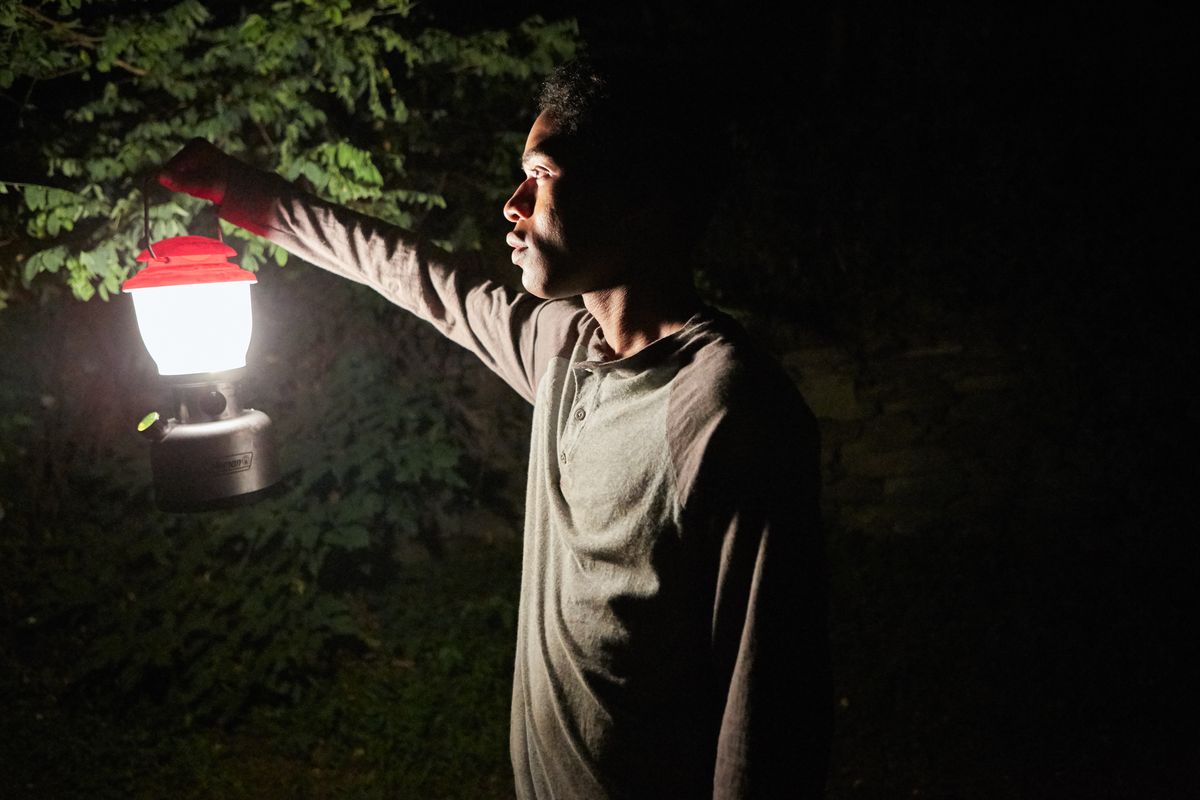
Set in a world desolated by a mysterious pandemic that is only alluded to, âIt Comes at Nightâ (2017) stars Joel Edgerton alongside Carmen Ejogo as married couple Paul and Sarah. The two have been weathered by their dire circumstances and are willing to go to great lengths to ensure their familyâs survival, even if it means sullying their own hands. The pair live remotely in the woods with their teenage son Travis (Kelvin Harrison Jr.). Whatever traces of normality in their lives are tenuous and the family have clearly survived by learning to make tough choices. New dilemmas arise and their lives are upended when they cross paths with Will (Christopher Abbott), who he breaks into their home in search of water for his wife (Riley Keough) and son (Griffin Robert Faulkner). The two families each have resources that the other needs, leading them to find a way co-exist. Challenges are presented that test just how far each of them will go to survive and what they are willing to sacrifice in order to do so.
It must be said that when describing âIt Comes at Night,” I use the term âhorrorâ with some reluctance and at the risk of misleading. Frightening the audience never feels like the primary objective of any unnerving scene in the film; it is more of a side-effect. Not giving a name or face to any tangible monster or threat, Director Trey Edward Shults opts for an unflinching focus on the effects of this horror scenario on the psychology of the characters. This ambiguity instead adds a layer of second-guessing as the audience are not sure themselves what they are to beware of. By the end of the film, the horror aspects are almost purely for context, informing character decisions through fear and desperation.
Although, that is not to say that there arenât moments of terror for the audience too. The film features some truly disquieting images (including the filmâs chilling final shot), yet it is the camerawork throughout the film that builds fear consistently. In scenes set at night, there is an overwhelming claustrophobia as the camera peeks around the narrow corners of the house, bathed in shadows cast by lamplight. In day, things open up as the scenes tend to take place outside. Here, there are frequent slow zooms on the different characters as they go about their business, giving the constant sense of an encroaching predator just beyond the borders of everyoneâs vision. This conveys the constant vulnerability felt by the characters that keeps them on edge, wary of their surroundings and each other at all times.

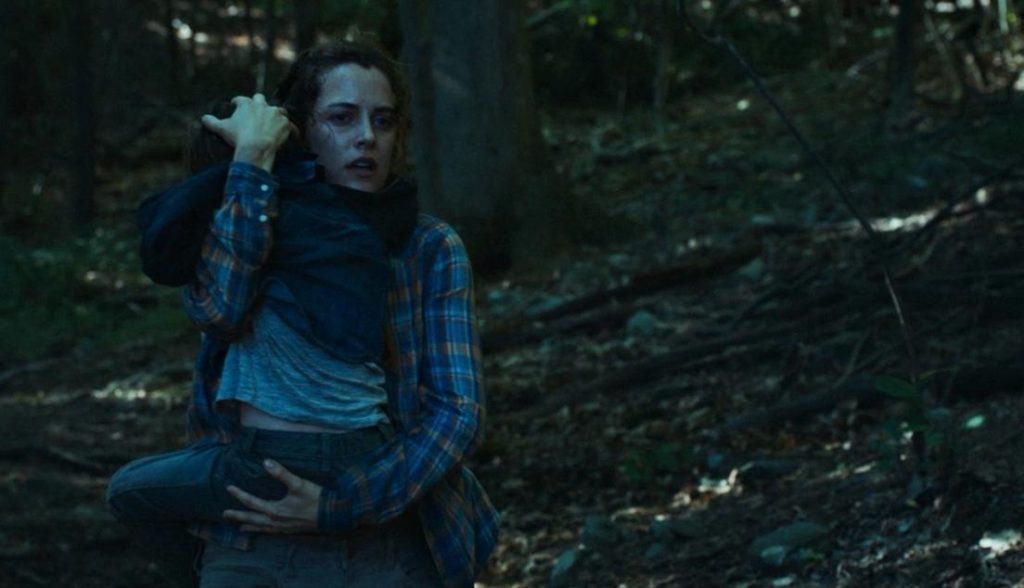
Shults uses paranoia and suspicion to fuel character decisions in a way that is reminiscent of the 1968 classic, âNight of The Living Dead,” in which a group of strangers are forced to hide away together inside a farmhouse to escape a hoard of zombies. Both films use both the possibility that anyone may be secretly infected, on top of the riskiness of having to trust strangers, to plant seeds of mistrust. However, in place of any tension caused by being in an alien situation, the premise of âIt Comes at Nightâ engenders a different source of tension between its characters. This film takes place sometime after its world has fallen into chaos. Therefore, everyone has a history in this chaos and is very likely to have done questionable things in order to have made it this far. This tacit truth looms over every interaction and makes unreserved trust between the characters impossible.
Acting as the perfect foil to the more seasoned older characters is Kelvin Harrison Jr.âs Travis, who is coming of age in this post-apocalyptic world. Perhaps having lost the least of his humanity thus far, Travis is well-meaning despite his brutal environment, with a pure naivety but also a clear-headed perception that the others lack. Harrison gives the most memorable performance of the cast as the sensitive and watchful youth and provides a great point of view for audiences to experience the characters of both families. The film establishes the two opposing sides to the bond between the two families. There is a budding friendship formed from lifestyle in which they survive alongside one another yet behind the smiles and platitudes, there is mutual suspicion that never dies.
âIt Comes at Nightâ takes a subdued and sombre approach to horror that slowly shifts uncertainty into intense paranoia, making for an uneasy watch. Whilst this is successful in portraying of characters in a world in where survival may be at the cost humanity, this is a theme that has been covered extensively in the genre and with more depth than the succinct nature here may allow. The filmâs scope does not expand or offer much in the way of new ideas by the time it reaches its predictable resolution. Having said that, Shultsâ refreshingly restrained approach to horror and unsettling command of mood make this more than worthy of your attention.