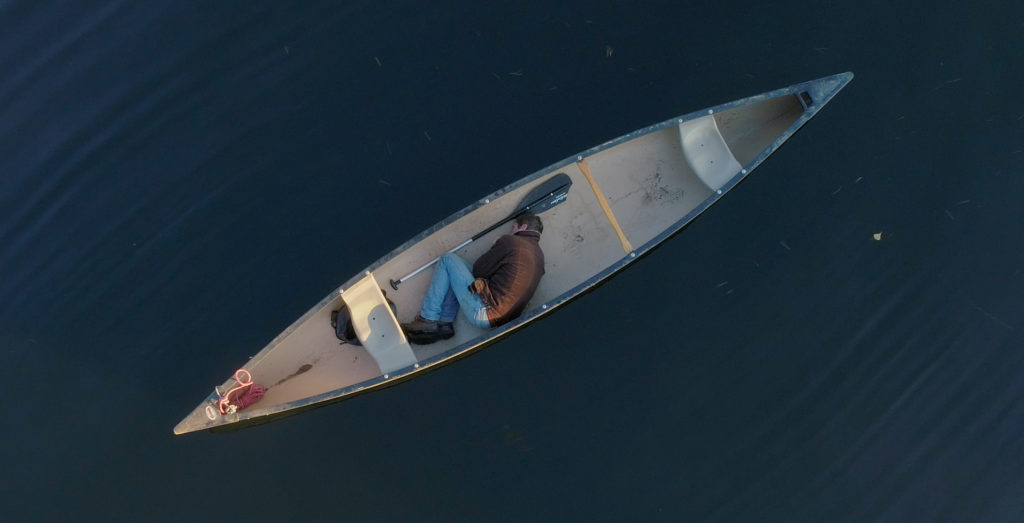
Guards are supposed to protect. Thereâs something noble, inherent, and something that feels almost like duty in the profession. So when a security guard and expecting father drives himself into the middle of the woods, throws away the keys to his car, and handcuffs himself to a tree so that he wonât harm his unborn son, thereâs something elemental and terrifying about it. This film, an indie short titled âThe Guard,â is written and directed by Mark Battle and is both an engaging drama and harrowing psychological horror feature that examines the inner demons a man doesnât want to have.Â
Make no mistake; this is not a film like âThe Stepfather,â starring Terry O’Quinn, of a father who wants to harm his wife and child. The guard, Denny (Bryan Veronneau) is a loving husband and soon-to-be father who cares deeply for his wife and unborn child. He builds a perfectly crated clock to hang in his baby’s room. He works on the babyâs crib, checking the walls around the room for nails, for any points of harm. But heâs haunted by visions he cannot control. He finds himself one night down in the kitchen forcing his baby (which is not born yet) into a heated oven. His wife startles him; the vision passes. He eyes the knives nervously. Yet another threat he could use to harm his child. Heâs soon overtaken by these haunting thoughts, unsure of where they will take him. He visits the local priest for solace, but finds he offers none. Denny is a dangerous man and heâs the only one who knows it.Â
From the onset of âThe Guard,â it is clear that Battle knows what heâs doing. The filmâs intense opening, featuring the aforementioned oven scene, is filmed seriously, shot from the left side of Veronneau, and the camera seems to linger on him precariously as he wears his guilt and horror at what heâs done. The scene is scored ominously and loudly by a synthetic score. We learn the music is an original soundtrack composed by Michael Teoli, and it is both haunting and foreboding, and compliments Battleâs cinematography expertly. We donât understand what Denny is going through, not precisely; but we understand that he is going through it, and that heâd rather be dead than alive.Â

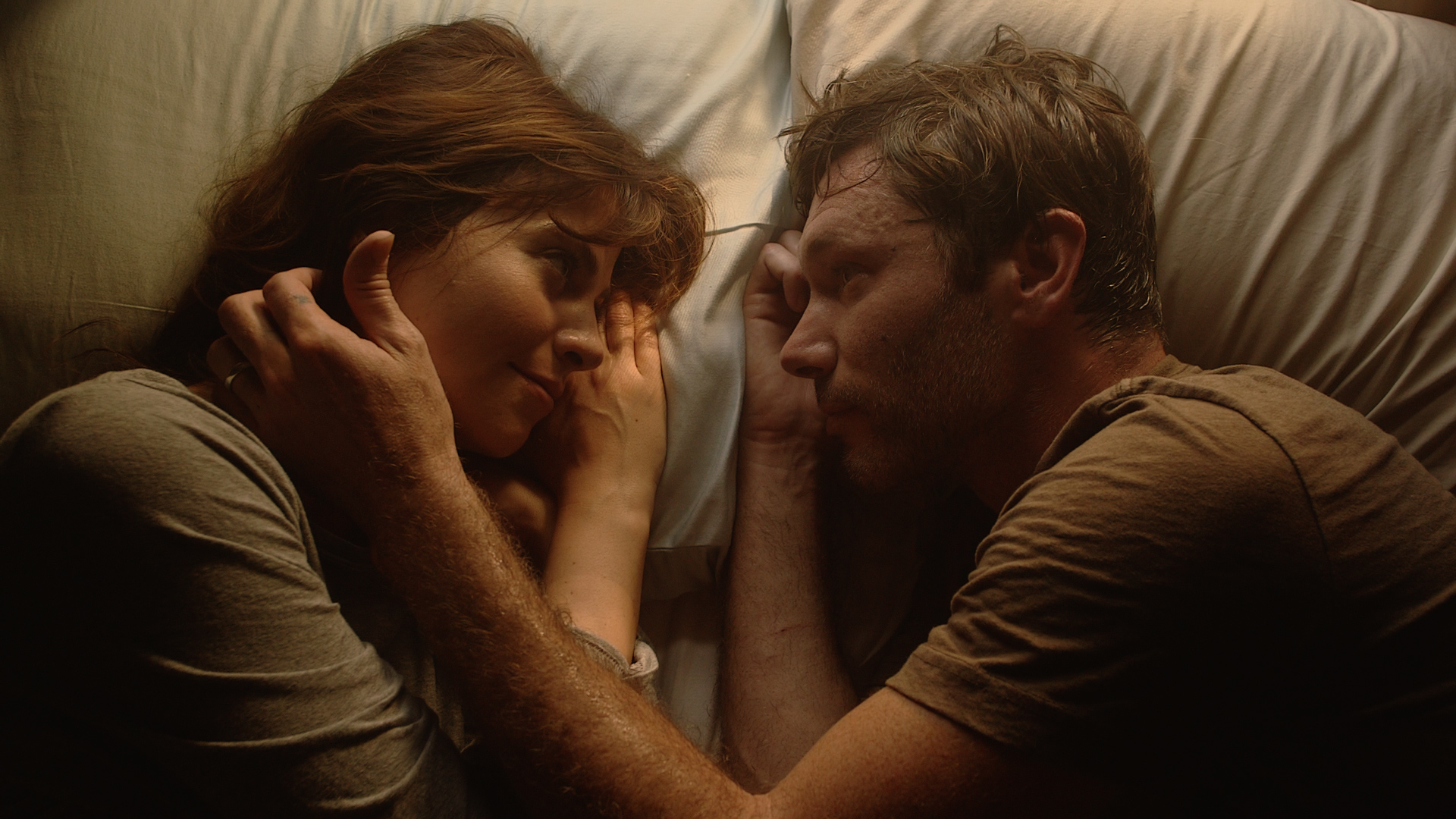
Battleâs narrative is sharp and feels precise. The gentleness of Dennyâs wife (played by Erika Thormahlen) is juxtaposed with Dennyâs decaying sanity in expert fashion. A home cooked meal of chicken and peas in a softly lit room between husband and wife is supposed to conjure images of home and family. But to Denny itâs a trap. He wonât use the knife to cut his chicken; heâs afraid to pick it up. His wife asks where the rest of the knives are. He got rid of them, he tells her. He didnât want knives around the child. As absurd as this notion sounds, due to Veronneauâs acting we believe it. In another scene Veronneau is hunkered down in a car, staring at his crumpled up guardâs uniform, the badge glaring out like bronze failure. He can do nothing to protect his family; both his profession and his duty as father are a sham.Â
The filmâs acting is apt, low on dialogue, but effective. Against Veronneau, Thormahlen plays her part well, appearing both overjoyed at the prospect of a newborn child and growing concern over her husbandâs mental health. The filmâs two other players – Michael Anthony Coppola as the Priest and Jeremiah Kissel, who plays Dennyâs boss, are effective but are limited to only one scene.Â
The film clocks in at 15 minutes, and focuses mostly on Dennyâs psychology. As such, much of the heavy lifting is given to Veronneau, and he delivers. Itâs not a performance of screams and grunts, but rather facial acting and expression that betray the seriousness of the material. He has his heavy scenes, some mentioned above; but itâs the way he performs them, playing not perpetrator but victim, that sells the picture to us. The filmâs final 5 minutes – not to be hinted at here – are among some of the most harrowing Iâve seen in an indie. Never before has a cell phone and a single, joyous text message invoked a more soul crushing blow and horrifying experience than as I concluded âThe Guard.âÂ
I spoke to Battle, who defined his piece as âthriller/horrorâ but itâs much more than that. It deals with heavy themes, of horror, dread, and the fear that every parent feels as they bring their child into a world they cannot control. The film won âBest Short Dramaâ at Draftfest 2018 and poises Battle as a filmmaker with an eye for physical performances and cinema. Psychologically the film fits in well with our â31 Days of Halloween.â
âThe Guardâ is screening at a the New Hampshire Film Festival on Oct. 11. For more information on the film, visit the official website at swevenfilms.com.Â