






Do you like gore? Specifically, do you like scenes of self mutilation sandwiched in between dreamlike sequences and toxic masculinity? If so, youâll probably enjoy the 2016 Canadian indie âLet Her Out.â True, the film watches well, has amazingly detailed special effects, and won an award for âBest Special Make-up Effectsâ at the Buffalo Dreams Fantastic Film Festival. Thereâs not much of a story here; but given the filmmakers want to shock and frighten their audience, thereâs not much need. However, it’s just hard to get behind this movie. Your stomach may turn, but getting lost in this film is bigger chore.Â
Iâve read several reviews of the film, which speculate the underlying inspiration for this project in the works of Canadian director David Cronenberg, and maybe theyâre right. I suppose in saying so they are revisiting Cronenbergâs earlier works, such as 1987âs âThe Flyâ and his preoccupation with a genre called âbody horror.â Sure, in 2005âs âA History of Violenceâ a man is shown with his face half blown off, but itâs part of an intricate story and character portrait rather than flat out gore.Â
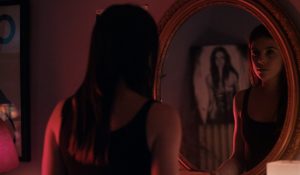
âLet Her Outâ positions itself with a couple of opening scenes. We see a woman (Brooke Henderson) engaged in prostitution before getting raped, and then fast forwards to this same woman, pregnant, who stabs herself in the stomach with a pair of scissors in an attempt to kill the baby. It then shifts to present day, and a young woman named Helen ( Alanna LeVierge), who we learn is this womanâs daughter, is struggling to let her death go. However, Helen is hit by a car in a parking lot, breaking her arm. But thatâs not the worst of it. She soon begins having haunting visions, waking up in strange places, and engaged in disturbing activities.Â

The film attempts to explain these strange activities with a medical defense of âvanishing twin syndrome.â Yes, a quick google search reveals this is a real condition whereby a miscarried fetus can be absorbed by the mother and or other child, leaving no trace it was ever there. However, thereâs certainly nothing psychological about it. âLet Her Outâ wants to tug on our suspension of disbelief; and thatâs fine. But where âLet Her Outâ comes up short is in its skip and jerk pace that shuffles from one scene to the next, never pausing for exposition, but pausing, frequently, for more confusing scenes and/or protracted gore.Â
I feel like Iâm failing to paint a portrait of what âLet Her Outâ is. Itâs psychological for sure, and, shot mostly in darkness and highlighted with an anxious score, the film definitely ramps up your nerves and makes you uncomfortable. I wasnât overly scared, but, as a horror lover, this is common. Itâs a credit that director Cody Calahan and Cinematographer Jeff Maher resist the urge to affront us with jump scares and loud nosies in the wrong places. You wont jump seeing this film, and overall it does make you think, which is a credit to the writing and camerawork.Â
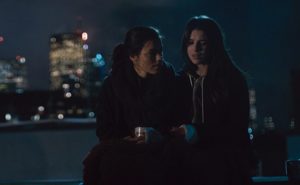
The characters are a problem. A film like this, that wishes to impart horror on its other characters, would have served better in painting them as innocents. Instead, âLet Her Outâ blurs this line, making you question whether the characters are really vile or if its in the protagonistâs head. Maybe itâs both. Helenâs friend Molly, played as her buffer to reality by Nina Kiri, is well meaning and, in the filmâs most desperate sequence, sweet.Â

You ought to judge a film by what it intends to do. âLet Her Outâ intends to be psychologically troubling and visually disturbing. It does this very well. It doesnât intend to be a genre buster or exceedingly smart, so you canât really blame it for what it is. Its effects are great and its atmosphere adequately creepy. But at the end of the day its lack of narrative causes more distance from its story than the filmmakers probably intended.Â
Regrettably we just donât like âLet Her Out’sâ characters enough to care too much about what happens to them.Â
– by Mark Ziobro


