





*Cliquez ici pour la version française
ââ¦a tradition, a Beaulieu family traditionâ¦waving goodbye with any object that flies in the wind.âÂ
My first experience with Québécois cinema was this, the 2015 production from Caramel Films titled âPaul à Québec.â Itâs a fitting entry point, both into French-Canadian film, as well as the works of illustrator Michel Rabagliati, from whose graphic novels the film was pulled. In fact, an online search reveals that Rabagliati approached Director François Bouvier about turning one of his novels – either this, or another, âPaul a un travail dâétéâ (âPaul Has a Summer Jobâ) – into a feature film.Â
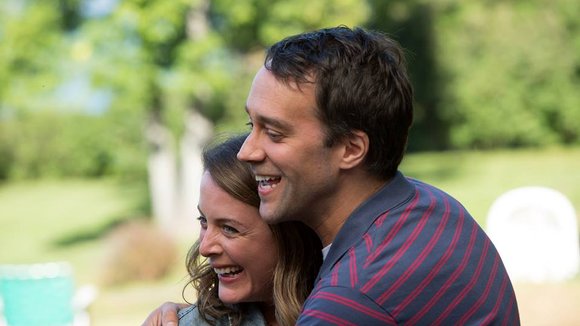
As a film, âPaul à Québecâ is subtle, a portrait of a family from Montréal, a family from Québec City, of life and death, and of family ties that the latter is ill-equipped to take away. The title character Paul is played by François Létourneau, who doesnât really resemble Rabagliatiâs design, but takes him over, gives him life, and make him a person we can relate to. Heâs the entry point into this story, which is both dour and sweet. Paul has a live-in girlfriend named Lucie (played by Julia LeBreton), and a daughter, Rose, played gleefully by Shanti Corbeil-Gauvreau.
Whatâs the story about? Why mince words. Lucieâs father, Roland Beaulieu (Gilbert Sicotte) has pancreatic cancer and is dying. This film is a nice homage to this manâs legacy. Thereâs no high brow drama or forced sentiment here. âPaul à Québecâ invites you into these peopleâs lives, and the result is worth the effort.Â
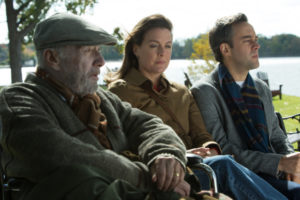

The film focuses the camera on the Beaulieus and Paulâs family the most. Lucie has two sisters, who, while adding necessary filler to the film, arenât as fleshed out. The exception being the end of the film, where Lucie must help one of her sisters get through a trying day, which is somber and sweet.Â
What works about âPaul à Québecâ is that it doesnât try its hand with an overabundance of tearjerking moments, but instead wants you to understand these people as human beings. Through the filmmakersâ eyes we see Paul, as he dutifully goes through days involving errands, work, and choir practice. Through their eyes we also see Roland as he struggles to hold on to his life and independence as he battles cancer.
The filmâs cinematography suits it well. My favorite shots include one as Roland smokes a cigarette in his bathroom which is lit with bright greens and a window looking onto his beautiful lawn, and another as he looks with reminiscence at a beautiful lake that borders his property. The shots didnât make me feel sorry for Roland, but hopeful. âPaul à Québecâ wants you to see the splendor of life, even amidst the threat of death. It accomplishes this well.Â


The film gently weaves the impressions that Rabagliati wants to impart, sometimes through subtle nudging, sometimes through its designs. The drawings, mostly black and white, are robust, vibrant, and full of life. The ending narration, drawn in images and scored with a gentle guitar, gathers the filmâs emotions and splays them out on the screen for us. Theyâre animated, which gives them an immortal quality, and move in a way fitting for the narrative – purposeful, slow, and touching. âPaul à Québecâ didnât make me cry, but it did make me understand. Itâs not a painful movie, but one that stays with you at the end.Â
Note: I watched this film in its original French with English subtitles. The film was translated by a man named Joshua Beitel, and the film is subtitled by CNST, Montreal. The movieâs aim is easy to follow, and viewers should have an easy time ignoring the subtitles and getting lost in the film, should you not speak French.Â
At the end of the day, âPaul à Québecâ is a nice movie that takes Rabagliatiâs art and forms it into a memorable experience. Sweet and touching, âPaul à Québecâ is a journey worth taking.Â
– by Mark Ziobro


