Itâs curious and a bit droll that many films depicting individuals in the confines of witness protection occur toward these films’ end. The idea is toyed with in Sydney Pollackâs fictitious âThe Firm,â as in the biographical and award-winning âGoodfellas.â However, in the 2005 crime thriller âA History of Violence,â directed by David Cronenberg, in his protagonist weâre confronted with a man named Tom Stall, whoâs turned to hiding in a small town to avoid a mob-tied past heâd like to forget. While the violence is sparse, the film earns a hard âR,â and shows the grip of violence on a man who mistakenly thinks leaving his past behind is as carefree as simply changing a name.
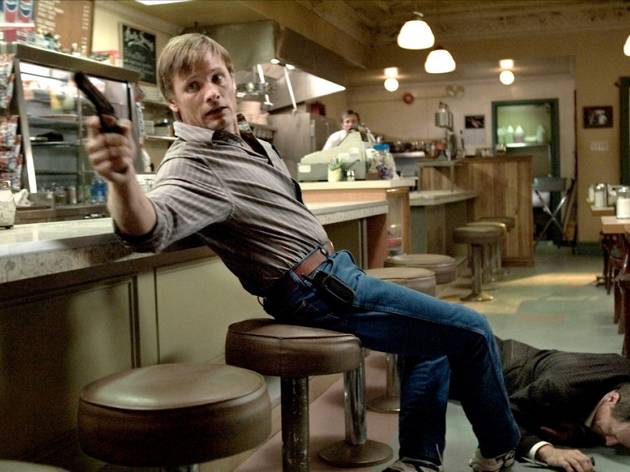
Viggo Mortensen, known more aptly for âThe Lord of the Ringsâ trilogy or his turn as a inconsequential lover of a married rich women in âThe Perfect Murder,â turns it up a notch as Tom Stall, running a small-town diner; and, we later learn, hiding from the mob. However a chance, late-night robbery at the diner – with Tom heroically saving the day – alerts some of his late âpartnersâ that Stall, known to them as ‘Joey,’ may not be as once dead as they initially thought.
âA History of Violenceâ is a solid film, a practitioner of showing and not telling, and a picture that will make you love and hate its protagonist in equal measure. It starts slowly, but makes its points forcefully and powerfully. The film begins not with Tomâs café, nor dark, shady milieus where mobsters conjugate, but with a parked car idling outside a motel lobby in broad daylight. Two robbers have done a deed – in fact killed the entire staff in a very gruesome fashion. But itâs not what they did, but how Cronenberg and cinematographer Peter Suschitzky depict it – with uncomfortable, lingering cameras and deadpan acting from the perpetrators – that sells the violence to us. Itâs foreshadowing to the fullest degree, letting us know what manner of violence we, the audience, should expect as the film progresses.


What works about the film is the violence that âTomâ is all but guilty of, and the kicking and screaming way he professes to be anything but for as long as humanly possibly. This is a testament to Morgensenâs acting, with âViolenceâ proffering more emoting than many of his other films have required. Heâs of course backed up by solid talent. He has a wife, Maria Bello (âCoyote Uglyâ), Ashton Holmes, who plays his son, and Heidi Hayes who plays his daughter. Their disbelief runs akin to Stallâs as his past becomes more and more inescapable: Especially when a shadowed and badly scarred man named Fogerty, played indelibly by the immensely talented Ed Harris, shows up looking for âJoey.â
The arc of the film is solid, and Cronenbergâs greatest achievement here is to keep Stallâs secret for as long as possible – until it is impossible to do so no longer. We, like his family, believe Stall. Especially in what amounts to the greatest shot in the film as we see Stall – wearing a cast – attempting to run from his restaurant to aid his family as a sleek, black car leaves town and heads towards his house, his hobbling and struggle as fruitless as his protestations of innocence. Of course, a deed that happens at the house threatens to shatter this image completely – but in the spirit of a spoiler-free review, that deed will not even be hinted at here.


The acting is good all around. And, in expert filmmaking, Cronenberg and company show how lost innocence may be more than a coincidence here, but a family heirloom. But to say more is to give away too much. Of course Stall must confront what made him run in the first placeâ¦but even as a quick look at the filmâs cast list on IMDb threatens to give away who Stall is running from, I will not give it away here. Itâs part of a mystery worth discovering.
This is a good film; not perfect, but worth the effort for the sadistic guessing game it makes you play, the graphic, in-your-face violence it portrays, and, on its underbelly, a fast-paced and unapologetic actioner that delivers. An entertaining film and a solid entry into this yearâs Mob Movie March.