


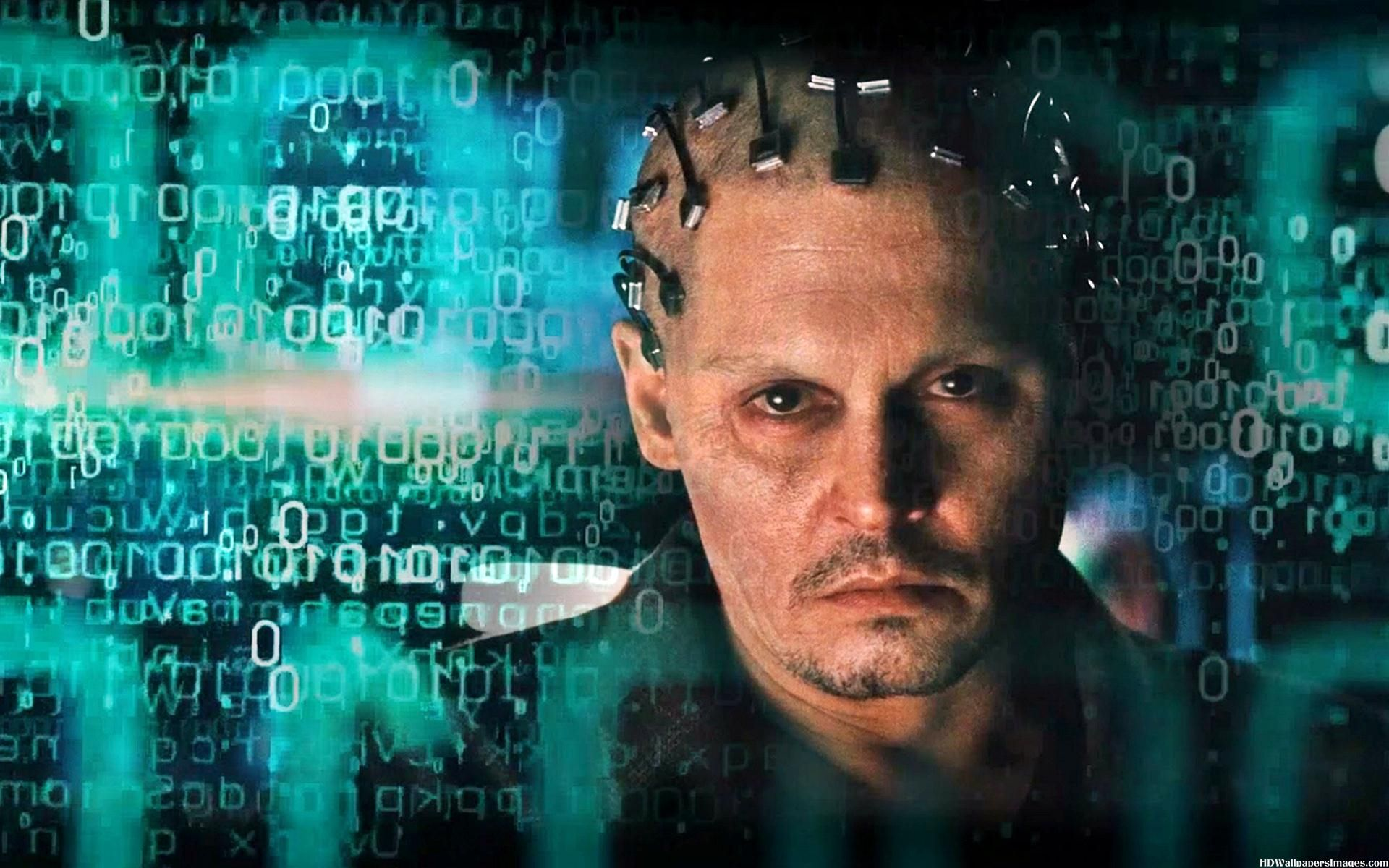
Wally Pfister’s directorial debut, “Transcendence,” uses the character of Dr. Will Caster (Johnny Depp) to introduce an interesting concept. Transcendence is the idea of an artificial intelligence that would be smarter than any person to ever live, transcending the ability of the human mind. It starts out with an artificial intelligence called PINN, and eventually leads to Caster’s consciousness being uploaded to the motherboard after an attempted assassination by a radical Luddite. He doesn’t die at the scene, but the bullet, laced with a poison that causes radiation in the bloodstream, slowly kills him. When A.I. Will wants to expand his network and gain more power, it becomes threatening to humanity.
I think artificial intelligence is a fascinating subject in the realm of cinema. Of course, I wouldn’t want it to happen in real-life – at least something to this extent, that could turn into a real-life, high-tech horror story. Artificial intelligence does seem like a distinct possibility. The film proposes an idea that technology should assist us, not control us. It’s a true fact that we knew prior to this film. Everyone’s seen enough technology-is-evil movies to know that this should never happen, or probably ever will. The film’s idea of transcendence is a cool way to live past your physical body. Of course, in order for you not to gain too much power – you should be limited to one or two computers, certainly not entire networks. Otherwise, you’re just being selfish. If computers do rise up I hope those power-hungry f!#ks make sure Paglen doesn’t write another movie because he is way too vague with his ideas; more on that later.
In “Transcendence,” the created A.I. can advance medical technology, and make any water safe to drink. I’d personally drink from a pond first before something like the Ganges River before taking the computer’s word for it. The A.I. can make the other world a better place in other ways, too. Ways it explains this and how it might happen is highly illogical and doesn’t make much sense – that’s mostly for how it makes water safer to drink. Some ways it advances medical technology goes against God’s will, which is thought provoking. Other things that Caster proceeds to do once he’s getting power is something that I won’t spoil – but I’ll say that it borders on silly.

Jack Paglen’s writing ability is lacking. He decides to merely lay a bunch of ideas up so viewers can personally decide where they stand on it all. The themes of the film are largely at their most basic stages of development, where Paglen offers ideas that he doesn’t flesh out. This is what prevents the film from being engaging or compelling. Instead, it’s a true bore that will make you have heavy eyelids early on. The only excitement in this so-called sci-fi thriller comes in the last twenty-five minutes, but by that time you simply won’t give a damn.
The characters and performances are forgettable, and they each feel like villains at some point. Depp portrays his anti-hero/villain with subtlety. It’s a good thing he looks like his normal self as the computer, and not the bald and sunken version. Hall’s Evelyn Caster is caught between her love and faith for her husband, and the human side. The film does have a cool premise where the human mind mashes with technology and turns out to be a story where they’re both monsters. It seems like it could be a different technology-is-evil film, but soon goes back into a humans vs. technology comfort zone. Paul Bettany portrays friend of the Casters, who sports the idea that the artificial intelligence really isn’t Will. Bettany on the human side is a funny contrast to him playing an actual technological invention, Jarvis in the “Iron Man” films.
Morgan Freeman and Cillian Murphy’s roles aren’t compelling. Murphy’s character is too generic to even pass the name test. He’s known as Agent Buchanan. There’s a creative choice with Freeman that’s strange. Freeman is in voice-over mode randomly because his character is reading a letter that he read to Evelyn, but not to Evelyn, to the audience. Even though he’s actually with Evelyn during the short scene. It saves time… I guess? But both Murphy and Freeman, who are usually phenomenal presences, are just kind of there – popping up for short periods throughout.
 Against Caster’s wishes is a neo-Luddite terrorist group called RIFT, led by bleach-blonde Bree (Kate Mara). She’s not veryintimidating as the antagonist to Will’s wishes, but she’s never really called to be. Mara’s pretty okay as the character. I think the hypocrisy of Luddites (those against the advancement of technology) in this film is absolutely hilarious. When some are getting busted, one of them is using a laptop. They also set a bomb at one point — that requires all sorts of technology, especially the timer and the detonator. These guys really make don’t make much sense.
“Transcendence” feels too much like a love story at times, as it explores a woman’s need to have her husband around in computer form. Hall is convincing as Evelyn. The love story aspect might not be that appealing to those simply expecting a good, high-concept suspense drama. There’s little suspense in this however, perhaps because we’ve seen this sort-of film too many times, and Paglen’s story doesn’t allow Pfister to be good at tension building. Due to the film’s familiarity, this film is void of worthwhile surprises, even if it is stunning, at least. It has the scope and usual cast members of Christopher Nolan’s films, as Pfister is his usual cinematographer. Pfister’s film just lacks all the greatness of a Nolan film, mostly because of the story that packs no energetic punch. More of the blame for this disappointing film should be on the writer, in this situation.
– by Daniel Prinn

