


I love English class. Grammar, poetry, improving my writing skills, reading, getting perfect scores on vocabulary quizzes. That’s my shtick. It’s important to study literature. And Shakespeare’s a huge part of that. I’m not the biggest fan of Shakespeare – I think he’s a figure that’s much easier to respect or admire than he is to understand. The works of Shakespeare are something people study, rather than be entertained by. That is why Joss Whedon’s “Much Ado About Nothing” is such a pleasant surprise.
Leonato (Clark Gregg), the governor of Messina, is visited by his friend Don Pedro (Reed Diamond), who is returning from a victorious campaign against his rebellious brother Don John (Sean Maher). Accompanying him are his two officers: Benedick (Alexis Denisof) and Claudio (Fran Kranz). Claudio falls for the governor’s daughter, Hero (Jillian Morgese), while the personalities of Beatrice (Amy Acker) and Benedick clash. Later, the main characters mean to trick Beatrice into falling in love. But what’s a good Shakespeare story without a villain? Pedro’s brother, Don John, plots to destroy the brewing marriage of Claudio and Hero before it even begins.
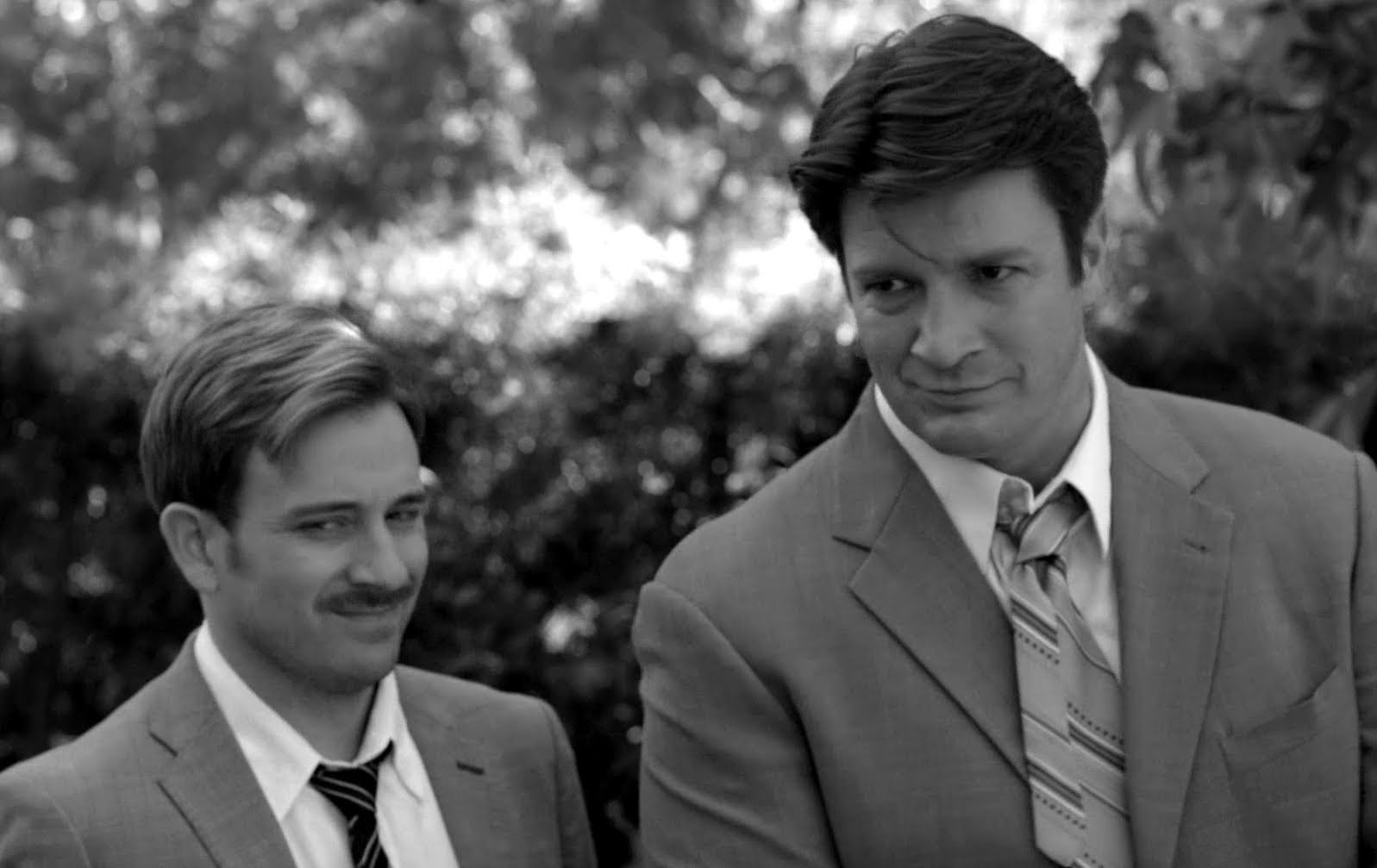
When one watches this film – they’ll have to re-adjust their expectations. When I think a modern retelling, I presume it will be in modern language, much like “10 Things I Hate About You.” That is not the case. Shakespeare’s words are kept, and placed into a modern setting; cars instead of horses, and now Claudio and Benedick are Pedro’s security detail. One might hope the language is merely homage to Shakespeare – but no, after ten minutes they’ll realize the language is going to stick.
It’s not a complaint exactly. I like a different cinematic experience. In retrospect, I should have anticipated a different experience considering, in an era of big-budget features and CGI-visuals, I was aware that the movie would be in black and white. (Is the cinematography for black and white movies always this great? Kudos, Jay Hunter.) It’s refreshing to see director Joss Whedon take on this indie passion project immediately after “The Avengers.” Only so many directors have that knack from going from superheroes to Shakespeare, and handling each just as well. I learn this was filmed in twelve days, on a budget so small, they couldn’t afford colour.
Even with the Shakespearian English, viewers will able to understand the basics, 90% of the time. Even if one doesn’t understand what the actors are saying exactly, they’ll be able to say, “Ooooh, he’s angry!” or “Dang, she’s sad.” Thankfully, emotion and comedy are universal. This is a funny movie about the game that is love. I’m still laughing about some of the occurrences and I saw this a week ago. It’s amusing when the characters talk to themselves (because apparently in everyone in Shakespeare’s plays does it, whether or not they’re schizo!) and the conversations are witty and never particularly boring. Just about everything in this flick is charming, from the artistic choices in music to many of Whedon’s regulars fitting their respective characters superbly.
Kranz is ideal as Claudio, a man who could show pain and still be laugh-out-loud hilarious while he’s in the water with his snorkel and a wine glass. Morgese (as Hero) shows some potential, and she does pretty well for her feature film debut, even if she isn’t much of a standout, here. I should come to Morgese’s defence – since it’s difficult to be memorable when one is on-screen with two of the wittiest and most memorable on-screen sweethearts (Beatrice and Benedick) Shakespeare ever penned.
 Denisof and Acker have the ideal chemistry, as they shared screen time on Whedon’s TV series “Angel” prior to this. I love this hoax put at play. Clark Gregg is great as the father, and Nathan Fillion is hysterical as Dogberry, the officer in charge of security at Leonato’s house (which is actually Joss Whedon’s home). He has a funny swagger about him, because of his distaste for being called names, and especially when he mispronounces words with the utmost confidence. Whedon’s vision and Shakespeare’s words marry each other with a fine balance of light-heartedness and charm.
Don John is the one character who is difficult to understand completely. His motivations to destroy the impending marriage between Claudio and Hero are ill-defined. Is it only because he’s a conniving schmuck? Is it just because there has to be an antagonist? Perhaps his motivations are explained well, but they might be difficult to grasp with the Shakespearian English. DJ seems to only be smiling when others are unhappy, so maybe that’s his motivation.
I usually understand the basics of what’s going on, but even after 109 minutes with the language, it’s hard to get used to. Shakespeare makes me feel so uncultured sometimes. A visit to the play’s SparkNotes page may be in order. The Shakespearian English prevents this film from becoming wholly engaging. I could enjoy this much more one day when I am older and wiser, and have a stronger understanding of Shakespeare. I applaud Whedon for taking an intelligent work, maintaining its intelligence, and simultaneously producing a movie that goes well with popcorn.
– by Daniel Prinn

