There is a version of “Practical Magic” that exists in the popular imagination.
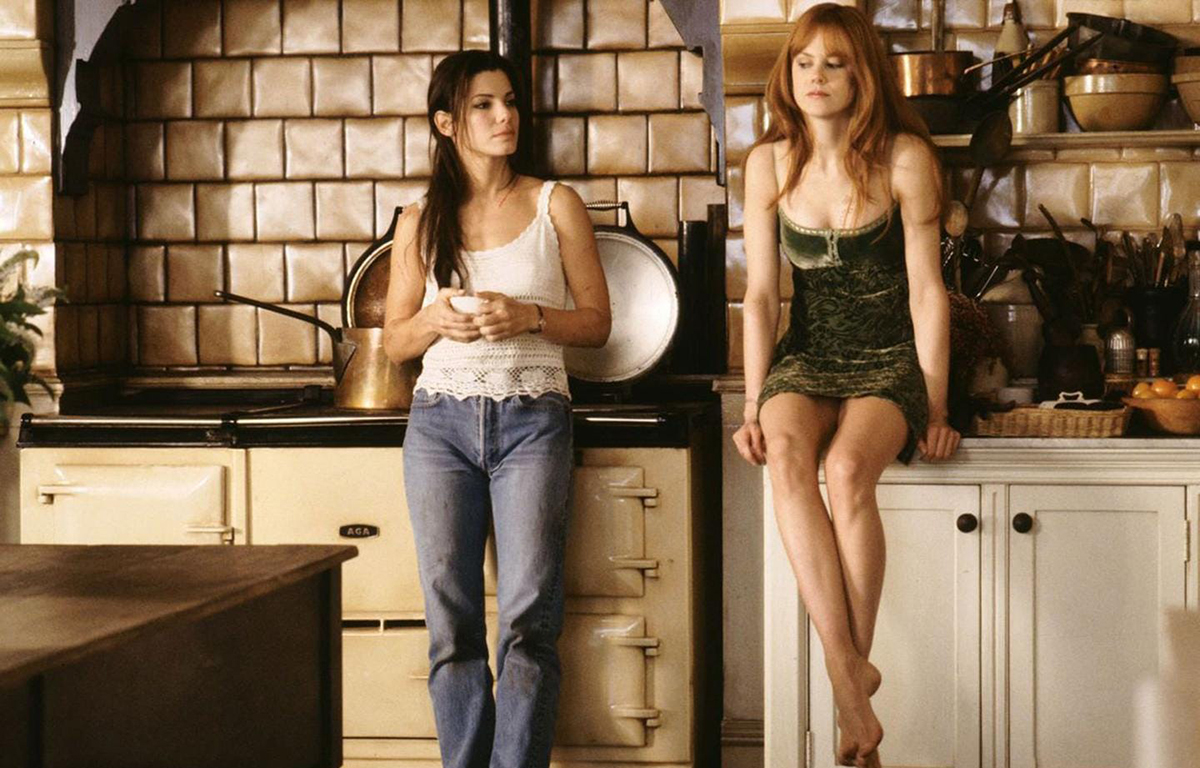
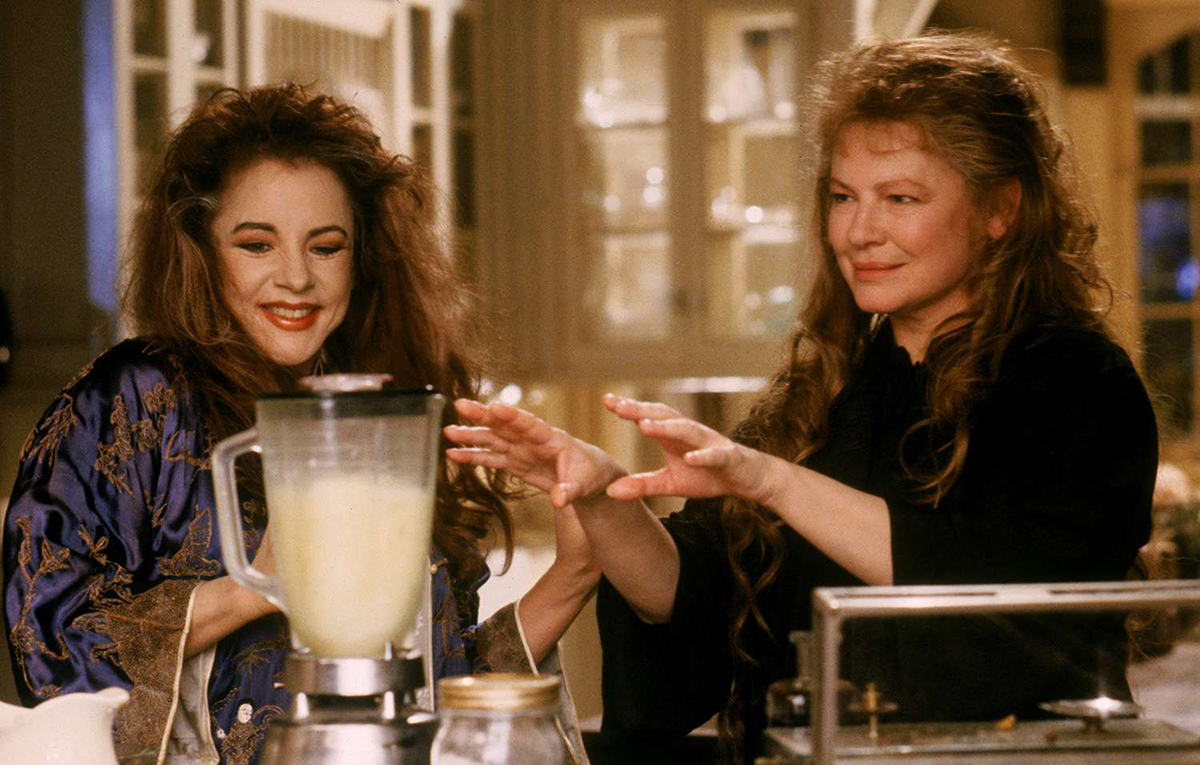
It is a cozy movie about Sandra Bullock and Nicole Kidman playing glamorous witch sisters. They live in an impossibly beautiful house with Stockard Channing and Dianne Wiest, who wear magnificent hats, dispense eccentric wisdom, and prepare midnight margaritas. Stevie Nicks plays on the soundtrack. There are candles, spell books, fresh herbs and a kitchen roughly the size of my apartment. It is a movie to watch under a warm blanket as soon as the temperature drops below 75 degrees.
A Romantic Comedy Amidst Heavy Themes
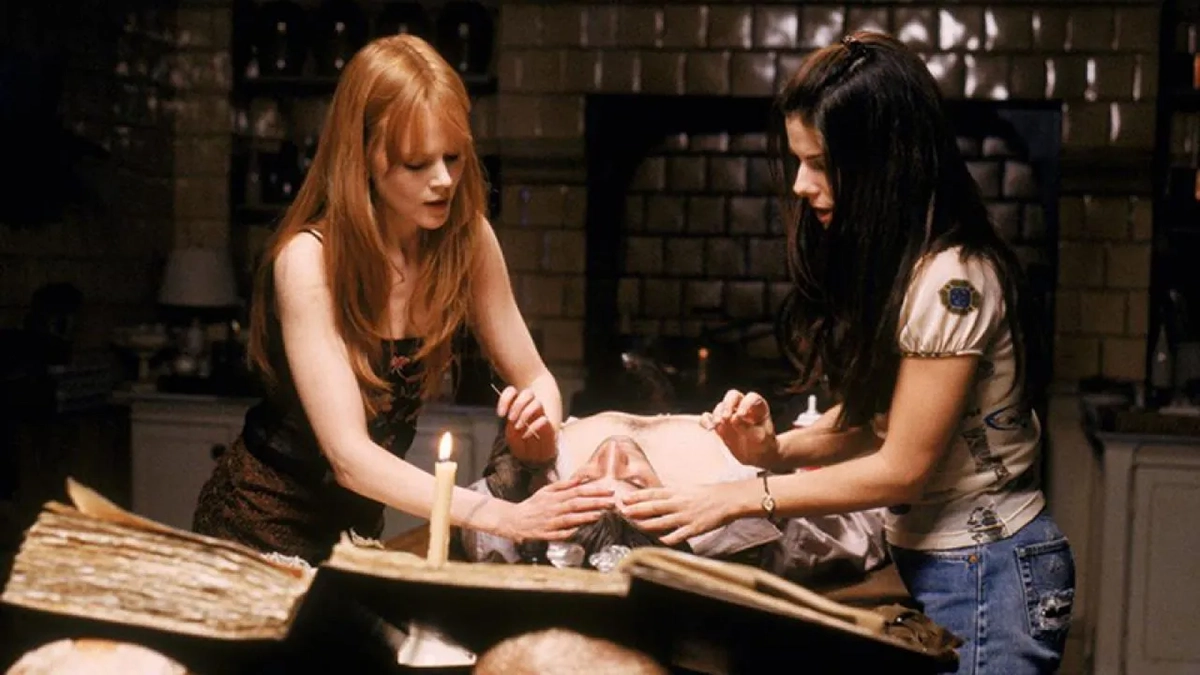
That movie does exist. It is also a movie in which Sandra Bullock and Nicole Kidman kill an abusive serial killer, resurrect him, kill him again, bury his body beneath the rose bushes and attempt to conceal the homicide from a handsome police detective. Eventually, the dead boyfriend possesses Nicole Kidman and has to be forcibly exorcised by a coven of neighborhood women.
This was marketed as a romantic comedy.
I cannot emphasize that enough. Warner Bros. spent somewhere around $75 million on a movie about generational trauma, domestic violence, homicide, corpse desecration, and demonic possession, cast Sandra Bullock and Nicole Kidman, dropped Faith Hill’s “This Kiss” onto the soundtrack and decided they had a breezy date-night movie on their hands.
And I love it very much.
Released in 1998, “Practical Magic” is essentially “Hocus Pocus” for adults—assuming the adults are processing bereavement, escaping abusive relationships, and worrying that every man they love is destined to die horribly. Both films were initially dismissed before finding enormous second lives as annual autumn traditions. Both offer movie stars doing witchcraft in fabulous outfits. Both understand that the most important ingredient in any spell is production design.
Leaps Between Genres
But where “Hocus Pocus” is Halloween candy for children, “Practical Magic” is its grown-up equivalent: wine, heartbreak, homicide, and Stevie Nicks.
The movie has anime-level tonal oscillations. It doesn’t blend genres so much as leap between them at full emotional volume. It moves from whimsical fantasy to shattering grief, romantic comedy to domestic-abuse thriller, and broad corpse-disposal farce to genuinely upsetting possession horror without pausing to explain itself. Every emotion is played with complete sincerity. It never winks when it becomes frightening or apologizes when it becomes sentimental.
At any given moment, “Practical Magic” feels like three or four different movies fighting to possess the same decomposing body.
This begins with a prologue that contains approximately an entire season of television. Maria Owens, a witch living in colonial Massachusetts, is exiled after becoming pregnant. When the man she loves fails to return for her, she casts a spell intended to protect herself from ever suffering that pain again. The spell curdles into a curse: Any man who falls in love with an Owens woman is doomed to die.
Griffin Dunne Directs
Generations later, young Sally Owens decides she can outsmart the curse by wishing for a man who cannot possibly exist. She grows up into Sandra Bullock, meets someone else, falls in love, gets married, has two daughters and settles into a happy domestic life. Then her husband is abruptly killed. Sally returns to the family home with her newly fatherless children, who are almost immediately bullied in the street because everyone in town thinks their family is evil.
This all happens in about 15 minutes.
Throughout this avalanche of persecution, abandonment, death and childhood grief, Alan Silvestri’s score keeps trying to reassure us that everything is whimsical and pleasant. A flute trills delicately as another generation of the Owens family is emotionally destroyed.
In “Practical Magic,” tragedy does not interrupt the coziness. Somehow, the tragedy becomes part of it.
That contradiction makes more sense when you consider the film’s director, Griffin Dunne, an actor who appeared in “An American Werewolf in London” and starred in Martin Scorsese’s comic masterpiece “After Hours.” Those are two movies that also understand how quickly comedy can become terrifying—and how terror can become funny if allowed to continue for long enough.
Supernatural Fantasy Mixed with DV and Murder
Dunne’s 1997 directorial debut, “Addicted to Love,” has the plot of a deranged stalker horror film that somehow snuck onto the romantic-comedy shelf.
Matthew Broderick and Meg Ryan play two people whose former partners have begun dating each other. Instead of moving on with their lives, they establish an elaborate surveillance operation, spy on the couple from an abandoned building and dedicate themselves to psychologically sabotaging the relationship. Naturally, the two stalkers eventually fall in love.
Broderick and Ryan were among the most reassuring faces in ’90s romantic comedy, which helps disguise how completely unhinged their characters are. Their relationship becomes tender, but the film never neutralizes the bitterness and obsession that brought them together. It is a romantic comedy populated by people who should probably have restraining orders against them.
“Addicted to Love” sneaks a stalker thriller into a rom-com. “Practical Magic” attempts a similar trick on a much larger scale, using the appearance of a cozy supernatural fantasy to tell a story about domestic violence and murder.
Love as a Fatal Medical Condition
At least “Addicted to Love” takes a little while to reveal how deranged it is. “Practical Magic” gets there before everyone has finished breakfast.
The curse hanging over the Owens women transforms the basic promise of romantic comedy. In most movies, falling in love is the solution. In “Practical Magic,” falling in love is a fatal medical condition.
Sally responds by suppressing every part of herself that might attract danger. She rejects magic, discourages her daughters from learning about their heritage and builds a life defined by normalcy and control. Gillian responds in the opposite direction, constantly moving and cycling through relationships. One sister tries to defeat the curse through stability; the other tries to stay ahead of it.
Neither strategy works.
Gillian eventually calls Sally for help after becoming trapped in a relationship with Jimmy Angelov, played by “ER’s” Goran Višnjić with the energy of a man who has wandered in from a much nastier movie. Jimmy is violent, controlling and genuinely frightening. There is no whimsical metaphor separating his behavior from the real thing. He hits Gillian, kidnaps both sisters and threatens their lives.
Remembering its a Rom-Com
While attempting to save Gillian, Sally accidentally kills him with belladonna. The sisters bring his body home and, in a moment of understandable but profoundly bad judgment, attempt to resurrect him. It works just well enough for Jimmy to come back evil, so they have to kill him a second time.
The sequence has the structure of a sitcom escalation: Every attempt to solve the problem makes it exponentially worse. Except the problem is the dead body of an abusive serial killer.
The sisters bury Jimmy beneath the rose bushes and try to continue with their lives. Then Aidan Quinn arrives as Gary Hallett, a police investigator searching for Jimmy, and “Practical Magic” abruptly remembers that Sandra Bullock is supposed to be starring in a romantic comedy.
Gary is handsome, kind and suspicious in a way that feels more flirtatious than threatening. He is also, conveniently, the impossible man Sally wished for as a child. He carries the genial energy of a much more conventional Bullock movie into one where his potential girlfriend has recently committed two homicides against the same person.
Corpses Refuse to Remain Dead
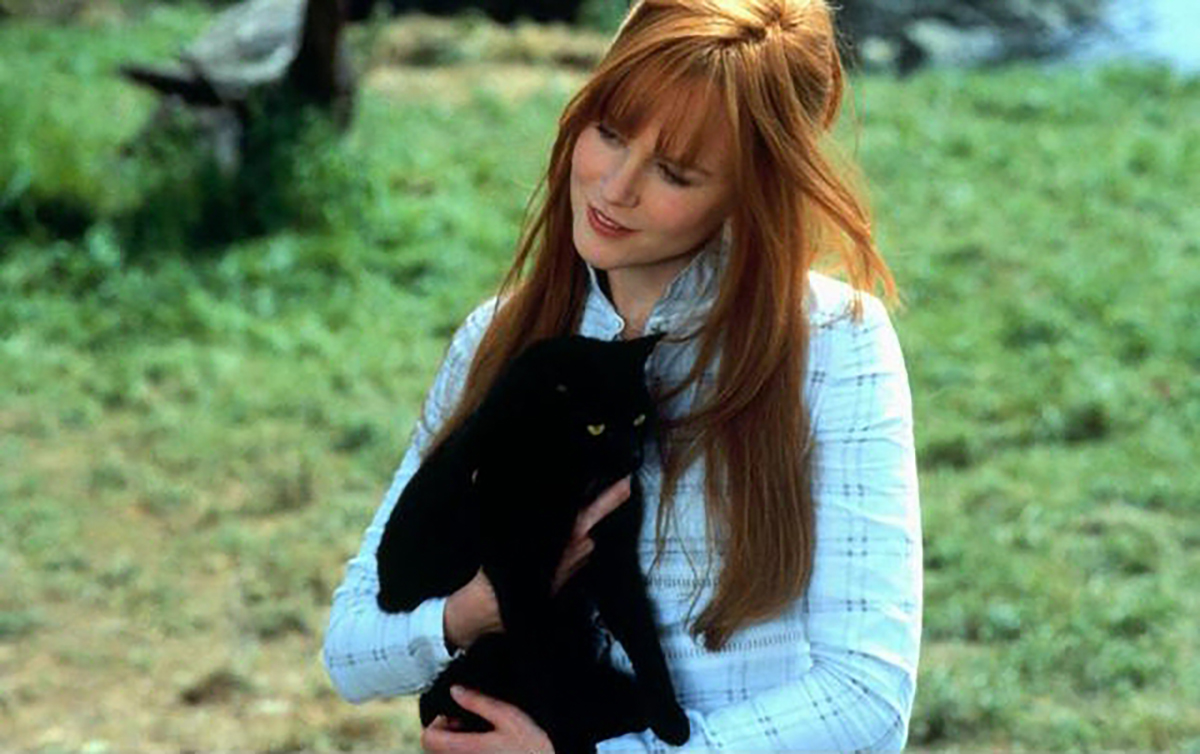
Their relationship is sweet. It is also competing for screen time with Jimmy’s corpse refusing to remain dead.
Jimmy eventually returns by possessing Gillian. She escaped him. Her sister killed him. They buried his body. None of it is enough to remove his presence from her life. He has burrowed so deeply into Gillian that he must be forcibly pulled out of her.
It is not a particularly subtle metaphor for the lingering effects of abuse, but subtlety would feel strange in a movie operating at this emotional frequency. Jimmy becomes abuse that refuses to remain in the past, bringing the ugliest parts of the outside world into the refuge the Owens women have created.
Sally and Gillian were raised by their aunts Frances and Jet, played by Stockard Channing and Dianne Wiest as though they had been waiting their entire careers to become eccentric witch matriarchs. They are unmarried, sexually autonomous, economically independent and largely unconcerned with the community’s opinion of them.
This, more than any actual use of magic, appears to be what frightens the town.
Witchcraft Transforms
The neighbors treat the Owens family as dangerous outsiders while quietly benefiting from their spells and remedies. Sally spends much of her life attempting to escape that reputation, only to discover that suppressing her identity has not made her any safer. Gillian physically escapes the town but falls into another form of male control. Both sisters eventually have to return to the family and the inheritance they were taught to fear.
When Jimmy possesses Gillian, neither Sally nor Gary can save her alone. Even Frances and Jet are not enough. Sally has to ask the women of the town to enter the Owens house and form a coven.
The same women who mocked and ostracized the family join hands to save Gillian. Witchcraft transforms from a source of isolation into an expression of communal power. Jimmy is not defeated by another man punching him harder or by Sally finding the correct boyfriend. He is expelled collectively by women.
It is an enormously satisfying scene, even if the film’s ideas about independence remain as contradictory as everything else. Sally still has to open herself to conventional romantic fulfillment. The movie wants to celebrate women living outside traditional structures while also delivering the pleasure of Sandra Bullock finally kissing the handsome cop.
’90s Perfection
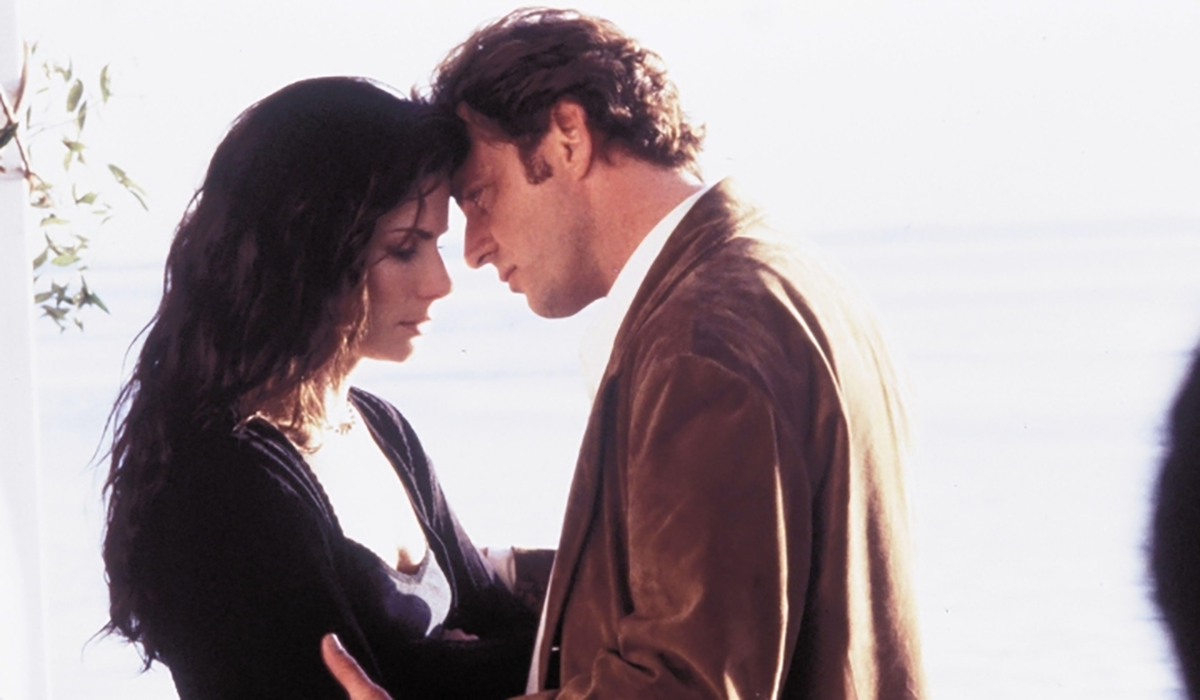
But “Practical Magic” does not resolve contradictions. It accumulates them.
When the film opened in 1998, critics largely treated that instability as a failure of control. It was too dark to function as a romantic comedy, too silly to succeed as horror and too frightening to become comfortable date-night entertainment. Audiences did not initially turn out either. The movie grossed roughly $46 million domestically against its enormous budget.
But like “Hocus Pocus,” it eventually escaped the expectations of opening weekend. Home video, cable, and annual autumn rewatches allowed people to approach it less as a conventional narrative and more as a place worth revisiting.
And what a place.
The Owens house may be one of the most inviting homes ever built for a movie. The clothes are magnificent. The soundtrack is wall-to-wall late-’90s perfection. There are pancakes in the morning and margaritas at midnight. Dianne Wiest is always nearby. It offers the fantasy of returning home to a community of women who will accept you, protect you and help dispose of a body if the situation absolutely requires it.
Grief Does Not Disappear
That atmosphere gives its darker ideas somewhere to live. Adult viewers return to “Practical Magic” because it understands grief that does not disappear, the fear of repeating inherited patterns, the difficulty of leaving destructive relationships and the desire to return home without surrendering your independence.
It imagines trauma as something that can be acknowledged, exorcised, and followed by breakfast in a beautiful kitchen.
That is also what makes the approaching “Practical Magic 2” such an interesting proposition. Reassembling Bullock, Kidman, Channing and Wiest can recreate the family. Costumes, music, candles and margaritas can reproduce the iconography. Hollywood knows how to manufacture nostalgia.
What will be harder to reproduce is the original’s apparent inability to behave like a normal movie.
Margaritas and Demonic Possession are Equally Essential
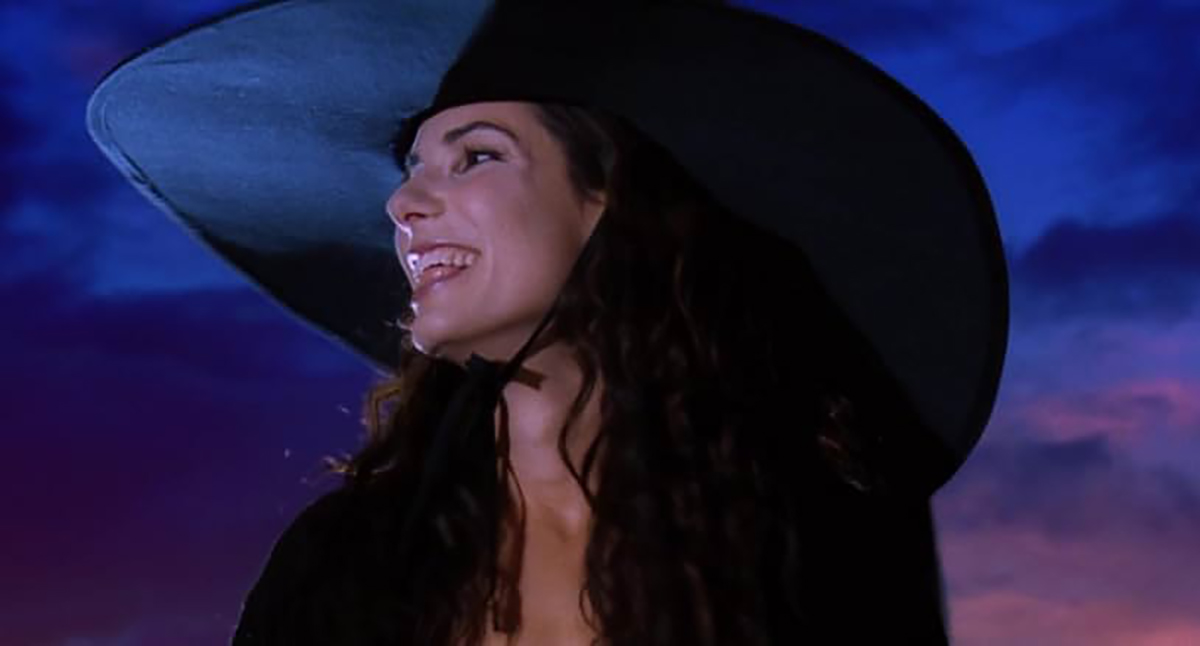
Will the sequel retain the darkness that made the first film more than a seasonal comfort object? Will it risk disturbing the audience that now returns to this world for reassurance? Does it understand that the midnight margaritas and demonic possession are equally essential?
The original did not become beloved simply because it delivered an attractive witchy aesthetic. It became beloved because that aesthetic somehow accommodated grief, violence, murder, romance and body horror. Its comfort had to be built and defended against everything trying to violate it.
“Practical Magic” may not be coherent, exactly, but coherence is no longer the most interesting thing about it. All those competing genres remain trapped together, and nobody has managed to exorcise the mess.
The margaritas are enchanted, the kitchen is warm and the bad boyfriend buried beneath the roses might still come back.
Happy spooky season.