
After coming in contact with a dead priest’s rosary, Frankie (Patricia Arquette), an atheist is afflicted with stigmata and experiences hallucinations. As her situation turns grave, with symptoms of possession setting in, it’s up to scientist-turned-clergyman Fr. Andrew Kiernan (Gabriel Byrne) to get to the bottom of ‘whatever’s happening to Mary’ …or rather, to Frankie.
Thematically, this movie precedes the more popular and controversial “The Da Vinci Code”.” Particularly, at how both works dared to push the envelope with wild ideas such as a secret society run by the Vatican straight out of the Chick tracts (silly little evangelical comic strips that pushed far-fetched conspiracy theories about the Church with additional bigotry towards minorities). Yet, “Stigmata” falls short. It suffers from verbal exposition every few seconds between Fr. Kiernan and his stern superior at the Vatican played by Jonathan Pryce. The suspension of disbelief is largely non-existent.
A Stereotypical Narrative
The movie also propagates generalisations. I don’t identify as an atheist myself, but their depiction in “Stigmata” could be construed as superficial. Interestingly enough, its director Rupert Wainwright is an atheist, yet still feels trapped by the obvious tropes. The movie’s protagonist Frankie is just another walking, talking edgelord who seemingly exists to hook up and is addicted to raves. She also throws aside a rosary gifted by her mother which honestly is just plain stereotypical. Thankfully, it stops short of antagonizing her entirely or painting her as the Antichrist, like those shamelessly vitriolic Pureflix movies.
There is also a touch of ignorance about foreign cultures with Brazil (where Fr. Kiernan is on assignment in the first half) depicted as a country where prostitutes hang out on the curb in broad daylight to seduce men of the cloth. Such imagery was probably included to showcase piousness and sin coexisting on God’s green earth. It is executed with all the subtlety of a sledge hammer.
As somebody who suffers from epileptic episodes, I personally also found it laughable and nonsensical when a doctor diagnosed Frankie with epilepsy after she is left battered and bloodied due to a mysterious flogging attack on the train in full public view. Although considering the myth of epilepsy being closely associated with demonic possessions, maybe the good but misinformed doctor had a point.
Strong Visuals Throughout
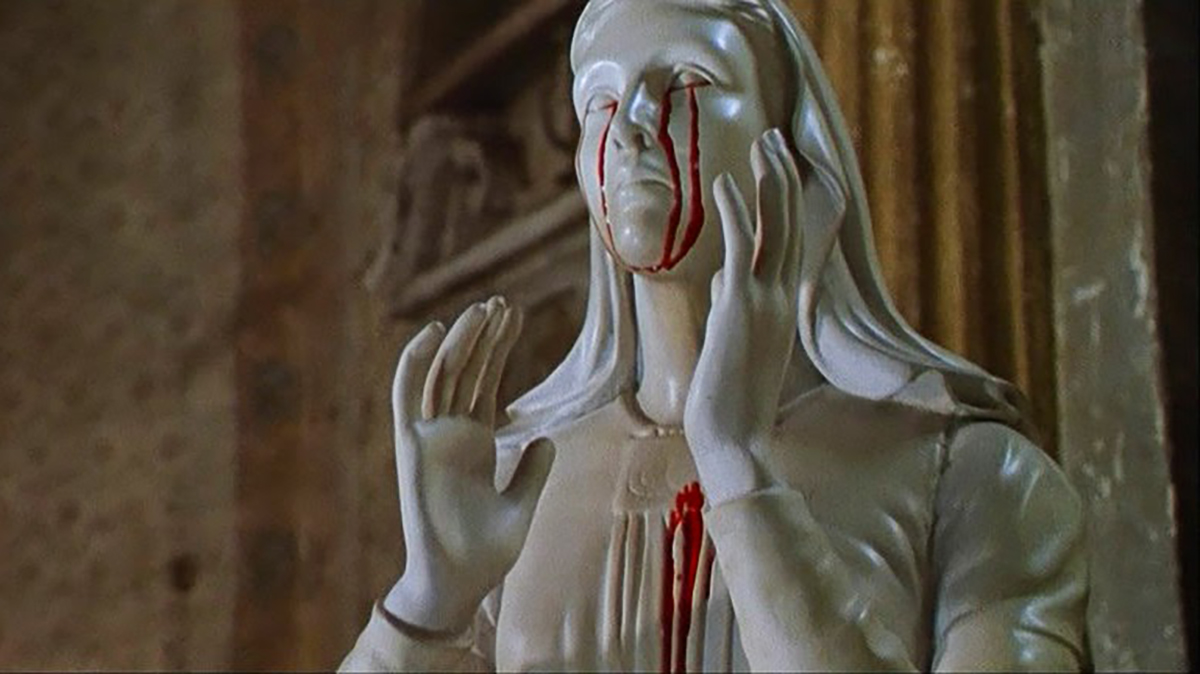
What the movie lacks for in subtlety it makes up for with its colour palette. As someone raised in a Catholic household, the blue-red motifs specific to Frankie stood out to me. This colour combination felt reminiscent to the blue robes donned by the Virgin Mary which signify purity. The omnipresence of red indicated not just the obvious and literal blood of Christ but also sacrifice, considering that the not so virginal Frankie endures persecution due to her erratic behaviour for a majority of the runtime. She is reduced to a pariah among her peers too, but nonetheless is redeemed as a living martyr in the final act. A parallel drawn between an long-suffering Frankie undergoing countless blood tests at the hospital, to Fr Kiernan offering sacramental wine during mass, i.e. the metaphorical Blood of Christ is yet another powerful visual motif.
The cinematography by Jeffrey L. Kimball is a positive, although the audience is left in the dark due to some poorly lit scenes. While the bathtub in Frankie’s apartment is surrounded by more candles than a séance, on the contrary, she works in a pitch-black hair salon/tattoo parlour. At other times, the visuals are bathed in the infamous “Twilight” filter.
Gabriel Byrne Stands Out
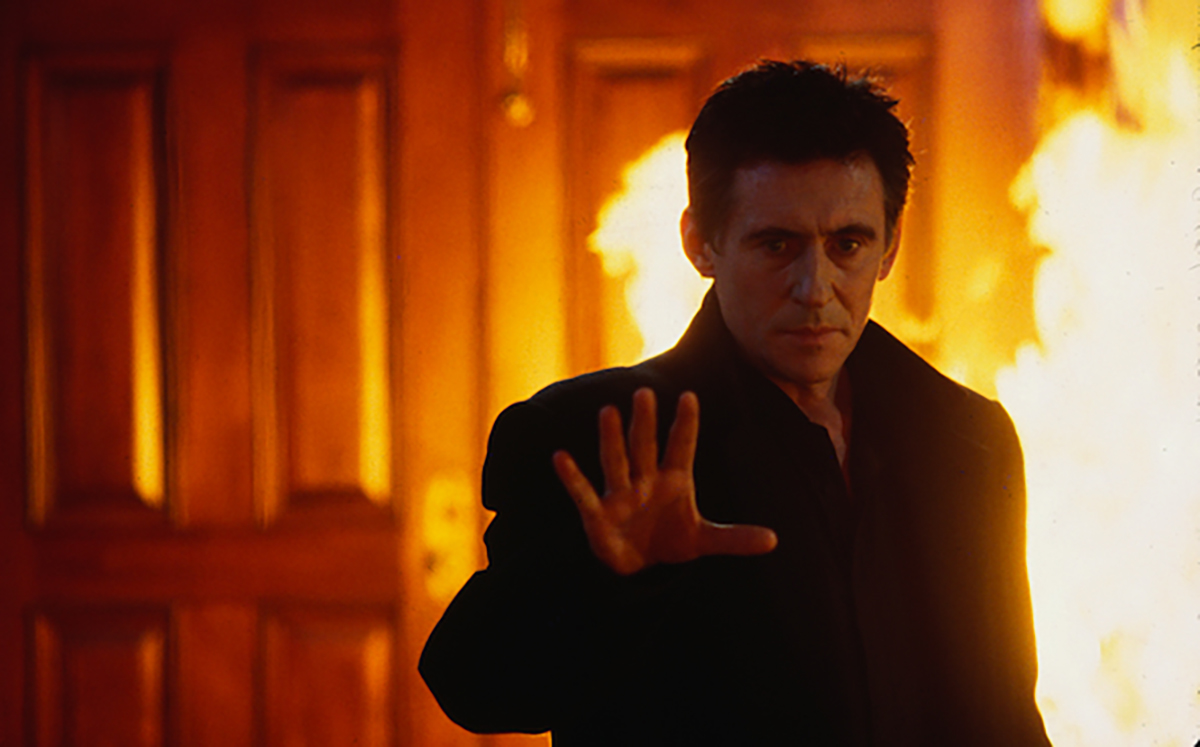
Gabriel Byrne channels his inner Jason Miller (Fr. Karras, of “The Exorcist” fame) in the role of the caring and merciful Fr. Kiernan. He is married to the priesthood but continuing a passionate affair with science on the side. Despite being saddled with a confusing storyline, the talented actor nonetheless flaunts his range. He plays a priest searching for answers with the conviction with which he played the Devil in “End of Days”. Or, as a guilt-ridden, sympathetic seafarer in my personal favourite, “Ghost Ship.” Patricia Arquette offers an endearing performance, even if Frankie is reduced to an edgy caricature on paper. Although she was a lot scarier in “Severance” as the antagonistic Harmony Cobel, than in the possession sequences here.
Both leads share a palpable chemistry, particularly as the bond between Fr. Kiernan and Frankie deepens into a moving ‘will they won’t they’ scenario (albeit a lot tamer and hardly as twisted as the forbidden romance between Kate Winslet and Joaquin Phoenix’s characters in “Quills” which released the subsequent year). A conversation between the pair at a plant nursery is one of the lighter moments in the movie. Unfortunately, the supporting cast are utilised sparsely and quite forgettable.
Ultimately Worth a Watch
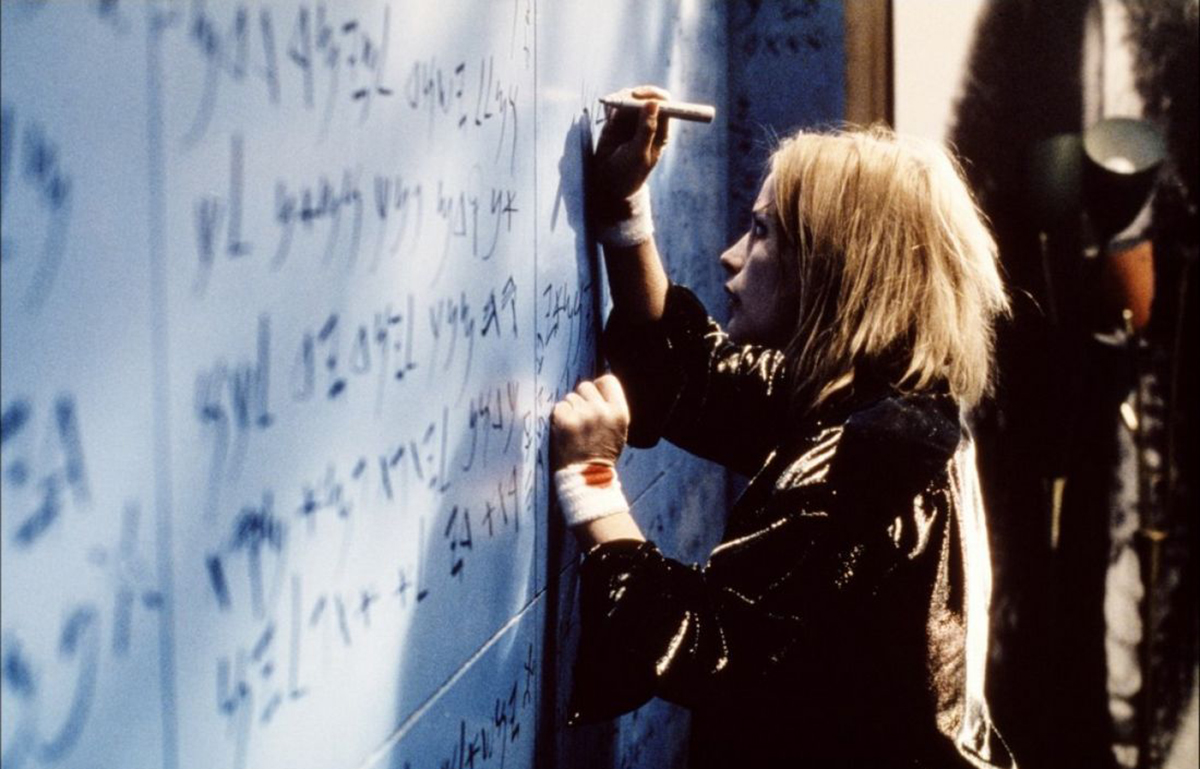
There is always room for skepticism and thus “Stigmata” certainly fulfills the criteria of a commentary reevaluating one’s religion and what constitutes true faith/divinity, albeit via convulated storytelling. However, as a religious-themed horror, it doesn’t hold a candle to similar offerings in the genre. It’s rather low on original scares or genuinely eerie and intense moments that make one jump out of their skin. But then again, none of those other movies featured a bad-ass Gabriel Byrne, who makes it worth a watch, flaws and all.