



Ridley Scott is no stranger to exploring provocative themes in science-fiction stories. “Blade Runner” and “Prometheus” both famously cover a wide breadth of existential themes while building tangible worlds with unsearchable depths. Scott’s new film, “The Dog Stars,” falls short of the precedent set by his earlier works. While the post-apocalyptic film has redeeming elements in its atmosphere and characters, the messiness of its many themes prevents it from achieving the profundity that Scott is known for.
The wasteland of “The Dog Stars” is a sparse and cutthroat one. Humanity was brought to its knees by a flu pandemic that spared few survivors. Hig (Jacob Elordi) survives in a compound outside of Denver with a brutal survivalist, Bangley (Josh Brolin). He was a mechanic before the pandemic, allowing him to maintain a Cessna 182 and the technical infrastructure of the compound. Hig regularly flies into a dilapidated and empty Denver with his dog Jasper to resupply food, fuel, and medicine for his compound and nearby community of Mennonites. Sometimes when gliding above the mountains of Colorado, he hears a radio transmission from Grand Junction. This feeds a relentless hope for the possibility of a civilization thriving in the midst of desolation. Bangley, on the other hand, is primarily interested in the defense of the compound. He’s a ruthless former Marine survivor, killing any strangers that approach them, never taking any unnecessary risks. With rumors of savage reapers wreaking havoc around Denver, Bangley is increasingly on alert for intruders.
Tension Between Survival and Compassion
Hig’s sensitivity and Bangley’s brutality come to a head one night when raiders penetrate deep into the compound. Hig is left to defend himself alone when he realizes that Bangley is absent from his lookout tower. In a fierce battle with Jasper at his side, Hig barely survives but the fight takes a toll on him. After suffering more loss and feeling fed up with Bangley’s violent cynicism, he yearns for some glimmer of an altruistic society in a world that has forgotten empathy. Hig decides to leave Bangley’s compound and make the journey to Grand Junction or die trying. However, his flight is cut short when he loses oil pressure and is barely able to land his plane in rural Colorado. In need of a refuge for repairs, Hig finds himself at the mercy of father and daughter Pops (Guy Pearce) and Cima (Margaret Qualley) while he fixes his plane.
The central theme in “The Dog Stars” is the tension between survival and compassion. Bangley survives by a Nietzschean ‘might-is-right’ principle, claiming the kill-or-be-killed mentality is how humanity has always lived and the intermission that civilization provided was a deviation from inherent programming. On the other hand, Hig isn’t built for this world. When Bangley kills teenagers approaching the edge of their compound, Hig grieves the loss of life. Hig criticizes Bangley’s mentality, telling him he was ready for the apocalypse 10 years before it happened. He claims Bangley enjoys the brutality of this world. Meanwhile Hig craves a community of empathy, compassion, and mercy that he knew before the flu. Hig’s sensitivity draws upon his grief, as he lost his pregnant wife and carries her death and his love for her with him every day.
Some Themes are Left Underdeveloped
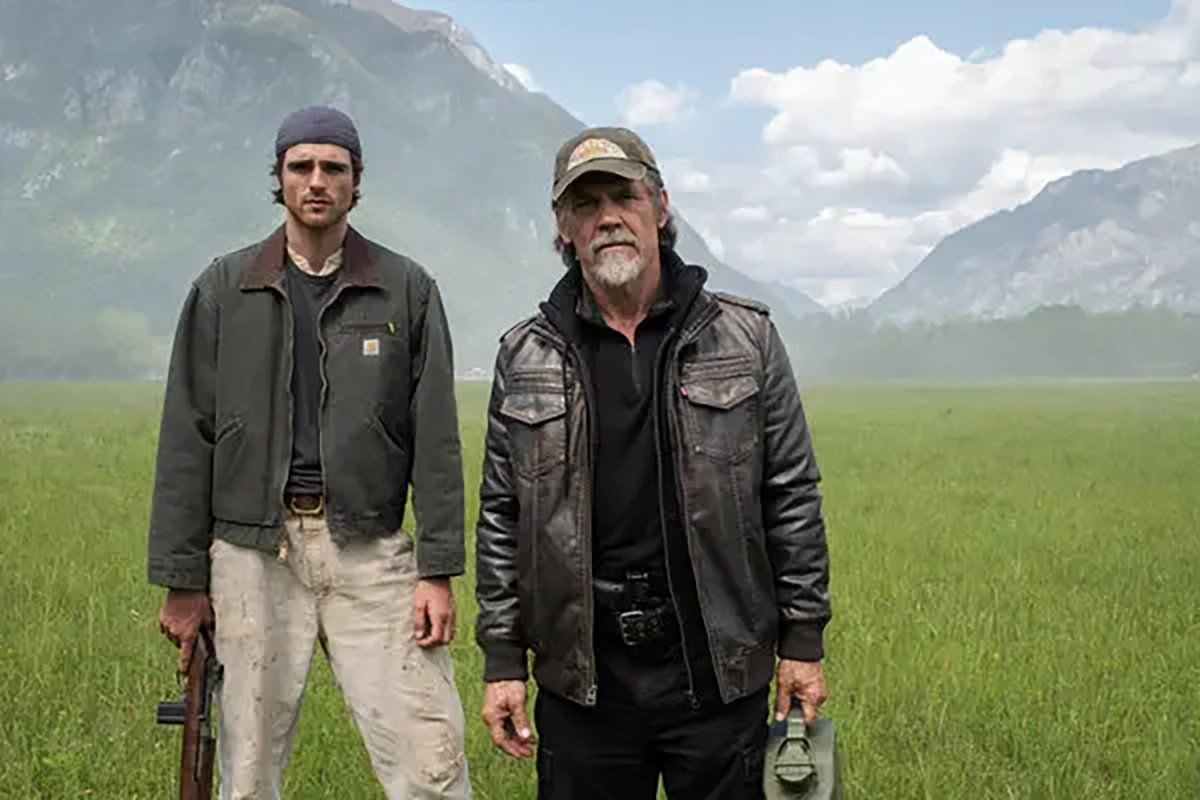
However, as much as this theme is introduced, the film never fully develops it. Hig survives his emergency plane landing thanks to the help of Pops and Cima. Here, one might think the film is developing a hopeful outlook on the necessity of compassion for the survival of humanity. However, the most jarring contradiction to this is the presentation of the reapers and raiders. On both Bangley’s compound and Pops’ farm, a group of savages attack, prompting both a massacre and flight. The film never commits to showcasing the downfall of either Hig’s or Bangley’s philosophy. It never presents a morally ambiguous situation in which a character is forced to make a difficult decision. Instead it presents a safe nobody-is-wrong compromise, in which mercy, ruthlessness, or righteousness depend on whether the recipient is a good guy or a savage.
Several other themes are explored in “The Dog Stars” but never fully developed. A powerful theme in the film is the necessity of hope. Hig confides in Pops that if Grand Junction doesn’t end up being a refuge of civilization, he might fly his plane into the side of a mountain. Robbed of his love, Hig needs hope to survive in the desolate wasteland. The film also explores themes of grief and acceptance through Hig and Cima. Cima also lost her husband in the pandemic and struggles with surviving in light of her loss. A romance develops between the two. However, it is presented more as a comforting companionship in the face of loneliness than an actualized romantic love. Towards the climax of the film, themes of class conflict are explored in such a contrived manner that it feels out of left field and jarringly disconnected from the themes developed earlier in the story.
Post Apocalyptic Without Feeling Derivative
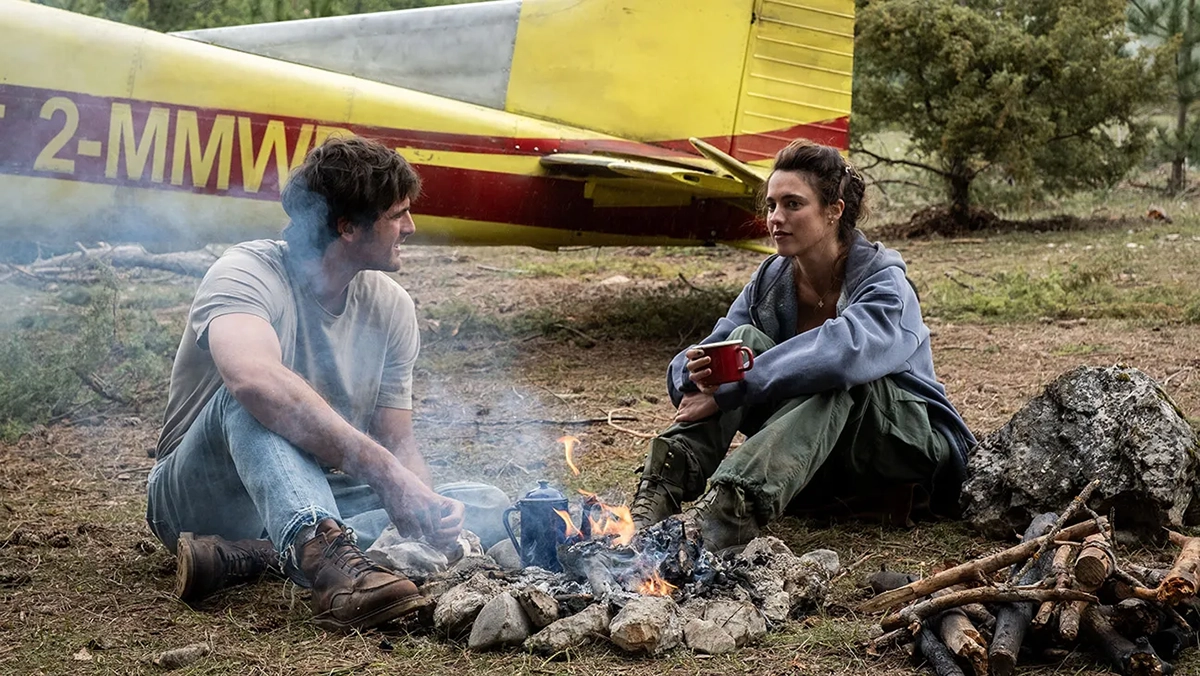
Despite the disjointedly sprawling themes in “The Dog Stars,” the atmosphere and world-building are still commendably well-done. A memorable visual motif in the film is the vintage yellow Cessna gliding over stunning Rocky Mountain landscapes paired with the gentle plucking of a folk song. Stylistically, the movie is mostly gentle and intimate when violent savages aren’t trying to kill the protagonists. It is reminiscent of the intimacy of other post-apocalyptic works like “The Last of Us” without feeling derivative. The film spends a significant amount of time with the soft-spoken Hig as he travels, visits his old home, and grieves. The idyllic and tranquil scenes contrast well against the ferocity and chaos of the action scenes.
“The Dog Stars” has a lot going for it. It features a star-studded cast, it’s set in a world that’s perfect for Scott’s thematic forte, and its story delivers a good balance between tranquility and action. However, that might be why the film is such a disappointment. The film doesn’t make full use of its cast’s talent. Elordi delivers a good moody handsome man, Brolin plays the same tough-guy he’s been playing since “No Country for Old Men,” and Qualley and Pearce are both sufficient in their performances. But none of them really shine in the way you’d expect with such a noteworthy lineup.
Scott Doesn’t Quite Get There

Additionally, if any other director were making this movie, the irresolute themes might be forgivable. But the philosophical depth of Scott’s filmography raises the bar for what this film should be capable of. The world-building might be the most effectively executed element of the film. The world feels so big and full of unknowns, with Hig only scraping the surface of what’s out there. The gentle closeness of the style and atmosphere lend themselves well to the sense of physical and emotional discovery. However, the success of that element never fully compensates for the messiness of everything else.