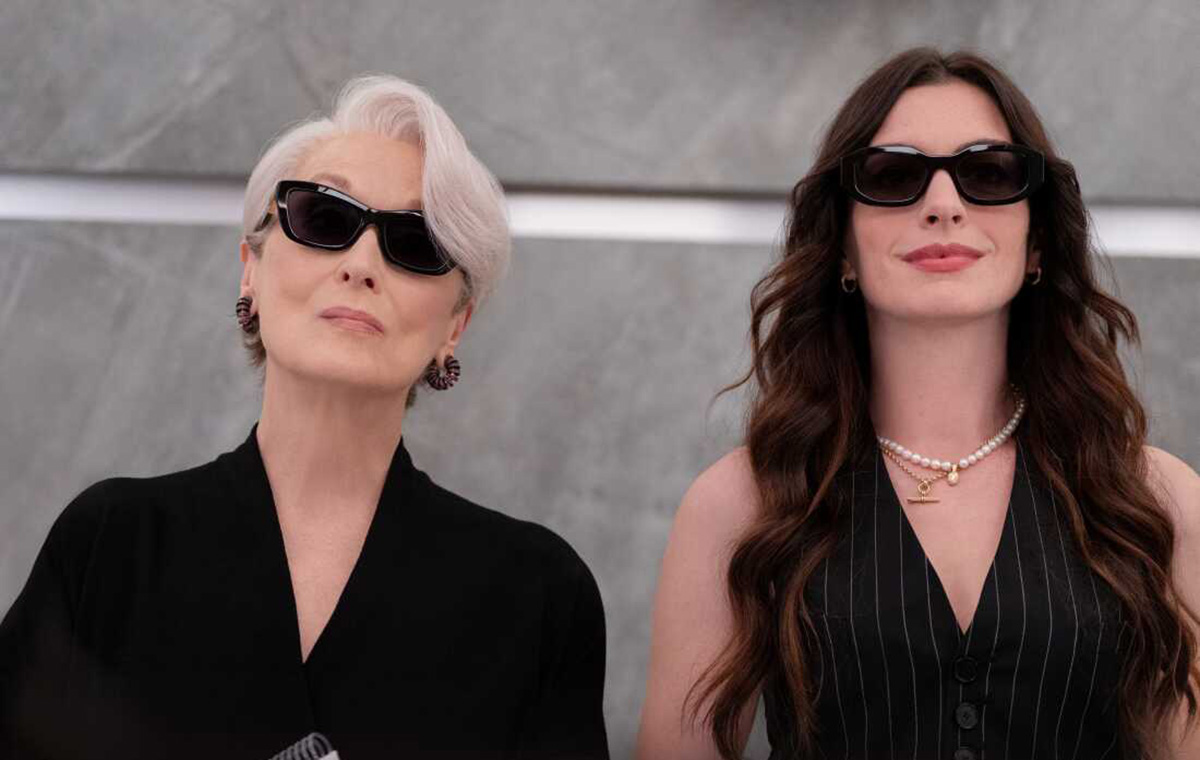
“The Devil Wears Prada 2” runs solely on the magnetism its star power brings, but falls short of its iconic predecessor. Our beloved fashionistas are back, but they find themselves challenged as short-form content floods social media and AI becomes the culprit in the unemployment of journalists and writers. What follows is a story that doesn’t really try to emulate its predecessor, giving us a more serious take on our adored characters’ workplace shenanigans. It is elevated by a star-studded cast, but it doesn’t quite land where it intends to.
The film is set two decades later and we find our characters in a “turn-table” situation. Miranda Priestly (Meryl Streep) is anxious as her PR numbers dwindle due to a social media debacle, while the moralistic yet ambitious Andy Sachs (Anne Hathaway) is now an award-winning journalist. Andy walks past a shopkeeper haggling with a customer who has yet to buy into the differences between two seemingly similar shades of blue, casting an askance look as she basks in the glory of her supposedly right career choice decades ago. But the satisfaction lasts only for a while; she and her entire award-winning staff are laid off, a somber prelude to the fact that while talent might have taken you places in 2006, it is not enough in 2026. Andy somehow finds herself back at Runway, joining Miranda along with the ever-reliable Nigel (Stanely Tucci).
A New Prada World
Twenty years on, the world has changed. Consequently, this sequel looks to take a more pragmatic approach to its storytelling. There is less bashful humor and the laughs are harder to find. It is a more realistic look at the present journalism and news outlet market, where content has become so saturated that you need to tweak everything just to stay relevant.
Director David Frankel, who helms the sequel just as he did the first, seems confused about what the approach should be. Yes, the pragmatism is welcome in contrast to silly humor, if that’s what they wanted “The Devil Wears Prada 2” to be, but the motives and emotions of the characters rarely seem to follow that path, often feeling unbaked and rushed. There is hardly any “I want to go to Paris” or “Get me the unpublished Harry Potter”-esque adrenaline, even though the creators want to make us believe it’s the end of the world. Astonishingly, the way Miranda Priestly is designed feels equivocal. She is hardly the haughty magnate anymore, yet she isn’t developed enough to have a wholesome persona worthy of a fitting ending. It is the finesse of Meryl Streep that one enjoys, but the role is hardly iconic this time around.
Hathaway and Streep are Spectacular
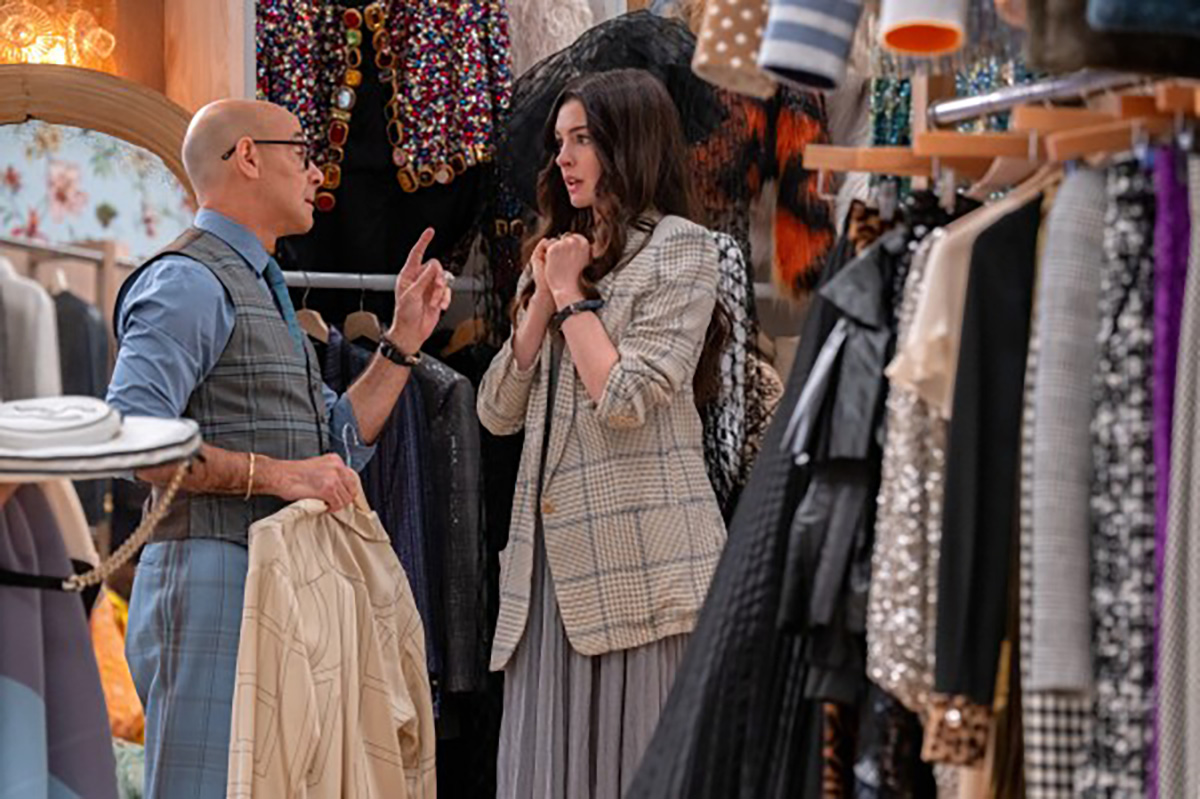
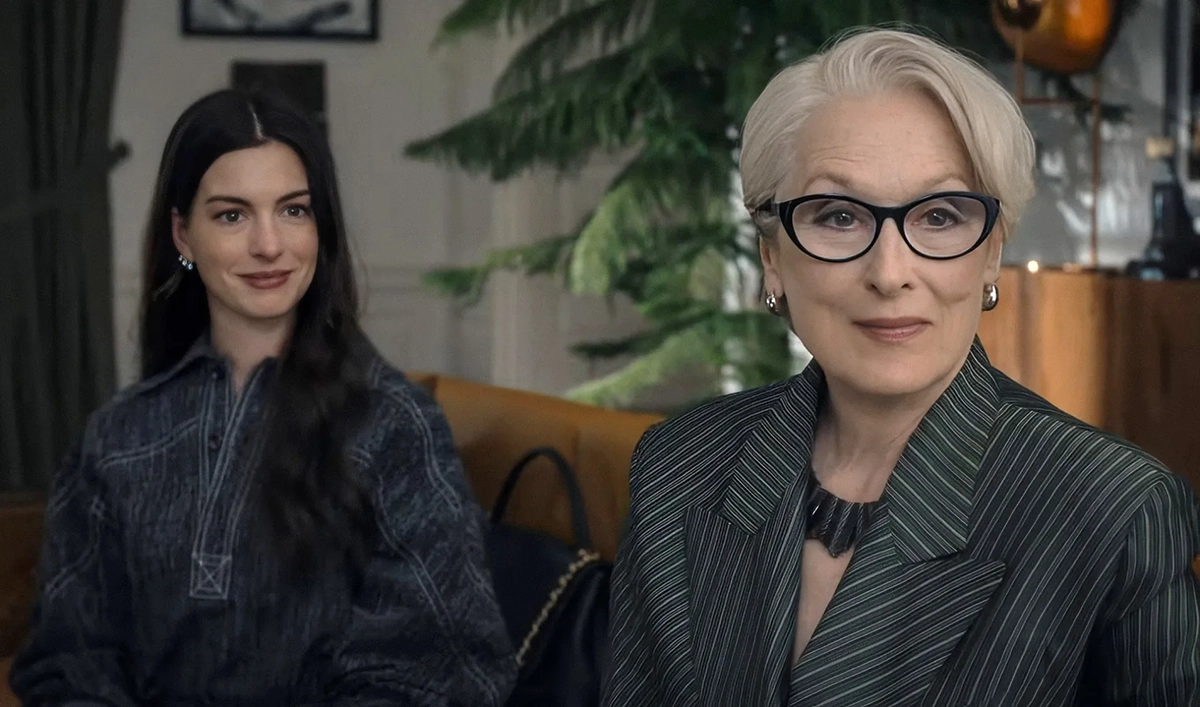
At its heart of “The Devil Wears Prada 2” is the spectacular cast. The film is carried by both Streep and Hathaway. Both stalwarts have long proved their worth, and it’s heartwarming to revisit the charisma and persona they share. Hathaway has carved out a career playing the ambitious-yet-idealistic person, and she’s always a welcome addition to any film. Decades later, Andy still has the warmth and poise to ensure we relate to her, root for her, and genuinely have a good time with her. And Meryl Streep explores deeper emotions this time as she’s forced to be more humane than in the predecessor. She is awesome, though, and a stunning force of nature. No matter what the story or production jumbles on-screen, she vitalizes it with grace and elegance. Miranda once quirkily remarked that she would be nothing without work. Imagine what we cinephiles would be without Meryl Streep.
A much-beloved addition is the strong performance from Stanley Tucci. As workplace toxicity evolves into further cut-throat competition, Nigel’s character has always felt like the safe cushion, the verdant warmth that prevents the movie from turning into a haughty display of power and poise. Stanley is a legend, and he gets his due in this edition.
Some Weaknesses Appear
Shockingly, and quite disappointingly, Emily (Emily Blunt) is pushed to the sidelines. Her character is still somewhat stuck in 2006, though she loses the humor she brought to the table previously. Emily runs Dior now, a position strong enough to talk back to Miranda, but not enough to demand a stronger personality or screen presence. She is weakened to a non-entity looking to climb the ladder through rather unscrupulous means. It was partly weak writing and a disservice to the chic suavity that was the jewel of the first edition. Elsewhere, characters like Amiri (played by Simone Ashley) and love interests played by Kenneth Branagh and Patrick Brammall were left unexplored. This is quite disappointing given the strength each character had in the first film, including Andy’s “obnoxious” boyfriend, Nate (Adrian Grenier).
“The Devil Wears Prada” introduced Andy to us with the joyful “Suddenly I See” by KT Tunstall, pulling us into the “ambitious young person in NYC” trope. This ingenuous approach is what made the movie iconic, and it is exactly what has been stripped from the sequel. It’s not necessarily bad; NYC is still portrayed in all its glory, and the towering Manhattan skyline still possesses the same appeal. Florian Ballhaus does a pretty commendable job with the cinematography.
A Watchable Sequel
Ultimately, “The Devil Wears Prada 2” is about how much has changed 20 years on and the intransigency of modern content creation. Well, what hasn’t changed is the elegance that Hathaway brings to the screen and the fact that we are evidently fortunate to watch Meryl Streep do her work. “My boss is baddier than your boss,” as Andy puts it. “The Devil Wears Prada 2” provides the necessary fan service… but is it more fun than the original? Not so. But it sure is watchable.