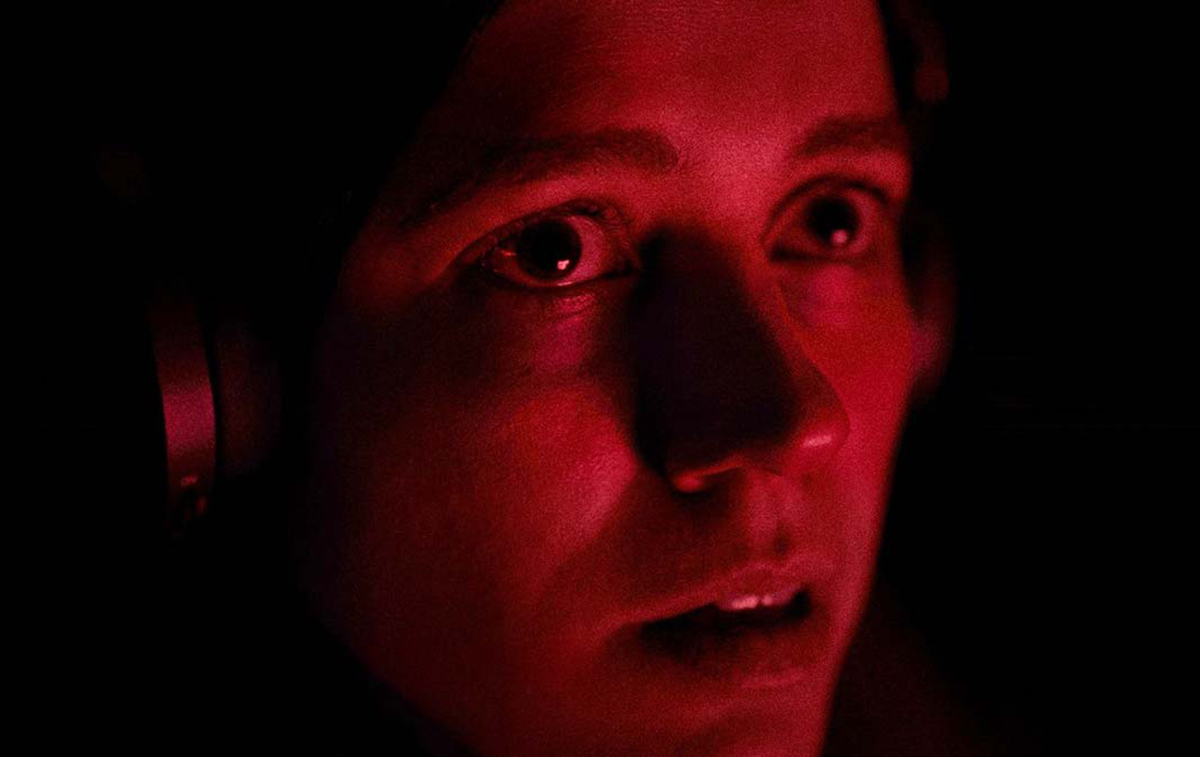
In what is shaping as a landmark year for the horror genre, “Undertone” more than holds its own as an exceptionally eerie controlled-burn. Replete with surprise-attack auditory frights, the film coasts on a baseline dread. Its central mystery gradually unspools, its terrors slink on the outskirts of the imagination. Most of “Undertone’s” staying power can be attributed to its clever soundscape, and it’s a formidable arsenal of garbled singsong, jarring knocks and an assortment of voices stricken with approaching panic. The movie dips and turns and at times feels a bit like “Dark and the Wicked” in the way it positions its protagonist Evy’s ailing mother (Michèle Duquet) at the epicentre of the rising paranormal within the house. More on that later.
Mysterious sounds at night. The storm of imaginings such unnerving experiences can trigger. These ideas and more get a real workout in this Ian Tuason helmed picture that creates and fosters a relentlessly chilling mood. As far as Canadian horror cinema goes, this one follows in the echoing footsteps of indefatigable classic “The Changeling” and lesser-known gem “Pyewacket” as one of the best genre offerings to come out of the country. Significant credit is due to Nina Kiry as the spiritually tortured Evy. She delivers a nuanced performance as a young woman racked with grief, existential worry and paternal doubt as she slips into the role of caregiver to her invalid mother. Evy’s inner voice competes with the disembodied voices on the tapes her and her pal/creative partner Justin (Adam DiMarco) review for their hugely successful paranormal podcast (titular ‘The Undertone’), and it’s precisely this ongoing internal conflict that renders emotional investment in the character’s plight easy.
Auditory Horror
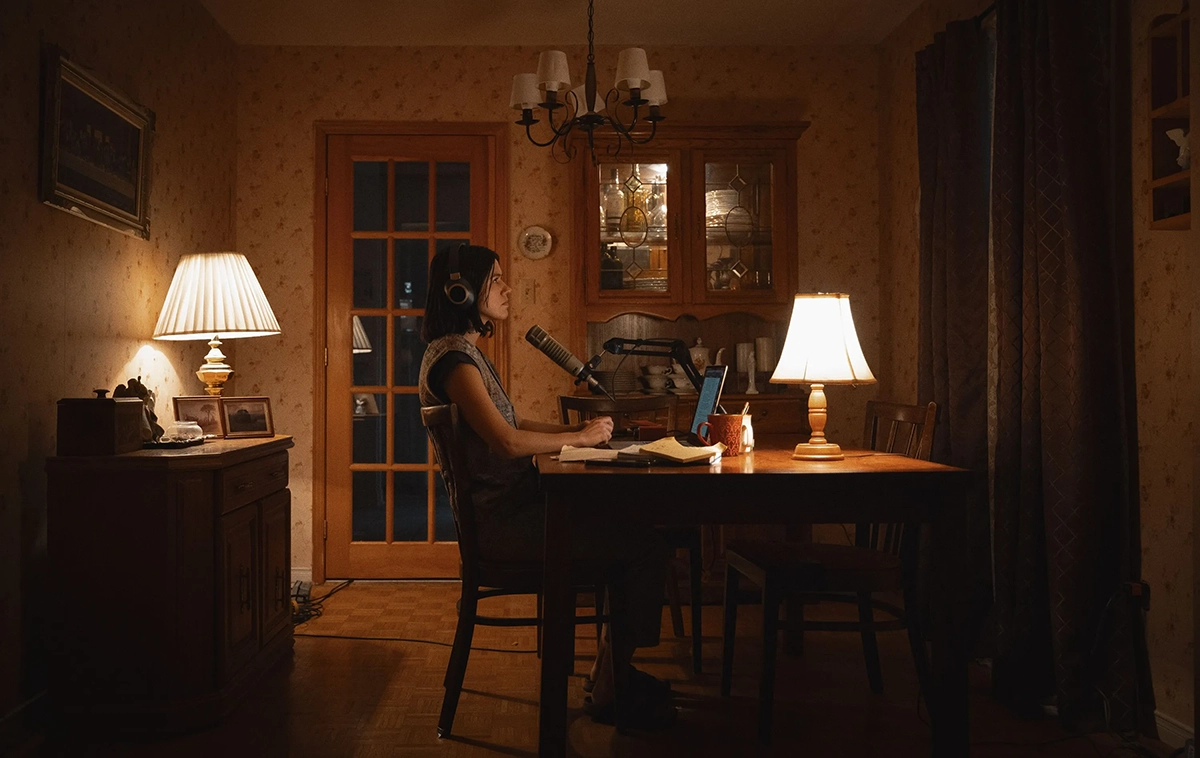
DiMarco (who recently starred in the creepy Netflix outing “Something Very Bad is About to Happen”) is incredibly effective in what amounts to a purely vocal performance. The audience never sees him, but feel his character vividly. There is an authentic, immediately credible relationship between these two podcasters—a long-forged mutual respect that transcends their differing standpoints on the supernatural world. In a nutshell, the film documents a series of days over which the two hosts go about unpacking a collection of unsettling, anonymously sent audio files detailing the apparent haunting of a young couple.
The duo’s objective is to determine the tapes’ credibility as real windows into a terrifying encounter involving a malignant, primeval demon later identified as Abyzou. And of course, initially, they simply want to entertain their keenly listening fans. Things get complicated when Evy, who is pregnant and on the brink of a relationship breakdown, suggests the two take regular breaks in between tapes as the material genuinely begins to get to her—chipping away at her initial incredulity. This is all on top of the trauma and day-to-day sadness she’s forced to contend with as her mother continues to fade.
A Distinct, Haunting Vibe
“Undertone” explores hidden messages in seemingly benign songs most people know in frightening ways, and Ian Tuason proves a master puppeteer when it comes to manipulating sound. Evy’s mother seems to be connected to it all as well, issuing warnings to her daughter when she was still able to freely communicate. Now, artefacts shift and move around inexplicably, amid escalating talk of a vengeful presence intent on wreaking havoc on young families. The last few images up the ante, evoking “The Blair Witch Project” with its chaos of wall drawings and general air of unseen menace. Possibly, these final moments are a little overdone and not in keeping with the smouldering terror that came before it. A flurry of live callers arrive late in the piece insisting they know of the couple on the tape, and this amplifies tension effectively without ever providing definitive answers. One might go into “Undertone” expecting something as cold and alienating as “Skinamarink.” Yet “Undertone” is far more accessible, though it does lean heavily into its aural framework.
The film’s oscillating camerawork seems to at times assume the POV of an unknown party observing (such as the spectre in the underrated “Presence”), and there seems to be a bit of a welcome John Carpenter influence at play. Certain elements and plot beats may seem familiar to horror diehards, but ultimately Tuason’s film seldom sheds an overall sense of ingenuity. “Undertone” has a distinctly haunting vibe that will cling to discerning viewers like a sheet, and serves as yet another A24 winner. Viewers appreciative of the film’s slow-building foreboding may find themselves clamouring for future instalments of ‘The Undertone…‘