


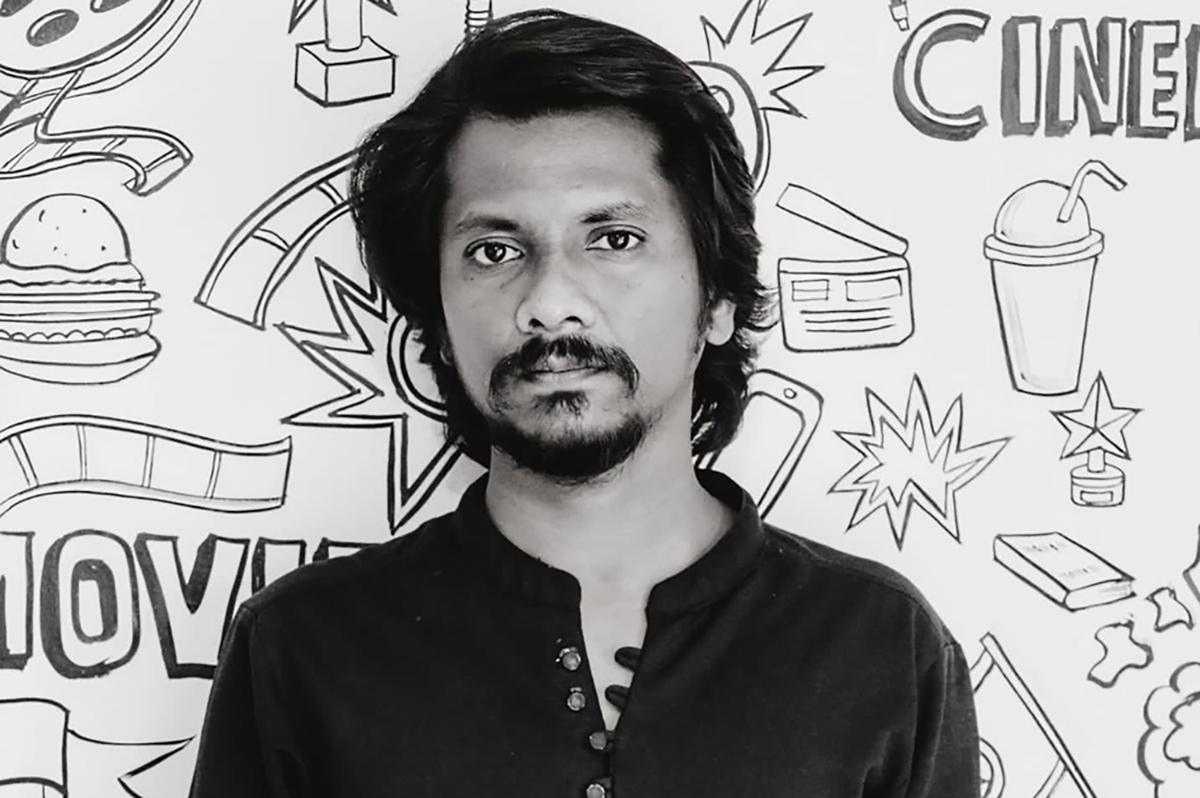
Following the success of his short film “Mauju E Sukhan” (2022), award winning independent filmmaker and literature aficionado, Nehal Ghodke returns with the Marathi movie, “Blossoming Almond.” It marks his foray into writing and directing a feature length work. Not a novice when it comes to filmmaking on a small budget, he discusses his limitations. However, he also discusses the fruits borne by the time, energy and team work spent during the process.
“Blossoming Almond” is also a window into the struggles of women who harbour desires and dreams while juggling household responsibilities. Ghodke shines light on his creative process in crafting a realistic female protagonist who would resonate with an universal audience.
In the following interview, we talk to the filmmaker on his latest feature, its challenges, rewards, and influences. (Note: This interview has been edited for clarity).
Vidal D’Costa for The Movie Buff: Congratulations on your feature debut, Nehal. It’s a pleasure to speak with you again. Could you briefly summarise “Blossoming Almond” for our readers?
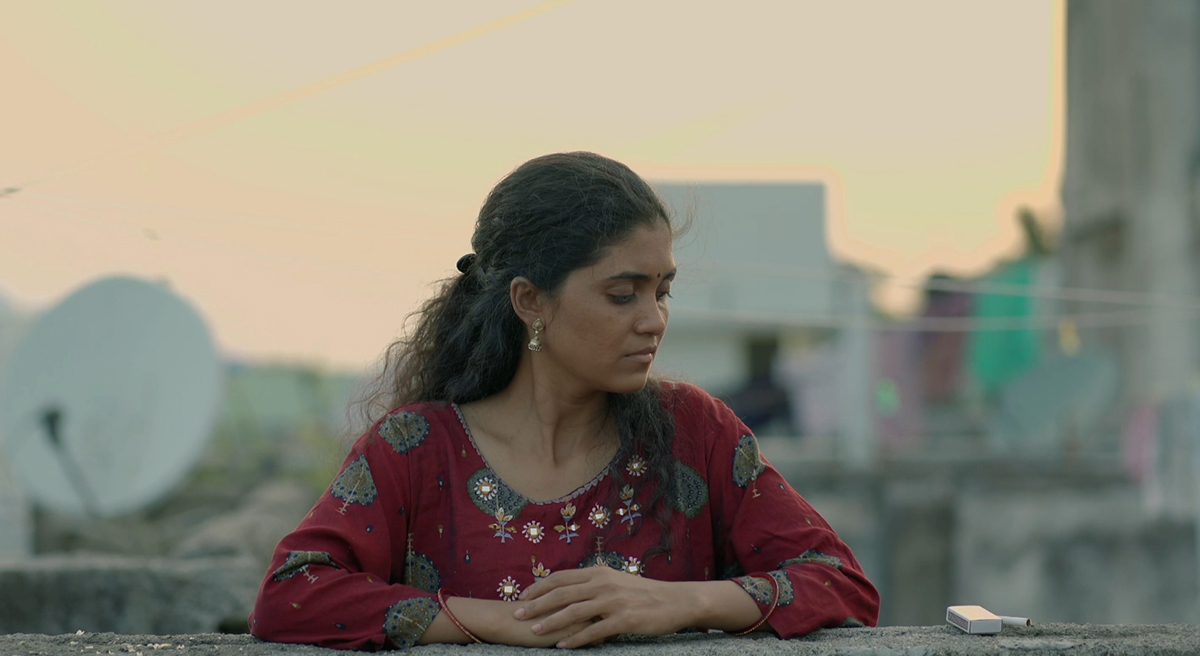
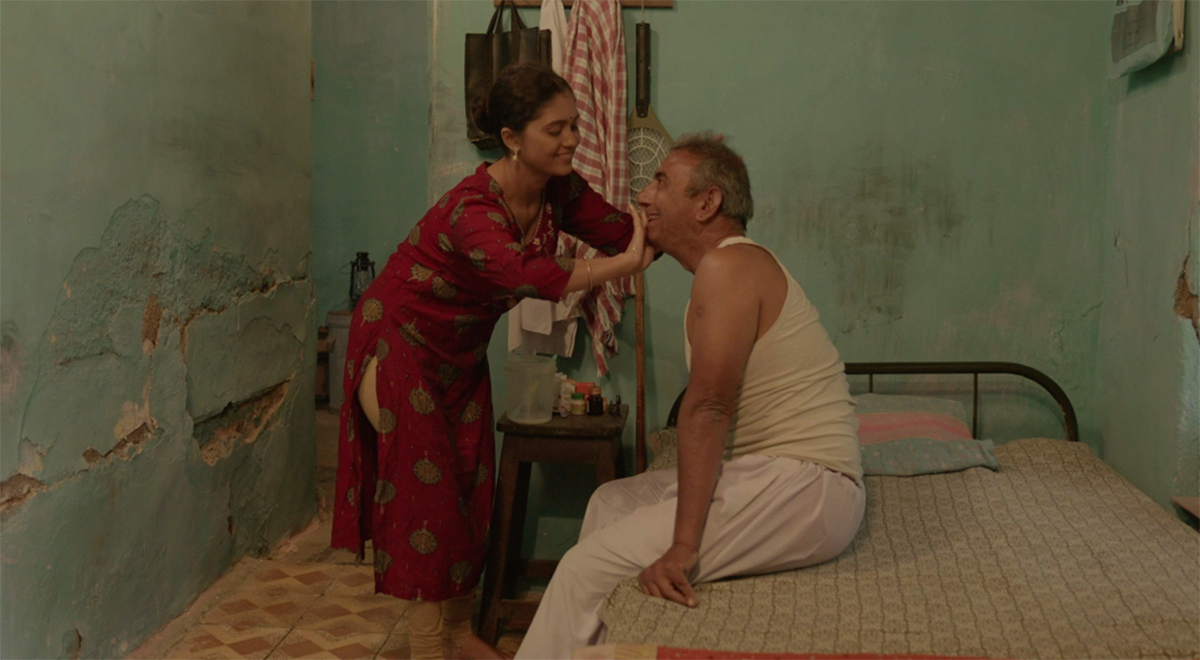
Nehal Ghodke: The movie revolves around Lata and her father, Dinkar Jadhav; the two main characters. Lata is her ailing father’s caretaker. But while caring for him, she is unable to live her dreams, desires, and personal life happily. The film comments on her struggle to find her own happiness as well her suffocation amidst her father’s illness.
We are taught certain things in the form of ‘values’ from the beginning: if your parents have raised you since childhood, you must take care of them in their old age. There is nothing wrong with this, but under this pressure, a child cannot live their own life. It is not necessary that an individual must waste their entire life for one person by sacrificing their dreams. Especially if the person is a woman, she is under the scrutiny of thousands of people and cannot live her personal life. The film highlights these aspects.
VD: Writing/directing a feature comes with its own challenges. What are some similarities or differences you’ve seen working on a full-length movie compared to your previous short film(s)?
NG: One must understand that there is a huge difference between writing and directing a feature film and making short films. Everything from the writing of a feature film to its production is different. Considering the story and script of the film, the structure of a short film does not apply to it. Also, compared to short films, I find time and budget to be important factors while making a feature film. Almost three years of my time were spent on writing this film. [It then] took nearly five years to complete including full production. This much time is not required for a short film. However, if you want to make a good film, you have to give it that much time.
The time spent on writing felt worth it when I received the ‘Best Writer’ award at the Seoul International Film Festival. Compared to short films, I faced more difficulties while making a feature film. And when you don’t have a budget, you have to endure more of those troubles. While making an independent film, one has to consider everything from casting to locations and technical equipment. This film has been produced by overcoming all these hurdles.
VD: In your last interview about the short “Mauju E Sukhan,” you spoke about the heavy influence of prose and poetry in your works. Did literature or other art forms play a role in shaping “Blossoming Almond” as well?
NG: That is very true. The influence of literature and poetry that I had from the beginning is just as effective today. While writing this film, I happened to read the book “Lust for Life” based on Vincent van Gogh. I was overwhelmed by the struggle of that artist and the life he endured. After studying his various paintings, I felt that his painting “Blossoming Almond” felt true to the character of Lata. [She is] similarly looking to make a new beginning in her life. And in this way, the story of the film was completed through a blend of literature and art.
… there is a huge difference between writing and directing a feature film and making short films.“
Nehal Ghodke
VD: You’ve also mentioned in press notes that aesthetically the film aligns with slow cinema and poetic realism. Any particular movies in this aforementioned genre(s) that played a key influence?
NG: While watching world cinema, this style really catches my eye and I grew an affinity to it, especially my own firm desire to incorporate it into my storytelling. I came across films by a Mexican filmmaker named Carlos Reygadas. I saw his film “Silent Light,” which had unique shot-taking that I had never seen before. Similarly, Andrei Tarkovsky’s “Mirror,” “Stalker,” and “The Sacrifice,” as well as works of Krzysztof Kieślowski, or Iranian directors like Jafar Panahi, Ali Asgari, Asgar Farhadi, Mohammad Rasoulof, and Abbas Kiarostami—all of them have been inspirations for me.
VD: “Blossoming Almond” revolves around a female protagonist and a feminist theme. As a male filmmaker, how did you ensure authenticity or relatability while crafting the character of Lata?
NG: What you are saying is absolutely right. Being a male director and making a film with feminist themes at the centre is a difficult task, but my upbringing helped make it easier. While observing the women around me living their lives, I realized how much this society is entangled in a patriarchal culture. I saw the lives of my mother, grandmother, and aunts passing under a kind of oppression, and to some extent, they had accepted it too.
However, not even realizing that injustice is being done to you is a very bad thing. And from all this, I found my character Lata. She is an individual woman, but simultaneously represents all women who fulfil their dreams. While writing the story, the question would often arise as to how Lata would think in a certain situation. However, through research and experience, I kept finding the answers, and Lata came before everyone.
VD: Could you share some insight into the casting process? What are the qualities you look for in the actors?
NG: The casting issue is very interesting. We had made a short film with Manisha More, the actress who plays the lead in this film. While making it, I realized that she could be Lata. Later, when the script was ready, I offered the role; she read the script, but budget was a big question. We found the artist, but didn’t have the budget, and there was a concern about how to pay the artist’s remuneration. After reading the script, we met again and I told her the truth about the situation: I wanted to make the film but I could not provide remuneration.
Manisha More’s contribution was such that she did not take any remuneration for the film and agreed to do it. In this story, another actor had been finalized to play the role of Lata’s father, Dinkar Bhaskar Jadhav, but as the film’s dates approached, he refused to work.
Now, who would play this role was a huge question, but the friend who did much of the casting for the film found an actor at the last minute, and by our luck, we got an excellent actor named Purushottam Upadhyay. He immediately agreed, and then the rest of the casting was done. If Manisha More and Purushottam Upadhyay were not there or if they had not agreed, the film would not have been made; it would have remained incomplete without them. Since it is an independent film, many other roles in terms of casting have been played by our crew members themselves and many non-actors. Everyone’s hard work and acting has shone through and was excellent.
If Manisha More and Purushottam Upadhyay were not there or if they had not agreed, the film would have remained incomplete without them.
Nehal Ghodke
VD: Lastly, what’s next for you after “Blossoming Almond?” Are there any genres, themes or stories you wish to shine light on in the near future?
NG: As a filmmaker, this question will always haunt me: what next? I feel that I have found my path, and I will create films in this same manner. While making this film and in the future too, money will be a secondary matter for me, and cinema will be in the first place, and I will just keep making cinema. I would like to tell my stories; I don’t know if others will like them or not, but I will continue to do my work honestly.
**Blossoming Almond is currently doing the rounds of the film festival circuit and so far it has been screened at 11th Seoul international Film Festival in South Korea, 9th International Folklore Film Festival at Kerala and Guwahati Asian Film Festival, Assam. For more updates, follow the filmmaker’s socials: https://www.instagram.com/nehalghodkefilm/

