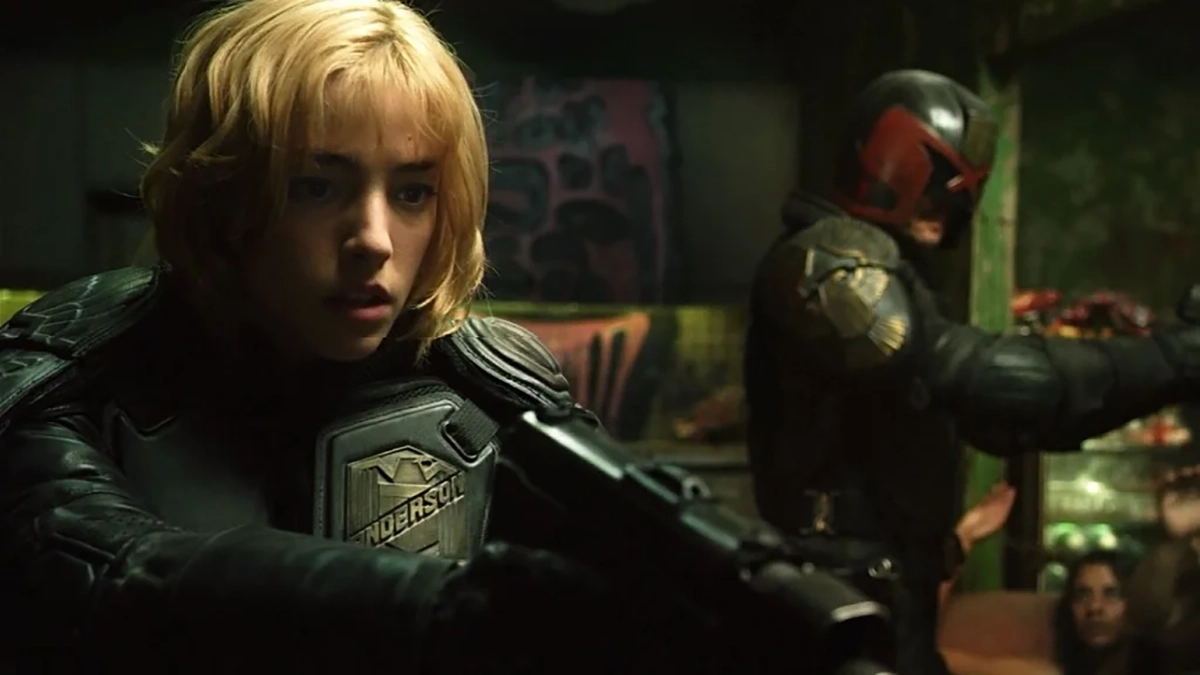
âDredd,â released in 2012, fits right into the dystopian ideal. The character itself, Judge Dredd, is pulled from source material from the comic anthology â2000 AD.â And while the comic sought to satirize totalitarianism, âDredd,â with solid direction by Pete Travis, kicks those themes to the back burner. Dredd, here bodied by Karl Urban, is an impregnable fountain of justice. He’s incorruptible; and the society he polices, Mega City One, is wholly corrupt. It makes for simple story, much like TVs â24,â where the good guys and bad guys are absolute. This may be a good or bad thing. Here, in Travisâ vision, Dredd and other judges police a population overridden with crime, where the idea of a court system seems farcical. Heâs job is to break in a new rookie (Olivia Thirlby), and the plot stems from there.Â
âDreddâ skips a lot of the niceties. The film sets Thirlbyâs âAndersonââa psychic with sub-par police scores who wants to be a judgeâagainst Dredd, the best of the best. He narrates all the ways she can fail the test before her: incorrect sentencing, disobeying a direct order, losing your primary weapon, etc. Dredd has an encyclopedia knowledge of the penal code and questions Anderson on what crime earns what sentence. Yet, along the wayâand especially as Dredd lets a perp go for vagrancy when he should bring him inâyou get the impression of a law student being pressured to display their knowledge, not a pawn being fed fascistic propaganda. And seeing how ruthless the criminals weâve seen are, we start to question if the judges are really that bad.Â
Urban Plays a Good Judge Dredd
What works about “Dredd” is especially Karl Urban. He doesnât seem like an actor trying to act tough, but someone embodying a character who actually is. And as Dredd and Anderson become embroiled in a gang war in the massive Peach Trees apartment complexâgoing up against gang leader Ma-Ma (a sinister Lena Headey)âthe senior judge still uses the situation for teaching skills. In case youâre in doubt of how evil Ma-Ma really is, she orders the flaying of three competitors at the filmâs opening before having them thrown 90 floors down to their destructive end. Sheâs also had them dosed with âslow-moâ first. It’s a synthetic drug she manufactures that makes the brain operate at 1% of its usual speedâmeaning their deaths likely felt like hours, not seconds.Â
The action set pieces of âDreddâ are impressive. And I liked that the film skipped unnecessary flyovers of Mega City One (which we learn is huge, spanning from D.C. to Boston). It instead focuses on the tenement block Dredd and Anderson are trapped within. âDreddââreleasing a year after Gareth Evansâ high-octane âThe Raid: Redemptionââdoubtless took clues from that film. Dredd and Anderson become prisoners in Peach Trees for most of the film’s run. And they’re not the favorites from the onset.Â
Not Short on Action or Intrigue
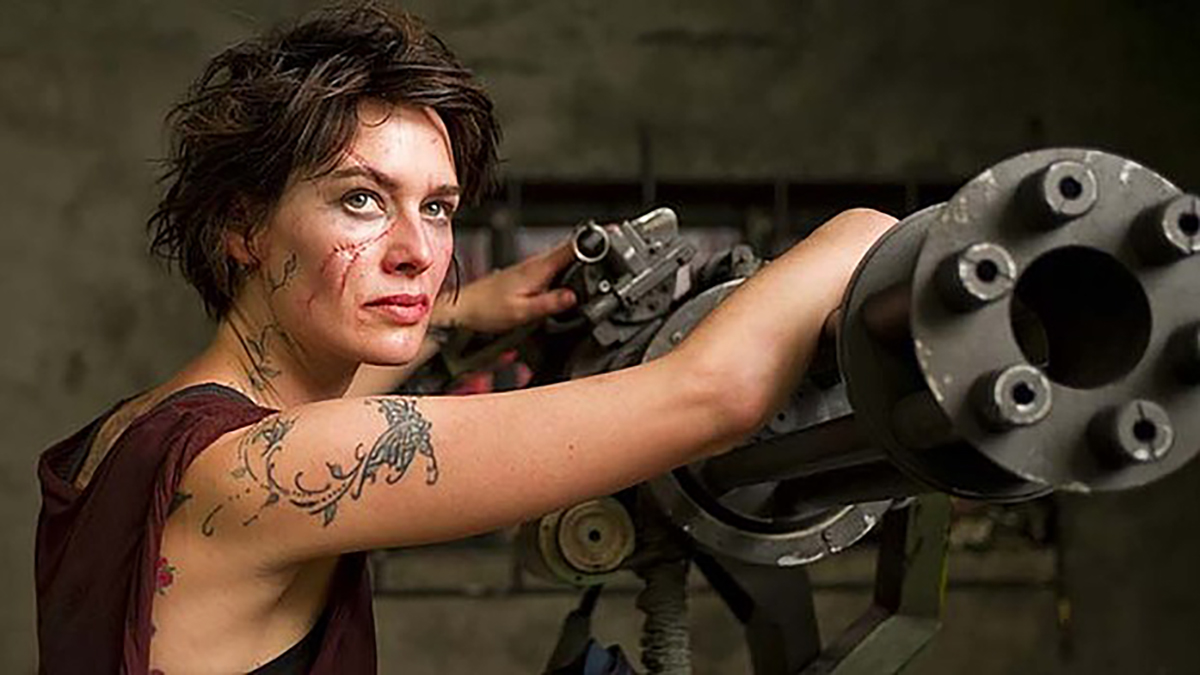
The cinematography and action make the film what it is, and Cinematographer Anthony Dod Mantle highlights “Dredd’s” better parts with intrigue. Some of this includes massive explosions (the filmâs pièce de résistance is a chaingun assault by Ma-Ma on an entire floor that leaves little but ruins), while others include hallucinatory visuals. The drug slow-mo is here rendered at insanely slow speeds. Waves of light and energy fields blend with bullet wounds and carnage. The photography takes some cues from âThe Matrixâ (what action film after 1999 didn’t), but becomes its own thing. It helps that the screenplay is by Alex Garland, who wrote and directed the perfect âEx Machina.â Garland knows sci-fi. And while âDreddâ is mostly dystopia mixed with action, the treatment of Anderson and her psychic abilitiesâand discrimination against her by ânormiesââset up interesting angles.Â
What also sets âDreddâ apartâespecially from the ’95 Sylvester Stallone actionerâis we believe Dredd believes in the law. He believes it absolutely, but not absolutely enough to not give Anderson dozens of chances. A weaker script would have focused on a totalitarian leader and Dredd getting off on the sentences he carries out. We truly believe from the scenery Travis gives us that America is indeed a wasteland. We also believe the judges are actually necessary. And given that other judges donât share Dreddâs immovable nature, the film becomes a treatise on integrity rather than totalitarianism. Iâm reminded of 2002âs âEquilibriumâ here, where a lawman suddenly realizes he must bring down the empire heâs helped defend. âDreddâ doesnât go this route. And while the comic may have intended to criticize government overreach, Travisâ film is more straightforward. Under his bravado, Dredd cares about people. It makes us believe his necessity more than it makes us question it.Â
Is Dredd a Fascist?
âDreddâ is a good film. Itâs not perfect, but it holds the test of time. I watched this film coming off of a viewing of 1987âs âRoboCop.â Itâs an interesting comparison, because Peter Wellerâs futuristic police unit is still figuring himself out, while Dredd knows who he is. And in a city this corrupt (despite honest citizens trying to live their life, ruled by criminal overlords), he feels necessary. The only criticism I can muster is that if the film sought to critique totalitarian overreach, Travis and company fail to make that point transparent. But all-in-all, âDreddâ is a good action film. It’s a a solid dystopian romp that is as likable as its lead, who hammers the character’s finer points home.Â