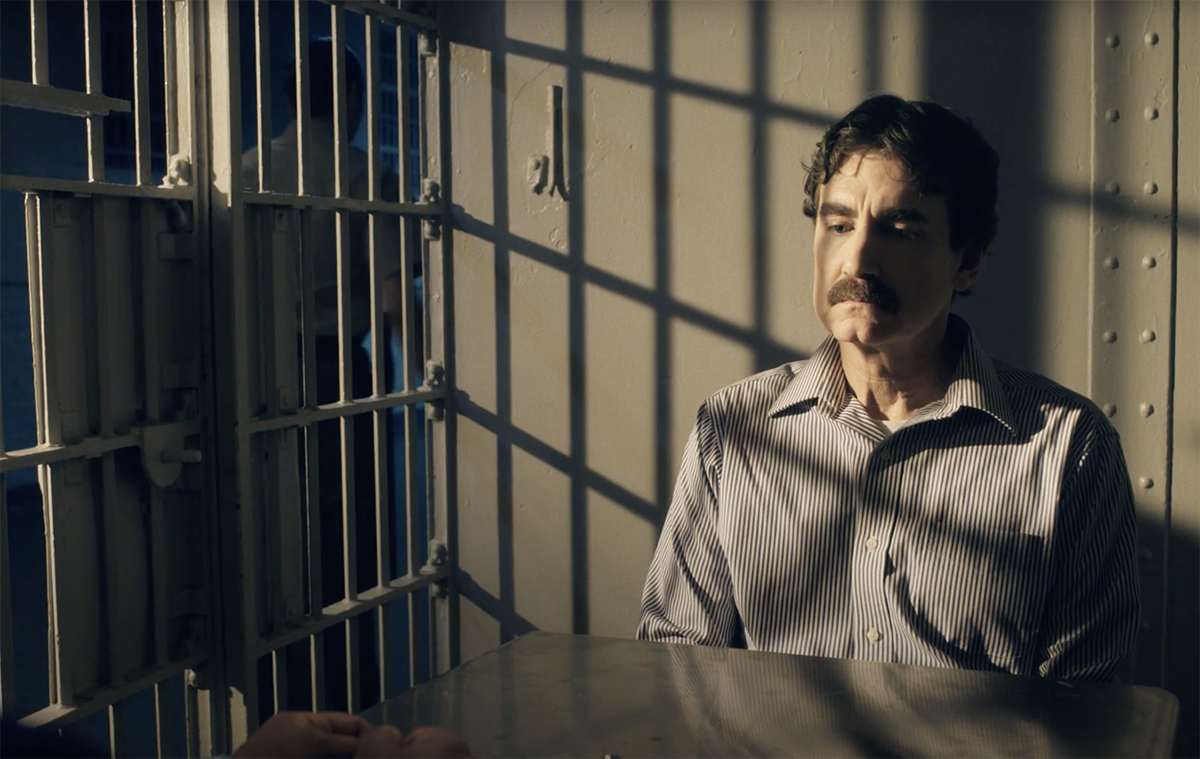
Itâs fitting I was asked to review âRamierz,â an independent short film by Rob Levinson, in the midst of binging âMonsters: The Ed Geinâ story on Netflix. Americaâs fascination with serial killers is undying, and, truthfully, Richard Ramirez was one of the worst. In contrast to âEd Gein,â âRamirezâ seeks to show a journalistâs unwillingness to interview the killer as a sort of thesis of its ownâhinting how big a monster Ramirez actually was. The film takes substantial time from its 34 minute run-time to set up Ramirez’ enigma in the time period after his arrest and conviction, when his notoriety wasnât yet fully realized. Additionally, the film works well in setting up a creepy air with true crime takeaways due to the solid acting of its two leads, Paul Noonan and Marco Sandoval.Â
Noonan, who plays fictional journalist Roman Devereaux for the LA Herald Examiner (a real paper) especially performs well here. Heâs a true newspaper man, in the spirit of actors like Denzel Washington (âThe Pelican Briefâ) and the late Paul Newman (âAll the Presidentâs Menâ). He muses at things professionally and carries a dry, cynical detachment. Heâs experienced tragedy in his life, and it’s no secret he has no interest in interviewing Ramirez, no matter how great the headlines. And in fact, the LA Herald Examiner was failing at the time due to a number of factors (most notably competition from the Los Angeles Times), and interviewing a serial killer seemed a desperate move. However, this mirrors concepts set forth in âEd Geinââsocietyâs fixation on violence and horror in escalating fashion after the horrors of World War II.Â
A Journalist Faces a Killer
What is great about âRamirezâ is the production value the team, Out of Time Pictures, was able to get from its $10,000 budget. The opening title cards are professional and seamless, feeling more like a Hollywood production than is typically afforded small films. Itâs also scored hauntingly, which gives it an eerie feel. The opening gives off the aura of police horror films like âFallen,â combined with the aforementioned journalism pictures.Â
âRamirezâ also takes pains to set its proceedings in 1989, making the film feel authentic even its short run. Newspaper clippings and grainy shots of The Night Stalkerâs crime scenes add a tonal bleakness to it. And one character discussing his wife taping âSeinfeld,â which she opined would ârevolutionize the modern sitcom as we know it,â adds a dated touch. There are times here where you feel you’re living in 1989; had this been a full-length film, Iâm sure this feeling would have been intensified.Â
The interplay between Ramirez and DevereauxâSandoval and Noonan, respectfullyâalso add interest to the film, and both perform well here. Devereaux is integral and seasoned as a newspaperman. He ignores Ramirezâ attempts to lull him into angry debate, remarking with detached nonchalance about the killerâs gambits. Of my favorites were Devereaux commenting on the cliche of Ramerizâ quest to be remembered (âyou moved to LA seeking fame?â), while also professionally reminding the prisoner, âI donât have to understand you to write a truthful article about you.â Itâs clear here that Devereaux has an axe to grind. He reminds us with his forced disinterest that he doesnât want to be here, nor reveres Ramirez as the celebrity he thinks he is.Â
Atmosphere and Eeriness Throughout
Sandoval is also good, and embodies the killer well. Again, harkening back to Gregory Hoblitâs âFallen,” he exists here in a two-fold way. One part is the compulsion to have his story told by a talented journalist, while the other hinges on psychopathic narcissismâhis need to brag and be remembered. However, I found it interesting that Ramirezâthrough Sandovalâreminds Devereaux that âeven psychopaths have emotionsâ in one scene. Heâs basically dying to bring Devereaux into a confrontation throughout, and is dripping with bated expectation. Personally, Iâve never seen interviews with the real Richard Ramirez. However, Sandoval does a good job making us believe his psychopathy, even if sometimes it is a bit on the nose.Â

My only criticisms of âRamirez” became its terse ending (it kind of just ends following the interview) and some of the finer symbolic takeaways Levinson tries to plant throughout. As a result, itâs likely that Ramirezâ interviewâand Devereauxâs take on itâwill not see the light of day amidst the failing newspaperâs financial realities. I initially thought this to be a detriment, but maybe thatâs Levinsonâs point. Maybe Ramirezâ ramblings, pontifications, and deflecting of blame to Satan didnât deserve another day of publicity outside his trial. I would have liked maybe five more minutes of screen-time to see the aftermath of the conversation on Devereaux, who to me was the more interesting character. But a look at his legal pad full of notes at the end lets us know maybe heâs said all he needs to say. Or maybe weâre simply meant to wonder.Â
A Capable Short
At the end of the day, âRamirezâ is a capable short film. I enjoyed the filmâs performances, setting, and series feel throughout. Itâs one of the more technically-apt shorts Iâve seen and leaves you thinking after the credits. Itâs one to check out if you get the chance.Â
Note: âRamirezâ is showing at the upcoming Harvest Shorts Festival for one showing only. You can purchase tickets to the event at the following link. You can also watch the filmâs trailer in the window below.Â