





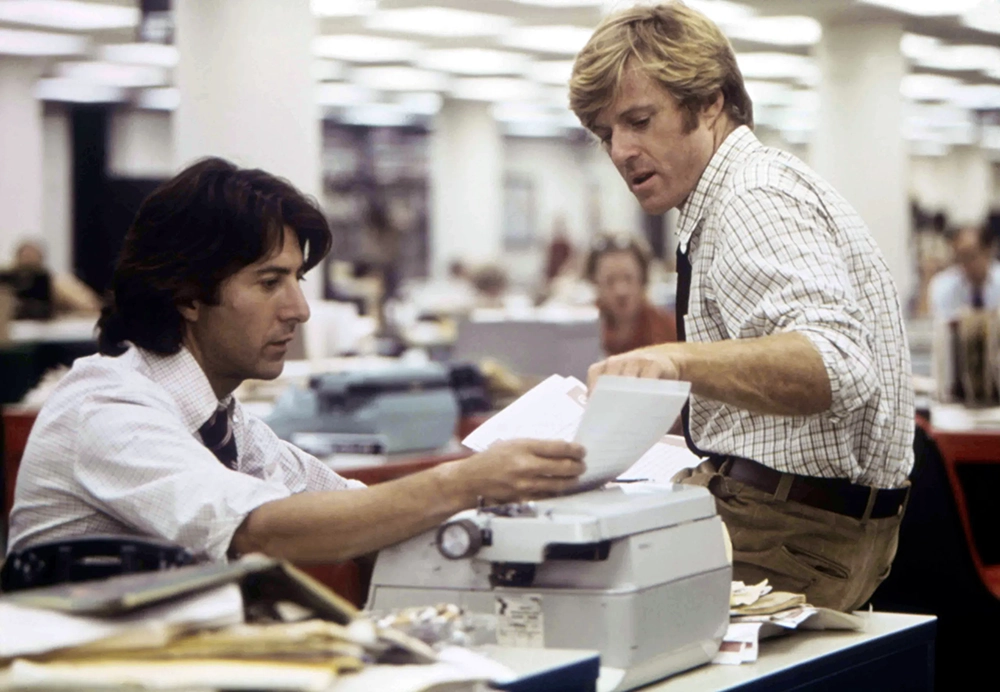
While at the heart of Alan J. Pakulaâs 1976 film âAll the Presidentâs Menâ lies a political scandal, the film is a treatise on investigative journalism. The movie is based on a screenplay by William Goldman and the book of the same name by journalists Bob Woodward and Carl Bernstein. It explores these characters and humanizes them (Bernstein had flirted with termination throughout his career; Woodward was only nine months in when âWatergateâ broke), while also illuminating a time period where a major scandal like this wasnâtâuntil the duoâs exposésâthat important to the general public. Looking back on the event now, in 2022, brings perspective. Watergate was exposed in steps (not in one shot like the excellent âSpotlightâ). âPresidentâs Menâ brings us into the newsroom fully. Its only negative mark is it sometimes pushes Watergateâs story to the back in the process.Â
âPresidentâs Menâ has excellent casting. âThe Graduateâ a decade behind him, Dustin Hoffman plays Bernstein with the right amount of pushiness and veteranship the character deserves. Robert Redford, who had been grinding out classic films at this time (âThe Great Gatsby,â âThree Days of the Condor,â âThe Sting,â etc.), likewise fills Woodwardâs shoes well. Getting scolded by his editor (a great Jack Warden) early on for not knowing a key political figure, it shows he has a lot to learn. But he has his nose to the grindstone. He gets the first lead on the Watergate case and runs with it. Unlike the aforementioned âSpotlightâ or the forever-charming â94 Ron Howard film âThe Paper,â office drama is a minutia of this film. Most of it is dedicated to pounding on doors and making phone callsââno commentâ the usual rebuttal.Â
Bringing Viewers into the Newsroom
In this way, the newsroom of The Washington Post has the feel and demeanor that would be featured in Oliver Stoneâs superlative âWall Streetâ years later. But here, while the protagonists are pushy (they have to be), theyâre polite. Redford plays more the straight man; heâs still learning the ropes and doesnât want to push people too hard. Hoffman, however, has no problem with this tactic. It rubs off on Woodward through the filmâs run-time; before long, pushiness, duplicity, and trip-ups become their modus operandi. You often feel youâre watching a detective exhaust a witness. However, the difference is hereâfor the most partâtheir subjects want to talk; theyâre just afraid to.Â
Of course, âAll the Presidentâs Menâ works because of its direction and focus, and Pakula does a solid job here. Thereâs a lot of frustration in the film as Woodward and Bernstein strike out and then find their way again. Gordon Willis is the Director of Photography, and the film often takes the look of one of a million action/thrillers that would line the â90s. You half expect henchmen with silencers to appear in the night, dealing with such a conspiracy in the making: but then you have to remind yourself this is real. This really happened. The absence of much of a score adds to the investigatory nature of the picture. Woodward and Bernsteinâs apartments are a mess; the latter drinks too much coffee and the former gets too little sleep.Â
Uncovering One of America’s Greatest Political Scandals
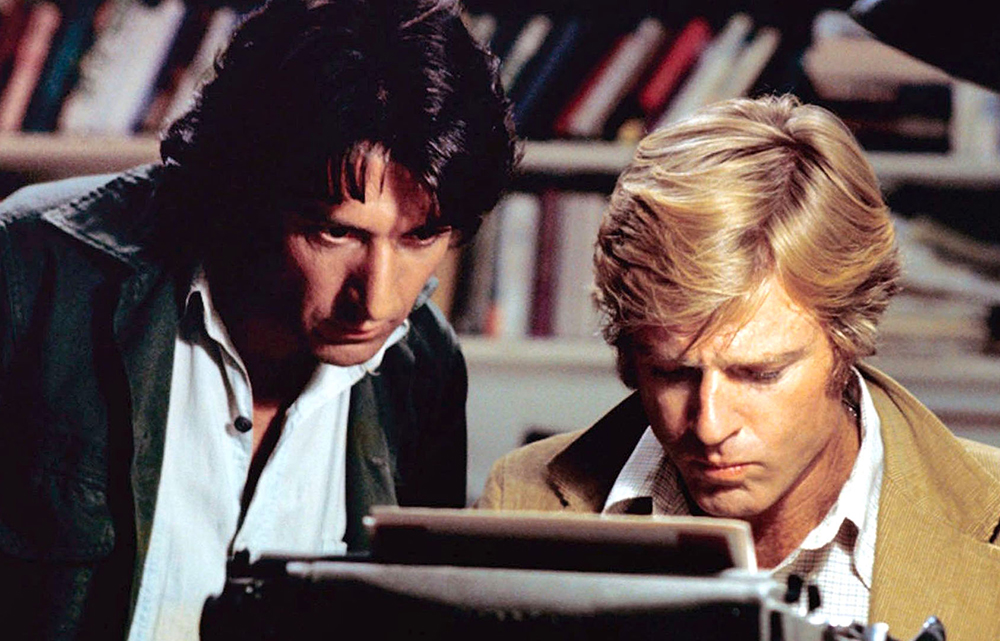
The necessity of the film comes from the slow uncovering of the conspiracyâs players, and itâs here that âPresidentâs Menâ often comes too hard-hitting and too-fast. It assumes knowledge of history, and was certainly written for the time (releasing only two years after President Nixonâs resignation as a result of the scandal). Comparing this to films like 2020âs âThe Trial of the Chicago 7â (also featuring Attorney General John Mitchell), which had the benefit of decades-removed history, knowledge of the events becomes more of a necessity. It spells little out for viewers. In this way, âPresidentâs Menâ can often feel like an onslaught of witnesses and sources, often without buildup. The breakdown sessions between Woodward and Bernstein become necessary to understand what weâve just witnessed. At times, watching this, you can feel a little punch drunk.Â
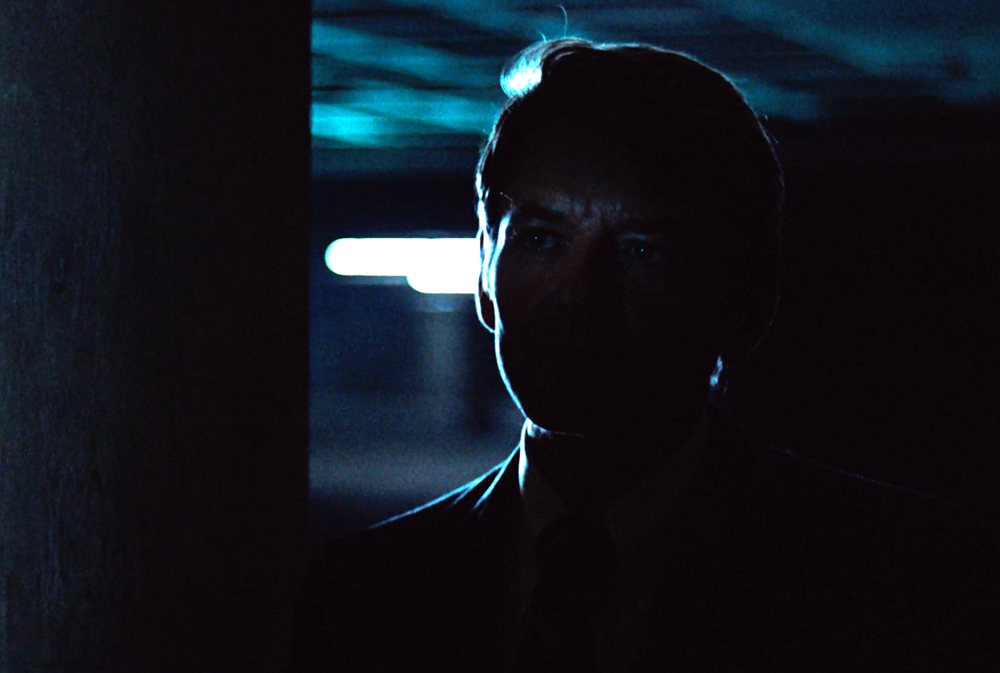
I guess this is the filmâs only true demeritâthat it is more of a journalism picture than it is a historical epic of one of Americaâs biggest political scandals. You never truly feel like youâre uncovering Watergate. We occasionally see clippings on TV of then-President Nixon and related news events. However, we donât see the inner-workings of the scandal itself. But maybe weâre not supposed to. Maybe âAll the Presidentâs Menâsâ true accomplishment is to put us alongside Woodward and Bernstein and make us feel their frustration, exhaustion, and, by the end, their fear. Itâs not just their jobs theyâre fighting for, but truth, Democracy, the 1st Amendment, decencyâ¦their lives. Amidst this, we capture hints of the corruption that lines Washington from the shadowed character âDeep Throat,â played well by the late Hal Holbrook.Â
A Procedural Film; but One that Holds Up
âAll the Presidentâs Menâ is its most effective when it chronicles its journalism, and the pictureâs obliviousness to the history that The Washington Post is in fact making. An editor warns the duo that polling shows that most Americans donât show much concern for Watergate, and the implication is that they should, but they donât. Pakula speckles his film with intriguing shots that highlight the hard work and necessity of the investigation; but none so poignant as one shot that shows a cross angle of Woodward and Bernstein typing their story as a television broadcasts the Republican Party renominating Richard Nixon, the duo unsure of where the story would go, us, the audience, knowing exactly where it would lead.Â
Does âAll the Presidentâs Menâ hold up over time? I think so. Watergateâs effect certainly hasnât waned any, and political scandals are still real, even if we’ve become jaded to them. The film deserves its four Oscar wins (not nabbing âBest Picture,â which it lost to âRockyâ), and I think the reason it might not have gone all the way is its procedural nature. The film doesnât end with a major âExclusiveâ newspaper drop and millions of Americans shocked and awed. The point of the film is the work that it took to get there. As it soaks in, and Woodward and Bernstein contemplate the film’s events, simple keystrokes relay the collapse of Nixonâs empire. Weâre used to more pizzaz; sidestepping that may be âPresidentâs Menâ greatest strength or weakest link. But history is rarely ever that black and white.Â
“All the President’s Men” is now streaming on HBO Max. You can rent or stream it from on most streaming platforms.Â
Support the Site:Â Consider becoming a sponsor to unlock exclusive, member-only content and help support The Movie Buff!


