
Kathryn Bigelow has spent many years working on political dramas and thrillers that encapsulate various situations in the U.S. or its military. Her topics have ranged from the militaryâs role in foreign conflicts and the hunt for Osama bin Laden to the racial tensions in America post 9/11. Her muscular direction makes these stories feel tense and hard-hitting. It is imbued with a sense of anger and aggression because of how these situations have been handled. You truly sense Bigelowâs frustrations and anguish on each topic depicted in her political work. It has drawn tons of controversy lately, with many reading her work as propaganda from its cold and direct approach. Bigelow has been clear about her opinions on these matters. She also provides the audience with a space of their own to question the harsh realities of these issues.
In âA House of Dynamiteâ (screening at the 2025 New York Film Festival in the Main Slate), Bigelow and co-writer Noah Oppenheim talk about the worries of nuclear weapons amidst the appearance and impending impact of a missile aimed at the U.S. The questionââWhat would the president, both in the film and the one currently in charge, do in this situation?ââsurrounds the filmâs entire run-time. They question the mentality of American political and military leaders if such an event were to happen in real life. However, Bigelow and Oppenheim tend to wag their finger as they discuss the topic, all the while depicting the U.S. as an innocent country that hasnât done any harm and has leaders who are all honest and careful.Â
In a Span of Twenty Minutes
It comes off as a manipulative effort to raise awareness on nuclear weapons, using tension to create a false vision and authenticity to cover red-tainted walls with a fresh coat of paint. âA House of Dynamiteâ is told in three chapters. Each covers a different perspective on the upcoming news that a missile is on its way to hit American soil. The location from which it was sent is unknown. These three chapters cover the same twenty-minute psan, from the alert to the âfinal decision.” This structure sounds like an intriguing concept on paper, although not highly original. However, restarting the film to present another (less interesting) perspective completely removes the anxiety and dread it builds throughout its first segment, which is the strongest of the three.Â
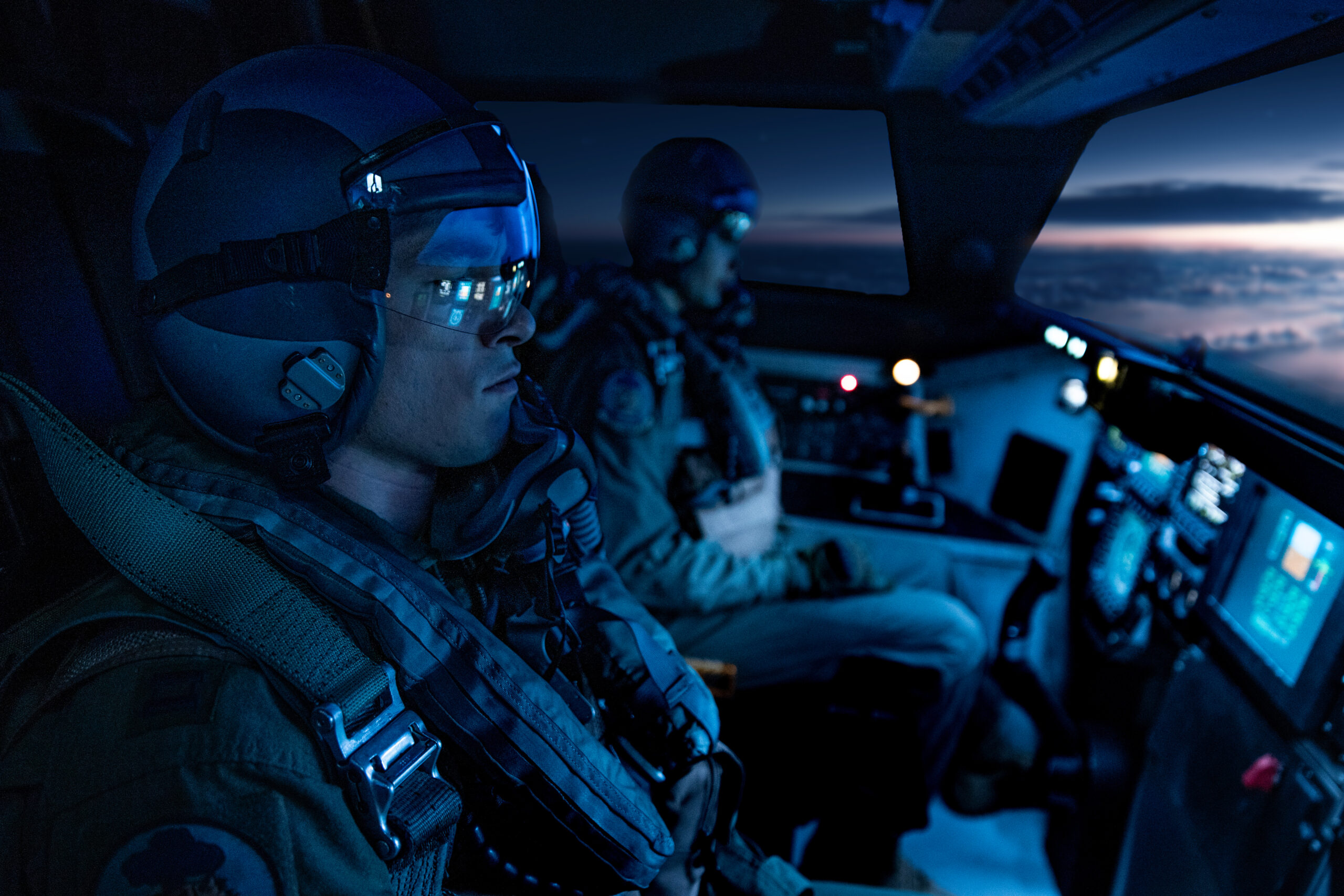
The first utilizes Rebecca Fergusonâs Olivia Walker, a captain in the White House situation room, to guide the collective panic and uncertainty. The team in the situation room notices that a nuclear weapon is heading towards the U.S. At first, they believed it was a practice test, as its trajectory seemed similar to prior ones. But it is getting closer and closer on the radar, and they realize that it is indeed not a test. A real missile is going to hit American soil. They must follow protocol, yet how can one do so when these may be the last few minutes before the world is in flames? Everybody is in despair, with their bodies growing cold as impending damnation becomes inevitable.Â
Manipulation and Unfinished Character-Work In Exchange for Authenticity
All of them try to think about a possible responseâretaliation, letting the impact occur, or firing one themselvesâwhile they ponder their own grievances and personal baggage. Oppenheim takes some liberties with the authenticity of the procedures that U.S. military personnel must follow in this situation to expand on the characters. Each one of them has a token from their life outside the situation room, whether a dinosaur toy from their child or an engagement ring. These serve as a reminder of whom they want to keep safe amidst the sacrifices and dangers of each decision made on their jobs. The trinkets are practical details for forging stronger characters. But Oppenheim doesnât give them much personality outside of that. He writes them thinly as individuals yet strong as military executives.
His focus is on dynamically and conveniently aggregating the numerous phone calls, video meetings, and discussions, setting the characters aside due to the faulty structure. Authenticity and professionalism are key facets when creating a film about a political hypothetical. In fact, they can help provide the work with a sense of realism and groundedness. However, that canât be the âend all, be all.” You canât ignore character workâridding them of moments where they show their humanityâjust to show your degree of research or expertise on the topic. When a film leans too heavily on procedure, it risks feeling more like a simulation than a drama. Bigelow and Oppenheim understand the mechanics of the crisis but not the people within it.Â
An Incomplete Reading of the U.S. Military

âA House of Dynamiteâ strays away from the action or the eventual cataclysm. This already hints at the outcome that Oppenheim and Bigelow decided to conclude with. The âwill it, wonât itâ of the bombâs implosion on American soil is not the vital factor, although it adds to the tension. The actual focal point is the U.S. militaryâs preparation, readiness, and mentality in a situation like this. In nuclear warfare, will the U.S. government act rationally, or decide without thinking things through? One single mistake will cost the world as we know it. Thatâs what Bigelow has in mind: if whoever is in charge (now, then, and before) will make the right decision.
The issue lies in how these officials and leaders are portrayed. The film makes it seem as if they are innocent bystanders who have done nothing wrong to another country. Everyone is viewed through a lens of good faith and nobility, which is already very difficult to perceive, given everything that has happened over the years. Year in and year out, the U.S. military has made terrible decisions that have cost thousands of lives. Are those the same people, the kind folk we see interpreted here? I donât think so. In âDr. Strangeloveâ, Stanley Kubrick talked about the nuclear paranoia during the Cold War. Done in a satirical manner, he mocked the leaders in charge and how absurd this kind of warfare isâthe irony of it all.Â
Kubrick understood how power, when coupled with fear and ego, leads to disastrous decision-making. The film exposed the irrationality at the heart of military logic through jet-black comedy. Oppenheim, on the other hand, seems hesitant to critique that same system, opting instead for reverence and restraint. In the end, âA House of Dynamiteâ mistakes composure for complexity. It refuses to confront the very power structures it so meticulously wants to recreate.