Those who know me are aware that I am not the biggest fan of Paolo Sorrentino, the acclaimed Italian filmmaker often compared to the maestro Federico Fellini due to their similar approaches to storytelling. Some of these comparisons are justified, as Sorrentinoâs âThe Great Beautyâ and âThe Hand of Godâ take inspiration from â8½â and âAmarcord,â respectively. The rest of them have their own unique twist and taste that hint at Fellini, yet veer into other directionsâmore self-aggrandizing and pretentious ones in my opinion.
Sorrentino’s career began with a bang, cementing his name in Italian cinema with films such as âOne Man Upâ and âThe Consequences of Love.â These films are what I believe to be his most interesting works in his lengthy career. You cannot say the same thing about the latter half of his career. It has been very underwhelming and not up to par with what he has provided before. Sorrentinoâs ideas and concepts are now more brittle and lacking the spark that his first few films containedâthe spark that made him a household name and one of the most recognized Italian auteurs working today.
Sorrentino’s Latest Addition to Contemplative Political Figures with Influence
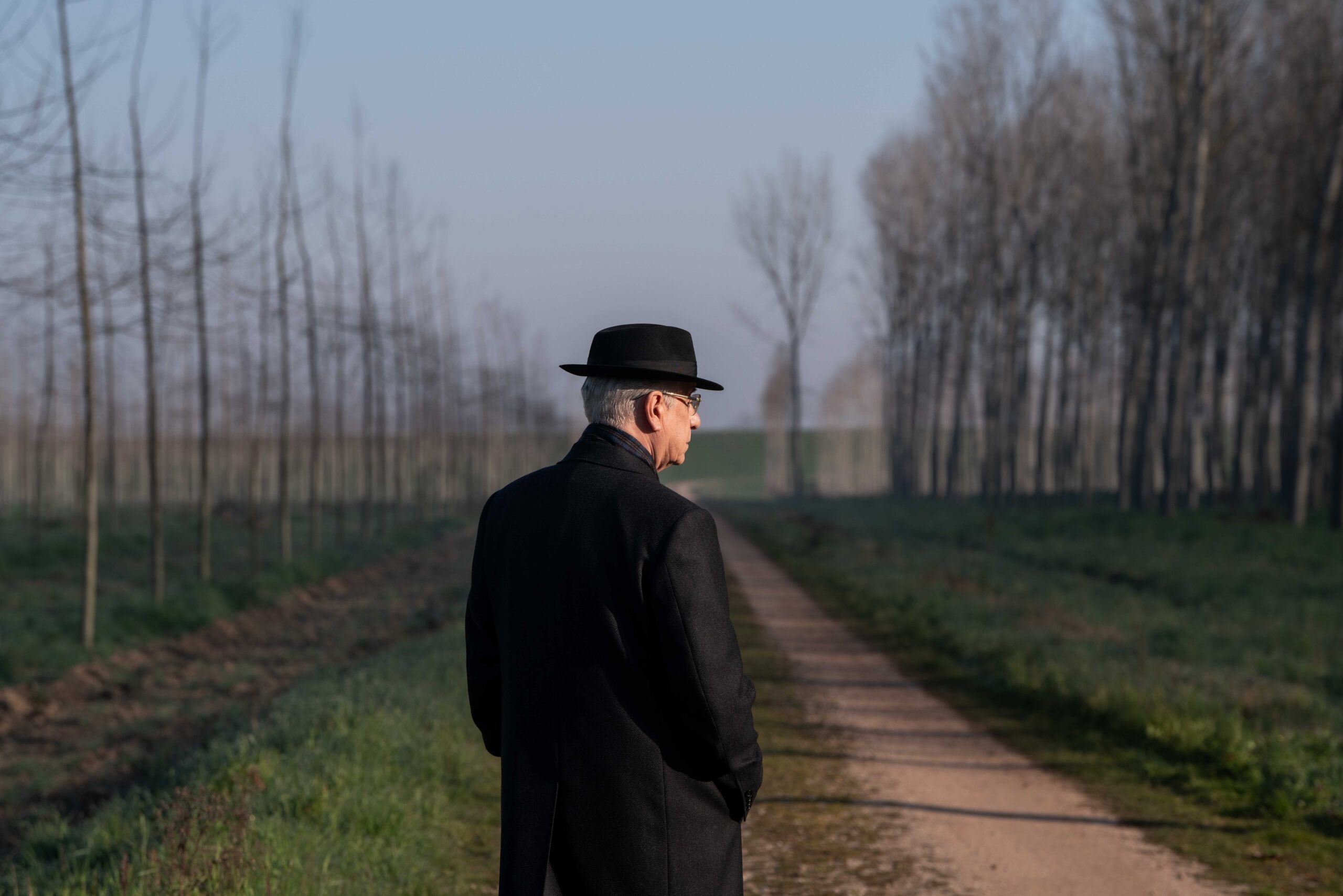
His latest work, âLa Graziaâ (screening at the 2025 New York Film Festival in the Spotlight section), contains thought-provoking ideas, yet it is marred by many foibles that prevent Sorrentino from finding his groove. In âLa Grazia,â Sorrentino, as he often does, looks back on a life thatâs slowly turning on itself. This time, it is through the eyes of a retiring Italian president and his worries upon exit.Â
This is not an original concept for him: taking a man with great power (a pope, a president, politicians, prime ministers, etc.) and examining their loneliness, fractured human connections, and faith. The contemplative outlook on these figures with influence has been a repeated format that sometimes works for Sorrentino, as seen in âThe Young Popeâ (and âThe New Popeâ) series, the two âLoroâ films, and âIl Divo.â However, the difference between those films and this latest one is that it is frail and inconsistent in its messaging. And while there are certainly some honest scenes, which feature some of Sorrentinoâs best writing in a long time, the necessity to add brevity and random notches of oddball detailing truly ruins the reflective tone.
Contemplating Resolution and Disarray
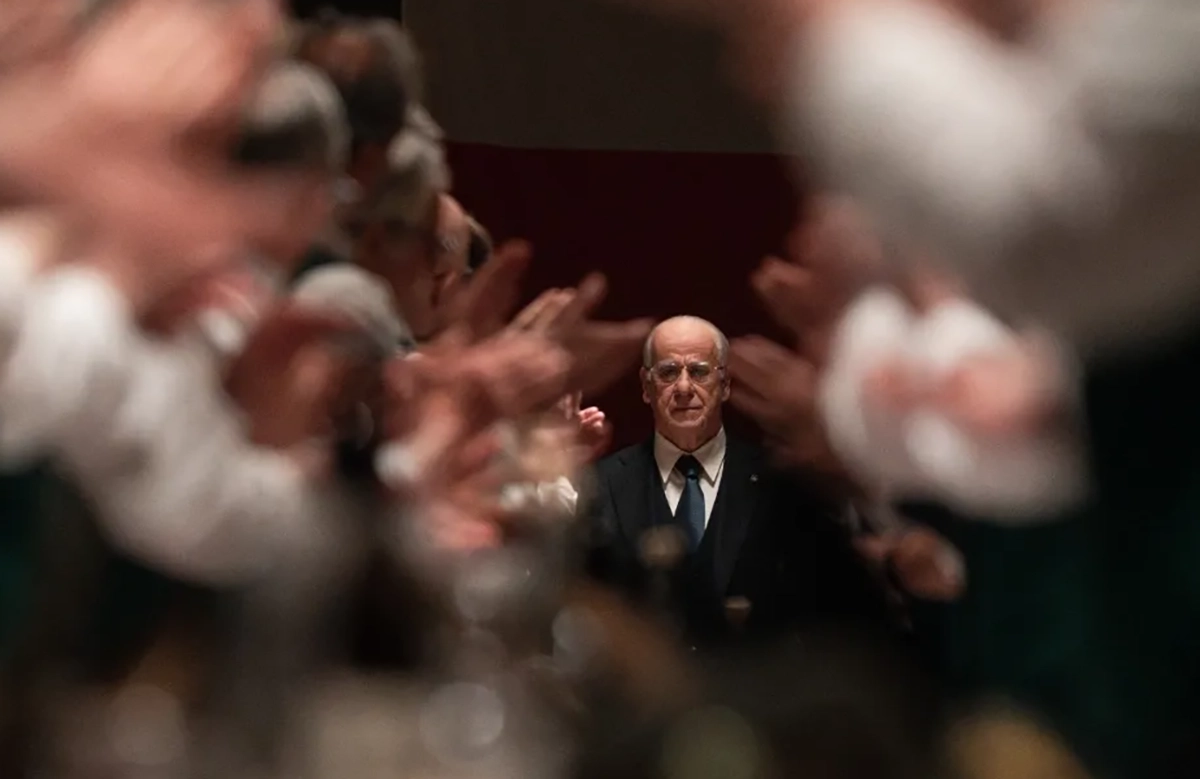
In âLa Grazia,â Sorrentino reunites with long-time collaborator and his on-screen dead ringer, Toni Servillo, who plays Italian president Mariano De Santis. This political figure stands out from many of those in power today. He ponders and questions plenty before passing legislation or laws, unlike those who donât seem to think at all. In most cases, he spends too much time contemplating rather than acting or making moves to help out. It serves as a double-edged sword. Yet, people like him and his attitude. We meet De Santis near the end of his tenure. Heâs got six months before he retires. During this period, De Santis has many things to consider that require careful thought and attention.Â
Other than dealing with the revealing of a very closely kept secret for his friend Ugo Romani (Massimo Venturiello), whom he believes is his deceased wifeâs former lover, he is circling a law that will legalize euthanasia in the country. These two debacles merge to form a third issue. Ugo wants him to commute the sentences of two people who murdered their partners, and there is a chance that euthanasia is involved in both of these cases. The âcondemned murderersâ are the key to his final decision on the bill. His obsession with his wifeâs loverâthe tainted memory of a loved one and the melancholic nature of assisted suicide come together. De Santis contemplates both resolution and disarray further and further.
Fascinating Ideas Lead to Very Little Because of Self-Indulgent Behavior
The premise for Sorrentinoâs latest is intriguing and as thought-provoking as his early features were. It has been a while since the Italian filmmaker has had a story in mind that is both topical and prosperous. However, what âLa Graziaâ still lacks is a complex and observational dissection of its interesting concepts and characters. On most occasions, Sorrentino opts for the obvious and trite dissertations on a late-life reflection and euthanasia. De Santisâ ethics are challenged, yet we never see how it affects his daily living. This rids the film and its lead character of a substance that one would think it had. Sorrentino fills some of the filmâs crevices with details that donât really matter and are quite mind-numbing, in a bad way.
From De Santisâ love for hardcore hip-hop to his admiration for an Italian astronaut, these quirks add little to the character. These details that help define Servilloâs character do not matter to us, the viewers, since they are introduced into the film without much purpose. This echoes the unfocused flourishes of âThis Must Be the Placeâ and âYouth.â Sorrentino wants us to care for De Santis more and more as the narrative develops, with its odyssey of regret and tough decisions. You can’t earn empathy that easily.
Sorrentino’s Symbiotic Imagery

You must build your characters and their dilemmas carefully to create an understanding between us and them. Through Servilloâs performance, you can sense the melancholy in the film, where disappointment and uncertainty lie deep. Servillo has played the doppelgänger of Sorrentino twice now. And their dynamic feels like Alejandro González Iñárritu and Daniel Jimenez Cacho in terms of performance and character. But Servillo canât carry âLa Graziaâ by himself, nor does the screenplay permit him to.
That is what bothers me with Sorrentinoâs cinema. He has interesting ideas in his head, yet he canât express them in an intriguing, complex canvas. Instead, the scenery is filled with symbiotic imagery and dissolute remarks. Ultimately, âLa Graziaâ is a beautiful canvas with little beneath the surfaceâdemanding more from the viewer than it offers in return.