





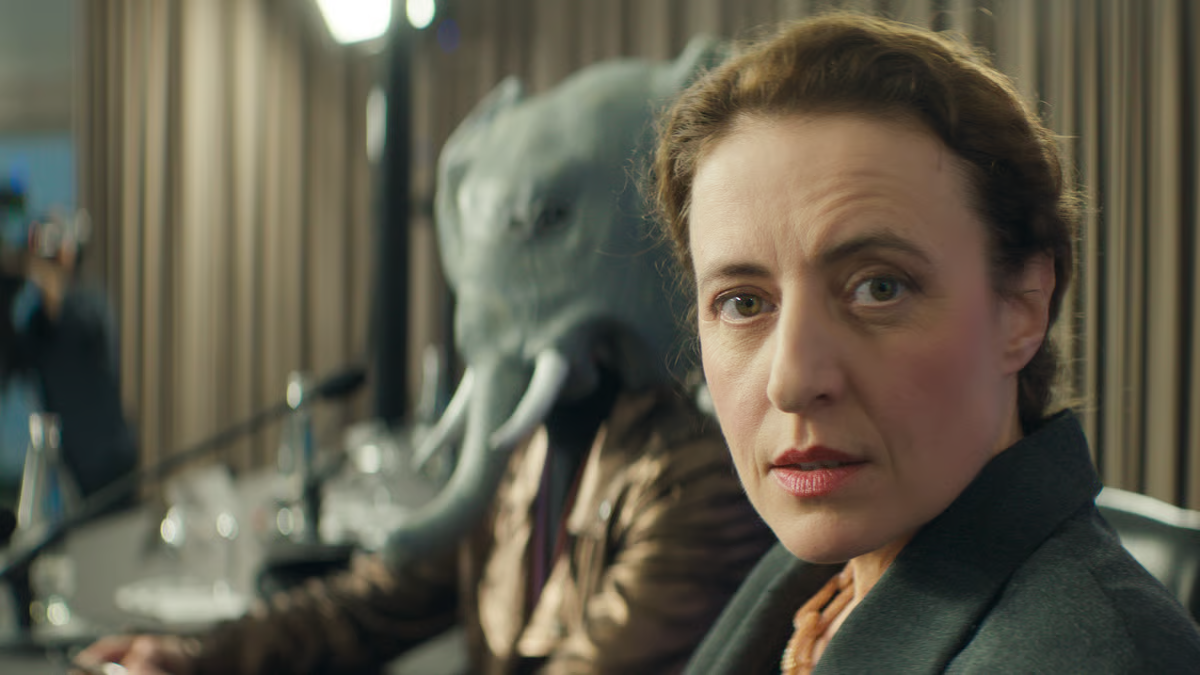
Ulrich Köhler knows what weâre expecting. Spending any amount of time out in the world or inside a movie theater has taught us to take sides, set the objectively good against the undeniably bad. But in âGavagaiâ (2025), which made its world premiere at the New York Film Festival, writer/director Köhler doesnât settle for a trite morality tale. What begins as a treatise on demanding creative types and their shaky personal lives swerves into a more unsettling lane when Nourou (Jean-Christophe Folly)âthe coâstar of a new “Medea” film thatâs set to debut at a festivalâ is accosted in front of his hotel. Köhlerâs ideas regarding the confrontation (which is based on a true story involving Folly) are complicated, perhaps even fluid at present. And so hashing out the details and motives from all sides leads the film down an uneven narrative path that lands at an appropriately incomplete dead end.
Told in four languages (English, French, German, and Wolof), âGavagaiâ is ostensibly about words and their consequences. The term gavagai refers toâaccording to an uninformed Google searchâthe âindeterminacy of translation,â so itâs natural that âGavagaiâ derives its core tension from missed connections and mixed messaging. On the “Medea” set, Caroline (Nathalie Richard) storms into the ocean to chide Maja (Maren Eggert)âher Medeaâand in a fit of directorial rage, tosses her back under water. Maja threatens to leave the set, an action Caroline brushes off if only because she has other crises to manage. Besides, later that night, most of the gang buries the hatchet over dinner at Nourouâs dadâs house. All exude cool, but hold tight to their respective grudges, including Nourouâs dad, an actor who earlier had scolded Caroline for relegating him to the extrasâ trailer.Â
The Murky Spots of Human Manners
On set and off, tempers boil, but itâs Nourouâs hotel incident that permits the filmâs fever to break. Before entering the hotel, Nourou sits inside the entrance, rolling a cigarette. A hotel security guard intervenes, first asking Nourou to step outside (âItâs raining and cold!â) and then, demands to see his I.D. before ushering him outside. When Maja pulls up to the curb, she catches up quickly (âWhy donât you ask for that womanâs I.D.?â) thenâagainst Nourouâs wishesâescalates the matter to hotel management, which after some resistance about delegation (the security guards are not actual hotel employees), vows that itâll never happen again.Â
The spiky discomfort runs parallel to Maja and Nouruâs tenuous romance, which seems only to exist when theyâre on set or in the same city. But when Nouru shows up at Majaâs apartment with donuts after a late night out (âHe smells like beer.â), Köhler muddles the arrangement further. Mining these human errors both for comedy and horror, Köhler approaches then dials back from the biting and unforgivable satirical mood of Ruben Ãstlund (âTriangle of Sadnessâ). The dull edges (compared to Ãstlund) arenât necessarily a narrative cop-out, rather itâs Köhler wading in the murky spots of human manners, similar to the squirmy cinema of his real-life partner, the brilliant Maren Ade (âToni Erdmannâ).Â
Köler’s Zig-Zag Subversions
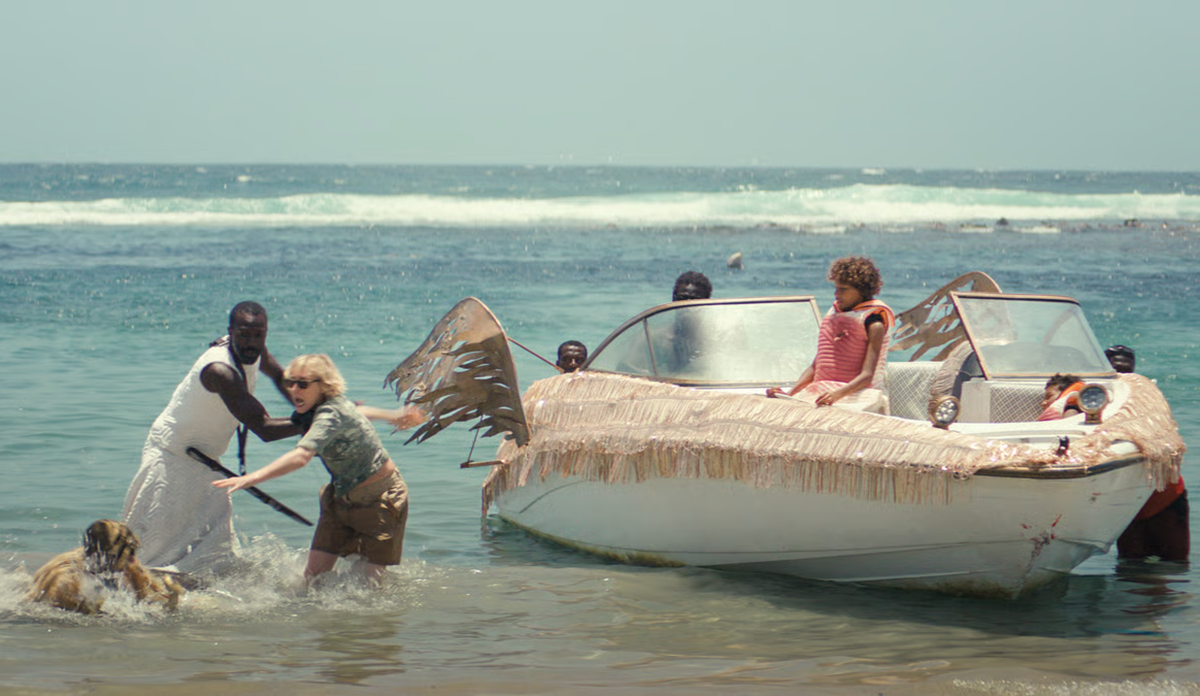
The final segment of the film round trips back to “Medea,” and itâs a curious decision to devote so much screen-time to a film-within-a-film. Still, itâs consistent with Köhlerâs zig-zagging subversion, proving that the show must go on, even ifâand especially becauseâmost of the drama is happening backstage. The central trio (Eggert, Folly, and Richard) are effective and believable as a dysfunctional work family so comfortable with each other that they can bicker and make up, rinse and repeat. As director, Köhler has a sympathetic ear, willing to take in everyoneâs story, including the maybe-bigoted security guard who ends up losing his job. And there, perhaps, is where this fiction film turns to outlandish fantasy: dueling factions try to hear each other out, but meanwhile, on planet earthâand the “Medea” set, that bloody patricidal/matricidal war zoneâskews closer to reality.Â

âGavagaiâ had its world premiere at the New York Film Festival. The next scheduled screening is on Thursday, Oct. 2.


