





Nostalgia is a funny thing. It can be comforting, like an old cassette tape that still plays despite the hiss and scratches, or it can be suffocating, trapping you in a loop of greatest hits without much new to offer.
“One Hit Wonder,” Marla Anchetaâs romantic musical set in the golden age of â90s OPM (Original Pilipino Music), lands somewhere between those two poles. It looks and sounds like a love letter to a time when songs were shared through radio dedications and demo tapes, but as a film it struggles to build a story strong enough to carry all that retro affection.
Romance with Music as Backdrop
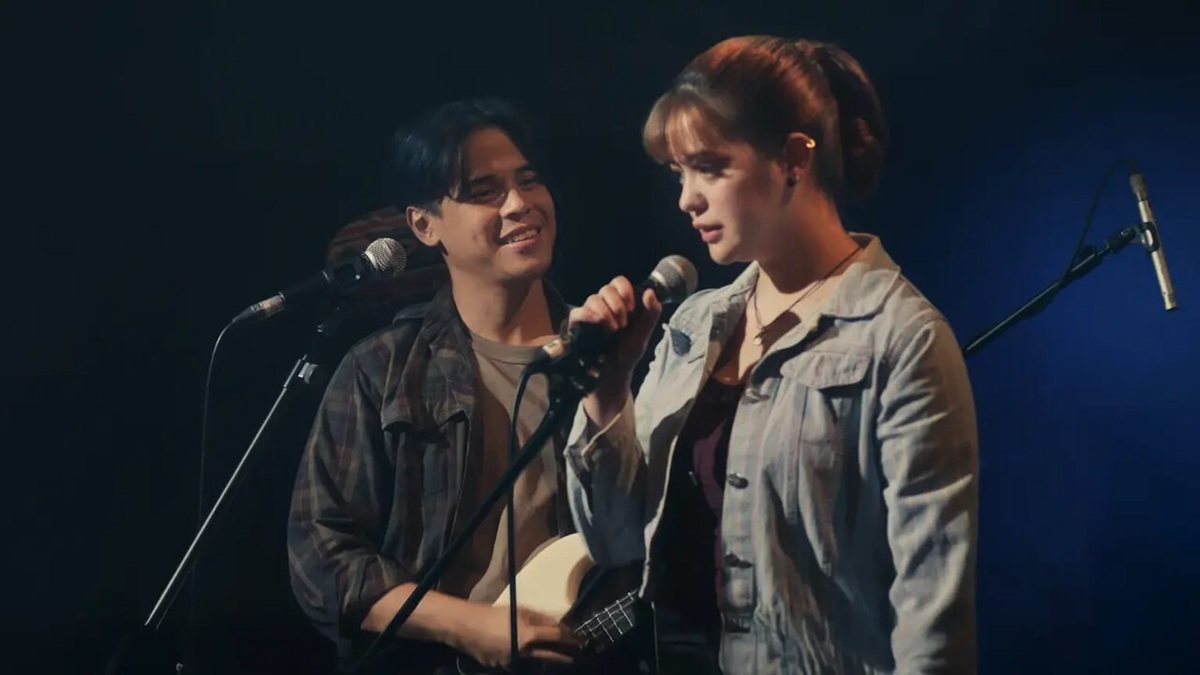
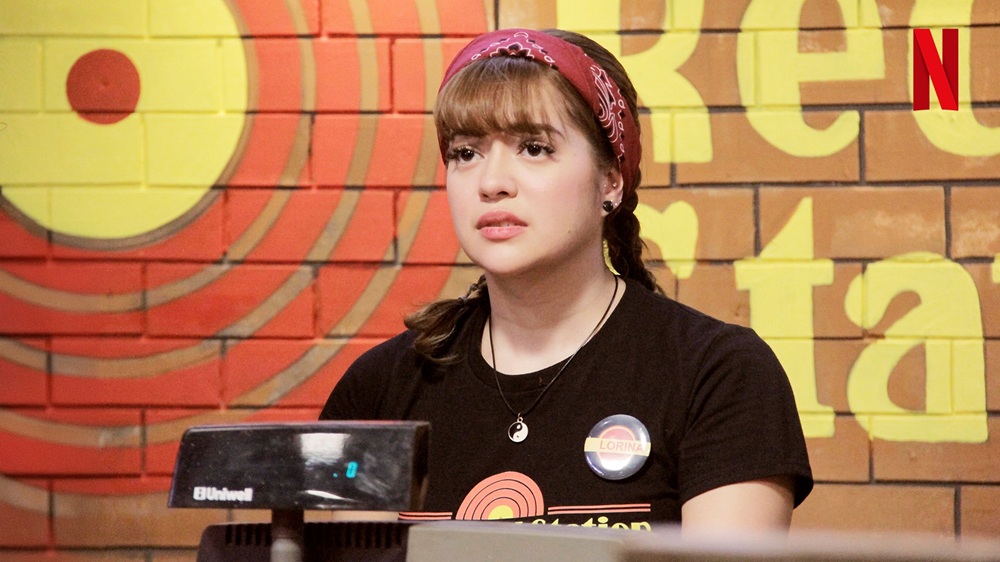
The setup has promise. We first meet Lorina (Sue Ramirez) as a young hopeful who once made it to the grand finals of Ang Bagong Kampeon (lit. The New Champion) in 1984, only to choke onstage and watch her shot at stardom vanish. A decade later sheâs shelving records and living quietly, her dreams deferred but not entirely extinguished.
Enter Entoy (Khalil Ramos), an aspiring musician with a band and a long memoryâhe never quite forgot the girl belting a Sharon Cuneta classic on that rooftop years ago. Their reunion sets the stage for a second-chance romance, complete with the usual highs, lows, and a climactic concert that doubles as catharsis.
On paper, itâs the sort of premise that could have been messy and moving. But “One Hit Wonder” rarely lets its characters breathe. Instead of allowing Lorina and Entoy to stumble into love with the awkwardness and unpredictability that makes romance believable, the script forces them along a conveyor belt of tropes: chance encounters, quick reconciliations, inevitable setbacks, and a finale that hits every beat you expect. Here, the filmâs themesâregret, reconciliation, chasing a dream past its expiration dateâarenât explored so much as announced. Characters talk about them endlessly, as if afraid the audience might miss the memo.
Top-Notch, Nostalgia-Evoking Production Values
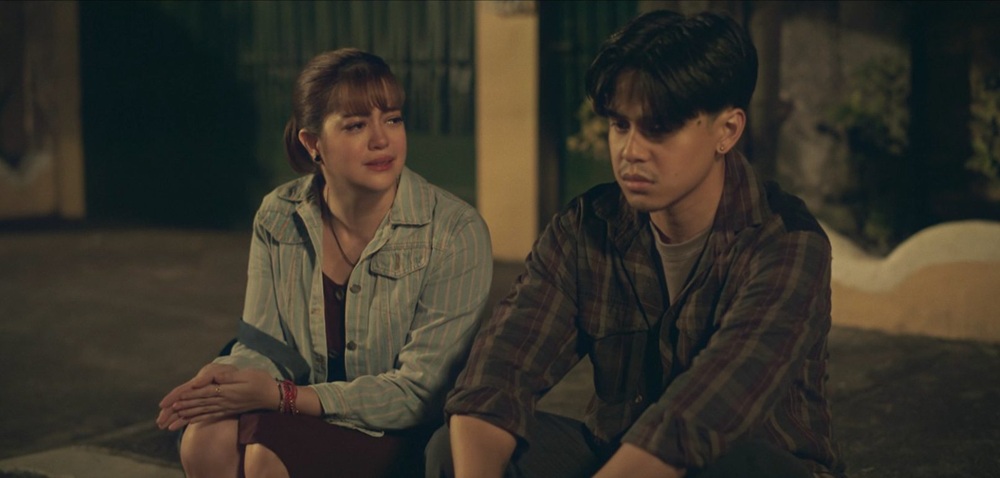
Ramirez and Ramos both have natural musicality, and their voices sell the songs, but the film doesnât give them enough room to act beyond what the script insists they feel. You sense they could deliver something deeper if the material allowed for nuance, but too often the dialogue spells everything out. Regret isnât suggested in a pause or a look; itâs proclaimed. Desire isnât hinted at; itâs narrated. Watching them, I didnât feel like I was being let into a secret romance; only that I was being reminded, again and again, that these two are fated to be together.
Both actors are clearly game for the material, and there are moments where their chemistry threatens to break free of the scriptâs contrivances. Ramirez, in particular, carries the fragile poise of someone used to being both admired and doubted. Her Lorina often speaks with the clipped politeness of a woman rehearsing her own downfall, and when she sings, you catch a glimpse of the star she could have been.
Ramos, meanwhile, plays Entoy with wide-eyed sincerity, the kind of earnestness that borders on naïveté. Heâs best in quiet beats, like when Entoy simply listens, his face flickering between fanboy awe and genuine affection. But too often, their interplay is undercut by dialogue that forces them into arch poses. Itâs not that they lack chemistry; itâs that the film seems not to trust them to create it.
A Whoâs Who of Legendary Needle Drops
The frustrating part is that Ancheta nails everything else around the story. The period detail is meticulous, sometimes even indulgent: Coleman jugs, butterfly clips, soft drink bottles, snippets of news events, and cameos from era icons all jostle for attention. The recreation of the music sceneâbands begging for radio play, hopefuls waiting by the phone for a callbackâis affectionate and oddly moving.
And then thereâs the soundtrack, which really is the star of the show. Hearing Eraserheadsâ âLigayaâ or I-AXEâs âAkoây Sa Iyo, Ikaây Akinâ is enough to stir memories of listening to FM radio with fingers hovering over the record button, waiting to catch a favorite song. Ancheta and music director Paulo Zarate clearly know their stuff, and the playlist could easily sell on vinyl or cassette today.
But once the needle lifts, the rest of the film feels flat. The love story doesnât have the sting of lived experience; it plays like something lifted from a template and then dressed up in retro clothes. Strip away the OPM backdrop and the cameos, and you could set the same story anywhere else with little change. That observation is unavoidable, and “One Hit Wonder” comes out the inferior for it.
Music in Philippine Cinema
In Filipino cinema, the idea of music carrying a story isnât new. Films like “Rakenrol,” “Ang Nawawala,” and “I Do Bidoo Bidoo” let music pulse through character, conflict, and catharsis. Where “One Hit Wonder” pulls its identity from kitschy musical cues and cameos, those titles build narratives that dance on musical linesâthey donât just play them. And that contrast leaves Anchetaâs film feeling more like wallpaper than part of the roomâs architecture.
Take Quark Henaresâ “Rakenrol” as an exampleâa scrappy, affectionate ode to the local indie-rock scene that, for all its rough edges, felt like it was actually there. I still remember how it stuck with meânot because it was flawless (far from it), but because it treated music as oxygen: the gigs, the dive bars, the clumsy energy of young adults stumbling into a world bigger than themselves.
“Rakenrol” may not have earned the same acclaim as its contemporaries, but it gave me the sense that music wasnât just part of the scenery; it was the bloodstream. Thatâs the crucial difference with “One Hit Wonder,” deploying songs more often as shorthand for character backstory or as nostalgic set pieces. One film sweats on stage with its bands; the other tends to admire from the wings.
Longing as an Unquantifiable Currency
To be fair, nostalgia is a powerful currencyâespecially for Filipino audiences who grew up on late-night jukebox shows, where every heartbreak had its anthem and every jeepney stereo carried the same handful of power ballads.
The filmmakers definitely know this, and they lean heavily on it, almost as if the music itself could stand in for narrative depth. The opening chords of a familiar tune intend to work like emotional shorthand: you hear them and instantly recall a first love, a missed chance, or a high-school prom gone wrong.
And for a while, it almost works. But the overreliance starts to feel like a cover version played one too many times. Instead of digging into what these songs meant to a generationâhow they shaped identities, how they defined class, migration, and the karaoke cultureâ”One Hit Wonder” simply drops them in as mood setters. Thatâs fine if youâre chasing an easy sing-along; less so if youâre promising a story about two people and the weight of their choices.
âOne Hit Wonderâ: A Sincere Film That Plays Better as a Mixtape
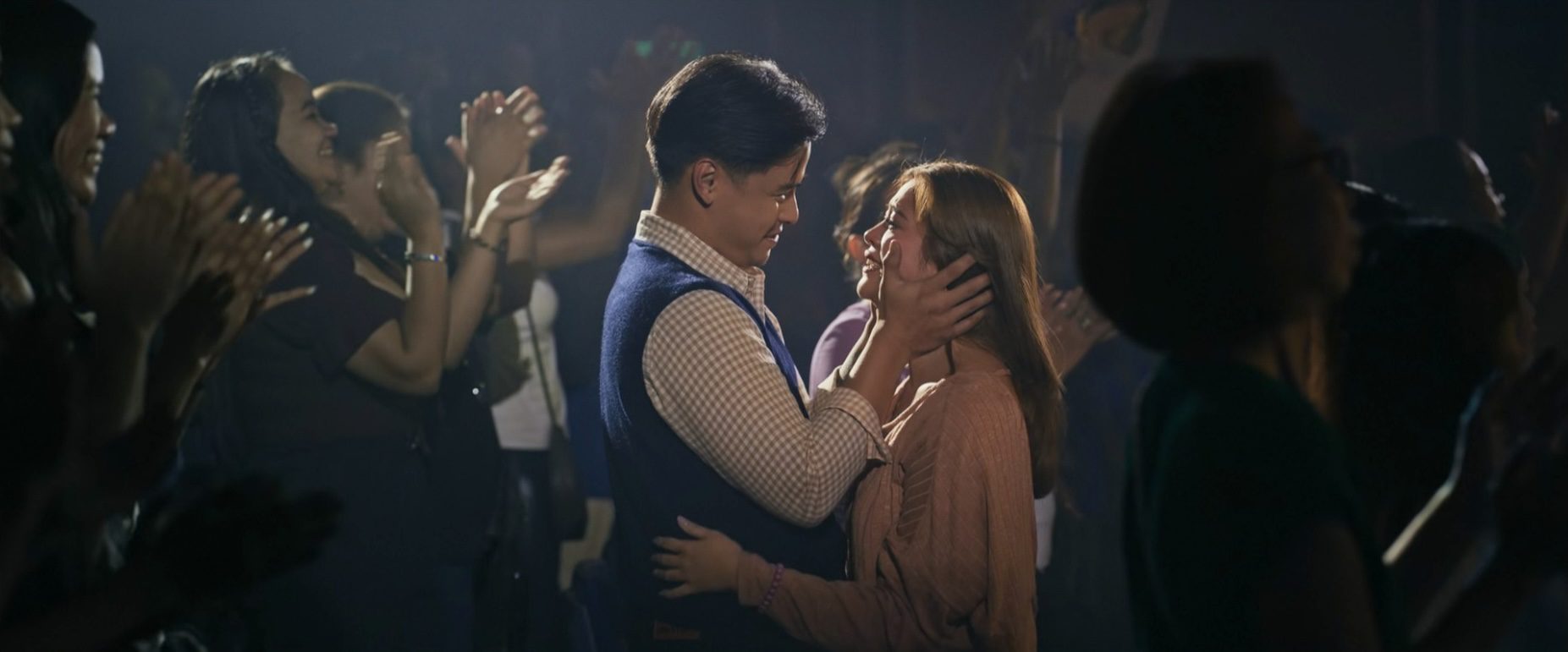
Even so, what keeps the film from collapsing entirely is its sincerity. Ancheta clearly cares about the period sheâs recreating, and there are momentsâlike Lorina finding her voice again in the final actâthat hint at the film “One Hit Wonder” wanted to be. The trouble is that those sparks donât ignite the way they should, because the romance at the center never convinces. Itâs hard to cheer for a couple when their chemistry feels more like a narrative requirement than an emotional inevitability.
After watching the film, I found myself humming the songs but forgetting the story. And maybe thatâs the most accurate way to describe “One Hit Wonder”: a solid mixtape trapped inside a lackluster movie. You can enjoy the tracks, smile at the references, and even catch a whiff of the eraâs magicâbut as a whole, it doesnât stick. I came for the music, and I stayed for the music. Everything else, I could take or leave.


“One Hit Wonder” is now available on Netflix. Follow us for more coverage.




