





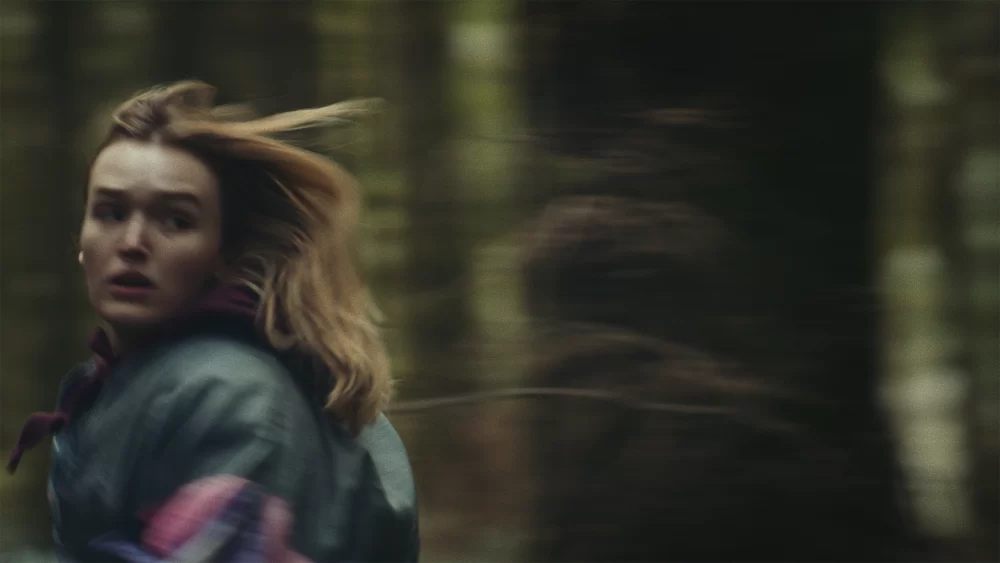
Kelsey Taylorâs âTo Kill A Wolfâ reimagines the âLittle Red Riding Hoodâ in a way that feels both unsettling and deeply human, stripping the classic story of its fairytale sheen and reworking it into something far more disquieting and grounded.
Instead of a whimsical retelling, the film becomes a tense, atmospheric drama about trust, survival, and the scars left by past trauma. With striking cinematography, powerful performances, and a deliberate, slow-burning narrative, itâs an impressive debut from a filmmaker in complete command of her vision.
A Gritty Fairytale Set in the Oregon Wilderness
The film follows a reclusive woodsman (Ivan Martin) who discovers a teenage runaway, Dani (Maddison Brown), collapsed and half-frozen in the snowy Oregon wilderness. He brings her back to his cabin, reluctant to get involved but unable to leave her behind.Â
The two slowly build an uneasy companionship as the woodsman attempts to return Dani to her grandmother, which the latter insists upon doing. But much like the forests they move through, things arenât as simple as they seem. Something about Daniâs story doesnât quite add up: she seems to be running from something, and the deeper the film goes, the clearer it becomes that the true dangers arenât always found in the wild.
Taylor leans heavily into the DNA of Little Red Riding Hood, but rather than retelling it outright, she twists its message. The biggest danger isnât lurking in the woodsâitâs waiting in the places we assume are safe. The film plays with audience expectations, hinting at familiar beats before shifting them in unexpected directions.
Through a non-linear structure divided into chapters (âThe Woodsmanâ, âGrandmaâ, âThe Wolfâ), âTo Kill A Wolfâ reveals its secrets in fragments. Some of these narrative choices work beautifully, keeping the tension simmering. Others, particularly in the second half, lead to pacing issues. The slow, deliberate setup gives way to a rushed conclusion, and some revelations feel a little too telegraphed by the time they arrive.
Performances That Elevate the StoryÂ
What really elevates the film, though, is the dynamic between the two leads, from which much of the filmâs emotional weight comes. Martin and Brown bring depth to characters who could have easily been reduced to archetypes. As the woodsman, Martin delivers a quietly affecting performance as a man who has spent years keeping the world at armâs length. A social outcast with his own share of scars, he is neither a hero nor a predatorâjust a man trying, in his own imperfect way, to do something good.
Brown, on the other hand, also impresses as Dani, portraying both defiance and vulnerability. Guarded yet vulnerable, Dani is not simply a victim but a person struggling to navigate a world that has repeatedly failed her. While some early scenes make her seem closed-off to the point of being emotionally distant, it becomes clear that this is intentionalâDani is someone who has learned not to trust easily. As her story unfolds, Brown finds the right balance between toughness and fragility.
Apart from Martin and Brown, the supporting cast is used sparingly but effectively. Michael Esper, in particular, leaves an impression as Daniâs uncle, bringing an unnerving, calculated presence that looms large even when heâs off-screen.
A Closer Look into the Reimagining of a Childrenâs Classic
As noted at the onset, Taylorâs take on Little Red Riding Hood isnât just a surface-level reimaginingâitâs an examination of what might have led to such a tale in the first place. The film strips away the folklore and instead presents something more unsettlingly real, where the concept of âthe wolfâ is far more complex than a single villain lurking in the woods.Â
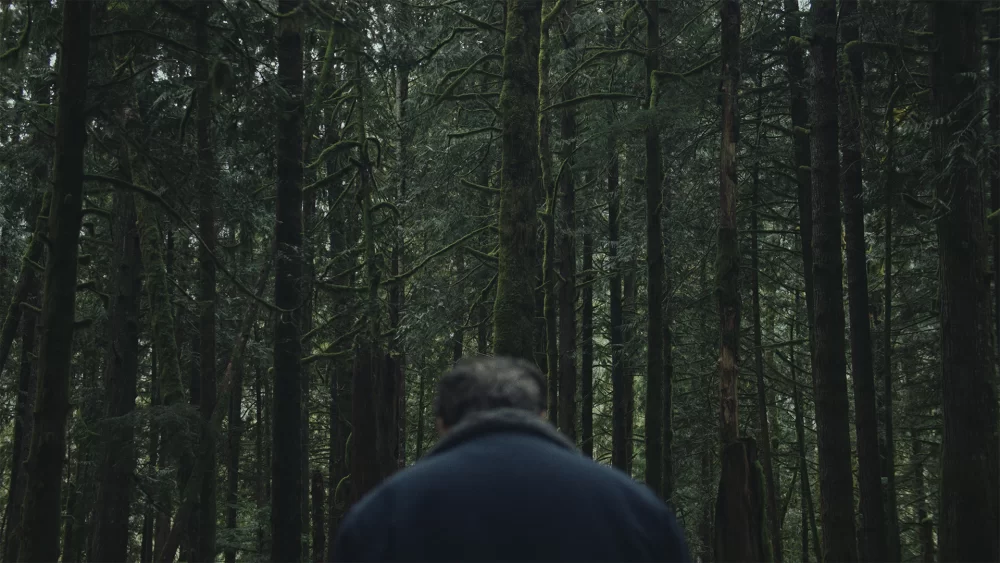
Through the filmmakerâs lens, the wilderness becomes neither a place of safety nor immediate danger but a space where truths become harder to ignore. The fog-drenched pines and sprawling, untouched landscapes create a sense of eerie isolation, reinforcing the idea that both Dani and the woodsman are escaping something. However, the question of what, exactly, lingers ominously over much of the film.
As the story unfolds, the traditional fairy tale roles begin to blur. The woodsman, at first glance, seems to be Daniâs reluctant protector. But underneath the gruff, breviloquent bravado lies a man burdened by past mistakes, carving out a quiet existence on the fringes of society. Dani, meanwhile, isnât the innocent, wide-eyed traveler in need of saving. Instead, she is guarded, withholding, and fully aware of the dangers that await her outside the woods.Â
Taylor plays with expectations, hinting at familiar beats before revealing the far more troubling reality at the movieâs core. The question isnât just who the wolf is, but rather how danger can take many forms, often hiding in plain sight.
A Visual and Sonic MasterclassÂ
To aid these thematic explorations as well as the performances, Adam Leeâs cinematography captures the Oregon wilderness with haunting precision, from the mist-heavy treetops to the decaying wood of the woodsmanâs cabin. Leeâs camerawork boasts of such detail that you can almost smell the scenery and breathe in the muted color palette, which add to the filmâs heavy, almost suffocating mood. It, in turn, makes you feel the chill in the air and the weight of the silence throughout.
The sound design and score add another layer of immersion. Composers Sara Barone and Forest Christenson craft a folk-inspired soundtrack that complements the filmâs moody tone and heightens the eerie stillness without overpowering it. Every note feels carefully placed, enhancing the uneasy quiet that dominates much of the runtime. Working closely with her film scorers, Taylor clearly knows how to craft an atmosphere, and here, she does so masterfully.
Where the Storytelling Wobbles and Occasionally StumblesÂ
Taylorâs decision to structure the film in non-linear chaptersâeach labeled with fairytale archetypes mentioned aboveâserves as an interesting narrative framing technique. It works well in reinforcing the filmâs themes and adds an extra layer of intrigue, but itâs also where some cracks begin to show.Â
While the fragmented storytelling keeps things mysterious early on, it also makes the timeline feel disjointed. For instance, flashbacks are essential to understanding Daniâs past, but the way Taylor introduces them here sometimes disrupts the flow rather than deepening the mystery.
The pacing is another issue. The first half moves with slow, deliberate pacing, immersing us in the charactersâ fragile dynamic. This meditative approach allows the characters to breathe. But once the pieces start falling into place, the second half sees the film accelerating toward a conclusion that feels somewhat rushed, sacrificing some of the emotional weight it so carefully built. Thereâs also a sense that once the film lays its cards on the tableâparticularly regarding Daniâs family situationâthe surprises start to dwindle.
Additionally, while âTo Kill A Wolfâ is thematically rich, some of its symbolismâlike the connection between the woodsmanâs past injury and the wolves he tries to saveâis laid on a little thick. For what itâs worth, the film works best when it trusts its audience to connect the dots without over-explaining them.
âTo Kill A Wolfâ: A Strong, If Imperfect, Debut
Despite all these, âTo Kill A Wolfâ never loses sight of its emotional core. It remains a striking, atmospheric film about people trying to claw their way out of the past, about the kind of wounds that donât heal easily. It explores abandonment, abuse, and the ways in which human connection, even in its most unlikely forms, can be both a burden and a salvation.Â
Kelsey Taylor proves herself a promising director with a strong visual eye and a thoughtful approach to storytelling. While the filmâs pacing stumbles and some narrative choices donât entirely land, she approaches these themes with restraint, refusing to lean into melodrama, and thatâs what makes the film resonate.
Ultimately, âTo Kill A Wolfâ isnât the most unpredictable story, and once its twists become clear, some of its impact fades. But it succeeds where it matters mostâdrawing viewers into a haunting world where trust is fragile, danger isnât always obvious, and redemption is never simple.


“To Kill A Wolf” will screen in the “Festival Circuit Favorites” at this year’s Santa Barbara International Film Festival, which runs from February 4 to 15, 2025. Follow us for more coverage.




