





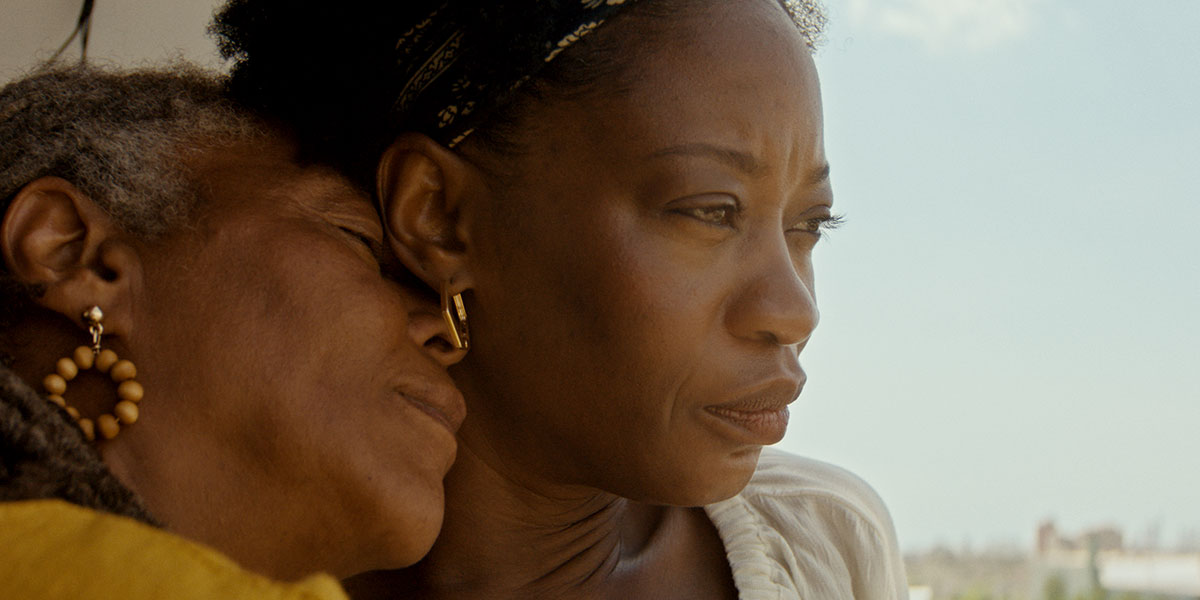
Each morning, Jean (Olunike Adeliyi) wakes up before the sun and takes the long commute from Lawrence Heights to an affluent Toronto neighborhood. She leaves behind her cramped apartmentâone she shares with her teenage kids, Tamika (Zahra Bentham) and Tristin (Micah Mensah-Jatoe), and her free-spirited mother (Maxine Simpson)âto clean homes and care for strangers. Itâs a routine, a means to an end. She tells herself itâs only temporary, that soon sheâll have enough saved to move her family somewhere better. But that dream keeps slipping further out of reach. The weight of survival presses down harder each day, and no matter how much she scrubs, some stains donât wash away.
Director Karen Chapman, known for her documentary work on grief and violence in Black communities, makes her feature debut with âVillage Keeper,â expanding on themes she first explored in her 2019 short film âMeasure.â From that acclaimed short film, âVillage Keeperâ feels like a natural evolution of Chapman’s storytellingâone that refuses to offer easy answers. Instead, it focuses on what happens when survival mode becomes a way of life. Jean isnât just trying to keep a roof over her childrenâs headsâsheâs trying to shield them from the violence outside their door and the ghosts of her own past. Sheâs so consumed with protecting them that she doesnât notice sheâs holding on too tightly, suffocating them in the process.
A Mother Who Takes Care of Others, but Not Herself
Jean has spent her life cleaning up after othersâliterally and figuratively. So when she finds blood in her buildingâs elevator after a violent attack and no one comes to clean it, she does it herself. Itâs not just about tidiness; itâs about dignity, about control. Itâs about erasing the reminders of a world she doesnât want her kids to inherit.
But trauma doesnât work that way. You can scrub away the evidence, but the fear lingers.
Adeliyi delivers an outstanding performance here, bringing Jeanâs contradictions to life with a quiet intensity. Sheâs strong-willed but brittle, protective but distant. She loves her kids but doesnât know how to reach them. Thereâs a heartbreaking moment when Tamika, trying to connect, says her mother used to love music. Jean barely reacts.Â
Later, when she finally lets herself dance, we see a glimpse of the woman she used to beâthe one buried under years of grief, responsibility, and fear. Itâs one of the filmâs most powerful moments, not just because of the joy in it, but because it reminds us of everything Jean has been holding back.
The Weight of Being a âVillage Keeperâ
The title itself is a perfect summation of Jeanâs role. Forced to move back into her motherâs cramped Lawrence Heights apartment with her children, Jean sees herself as their protector. She works tirelessly, juggling two jobs to save enough money for a fresh start.Â
But in doing so, she assumes the role of a âvillage keeperâ not just for her family, but for a community drowning in violence and neglect. Her cleaning is not just an act of laborâit is an act of defiance, a desperate attempt to restore dignity in a place where even landlords refuse to wash away the bloodstains of a stabbing.
Yet, for all her strength, Jean is blind to the damage she is inflicting on herself and her children. At home, sheâs hyper-vigilant, enforcing curfews and rules meant to protect her children, but she doesnât see how much theyâre struggling in their own way. Tamika experiences panic attacks. Tristin is quiet, but thereâs anger simmering beneath the surface. Theyâre trying to process their reality, but Jean is too preoccupied with shielding them to notice.Â
Like many parents who have suffered, Jean believes that shielding them from pain is the answerânever realizing that unspoken trauma festers, repeating itself in an endless cycle. Sheâs convinced that if she stays strong enough, if she controls everything, she can keep them safe. But as she herself admits,
âThe truth is, I was drowning for years…
I was the only one who couldn’t see it.â
Breaking the CycleâIf That’s Even Possible
One of the most striking themes in âVillage Keeperâ is how trauma moves through generations, passed down not just through experiences but through habits, silence, and unspoken fears. Jeanâs mother has learned to live with the weight of her past, but Jean is still carrying hers like a fresh wound. Without realizing it, sheâs handing it off to her children.
When she finally visits a therapistâinsisting that itâs only for the kidsâsheâs hit with a simple but devastating question: How will you help your children without having helped yourself first? Itâs a moment that forces Jean to face something sheâs been avoiding: healing isnât just for themâit has to be for her too.Â
Even so, âVillage Keeperâ doesnât offer an easy, neatly tied-up resolution. It acknowledges that trauma isnât something you fix overnight. Jean takes steps forward, but she also stumbles. She tries to change, then reverts to old habits. And thatâs the reality of it. Change is hard, and sometimes it takes a lifetime.

âVillage Keeperâ: A Film That Feels Lived-In
What makes Village Keeper stand out is its refusal to turn Black suffering into spectacle. The film doesnât shy away from the realities of poverty or violence, but it also doesnât dwell in misery for the sake of it. Instead, Chapman fills the screen with moments of warmthâshared meals, Tamika doing hair for neighborhood clients, the simple but significant ways people take care of each other. These moments matter just as much as the ones filled with tension because they remind us that survival isnât just about enduranceâitâs about finding joy wherever you can.
Visually, the film is striking. Cinematographer Jordan Oram captures the world of Lawrence Heights with a mix of intimacy and unease. Tight framing mirrors Jeanâs claustrophobic reality, while wide shots remind us how small she feels in a city that doesnât make space for people like her. The score, composed by Dalton Tennant, vacillates between subtle and melodramatic in D-flat major, but nonetheless effectively wraps the film in a sense of quiet urgency.
Not Perfect, But It Sticks with You
If I could niggle about one thing, itâs that some moments of exposition spell things out a little too clearly when the film is already doing the work visually. At times, the storytelling feels a little rushedâespecially given the filmâs lean 80-minute runtime. Certain character moments, particularly Jeanâs journey toward self-acceptance, could have been given more space to breathe. The film also flirts with melodrama in a few places, but Chapmanâs direction and Adeliyiâs grounded performance thankfully keep it from going too far.
Even with these minor quibbles, âVillage Keeperâ is a film that lingers. Itâs intimate, raw, and deeply human, a story about survival, motherhood, and the quiet battles people fight every day. Jean wants something better for her kids, but before she can give them a future, she has to believe sheâs worthy of one herself.
And more often than not, thatâs the hardest part.


“Village Keeper” will have its U.S. premiere at this year’s Santa Barbara International Film Festival, which runs from February 4 to 15, 2025. Follow us for more coverage.




