





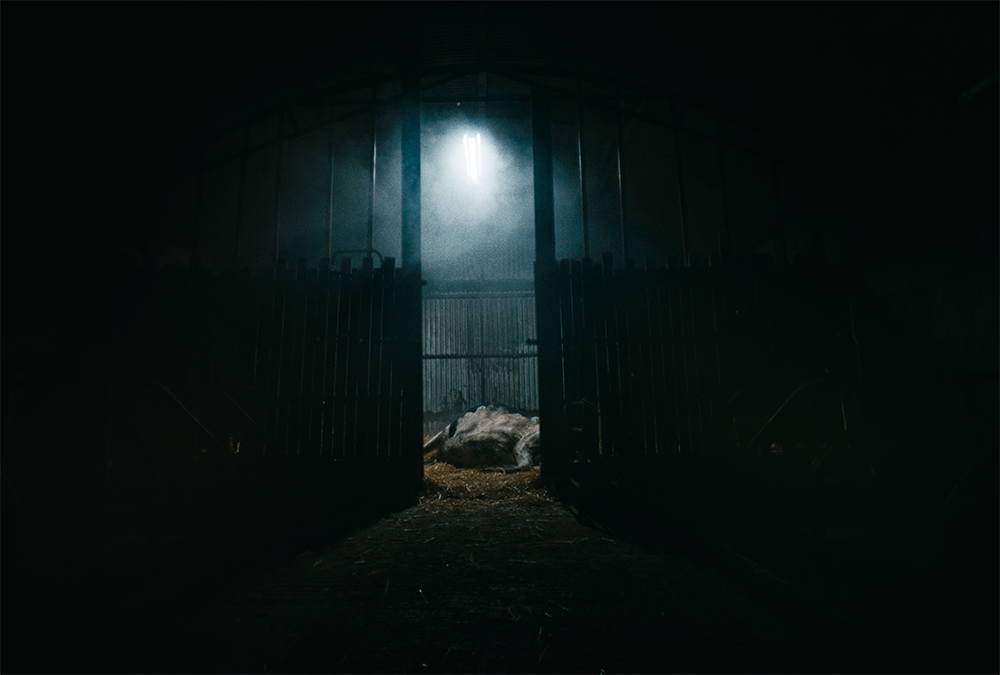
âCalf,â directed and written by Jamie OâRourke, is a deeply tense and unnerving film. That it is slow to explain itself, and lets you instead bask in murkiness and uncertainty is its crowning achievement. This is a film like Mark Battleâs excellent short âThe Guardâ that earns its horror badge. Too many films in the genre focus on blood and guts and serial killers and eery clowns. Making a true, psychological horror pictureâeven a shortâis a lost art. Here OâRourke lures us in with tension and holds our attention with its leadâs questionable actions. He ends the film with explanations we should have saw coming, but didnât.Â
At roughly 15 minutes, what works about âCalfâ is how OâRourke and Cinematographer Colm Hogan insert us into the proceedings with little explanation. A dark country farm in Ireland is the setting. The film starts with the pulsing belly of a pregnant cow laying in a barn as a farmer (Stephen Hogan), parks a tractor and busies himself with work. Itâs near dawnâwe learn this as the camera shifts inside to mother and daughter, Cáit (Kate Nic Chonaonaigh, Isabelle Connolly), the former preparing breakfast as the latter sits listening to headphones as most teenagers do. She asks her to go tell her dad that breakfast is ready. But as weâve already seen the beginning of a tragedyâthe tractor began to roll downhill, towards the father before the scene cut to the kitchenâweâre unaware of what exactly we and Cáit are about to find.Â
A Lingering, Uneasy Film
The filmâs scene shifts and doleful, eery score by Orla OâRourke are what sells the short. And by the time Cáit finds her fatherâhelplessly impaled by the tractorâs forklift, raised off the ground and barely able to speakâthe dread the film dredged up moments prior makes the moment hit harder. As does the breaking dawn and the cameraâs ability to linger. Cáitâs father, Michael, clings on to life, barely, as Cáit stands frozen. Or we think sheâs frozen. But when she walks back to the house, telling her mother her father was busy and to hold his breakfast, we start to feel uneasy. What is prompting Caitâs actions? Is she reacting out of purpose or reason? Is she evil? Answers arenât forthcoming. And as she offers excuse after excuse to keep her mother from discovering her father outside, near death, we watch helplessly, drawn in by our need for explanation.Â
The acting from Chonaonaigh and Connolly is doleful and intriguing, though Connolly is tasked with the most screen-time. Cáitâs young brother (Isaac Fitzgerald) sits playing on the floor with his toys, unawares. Thereâs something going on in this family, a silent dread, and the way Connolly tells the story with her eyes is harrowing and powerful. Her words are quick and furtive; but itâs her eyes and facial expressions that tell the story. Until roughly the 10 minute mark sheâand us, the audienceâare the only ones that know her secret. Her mom suspects something is wrong, but likely chalks it up to teenage edginess. Cáit is hyper-aware and guards her mom from finding her fatherâs near-lifeless body outside, run through by a giant fork. And all the time, we keep asking ourselves what is going on here?Â
An Oscar-qualifying Short Worth Watching
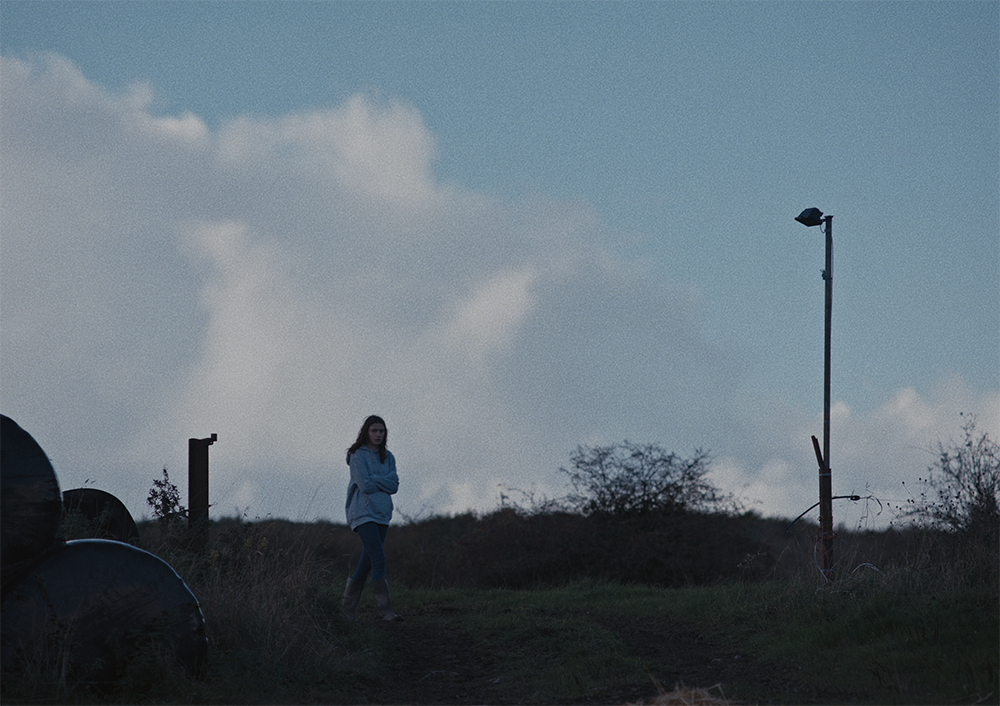
âCalfâ is unique psychological horror that keeps our attention and resists letting us in on its secret until its dying moments. The scene where it does is pensive and still, and one of the most powerful depictions of trauma Iâve seen in some time. The film in and of itself is traumatic, making us share the questionable actions of Cáit until an unavoidable climax, which wonât even be hinted at. âCalfââan Irish releaseâis currently on the Oscar qualifying long list, and short list determinations are to be announced mid-December. But spoiling this film would do it a disservice. Wading through Cáitâs inactionâalong with the heavy dawn and droning scoreâcreates an existential dread that stays with you. The filmâs explanations donât erase that, but possibly add to it. Watching âCalfâ is in itself an act of trauma. In that, Jamie OâRourke has made a powerful and imperative psychological film.Â
All-in-all, âCalfâ is a worthy recommend. Part horror, part mystery, and all atmosphere, itâs been some time since a still, quiet picture carried the uneasiness this film leaves behind. The performance are indelible, the cinematography basked in realism and muted colors, and the filmâs conclusion stays with you. If youâre able to, catch âCalfâ for an eery, rewarding experience.Â
“Calf” is currently on the Oscar-qualifying long list. It is produced by Jamie O’Rourke, Gregory Burrowes, and Ronan Cassidy. Follow us for more Oscar-qualifying coverage. You can watch the film’s trailer in the window below.Â





