





James Baldwin (1924-1987) wouldâve turned one-hundred this year, and in honor of his centennial, museum exhibits abound for the iconic writer, activist, intellectual, and thinker. Back in 2016, Raoul Peckâs âI Am Not Your Negroâ screened at the New York Film Festival, centering Baldwin the firebrand through the lens of his unfinished novel; in turn inspired by the murders of Medgar Evers, Malcolm X, and Martin Luther King, Jr., Baldwinâs friends and contemporaries.
Now, at NYFF62, photographer and filmmaker Yashaddai Owens is making his feature debut with âJimmy,â commemorating Baldwinâs 100th, arriving like a whisper to Peckâs wail, though it’s no less ambitious in an offbeat presentation of the artist finding his place in the world. As it turns out, this place is Paris, and Jimmy plans to stay a while.Â
Guided by Paco Andreoâs mood-setting score, Owens’ polished visual style (monochrome and grainyâit looks how vinyl sounds) adds its own language to a film which has very little dialogue, and largely avoids background detail or biographical fillers. The music provides the pulse, giving Jimmy (Benny O. Arthur) much to shuffle, smile, and dance to in his new Paris playground.
Baldwin was twenty-four when he went to Paris, and Arthurâs reserved yet puckish rendering of Jimmy evokes a contagious sense of wide-eyed optimism and curiosity. He glides around town on a bike, treats himself to a picnic, and Owens’ photography bona fides are on full display, allowing the city to linger in the background as eye candy.
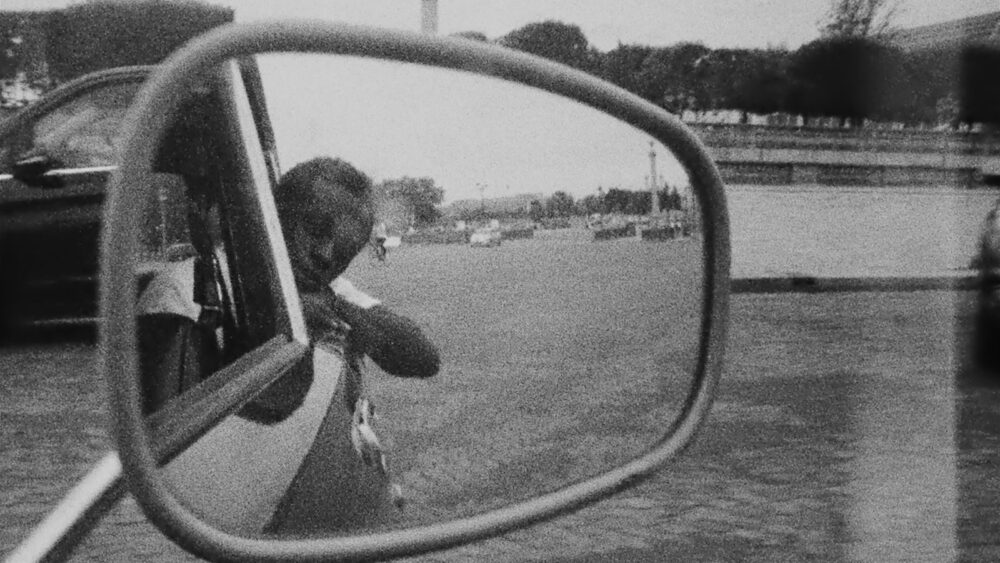
A Visual Experience Atypical for Standard Biographical Films
While the film portrays Jimmy often writing in a notebook, only at the end does it look like heâs hard at work. Owens withholds quoting from Baldwinâs writing until that point, a cagey narrative choice which reveals his preoccupation, if it wasnât evident already. This is less a cradle-to-grave biopic than a life story in miniature, telling us all we need to know about this mid-20s ex-pat, who could be anyone except for the fact itâs Baldwin.
But what we might know about him alreadyâat present dayâis secondary to what Owens wants to show us. And although itâs fiction, the film resembles more of a diary entry than a novel in its scale and sharp attention to detail.Â
“Jimmy” is a loose, generous tribute, whose moving images belong on the screen but could also fit right at home on a museum wall. Rearrange the frames here and it would all still cohere; even the enigmatic opening sequence in Turkey fits in the context of the film’s nonchalant attitude. A viewer could hop in at any point and catch up quickly, thanks to Arthurâs boyish grin, Andreoâs articulate and inviting score, Owensâ abundant care for his subject, and the city which welcomed him. Characters come and go, but most exchanges are wordless; Jimmy might narrate out loud, reading from his notebook, but the conversations with some new friendsâincluding one who Jimmy kissesâare muted. Owens is telling us to either use our imagination, or to mind our own business, elevating the mystery of his intrepid protagonist.
More NYFF62 Coverage: “Anora,” “Nickel Boys,” and “Maria“
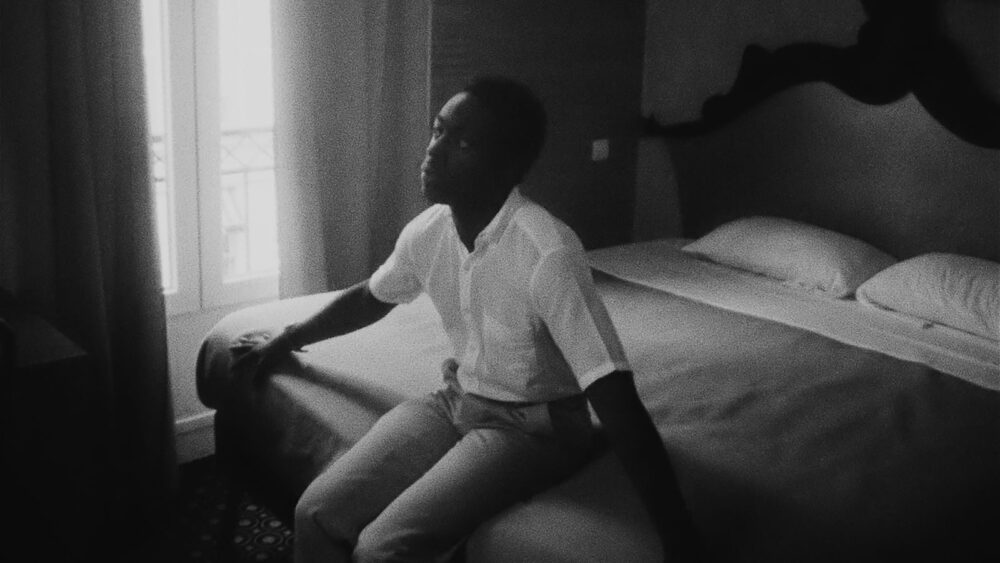
On Employing a Less-is-More Approach
The film runs a trim, but not thin, 67 minutes, with Owens’ photographic delicacy doing most of the explanatory heavy-lifting. And less truly is more, or at least enough. When Jimmy arrives in Paris, a cab driver asks where heâs from. âNew York? Iâve always wanted to go there,â to which Jimmy says, âIâve always wanted to leave.â
In certain scenes, Arthur bears an uncanny resemblance to Baldwin, in others, he sounds like Katharine Hepburn. Even so, thatâs a minor cavil for a performance thatâs so demanding; asking of him to reinterpret a historical figure, and to evoke specific emotions through action instead of the usual verbal aerobics for which the real James Baldwin was so famous.
In tackling a larger-than-life figure, Owens doesnât so much as shy away from Baldwin’s public life as he does redirect the spotlight from what the world thinks it already knows. Besides, this isnât Baldwin; itâs 24-year-old Jimmyâbefore the televised debates, before the FBI opened a file on him, and long before his voice, face, and sensibilities became recognizable worldwide.
Here, Jimmy can dance in his hotel naked in the morning, then ride his bike past the crowds, avoiding disturbances for the most part. He was an unknown quality, which isnât to say invisible. Even the most sprawling biopics canât capture the totality of any human being, and Owens’ quietly subversive and unapologetically spare film has no interest in that type of life summarizing anyway.

âJimmyâ screened at the New York Film Festival, which runs from September 27th â October 14th. Follow us for more coverage.Â




