





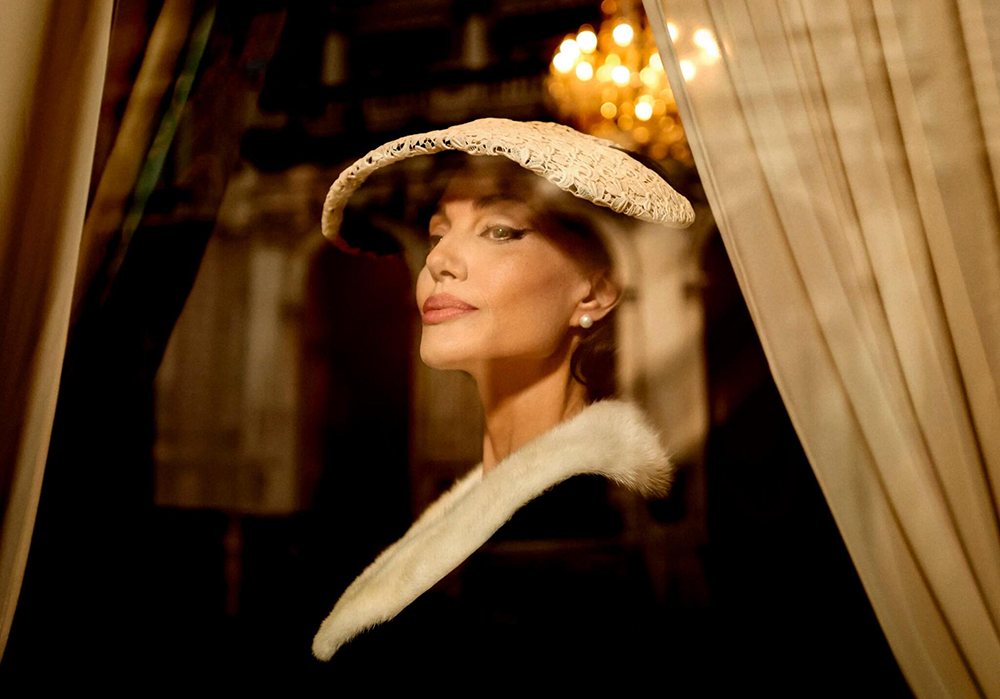
The interiors set the mood in âMaria,â the latest gilded-edged biopic from Pablo LarraÃn. Crisp and sparkling, the look-donât-touch aura of Maria Callasâ (Angelina Jolie) decadent home is a foil for her crowded, restless mind, where most of the actual action takes place. LarraÃn and Writer Steven Knight present a sumptuous visual worldâthanks to ace Cinematographer Ed Lachmanâadorned in incandescent autumnal colors, a stark contrast to the patchy, dark mental state where Maria finds herself during the final week of her life. Rushing to judge and then even quicker to backpedal, âMariaâ is cornered when it slows down to explain and introduce standard, hackneyed biopic backstory. But, behold La Callas! Sheâs more than her addiction, suffering and death. So when sheâs allowed to breathe and seek, especially in a series of surrealistic, near hallucinatory flourishes, the film does service to Mariaâs grand artistic fervor and muddied private life. Â
Jolie and a solid supporting castâincluding the consummate scene-stealer/rescuer Alba RohrwacherââMariaâ provide a sturdy foundation to counter any perfunctory or half-baked sequences. But LarraÃnâs Callas is often sketched roughly as a disturbed, tormented diva, and the life details offered amount to an extended Wikipedia entry, a speculative account of her downfall. Callas lives in a massive home, accompanied by her primary caretakers and sole life companions Bruna (Rohrwacher) and Ferruccio (Pierfrancesco Favino). While Bruna cooks, cleans and nurses Mariaâs ego (calling Mariaâs middling kitchen rehearsal âmagnificentâ), Ferruccio is the doting, yet stern hired hand. When heâs not obeying Mariaâs orders to move an enormous piano (a gag that violates the rule of three), heâs reminding her about a doctorâs orders or defending her against nosy irritants (in one case: an aggressive journalist).Â
Angelina Jolie and a Solid Supporting Cast
And then thereâs Mandrax. The human iteration, played by Kodi Smit-McPhee, is evidently a figment of Mariaâs imagination. Mandrax interviews her about Mariaâs life, career, and comeback, and when his questions arenât sufficiently probing, Maria encourages him to be more persistent. Jolieâs strongest in these moments, that radiant star power over matches a game counterpoint in the tranquil, quietly menacing McPhee. The other Mandrax, a powerful sedative, hides in Mariaâs drawers and eventually, her coat pockets, after a doctor warns her current intake will kill her. That warning, she ignored, just as she brushes off the warnings of Bruna and Ferruccio. Maria finds elusive comfort and uplift in daily piano recitals, but Mandraxâs hold is too strong, the descent of La Callasâ fall fromâartistic, romantic, etc.âgrace too steep to rebound.Â
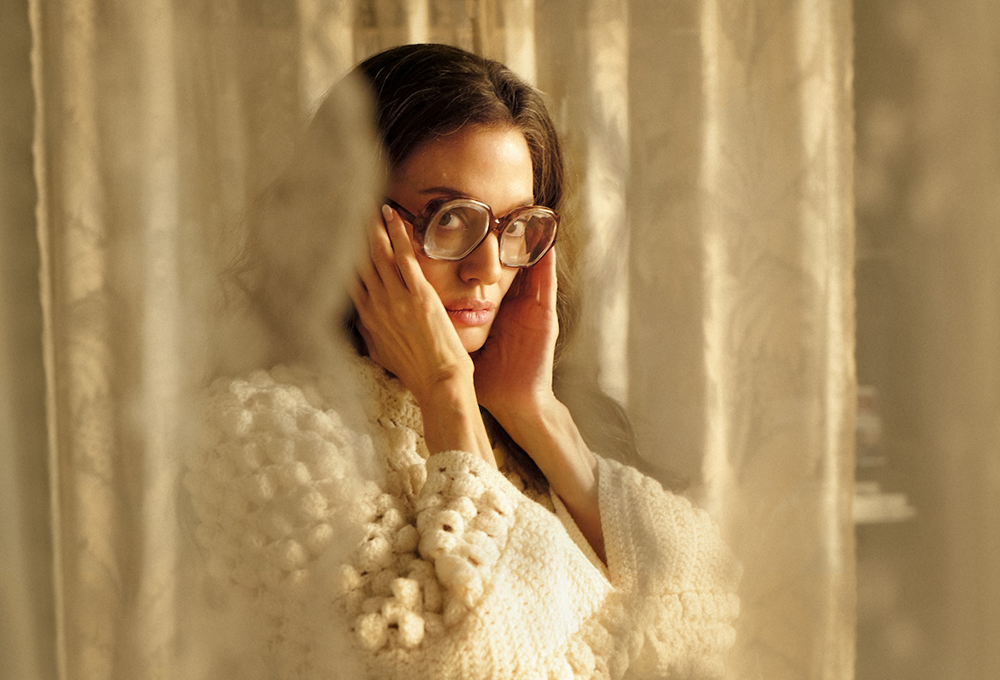
Inevitably, catching up with Mariaâs future will require an extended gaze to the past. And so the film name-drops (Jackie Onassis on several occasions) and star gazes (Marilyn! JFK!), which seems less like a link to Callasâ cultural heft than a plodding self-homage. LarraÃnâs âJackieâ (2016) was, after all, the first in his trilogy of âlady with heelsâ biographies. (Also: Jolieâs Maria also, to me, looks conspicuously similar to Portmanâs Jackie.) The monochrome flashbacks explain but donât enrich Mariaâs story, keeping the film on a rather predictable, risk-averse fairway. And yet, Lachmanâs glimmering universe and Jolieâs commanding presence buck the conventional components. Mariaâs mind might be a dangerous place, but it also houses the filmâs abundant bursts of pleasure, including when she walks past the Eiffel Tower and a ragtag choir emerges, bursting out into a thrilling rendition of âThe Anvil Songâ from Verdiâs Il Trovatore.
LarraÃn Tells Too Much
Overall though, the halting momentum and delicate tone of âMariaâ shields it from the ambiguity which wouldâve opened Callas life to interpretation. Instead, itâs all dictated to us: difficult childhood (her mother made her sing to soldiers), troubled romances (Aristotle Onassis forbade her from singing), pill addiction and an early death, leaving only intermittent peepholes of joy and independence. The most unreliable narrator then, might not be Maria, itâs LarraÃn, who shrinks his subject down to a digestible size, and the periodic electricity and arresting imagery only partially makes up for. Music is what moved her, and when itâs allowed to appear out of thin air, the film shows signs of life. Maybe thatâs how it was for Maria: controlled at every cornerâby her mother, men and drugsâbut always letting the music in. It belonged to her, not them, so Mariaâs death allowed her to wrest back control.Â

“Maria” screened at New York Film Festival, which runs from September 27 – October 14th. Follow us for more coverage.




