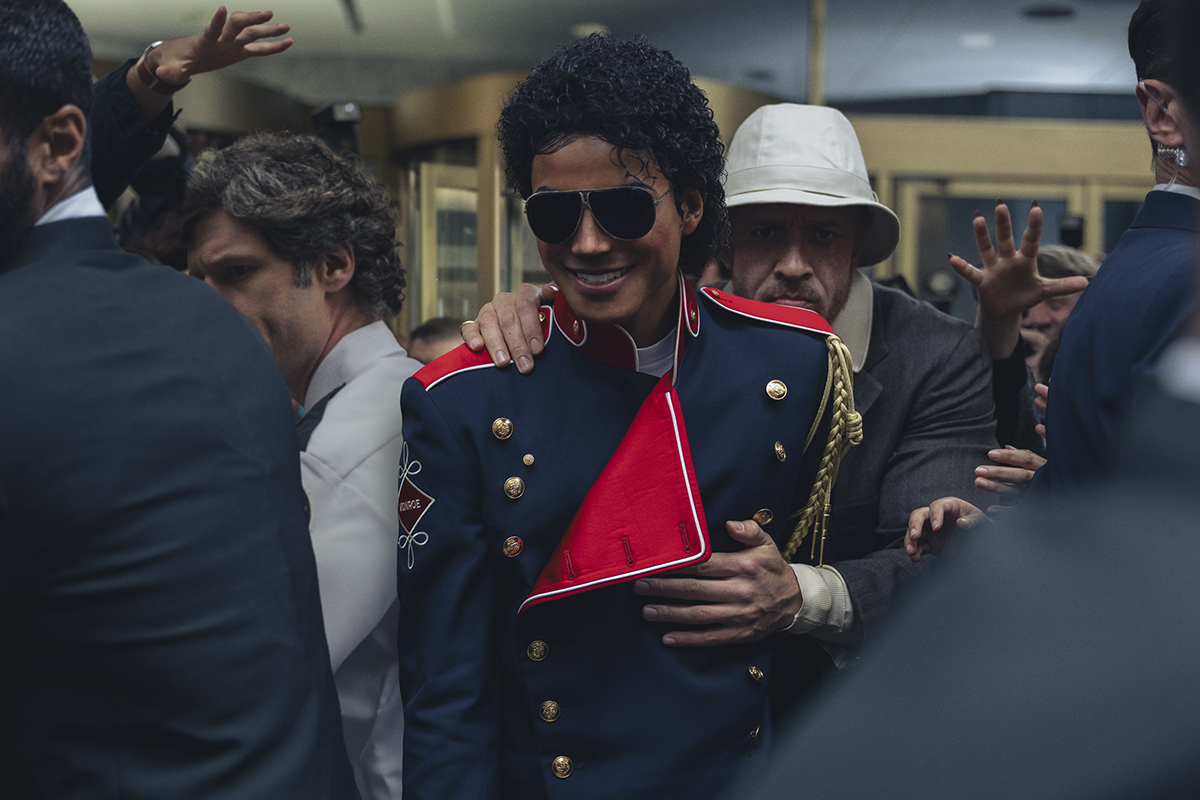
“Michael,” the highly anticipated biopic directed by Antoine Fuqua (“Training Day,” “The Equalizer”), delivers exactly what you expect: larger-than-life hits that not only defined an era but remain relevant to this day, along with stunning cinematography that complements every note and chapter of the King of Popâs life. And thatâs pretty much it. By dismissing much of the struggle and triumph, this ends up being a nice, comfortable, cozy, and safe film. Â
The casting of Jaafar Jackson as Michael was the right choice. He not only has an astonishing resemblance to his late uncle, but also fully commits to the choreography, perfectly executing his signature dance moves, gestures, walk, talk, and mannerisms. Pair that with the talents of Colman Domingo (“The Running Man,” “The Color Purple”) and Nia Long (“Missing,” “The Best Man Holiday”) portraying Joseph and Katherine Jackson, a major studio backing the production, andâmost importantlyâthe rights to the music, and it all seems like the right combination of elements coming together to form what some would call a masterpiece. Not only because of the amazing visuals, but also for the promise of gaining a deeper understanding of the man whose music will almost certainly live forever.
A Safe Movie
Despite all that, walking out of the theater, I donât think I learned anything new about Michael Jackson that I hadnât already read or couldnât have just looked up. This felt more like a playlist of the hits we know and love, disguised as cinema.
From the moment the film begins, the hits keep comingâand they donât stop (giving âDonât Stop âTil You Get Enoughâ a whole new meaning). It doesnât allow the audience to breathe or fully immerse themselves in the era; instead, it becomes a complete overdose of heavy-handed tunes. Thereâs little–to-no introduction to the family members or their roles within the household. Itâs the Michael Jackson show, and every other child in the house is reduced to a background character. There are no meaningful relationship or bonding moments with his siblingsâjust business, despite this being a story rooted in family.Â
But my biggest issue is how much of the Jackson family is erased. Sure, itâs Hollywood, and the focus is on Michael, so some changes are expected. However, cutting out nearly half the family comes across as unnecessarily dismissive. Some may not have wanted representation or dramatization in the film, but not mentioning them at all feels like a glaring omission. The film makes it seem as though there were only six Jacksons instead of nine, many of whom went on to have their own music careers and television ventures outside of Michaelâs shadow.
Short on Characterization
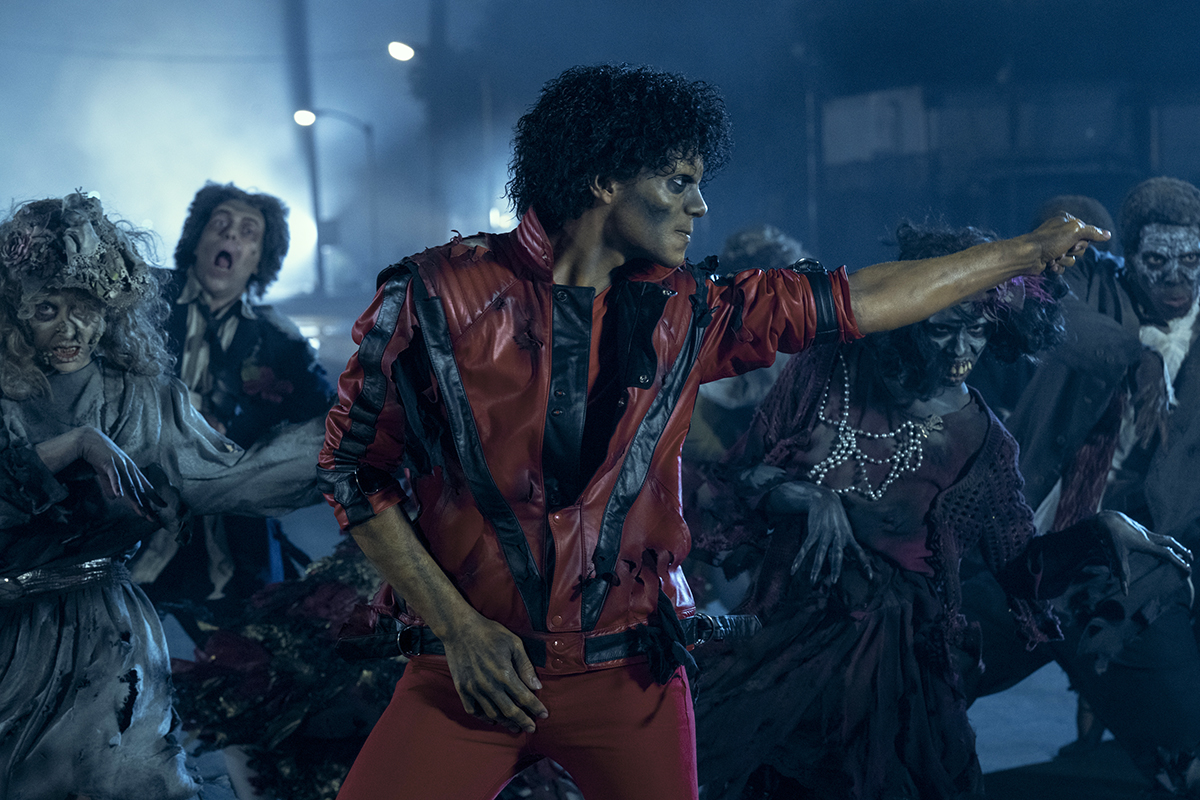
Making sure to include every hit from the Jackson 5âs first appearance, the film moves through multiple time jumps via musical montages. Thereâs little-to-no dialogueâjust needle drop after needle drop (seriously, this script couldâve been written on three pieces of paper)âfollowing the same formula as the musical biopics that came before it. That approach works if youâre a fan of the music, but I have Spotify and a YouTube account. I can watch all of these performances from the comfort of my home on a Saturday nightâin fact, I already have.
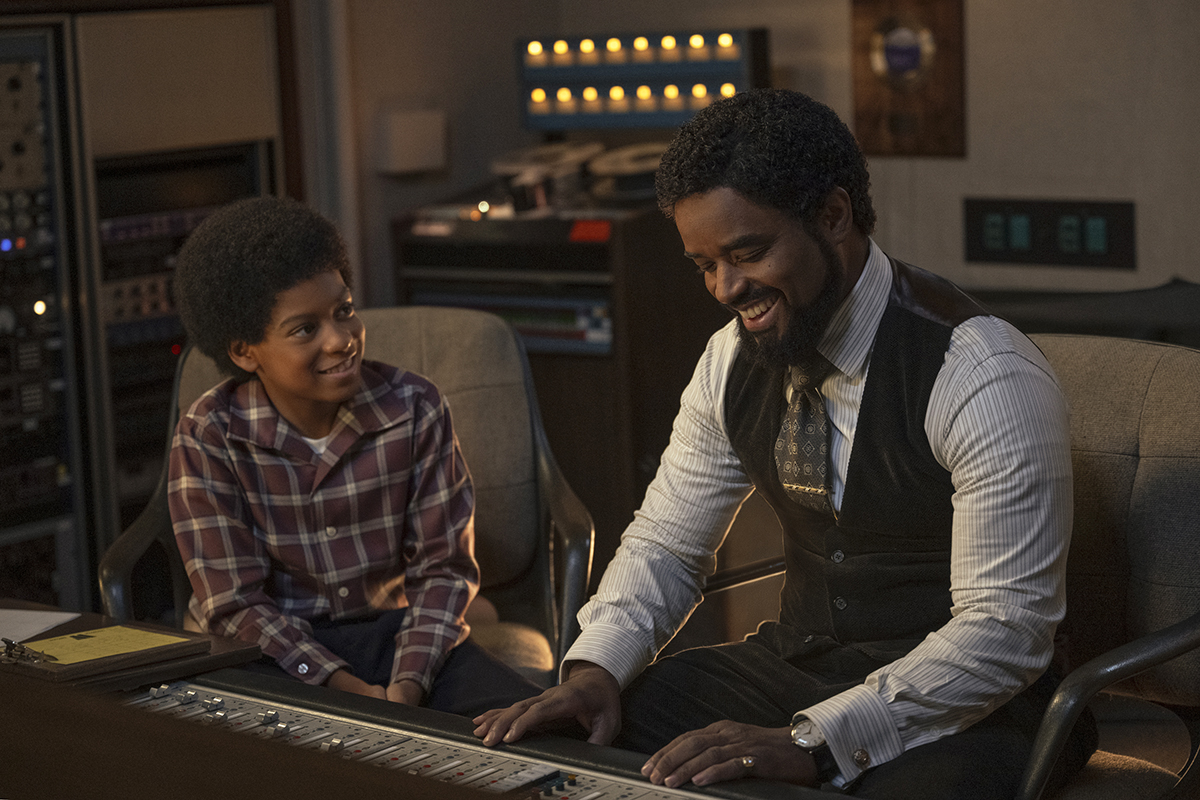
What I want is a story: meaningful performances, growth, and character arcsâbut that never comes. Instead, it feels like the goal is simply to sell this Michael soundtrack album as much as possible. There is, however, a brief glimpse into the creative process between Michael and Quincy Jones (Kendrick Sampson) during the making of “Thriller,” but itâs so short-lived that it might as well have been cut from this two hour and seven minute film. If you get up to go to the restroom, youâll miss itâand return to a completely new sound and era in the iconâs life.Â
But every story needs a good villain, and that role is reserved for Colman Domingo. As always, Domingo commands attention with every performance, whether heâs the lead or a co-star. Adding a level of tension to this almost perfect life, his presence and portrayal of Joseph introduce conflict and pressure into the pop starâs life. Any form of disobedience results in discipline and guilt trips that go on for miles, all under the impression that he was the sole reason for the familyâs success.
A Lack of Connection Hurts ‘Michael’
I wonder if this purely evil depiction of their fatherâwith no redeeming qualitiesâis part of the reason the family is split on this film. Playing opposite him is Nia Long, whose relationship with her son serves as a safe haven, but ultimately takes a backseat to everything else and is merely there to witness events unfold. All that talent is reduced to just a few lines and close-up shots.
If you ignore the lack of dialogue, pacing, and constant needle drops, youâre left with a very expensive sing-along. At no point did I feel connected to, or gain a better understanding of, the man in the mirror. Again, the film is beautiful to look at, and some momentsâbrief as they areâcan even be fun for certain audience members. I just personally donât see the point in a film that doesnât explore anything I donât already know. He loves music, animals, and helping the sickâend of story. Now buy the soundtrack.