





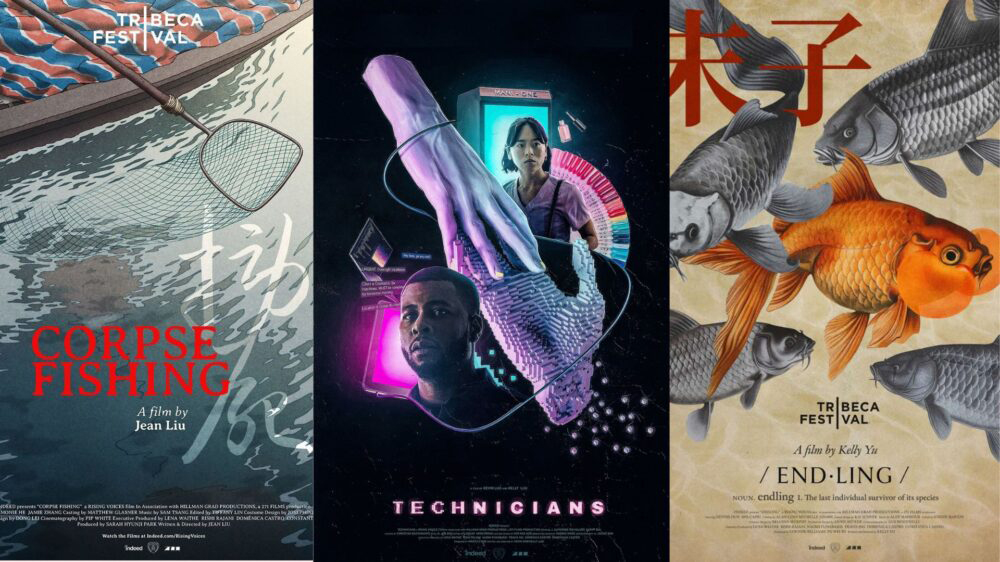
With their continued support of providing opportunities for Black, Indigenous, and People of Color (BIPOC) filmmakers and storytellers; Indeed partnered with Lena Waithe, Hillman Grad Productions, Ventureland, and 271 Films to create the âRising Voicesâ program. Taking part in several film festivals to promote these BIPOC-made films, most notably last yearâs Toronto International Film Festival (TIFF), the Rising Voices program features more stories and talents in this yearâs HollyShorts Film Festival. These include Jean Liuâs haunting short âCorpse Fishing,â Kevin and Kelly Luuâs thought-provoking âTechnicians,â and Kelly Yuâs mockumentary short âEndling.â
Exploring a wide range of themes affecting humanity today â grief and longing amid marginalization, the rise of automation and its potential effects on the labor force, an absurdist take on mortality â the films showcase the breadth of storytelling these filmmakers can offer to the table. The only thing thatâs missing is the opportunity for them.Â
Here are our thoughts on âCorpse Fishing,â âTechnicians,â and âEndling.â
[More HollyShorts Review: âAnujaâ: Hot on the heels of Poverty, a Prodigy is Split Between Choices]
âCorpse Fishingâ Puts a Marginalized Community Front and Center
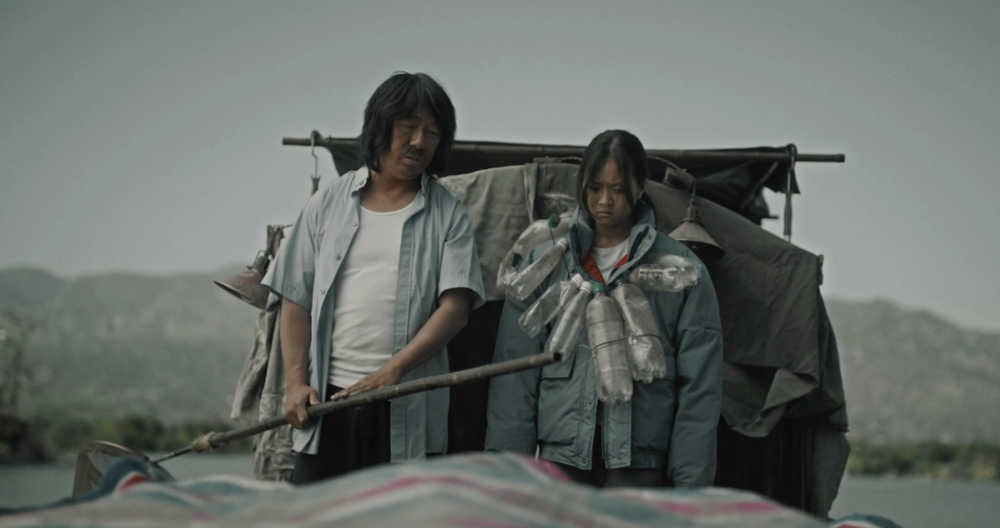
A young woman named Yan (Harmonie He) stares pensively by the bay, absentmindedly tending to patrons availing of her small karaoke business. A motor boat then approaches the shore, and along with it a stench so powerful fills the air it drives everyone away. Everyone, except the young woman.
The unseen boatman asks if the woman sells cigarettes, and asks for one strong pack when she affirms. âYour catch is rotting,â she remarks, then asks what the boatmanâs catch is.
âCorpses,â he calmly replies.Â
Jean Liuâs âCorpse Fishingâ opens with this matter-of-fact exchange between the young Yan and mysterious boatman Bo (Jizhong Zhang). It turns out that Bo actually fishes for corpses. From people who have chosen to end their lives to those murdered by criminals, Bo looks out for cadavers at sea and reels them in. He would then make scheduled stops to seek families who are hoping to see the bodies of their beloved ones that have gone missing.
These encounters, one of which the film would later show, shed light on how little people think of Bo, even if he only does this unethical job just to earn a living.Â
The Dead Bringing the Living Together
As Bo remarks how Yan is the only person not repulsed by the smell, she provides a few details about her hard-knock life. Her late mother used to work as a toilet cleaner, and she would bring Yan with her; which might have contributed to Yanâs desensitization to bad smell. As for her father, she claims he has been missing for some time, and that he might be dead.
In a desperate attempt to find her missing father and seeing an opportunity in front of her, Yan makes an unusual proposal to Bo. For three days, she helps him with âcorpse fishingâ, and he helps her look for her father â whether dead or alive. In return, Bo lets her see the bodies of the three corpses he recently caught, one cadaver viewing a day, to see if one of them was her father.
As the film progresses and their arrangement about to run its course, Liu makes no secret of her narrative. âCorpse Fishing,â after all, involves catching dead bodies while bringing the living together in the process.
The Longing for Connection as a Fundamental Human Need
There are a couple of ways to interpret the film, with the act of corpse fishing itself symbolizing the longing for closure. Thereâs also the marginalization of the characters, with Bo having to resort to doing a job so morally questionable, just because there arenât any offers on his table. By his own admission, he saw a demand for that line of work, and simply met it.Â
What I find fascinating with this short, however, was how writer-director Liu chose to eschew meting out judgment to her characters, including the out-of-focus background characters in mourning. Even as ominous music plays throughout, âCorpse Fishingâ highlights the lengths to which people will go when they are driven by hope and loss. Instead, the film keys in on isolation, whether by circumstance or by choice, and how it figures into oneâs musings about their own existence.
Going for the jugular from the get-go, âCorpse Fishingâ pits a hardened young woman in search for answers and closure against a man jaded from the societyâs perception of him due to the nature of his work. The result is a tender â though at times meandering â short about the fundamental human desire for connection; and how oftentimes, those connections are found in places and with people we least expect.
Grade: B
âTechniciansâ Pits Automation Against the Human Touch
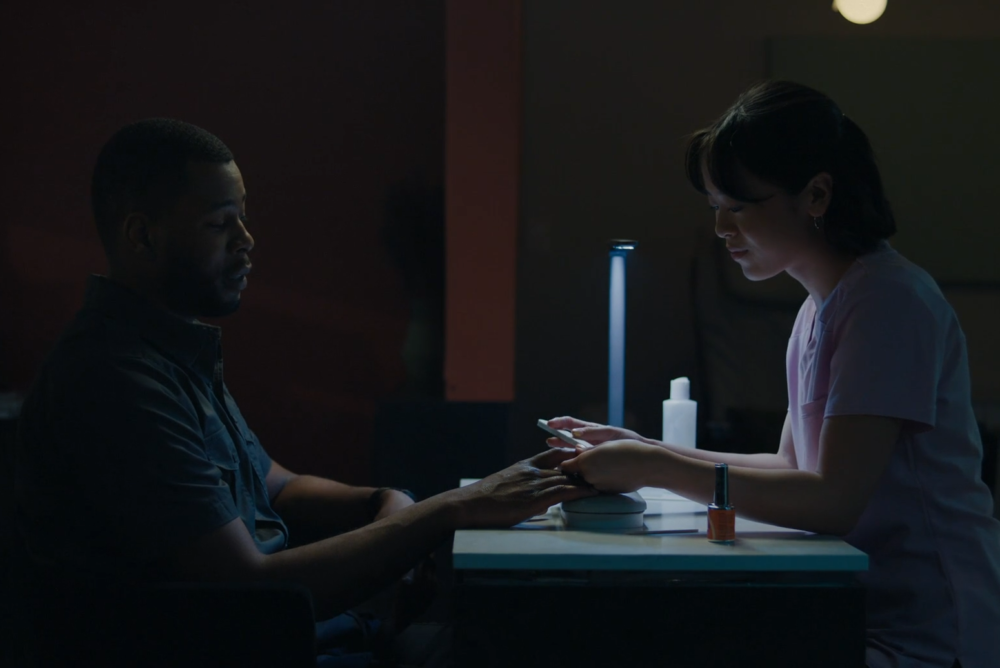
In Kevin and Kelly Luuâs âTechnicians,â the spotlight is directed to two characters at the opposing ends of a desperate situation. An African American programmer named David (J. Alphonse Nicholson) badly needs a job in order to care for his ailing mother. One day, he receives an urgent assignment from his boss: install self-service manicure stations at a nail salon that employs Vietnamese American nail technicians.
This, of course, would come at the expense of those nail techs. One of them, Tippi (Cathy Bui), implores David to botch the installation so that the nail techs donât lose their jobs over the automated service stations. The unease surrounding the situation heightens when the nail salon owner tasks Tippi to work overtime and keep David company as he completes the installations overnight. This culminates in a confrontation between the two that shows the dire straits both of them are in.
On the Ever-Relevant Discourse on Automation and Job Displacement
âTechniciansâ explores the plights of these characters and reveals how much they have in common. Apart from the shortâs title serving as wordplay befitting both of them â one works on motherboards, the other on nails â both David and Tippi navigate their circumstances the same way. And in the age of technology where automation and artificial intelligence threaten to replace human workers, the two characters converge in the intersection that allows them to clearly see how technology has affected the evolving dynamics of their work.
With this short, Kevin and Kelly Luu focus on the central theme revolving around the tension between technological progress and job security. By depicting David having to install those self-service manicure stations overnight, Tippi and the other nail techs would be out of jobs within a couple of days. âTechniciansâ captures the immediate and personal impact of automation on workers, especially the marginalized community.
One of their confrontations has Tippi telling David that the nail techniciansâ work is deeply embedded in Vietnamese culture, and losing their jobs would be akin to taking that multigenerational culture away from them. In essence, the filmmakers aim to present a microcosm of the broader societal shifts caused by technological advancements.
A Morose Take on an AI-Powered InevitabilityÂ
This short reminds me a great deal of Miguel Angel Caballeroâs âThe Ballad of Tita and the Machines,â another Indeed-backed short film that showed at last yearâs TIFF. But whereas Caballeroâs film manages to balance incisive commentary and humor to counter a somber reality, âTechniciansâ takes the serious route instead.
And while thereâs nothing wrong with such a decision, itâs important to note that neither film provides tangible solutions. Instead, both go for depictions of stalling the fruition of an inevitable outcome.
I mean, this could have at least taken a more lighthearted route.Â
Grade: B-
[More HollyShorts Review: âThe Brown Dogâ: Loneliness and Introversion Pave the Way for Philosophical Contemplation in this Animated Short]
âEndlingâ Tackles Mortality and Existentialism Amid an Absurdist Backdrop
âDo you know the origins of the first goldfish?â
Kelly Yuâs short âEndlingâ spends just a little over two minutes to tell the genesis and decline of goldfish. From starting as a gray and dull carp tired of leading a life of mediocrity, the goldfish became household pets; crossing continents and coming into the US households, until the World Wildlife Protection Agency officially listed them as endangered species.Â
Later on, the film shows in title cards that within three years, all the goldfish in the world suddenly died, except for one. The sole survivor now resides in hospice care at the Endling Home of Assisted Living, a facility for species that are the last of their kind.
All these details, obviously, arenât real. And yet Yuâs astute direction gives off a vibe that all the exposition feels factual.
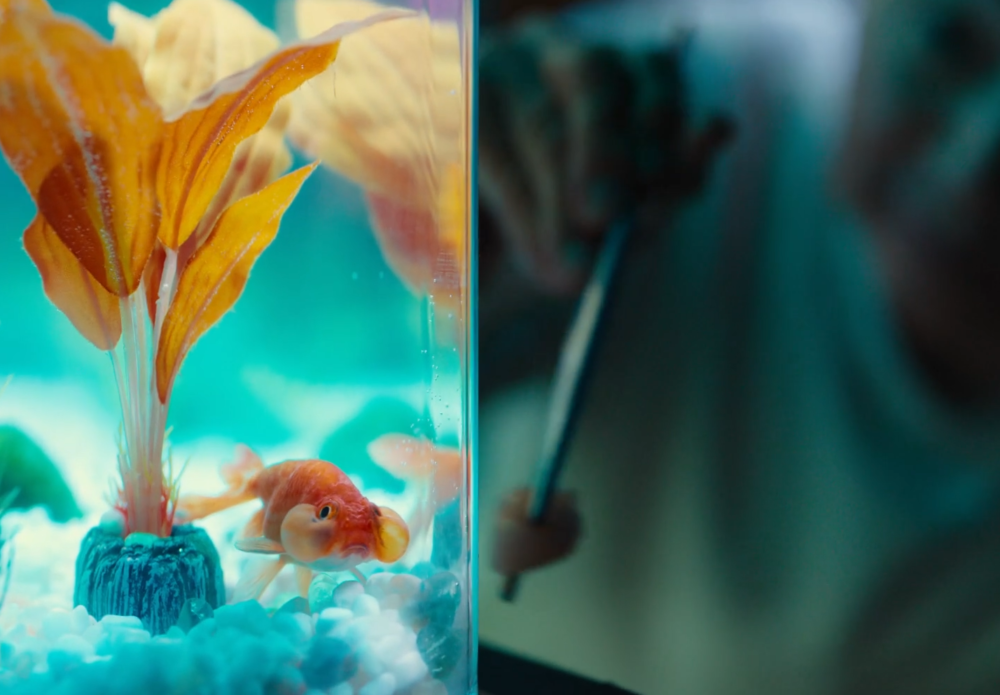
This clever blurring of the lines separating truth from fiction makes it easier for the audience to emotionally invest in the main characters: a charming old man named Richard Chen (Dennis Dun), whoâs in charge of taking care of the last surviving goldfish on earth; and Pao Pao, the last cyprinid herself.
A Darkly Comedic Take on Preservation amid the Threat of Extinction
âEndlingâ goes full-on mockumentary mode, interviewing Richard and following him as he goes about his regular day taking care of Pao Pao. This includes monitoring the goldfishâs stress levels, and dressing up as a giant fish in hopes Pao Pao feels better seeing another goldfish (spoiler alert: she doesnât).
An interview with a goldfish ichthyologist (Ava Capri) reveals plans to study Pao Pao to see whether scientists can get something out of the fish to cure human genetic disorders someday. When pressed about whether she cares for the goldfishâs survival, the ichthyologist compares the hypothetical extinction of bees, saying it would devastate the food chain. If pandas went extinct, the bamboo forest would be decimated.Â
On the other hand, she asserts that the extinction of goldfish doesnât do anything that drastically affects the world; before reflecting upon the living thingsâ ultimate purpose:
âMaybe extinction is the rule and survival is just an exception.â
âEndlingâ: An Incisive Reflection on Human Life and Our Place in the World
âEndlingâ zeroes in on the theme of mortality by focusing on the last living representative of a species, Pao Pao the goldfish. Director Kelly Yu employs an absurdist approach to highlight the inevitability of extinction and the inherent ridiculousness in our attempts to grasp and document it. I especially admired how she presented the narrative in a fictional documentary style, since it accentuates the surreal nature of trying to find meaning in the final remnants of existence.
On a broader scope, however, the film invites existential reflection on human life and our place in the world. For one, Richardâs role in caring for the last goldfish serves as a metaphor for our quest to find meaning in our actions. And without spoiling the ending, the short drives home the oftentimes-futile nature of this quest.Â
As a wickedly funny short, âEndlingâ maximizes its runtime to tell a thought-provoking tale of mortality and the nature of our fleeting existence. Somehow, though, I found myself wishing this were a bit longer. And for what itâs worth, thatâs a good thing.
Grade: B+
âCorpse Fishing,â âTechnicians,â and âEndlingâ screened and competed at this yearâs HollyShorts Film Festival, which ran from August 8 to 18, 2024. Follow us for continuing dispatches, reviews, capsules, and wrap-ups.Â




