





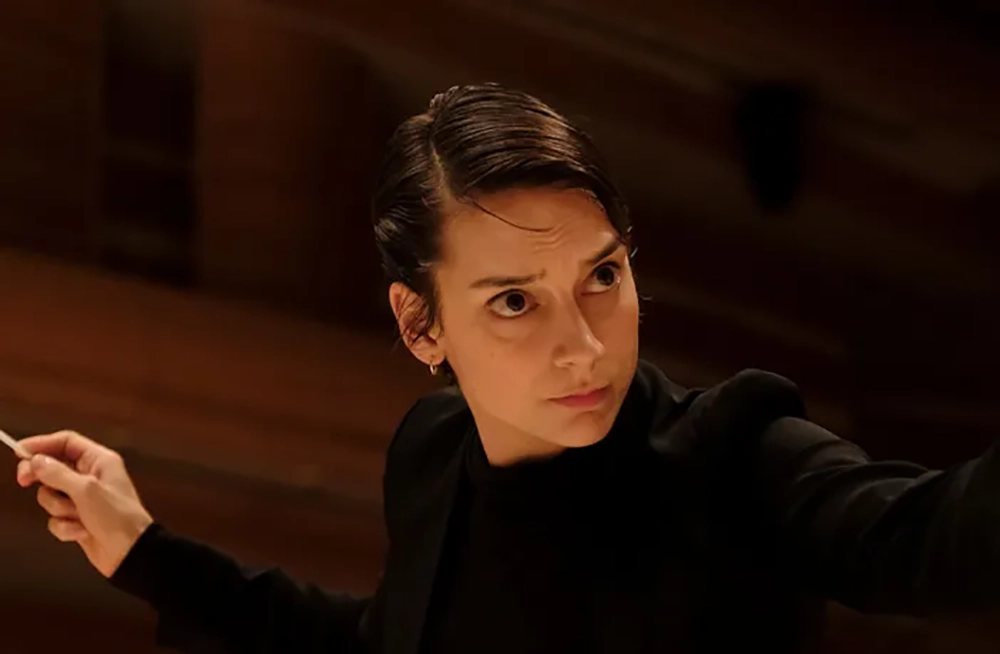
A young woman sunbathes on a floating bed by the lake. Suddenly, she panics when the bed drifts away, helplessly wading through the water. She catches the attention of onlookers (one of whom diving in to pull her back), revealing her inability to swim. Later on, we see the same woman, this time in her element as she conducts an orchestra during a rehearsal, deals with her agent, and spends time with her romantic partner.
These two scenes provide a dichotomy of a person, one terrified and the other in control ; one traumatized and the other confident. And âDays of Happinessâ (French: âLes Jours heureuxâ), the latest film from Writer/Director Chloé Robichaud, wastes no time in portraying how a complicated filial relationship has the power to mold â and ultimately destroy â someoneâs very soul.Â
A Pursuit of Perfection Masking a Complicated Filial Relationship
âDays of Happinessâ introduces us to the woman, Emma (Sophie Desmarais), a talented conductor and rising star on the Montreal stage. Sheâs charismatic, gifted, and on the verge of becoming a major player in the classical music scene. She has earned recognition as a model student, with the uncanny ability to master techniques quickly. However, as Emmaâs mentor tells her, she can be so fixated with perfection that such pursuit ultimately becomes boring.
This pursuit of perfection can be attributed to Patrick (Sylvain Marcel), Emmaâs agent â who also happens to be her father. They came to an agreement early on that she would sign with Patrick provided that he treated her like anyone else.
Robichaud shows right away the latent tension in this father-and-daughter relationship. A controlling person by nature, Patrick has very closely managed Emmaâs career. This includes Emma having to acquiesce to his demands for years, ranging from what pieces of music to conduct, to which residencies to look out for.
A master of microaggressive behavior, Patrick vacillates between being a stern but loving father and engaging in subtle guilt-tripping. In one of these exchanges, Patrick cajoles Emma into acquiescing to use the music of Arnold Schoenberg, something widely considered difficult to understand â and demanding to conduct. This catches even other people by surprise.
âIt pays to be audacious,â Emma reasons, to which she receives a retort:
âYou sound like your agent.â
And later on, when she tells the orchestra to channel their rage in order to connect to Schoenbergâs composition, she receives constructive feedback from her mentor: âWhereâs your rage?â
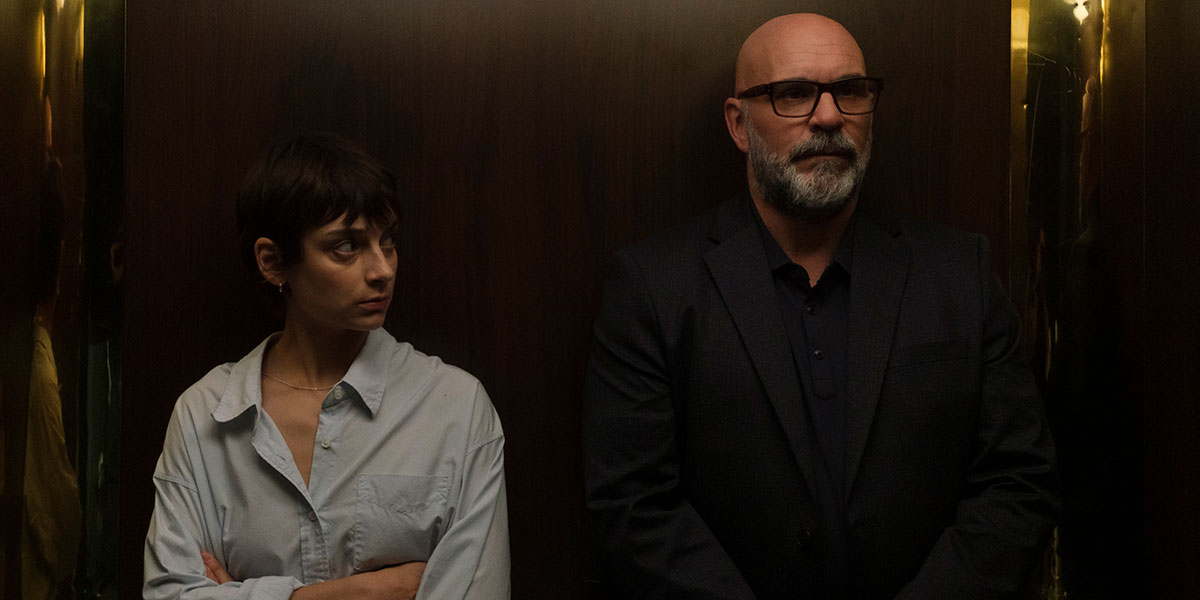
A Complicated Romance Provides an Ironic Sense of Normalcy
Throughout the film, Patrick would simply re-frame any confrontation and say that as Emmaâs father, he âalways wants the best for his daughter.â On the other hand, Emmaâs mother doesn’t provide much of a solace either, simply musing that when doing things that clearly hurt Emma, Patrick certainly had his reasons.
Emma finds solace in her romantic relationship with Naëlle (Nour Belkhiria), a newly separated cellist and mother of a young boy. Ironically, this complicated romance provides her with a source of happiness she couldnât seem to get from her father. However this, too, triggers Emmaâs insecurity from time to time; she and Naëlle donât see eye to eye in terms of making their relationship public, and Naëlle still hasnât sorted out her affairs with her ex-husband.
Nevertheless, this gives Emma a newfound perspective: the chance to experience an entirely different life â a new family dynamic and a non-traditional relationship, with a promise of happier days ahead. But is she willing to fight for it? Will she be able to stand up to Patrick once and for all and pursue what she really wants?
An Emotionally Complex Film About Legacy, Parentage, and Toxic Relationships
On the surface, itâs easy to point out the filmâs inevitable comparisons to Todd Fieldâs âTár.â But personally, âDays of Happinessâ is less âTárâ and more âKing Richardâ and even âBlack Swanâ; in that Robichaud chose to portray her characters in a more sympathetic light. Sure, obsession and toxic relationships loom as the overarching themes here. But Robichaud elects to show the nuances of abuse and manipulation, and how sneaky manipulators can be victims of the same abuse sometime at the hands of their parents.Â
Robichaud succeeds in depicting a narcissistic abuser through Emmaâs father. Depictions of intrafamily violence in film usually feature physical abuse. âDays of Happiness,â however, highlights the nuanced nature of psychological violence in manipulating others to keep them at the abuserâs disposal. It takes great storytelling and direction to present this balance on screen, and Robichaud clearly pulls it off in style.Â
Nonetheless, the most important facet of the film for me is how Robichaud manages to hammer home the dangers of having violence handed down from one generation to the next. This creates a never-ending cycle that can shape a person and the different aspects of their everyday lives. This even applies to Emma and Naëlle, both of whom can fall prey to a dangerous savior-complex relationship.

âDays of Happinessâ: A Promising Creative Collaboration Between Robichaud and Desmarais
The film benefits greatly from its collaboration with Yannick Nézet-Séguin as the movieâs artistic consultant. Consulting with Nézet-Séguin gives âDays of Happinessâ a visual texture of its own. Indeed, scenes of Emma conducting feel like a building thriller, gripping the audiences to wait for a possible slip in tempo or a semitone offkey.
But all that rests on Sophie Desmaraisâ compelling performance as Emma. Thereâs something about her powerful gaze that gives life to â and almost betrays â Emmaâs emotions buried deep. And she embodies the tortured soul of someone whoâs only just beginning to realize she can have the life she deserves, if she fights for it. Desmaraisâ performance (her second collaboration with Robichaud after 2013âs âSarah Prefers to Runâ), ranks among my favorites of the year.
The heartbreaking third act of âDays of Happinessâ is where everything goes full circle. From the opening scene to the nuances of the wobbly family relationship, Robichaud reminds her audience what Emmaâs mentor told her earlier. Break the rules a little.
Who knew watching someone conduct an orchestra playing Mahler can be so cathartic?





